Romanism in Peru

13%

Pacific Press Publishing Association · Mountain View, California · Dec 3, 1912

FromSigns of the Times, Vol. 39, No. 47.

Read the full edition

Romanism in Peru

The London "Christian" of October 17 informs us that there has been an appeal made by Roman Catholics to both Catholics and Protestants for the purpose of sustaining a mission in Putumayo, Peru, among the descendants of the aborigines of South America. Mr. Eduardo F. Forga writes a stirring article against it, and points out some of the horrors of the rubber districts of Peru, that are paralleled only by those that have been found in the Kongo district. He says:
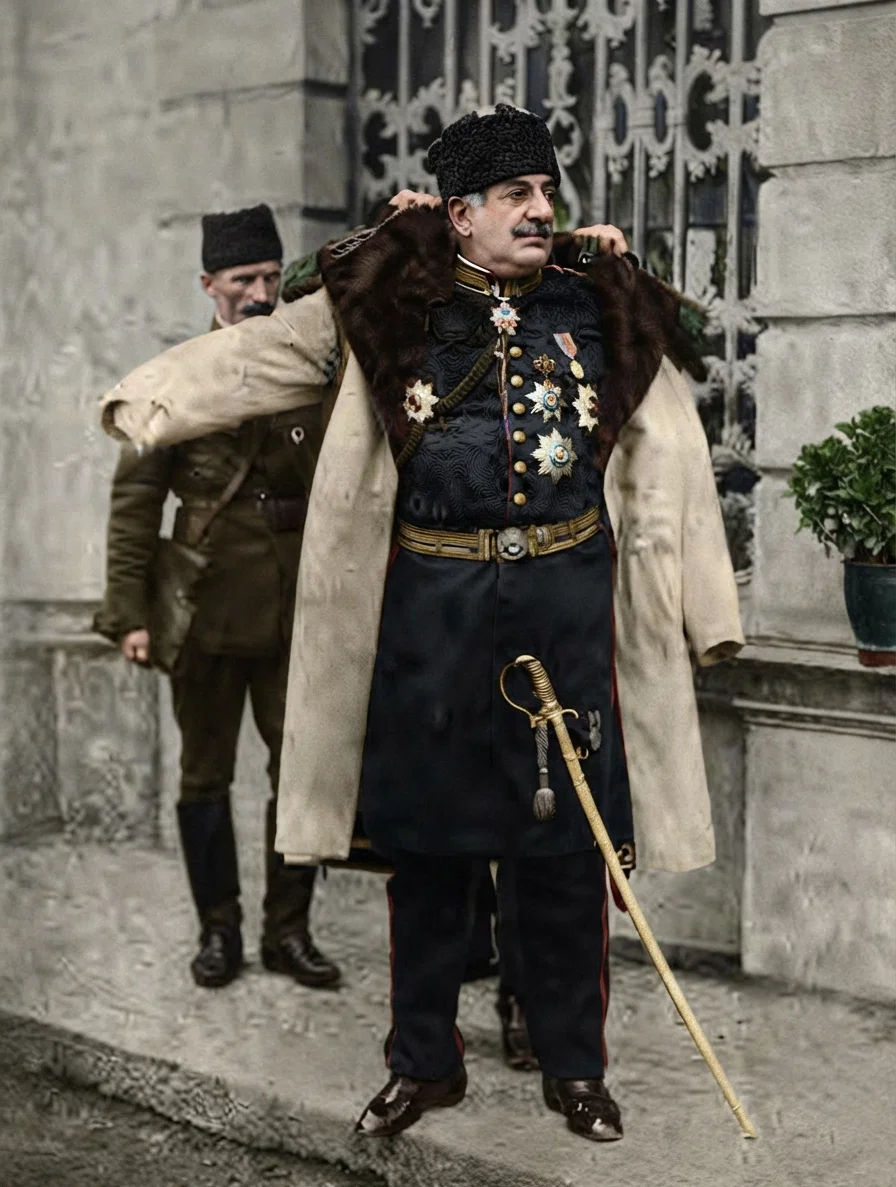
Nazim Pasha, the commander-in-chief of the Turkish forces, Turkey's greatest soldier and her chief hope in meeting the Balkan allies. He is sixty-four years of age, but strong and vigorous. (From "Illustrated London News")
"The atrocities enacted there are nothing else than the fruit of the teaching of the Roman Catholic Church itself. In those backward countries where she reigns supremely, and where she has not been uplifted by purifying Protestant influences, her true nature appears. . . . These revolting acts that have horrified the civilized world are but the later fruits of that diabolical school of cruelty, the Inquisition, which during many centuries has molded the character of the Spanish Roman Catholic peoples, and whose spell was broken in Lima, the capital of Peru, no longer than eighty years ago."
"What is happening to-day in the Putumayo is but a repetition of what happened during and after the conquest of Peru, when the native population fell from about fifty to five millions. And what is the condition of the miserable Indian remnant? They can neither read nor write, but live in the greatest darkness, degradation, and superstition."
He tells us that most of them are more like animals than human beings, and then asks why the Roman Catholic Church did not send such a mission before with the hundreds of millions of money she has received from the government at Lima, and from the neighboring Catholic countries. He tells us, too, that the statement that the Peruvian government would not tolerate a Protestant mission to the Putumayo is a falsification of the facts.
Another article in the same paper declares that a meeting has been held in London for the purpose of raising funds for a Protestant mission among the Indians. This meeting was addressed by Marquis of Tullibardine, member of Parliament, who described the Putumayo region as "the darkest spot on earth at the present moment." A Peruvian obtained a concession, he tells us, set up stations, collected a gang of infamous men, and set them to work to collect rubber, get rich quick, kill the slave when he can work no more, kill off the people who try to save their country or to escape these with their methods. Those who failed to bring in their quota were flogged to death.
Certainly this is a sad, sad tale, and ought to appeal to every lover of souls.