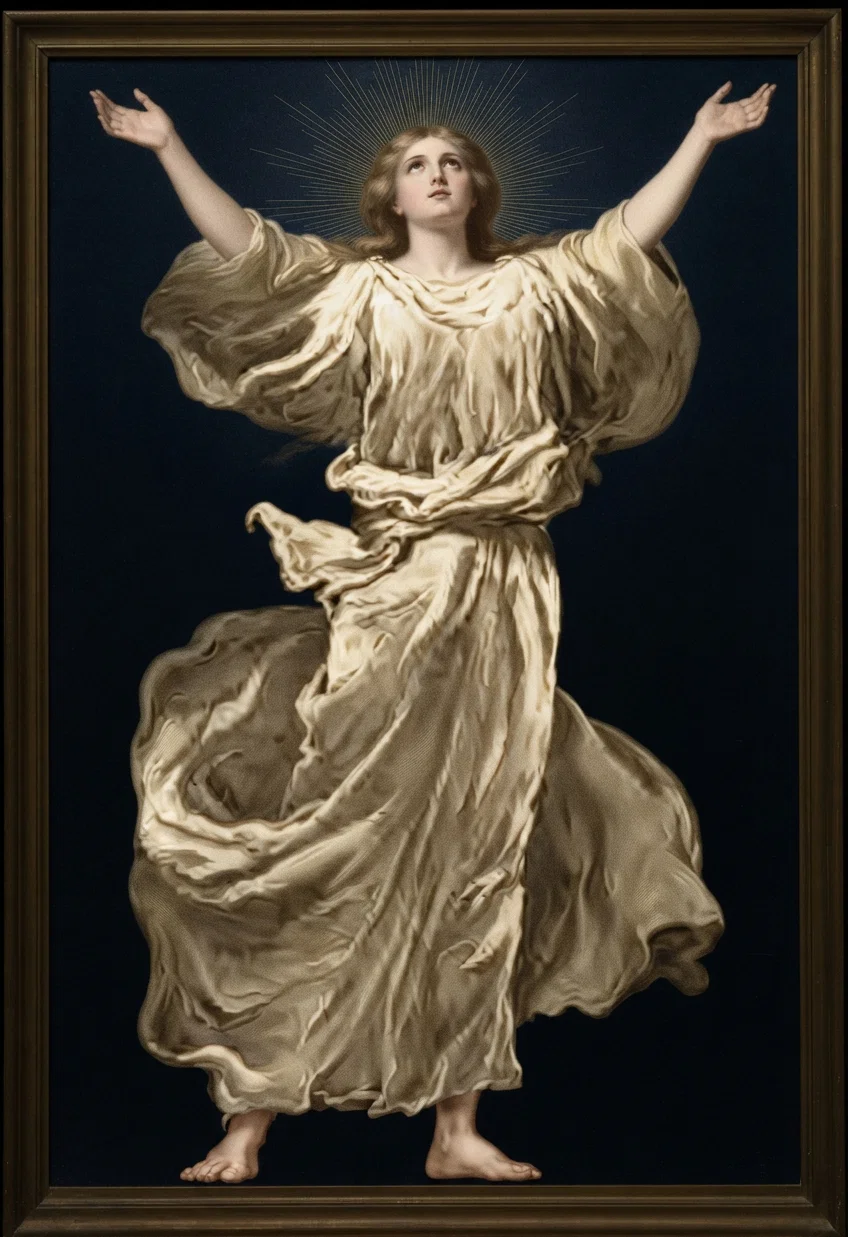
Victory Through Faith

6%

Pacific Press Publishing Company · OAKLAND, CAL., KANSAS CITY, NEW YORK · Nov 28, 1900

FromSigns of the Times, Vol. 26, No. 48.

Read the full edition

Victory Through Faith

VICTORY! Victory in the face of apparent defeat. Victory over the kingdom of this world and the god of this world! Victory over every opposing power and all opposing powers combined, just at the time when the wisdom of this world would prophesy certain defeat! Victory such as no world power has gained during the long-continued struggle for supremacy and permanent possession of the earth! Victory through the power of righteousness revealed in humanity, "even the righteousness of God which is by faith of Jesus Christ unto all and upon all them that believe," that supreme gift of God to men which makes them "partakers of the divine nature" and "joint heirs with Christ" to His throne of universal dominion! Victory which finds its best expression in the words of that immortal song: "Who is like unto Thee, O Lord, among the gods? who is like Thee, glorious in holiness, fearful in praises, doing wonders? . . . Thou in Thy mercy hast led forth the people which Thou hast redeemed; Thou hast guided them in Thy strength unto Thy holy habitation. . . . Thou shalt bring them in, and plant them in the mountain of Thine inheritance, in the place, O Lord, which Thou hast made for Thee to dwell in, in the sanctuary, O Lord, which Thy hands have established. The Lord shall reign forever and ever." This is the Gospel outlook when the eye of faith is at the telescope.
These are not the mere assertions of an optimist. These are "the words of truth and soberness," the revelation of "the manifold wisdom of God, according to the eternal purpose which He purposed in Christ Jesus our Lord." Let the Holy Spirit, speaking through the Word of God, bear its infallible testimony; for "it is the Spirit that beareth witness, because the Spirit is truth."
The Gospel is not abstract, but concrete. It is not a verbal statement of truth which demands an intellectual assent merely, but a revelation of truth in life, an experience of divine power which can only be known and appropriated by personal faith. The Gospel of Christ "is the power of God unto salvation to every one that believeth. . . . For therein is the righteousness of God revealed from faith to faith." And this is based upon the fundamental truth that "the just shall live by faith." The righteousness of God revealed, not in a definition but in a person, to be appropriated as the life of the believer, fellowship with "that eternal life, which was with the Father, and was manifested,"-this is the Gospel of Christ. What that life can do in and for humanity when "the faith which is through Him" accepts Him as the life, is the ever-present assurance of the reality of the outlook to faith's aspiring eye.
The eternal life was manifested in the flesh for a very definite purpose. "Forasmuch then as the children are partakers of flesh and blood, He also Himself likewise took part of the same; that through death He might destroy him that had the power of death, that is, the devil; and deliver them who through fear of death were all their lifetime subject to bondage." "He was manifested to take away our sins." "He hath made Him to be sin for us, who knew no sin; that we might be made the righteousness of God in Him;" "to bring in everlasting righteousness;" to "restore again the kingdom to Israel." Thus "the mystery of godliness, He who was manifested in the flesh," was revealed, and the union of the divine life with sinful flesh was accomplished, not simply in order to provide an all-sufficient sacrifice for sin, but to bring into humanity that power of righteousness which in it could defeat the devil, deliver from fear of death by saving from the dominion of sin, restore the image of God in the soul, and so restore the kingdom to the Israel of God. This great truth is the source and the substance of all real Gospel teaching, under whatsoever form it may be presented.
It is therefore clear that present deliverance from the power and dominion of sin through the "abundance of grace and the gift of righteousness" is the experience which is the pledge of the fulfilment of all promises for the future. Thus the sharing with the king in His kingly character involves all the outward results which flow from such a life, as revealed in Him. This is the key to the understanding of all those promises which set forth the final and glorious triumphs of the Gospel. They are not the arbitrary gifts of a capricious monarch which will be bestowed upon certain favorites, but the simple outworking of the eternal principles of the divine character, as shown by the results when "that eternal life" was manifested in the flesh of Jesus of Nazareth.
A brief consideration of one prophecy out of many will clearly establish the principle. The vision of Daniel the prophet, when he beheld, "and four great beasts came up from the sea, diverse one from another," was briefly interpreted to him by "one of them that stood by;" "These great beasts, which are four, are four kings, which shall arise out of the earth. But the saints of the Most High shall take the kingdom, and possess the kingdom forever, even forever and ever." The further statement that "the fourth beast shall be thefourth kingdom upon earth" makes clear the application of these symbols, and shows that the fourth beast represented Rome, the third beast Grecia, the second beast Medo-Persia, and the first beast Babylon.
Now it was through the direct providence of God that Babylon exercised a world-wide sovereignty. "Thus saith the Lord of hosts, the God of Israel, . . . I have made the earth, the man and the beast that are upon the ground, by My great power and by My outstretched arm, and have given it unto whom it seemed meet unto Me. And now I have given all these lands into the hand of Nebuchadnezzar the king of Babylon, My servant." But within three-quarters of a century from the time of this proclamation, Babylon fell. On the very night when Belshazzar was celebrating the praises of his gods, "in that night was Belshazzar the king of the Chaldeans slain. And Darius the Median took the kingdom." What the God of heaven gave to Babylon, it could not retain, and Darius "took the kingdom."
But what was the cause of this change in the dominion?—It was because Belshazzar failed to recognize God as over all, and himself simply as the servant of God, even after the most wonderful revelation of these truths to Nebuchadnezzar in God’s dealings with him, "And thou his son, O Belshazzar, hast not humbled thine heart, tho thou knewest all this; but hast lifted up thyself against the Lord of heaven; . . . and thou hast praised the gods of silver, and gold, of brass, iron, wood, and stone, which see not, nor hear, nor know; and the God in whose hand thy breath is, and whose are all thy ways, hast thou not glorified." Failure to recognize God as his life, lost him his life, and consequently his kingdom. But what Medo-Persia took from Babylon, it could not retain, and in due course of time it passed over to Grecia. And in the same way and for the same reason the third kingdom could not maintain its sway, and so Rome took the control.
And yet after all this repeated failure of earth’s mightiest powers, a most glorious triumph is predicted in the declaration that "the saints of the Most High shall take the kingdom, and possess the kingdom forever, even forever and ever." What the rulers of Babylon, Medo-Persia, Grecia, and Rome, with all the power of armies and navies at their bidding, could not do, is accomplished through the power of a righteous character in the weakest child of God. "God hath chosen the weak things of the world to confound the things which are mighty." "Fear not, little flock; for it is your Father’s good pleasure to give you the kingdom." But the assurance of all this is found in the present cleansing from sin. "Unto Him that loved us, and washed us from our sins in His own blood, and [in so doing] hath made us kings." And of those it is said, "And they shall reign forever and ever."
The present application of these principles ought to be perfectly plain. The five great powers of the earth, England, the United States, Russia, Germany, and France, are now dividing the territory of the world among themselves, each with much jealousy and distrust of all the others. Students of prophecy know that this is simply the preparation for the last final struggle between the world powers which will usher in "the battle of the great day of God Almighty." Even now the warning is being heard, which is to be given "mightily with a strong voice:" "Babylon the great is fallen, is fallen. . . . Come out of her, My people, that ye be not partakers of her sins, and that ye receive not of her plagues." And the very next event in the fulfilment of all the prophecies will be the coming of the Son of man "in His glory, and all the holy angels with Him," and "then shall He sit upon the throne of His glory. . . . Then shall the King say unto them on His right hand, Come, ye blessed of My Father, inherit the kingdom prepared for you from the foundation of the world." "Then shall the righteous shine forth as the sun in the kingdom of their Father."
In the light of the prophecies and the promises, it is clear that no Gospel outlook is scriptural which does not include in the range of its vision the whole earth renewed and restored as the possession of the new man in Christ Jesus. And this glorious outlook becomes reality through the acceptance of that righteous character which is in itself a crown of glory and honor. Here are the declarations: "For the promise, that He should be the heir of the world, was not to Abraham, or to his seed, through the law, but through the righteousness of faith." "Now to Abraham and his Seed were the promises made. He saith not, And to seeds, as of many; but as of one, And to thy Seed, which is Christ." "And if ye be Christ’s, then are ye Abraham’s Seed, and heirs according to the promise." That a present condition of character is the basis for the fulfilment of this promise is evident from the teaching of the Saviour: "Blessed are the meek; for they shall inherit the earth."
The seven-fold promise which culminates in a place upon the throne with the Faithful and True Witness, is in every instance made "to him that overcometh." Revelation 2 and 3. This is only another way of saying that he will have rule over the earth who conquers it, and this is strict justice to all. But he who conquers "the lust of the flesh, and the lust of the eyes, and the pride of life," has conquered the world and "all that is in the world," and consequently wins his throne. "And this is the victory that overcometh the world, even our faith." Thus is the future brought into the present for the believer in the Gospel, and the glorious outlook becomes a constant fact to him.
All that is included, however, in the Gospel outlook is not fully apprehended unless there is a clear understanding of all that was accomplished in the flesh of Jesus of Nazareth by the manifestation of that eternal life in Him. His experience is set forth as the experience of every one who is brought into life union with Him through being born again. "Have this mind in you, which was also in Christ Jesus; who, being in the form of God, counted it not a prize to be on an equality with God, but emptied Himself, taking the form of a servant, being made in the likeness of men; and being found in fashion as a man, He humbled Himself, becoming obedient even unto death, yea, the death of the cross." And this was done with no greater inducement in view than that He might win back man for the earth and the earth for man, and that thus the original dominion might be restored. But the character which was revealed by the Son of God in thus becoming the Son of man for man’s sake, brought to Him, as the Son of man, and to all who are in Him, all that He gave up as the Son of God when He emptied Himself. "Wherefore also God highly exalted Him, and gave unto Him the name which is above every name; that in the name of Jesus every knee should bow, of things in heaven and things on earth and things under the earth, and that every tongue should confess that Jesus Christ is Lord, to the glory of God the Father." Thus the Man Christ Jesus was exalted to the throne of the universe, "far above all principality, and power, and might, and dominion." And all this He shares with the humblest believer who really shares with Him in His character. Through the grace which is in Christ Jesus, man is so filled with the fulness of God through the wonderful provision of the Gospel, that he is thereby restored, not simply to the dominion which was forfeited through the loss of His kingly character, but to a seat upon the throne of the universe by the side of "the King eternal, immortal, invisible." "O the depth of the riches both of the wisdom and knowledge of God! how unsearchable are His judgments, and His ways past finding out!" New heavens, new earth, New Jerusalem, new creatures in Christ Jesus. "Behold, I make all things new." "He that overcometh shall inherit all things; and I will be his God, and he shall be My son." "Behold, what manner of love the Father hath bestowed upon us, that we should be called the sons of God. . . . We know that, when He shall appear, we shall be like Him." O glorious outlook of a glorious Gospel! "Thanks be to God, which giveth us the victory through our Lord Jesus Christ." "Alleluia, for the Lord God omnipotent reigneth."
W. W. PRESCOTT. London, England.