THE OUTLOOK IN EUROPE

4%

Pacific Press Publishing Company · OAKLAND, CAL., KANSAS CITY, NEW YORK · Nov 28, 1900

FromSigns of the Times, Vol. 26, No. 48.

Read the full edition

THE OUTLOOK IN EUROPE

By W. T. Bartlett, London, England
IT WAS in “the fulness of the time” that Christ was revealed in mortal flesh. He did not come until it was clear that men of themselves were powerless to save themselves. Four thousand years of moral failure had demonstrated that, without a personal, indwelling Saviour, the race was hopelessly lost, whether under the law or without the law. All that human wisdom or human strength could do had been done, and done in vain; and if the Saviour had not then come, the light of hope for the world would have gone out in utter darkness.
So, also, when the second coming of Jesus Christ shall close up the volume of earthly history, it will be in “the fulness of the time.” A point will have been reached beyond which things could not possibly continue longer. Let us review the present situation in Europe, and see if we are not within measurable distance of such a crisis.
Let us not, however, make the mistake of the Pharisees. Christ could give them no sign that would satisfy their unbelief, because they would not accept what they did not like. The signs of the times were as open to human understanding then as the face of the sky; but, while the Pharisees claimed to read this with certainty, they utterly failed to grasp the import of the signs that surrounded them. Many, like them, are unconscious to-day, but it is not because the signs are not clear enough. It is because these are given to blinded eyes and stubborn hearts.
Like the Jews, men point to the evidences of material progress and advancing civilization, refusing to believe that these are doomed to perish, even before they are consummated. The Pharisees could not conceive that their magnificent temple, on which so many years and so much treasure had been lavishly expended, was not destined to stand for ages, an honor and a pride to their nation. But its sentence was pronounced by Christ before it was completed. So let none fondly imagine to set those things on which the world builds its hopes for the future against the “more sure word of prophecy.”
Not every one will recognize the true import of the signs which God is causing to stand out so prominently, or give them more than a passing thought. Only eight souls were saved in Noah’s day, because the multitude would not heed his warnings; and we are told by Christ that this suicidal indifference will be repeated. Matt. 24:37-39.
If we could take our stand at some point of time in the past, and be permitted to look at the scenes which are now taking place, we could not fail to be impressed with the extraordinary character of a time in which such things could be. Yet so accustomed have we, who live in the rush of events, become to wars, famines, plagues, assassinations, and political and social commotions of every kind, that we neglect to mark how the stream is hurrying on, faster and faster, in ever-increasing volume, and do not stop to inquire, Where is it tending? and where will it end?

A Promise of Peace.

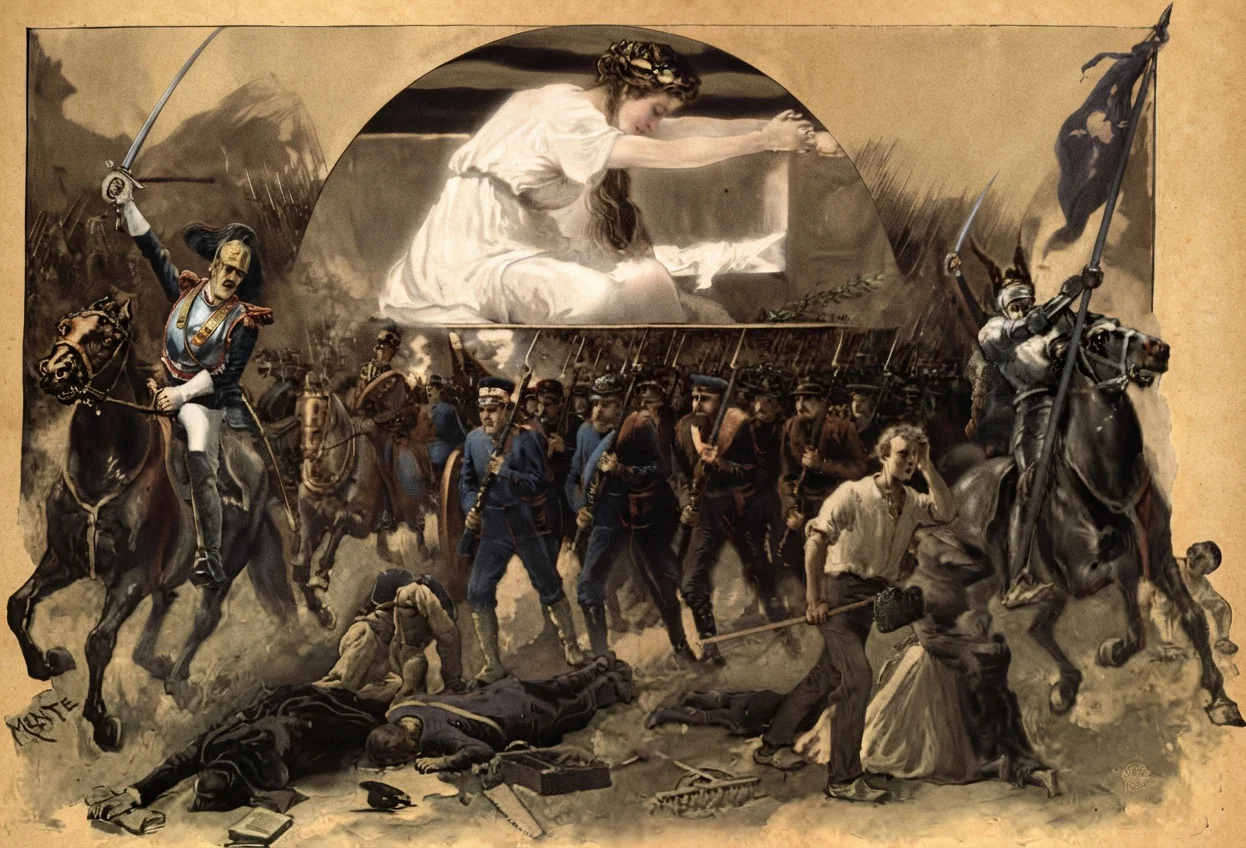
It was only last year that Europe gathered at The Hague to discuss general peace and disarmament; yet look at the situation in Europe to-day. England has in South Africa the largest army she has ever sent abroad, and nearly sixty thousand of her people have been killed or disabled in a struggle with a white race, the fruit of a war which both parties protested would be unnecessary and wicked. It was generally believed that but for the exposition on her hands, France would have taken advantage of England’s difficulties to seek an awful revenge for her own injuries, real or imagined. Both countries are persuaded that the other only awaits a favorable moment for declaring war. Russia is making steady progress in Asia, and coming gradually nearer to the outposts of England. Germany is possessed with the ambition to take from England her maritime supremacy. Austro-Hungary is ever on the verge of civil war, which no one expects to be deferred beyond the life of the present emperor. At present the great powers are more or less united against China; but the union serves principally to accentuate their national rivalry and distrust. No one power trusts another, and new combinations between them are continually urged or threatened. The description given by Daniel of these kingdoms is strikingly exemplified to-day, “They shall not cleave one to another, even as iron is not mixed with clay.” Dan. 2:43. No one can be certain for a day that some new issue will not be raised which will involve every nation in Europe in a general war.
It is noticeable how frequently newspaper writers now use the word “Armageddon” when referring to the great European conflict which is generally considered inevitable. All recognize that it must come sooner or later; but they do not know, because they do not seek to know, that the battle of Armageddon is that one in which the kings of the whole world are gathered by the spirits of devils, to the battle of the great day of God Almighty. Rev. 16:13-16. Did they appreciate this, they would not prepare so eagerly for the event; but, urged on by the evil spirits, who find many an editorial and political voice to do the devil's work in the name of patriotism, the nations of Europe are steadily preparing for the last great conflict. The poorer countries, largely made poor by their armaments, already groan under the burdens of conscription and excessive taxation. One well-known writer says:—
The European States are to-day spending in armaments more than £100,000,000 yearly above the amounts they expended thirty years ago. These sums, sweated out of the blood and bone of the workers of Europe, so far from adding to the security of the nations, have already diminished it. The world can bear the strain a little but only a little longer.
Yet every year witnesses a steady increase in naval and military estimates. Hitherto England has been free from conscription; but it can only be a short time before this “blood tax” is levied upon her able-bodied population. It is called for in all directions. A contributor to the Westminster Review says:—
The universality of the cry for conscription, in one form or another, is one of the most remarkable and dangerous symptoms of the age.
The minds of men are filled with false notions of what constitutes glory. Imputing shame to that which alone is glorious, the cross of Christ, they have invested deeds of devilish cunning and ferocity with the titles of glory and honor. This is why the unthinking mob clamors for the establishment of the military despotism which is wrapped up in conscription.
Yet God by His providence has revealed to this generation the true character of militarism with such clearness that all may understand it. The country which above all others worshiped its army as the soul of honor and the embodiment of all manly virtues, has afforded to the whole world an indelible illustration in that army of infamy and corruption. In the Dreyfus case, hidden secrets were brought to light that men might know how false and empty is the glory that belongs to all systems for organizing murder. England, by her attitude against the Boers, has shown that the lesson was lost upon her, and now her own military system has proved a broken reed, and humbled her before the world. Claiming first place among empires, she has almost suffered defeat at the hands of a numerically insignificant people. If others of the powers will not learn the lesson, they too must be humbled; for since the world will not pay heed to the words of God, He must speak to them in a way which they can not escape, no matter how much they desire to. It is He “that bringeth the princes to nothing; He maketh the judges of the earth as vanity,” that He may save some at least from the curse that falls on those who put their trust in men and make flesh their arm. Isa. 40:23; Jer. 17:5.

In Socialism.

In social and business life the same spirit that creates unrest among the nations is busily at work. Labor and capital are organizing their forces. Unions among the workmen, and trusts among the large manufacturers, are the means employed by each to protect their own interests and enforce their claims. At the present time the employers are victorious in most of the struggles; but the organizations of the men are being more and more perfected, until they hope to be able to stop every trade if one is denied its claims.
A few wealthy men are heaping together treasure, but it would spoil all their satisfaction to know that it is “for the last days.” James 5:1-4. Numbers of the smaller factories are closing through inability to compete with their larger rivals, and in many places there is distress, enhanced by the great increase in the price of coal.
As a consequence, there is a growing discontent among the poor, and socialism and anarchy find numerous recruits. Frequent attempts are made against the lives of exalted personages, and the Spanish prime minister, the French president, the empress of Austria, and the king of Italy, have all fallen recent victims to the dagger and pistol of the assassin, a fate from which the Prince of Wales and the shah of Persia have had a narrow escape.
If it be asked, “What are the churches doing to warn the people concerning the dangers which surround them and the snares which are set for their feet?” it must be answered that many of them are too much concerned with questions of ritual and politics to trouble about other matters. The religious teachers in Christ's day were not quick to receive His message, and their spirit has descended to their successors. Ministers who openly profess their belief in the Scriptures as God's Word are comparatively few in number. The majority find in it more exercise for learned criticism than for faith.
There is a kind of religion which is very popular. It has mounted the stage, and formed the subject of a most successful play. It supplies matter for several well-known novelists, and the Passion Play at Ober-Ammergau gets more visits than ever; and all these things are commended by many of the clergy as aids to Christianity. The newspapers can find use for such a Christianity as this, and it serves many a purpose. It was especially in evidence when the Transvaal War began, in the columns of the papers which called loudest for war. With a great many the idea of religion has become a mere sentiment, demanding from its adherents a little emotion and outward show, and giving in return its sanction to whatever is desired.

The Only Hope.

Men have been raised up here and there to whom God has revealed principles of truth. They have taught these faithfully, but for all such sentinels, Satan sets his most subtle snares, and too often with success. It is a sad thing to see a man, or a body of men, intrusted with a warning for the people, win a measure of popularity, and, flattered and deluded by it, come at last to take their stand among those who seek to carry out moral reforms by human legislation. Only one thing will save men from the seducing spirits of devils who are now at work, and that is implicit faith in God's Word. By it Christ conquered His spiritual foes, and only by it can we escape. This is why Satan's strongest efforts are bent to discrediting God's Word among those whose office it is to declare it. The attacks on the Bible are one of the most important signs of the times. Yet these attacks are to be met, not in any carnal strife, but by our own individual faith in it. Many are posing as the champions of truth who are sadly misrepresenting it, ostensibly denouncing the errors of infidelity and the abuses found in corrupted churches, but giving evidence that they have insensibly imbibed the spirit of error and adopted the methods they condemn in others.
Do not these things, and many others that are equally well known, show that we have reached the fulness of the time when the world is ripe for the harvest? Only one thing holds back the winds that, left unchecked, would quickly fan the smouldering embers into a devouring flame. Rev. 7:1-3. The servants of God are not yet sealed, and for their sakes to whom the angels minister, those who shall be heirs of salvation, the winds are held. By many a token we may know that they will not be restrained much longer. “Now is the day of salvation.” W. T. BARTLETT.