THE HARVEST OF GREED

2%

Pacific Press Publishing Company · Oakland, Cal., Kansas City, and New York · Nov 29, 1899

FromSigns of the Times, Vol. 25, Nos. 48, 49.

Read the full edition

THE HARVEST OF GREED

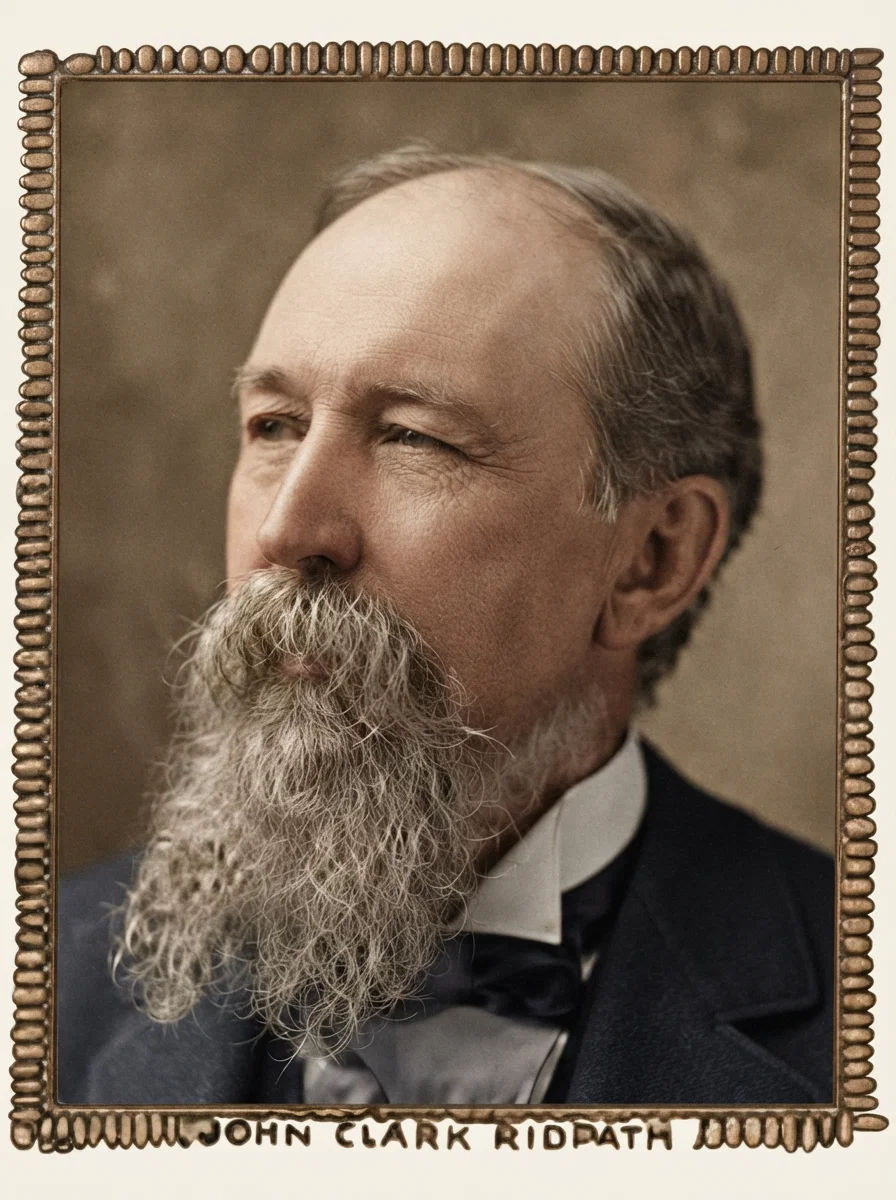
By John Clark Ridpath, LL.D., the Historian.
GREED is the excess of appetite. It begins deep down in the abysm of nature. It exists among the primary forces of life. Every living cell is a glutton and a brigand. Every cell survives by marauding and murdering. Every cell is a savage, a cannibal. It seizes and devours alive such other cells as it can entrap and strangle. Out of this chaos of piracy and killing and eating, the larger organic life of the world proceeds.
In the light of reason, the history of life is a horrible history, for it begins with murder and ends in sickening corruption. This is said of that organic, visible life with which we are acquainted by our senses. There is, however, another life, which begins with the universal spirit, and, as we think, ends with a broadening flight in the open firmament of freedom and eternity.
The cell-body which the soul inhabits has desires and appetites. They are essential to its existence. The cell-body does not hesitate to follow its desires. The cell-body has no sense of justice, and no restraint of conscience. Its motto is, Take and stuff. Its principle of action is, Kill and eat. Its philosophy is, Get and gratify. In a word, the cell-body is the habitation of greed. It grabs and keeps. It spares nothing. It concedes nothing. It fills itself by spoliation and sleeps the untroubled sleep of the beast.
In the lower orders of life, greed is natural, inevitable. The forces of nature working in matter have no moral quality. The moral quality begins when consciousness and conscience enter in. Greed in an animal is as innocent as gravitation. When one beast kills another, the action is as devoid of moral quality as is the falling of a stone or the working of a poison. Greed gets its immoral force and its pernicious action only when the man-animal persists in carrying his habits into the sphere of spiritual consciousness. Greed is only harmful in a beast. It is vicious and criminal in man.
JOHN CLARK RIDPATH
JOHN CLARK RIDPATH
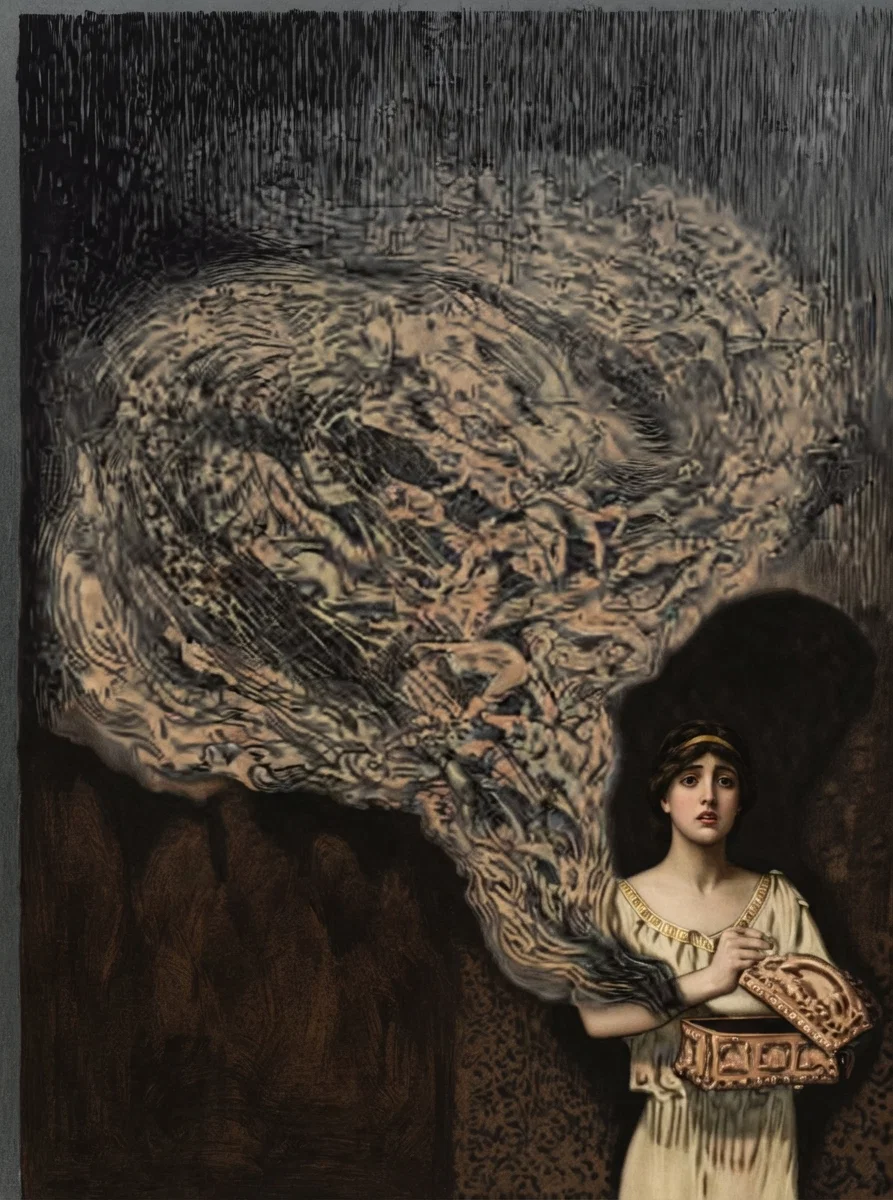
The lid of Pandora's box is flung up, and the vices which afflict the social life of man swarm forth.
So long as appetite, the appetite of the individual, his desire and avarice; so long as the appetite of a community, its lust of getting and pride of power; so long as the appetite of a people, its innate love of conquest, its hunger for spoliation and blood,—so long as these are held down and constrained by the conscience of the man, the ethical sense of the community, and the justice and wisdom of the people, so long is greed, in the moral sense, rendered impotent, if not impossible. But when Hyde has the mastery of Jekyll, then greed rages, the lid of Pandora's box is flung up, and the vices which afflict the social life of man swarm forth a legion.
Let no man think that the hungry, insatiable animal can not be curbed and regulated. The animal
can be tamed and civilized. The animal can be purified and ennobled. The animal can be cleaned and set upright and converted into an object of beauty and adoration. The spiritual spark which burns somewhere like a star in the tissues of life is sufficient to pervade the visible creature, to warm him with a motive superior to his natural gluttony, and to change him from a cannibal to a man. This does not involve the extinction of appetite or the crucifixion of desire. It involves simply a limitation thrown over both. It signifies that desire shall be tethered—that appetite shall be bound with a chain.
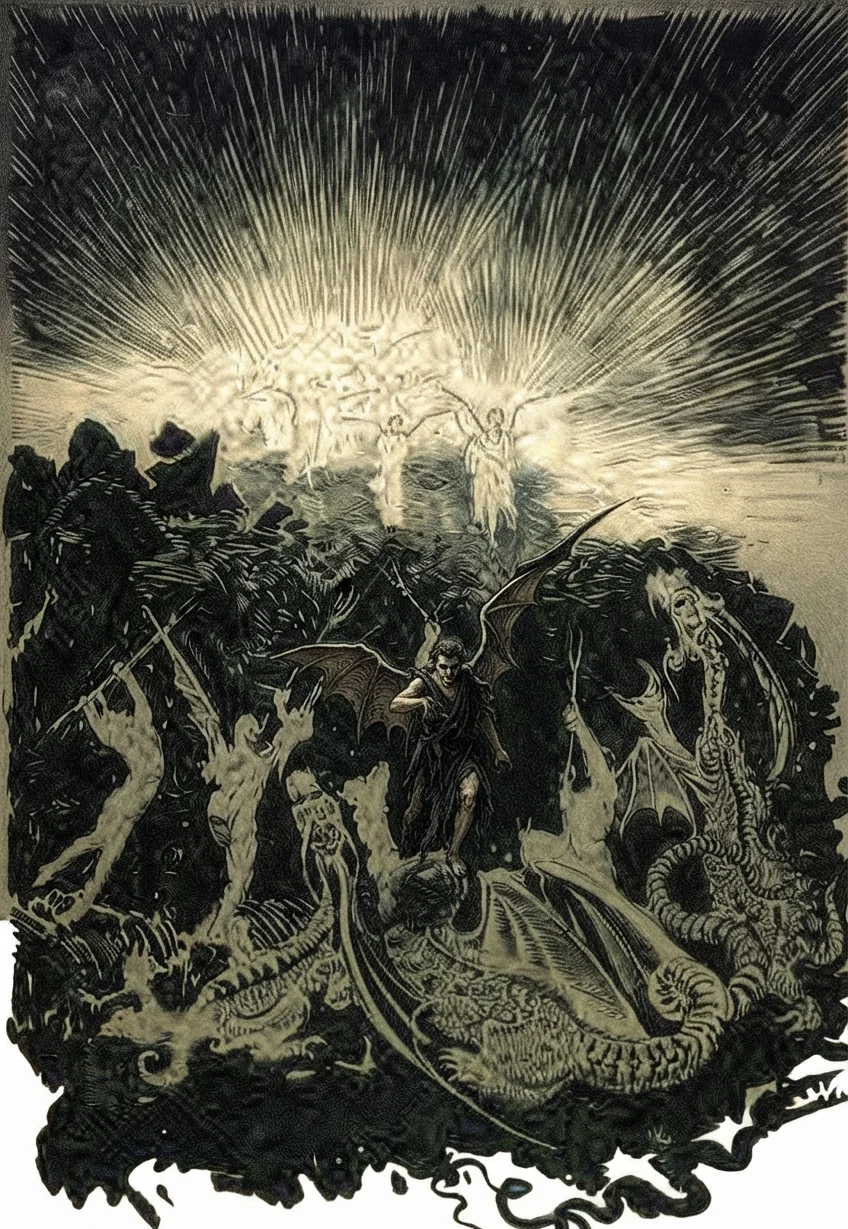
Thus comes the battle of the Spirit with the Beast. Thus arises the swirl of moral and intellectual forces sweeping through the purlieus of human society. Thus it is that the warfare in every human breast is waged—a warfare which no historian is able to describe, and of which no prophet is able to foretell the end. On one side fights Greed with his dragons and fiends, and on the other side fights the masterful Spirit of Life with all His angels.
The world is the battle-field of these contending forces. Almost every square rood of the fair landscape has been torn and reddened and blackened with the ravages of the conflict. All men have engaged in it. All communities, all States, are participants; all societies and combinations of men are the cohorts in the universal broil. All nations in all ages are the armies, and perhaps all time is to be the limit of the war.
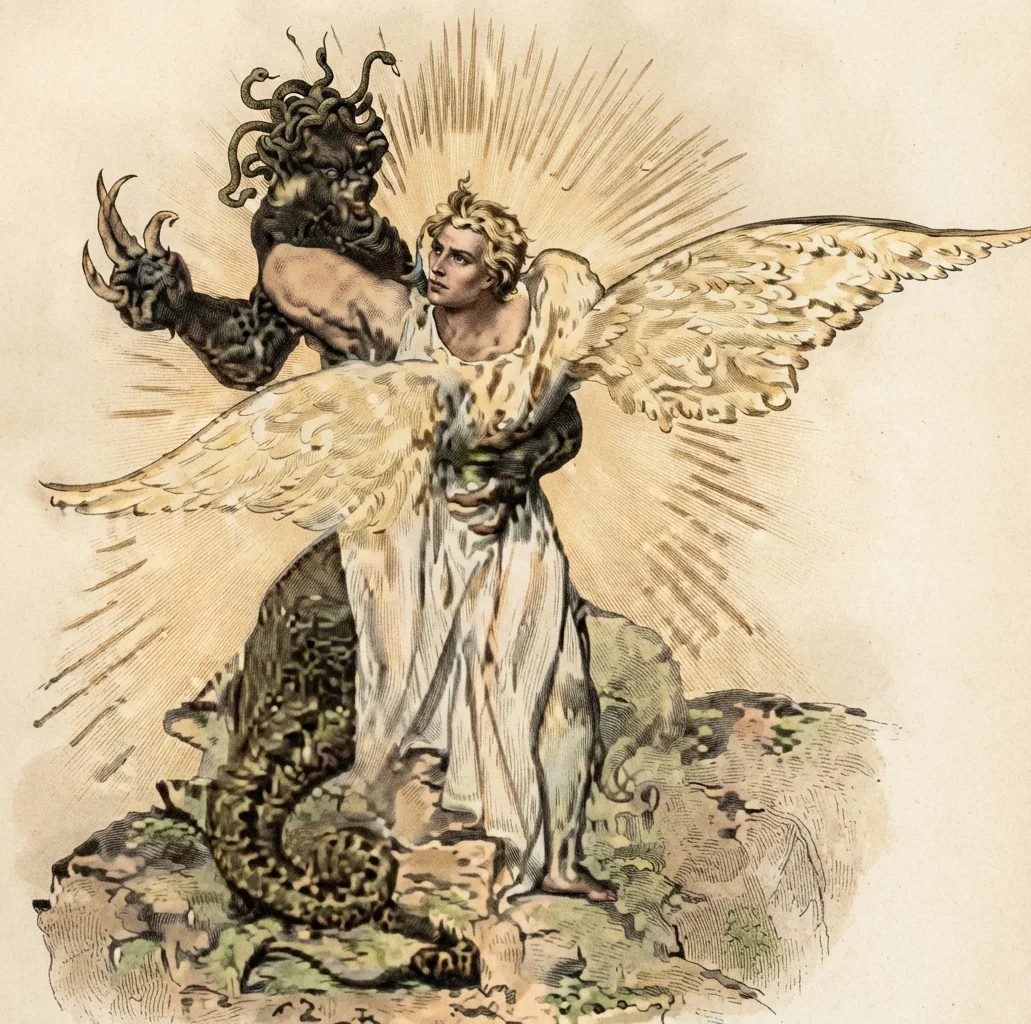
How fierce is the battle with Greed! How arduous is the campaign against appetite; the war with the animal; the stern onset of the Man-angel with the Man-dragon; the struggle of the Soul with the Body; the awful challenge of Brain to Belly! In a larger sense, how dreadful is the struggle of the civilized life to put down the savage hosts of Greed!
A certain man went forth to sow. He scattered seed as he went, and it grew. Afterwards he came back when nature had done her work, and he gathered the fruits of his sowing. A certain tribe went forth to sow. The tribe also came again, after a season, and gathered fruits from every stalk that was planted.
A State went forth to sow, and the seed of that sowing also germinated and brought forth a harvest. The State returned and gathered its own. A certain community sowed seed, and the community had also its reaping-time, its gathering into bins, and its winter hours, in which the fruits of the sowing were consumed. A people, a nation, went forth to sow, and great was the sowing! The seed flew wide. Some fell along the ocean shores. It fell in river valleys. It fell in open glades of the forest. It fell on the green slopes of hillsides where nature had drawn a landscape for the dryads and goddesses of the woods. Some fell on the mountains, whose high peaks were kissed with the radiance of rising and setting suns. Some fell on the prairies wide, and in the woods illimitable— Where rolls the Oregon and hears no sound Save his own dashings. Some fell at the mouths of open mines, and some in the sands of gold. Some fell by the flashing waters of great lakes, and some amid the beauty of sun-kissed Savannahs, or under the shadow of mighty oaks trailing with spectral mosses. How magnificent, how full of promise was that flinging of generous seed, broadcast from the hands of our patriotfathers who escaped from the old tare-taken fields of the Middle Ages, to plant seed in another continent with the hope of better things!
Let us drop the poem and follow the prose. We are now able to discover that the founders of the old American democracy brought with them the best seeds which might be gathered from the past. But they also brought cockle, and poisonous weeds. They brought the bad with the good in their old skin-covered boxes.
They brought it in their own natures. They brought it in their traditions, in their superstitions, in their ignorance, in their narrowness of vision; and the worst of all they brought was Greed.
We may, without disparaging our fathers—which we would never do—censure their almost uncurbed spirit of acquisition. They seized the lands. They took them by what they vainly called the right of discovery; afterwards, by conquest. They dispossessed the aborigines. They clutched at forest and river. They exhibited that passion for gain which is to this day the rampant and predominant spirit and purpose of the English-speaking races. It was said of the Puritans that they kept the Sabbath—and everything else on which they could lay their hands!
The patriotic shock of the American Revolution, most salutary battle that ever was fought, did much to extinguish the avarice and the miserly hypocrisies of the forbears of America. Great was the democracy of 1776! By it the sordid passions of the Anglo-Saxon man-animal were almost assuaged. By it the inherent greed of the race was for the time transformed into nobler forms of desire. Then it was that human freedom became the idiosyncrasy, first of the Americans, then of the French, and then of civilized mankind.
See the patriots who had achieved their independence settling themselves in the new lands of liberty, and making ready for the future. Witness the magnanimity of the times: Was there ever such a man as Washington? Was Jefferson a reality or a dream? Was Franklin a myth or a miracle? Read the works and know the purpose of these men, and contemplate the structure of human society which they would build in these broad lands.
The secret of it all was that the fathers built for Men and not for Things. They fixed their gaze, not on the creature of tissues and gluttony, but on the creature of brain and freedom. It is literally true that the American Republic was founded for the risen man, who had just then sprung from his medieval tomb. It was not built for things; it was not created for plethoric politicians and magnates to strut in, but for the millions of the free to live in and work in—to live in without oppression, and to work in without servitude or the inflammation of lust.
There was a long period in the early history of the American Republic when everything promised well—everything but two things: slavery in the South, and the incipient infection of the trade-fever in the North. In the South, men hankered a little after the old aristocratic meat-pots of the Middle Ages. There the plantation arose over the humble farm. The cotton field spread out. The master acquired hereditary pride. The slave acquired hereditary obsequiousness and untruth. In the North, the primary industries, even in the forties and fifties, lost ground as the secondary industries and corporate thrift came on.
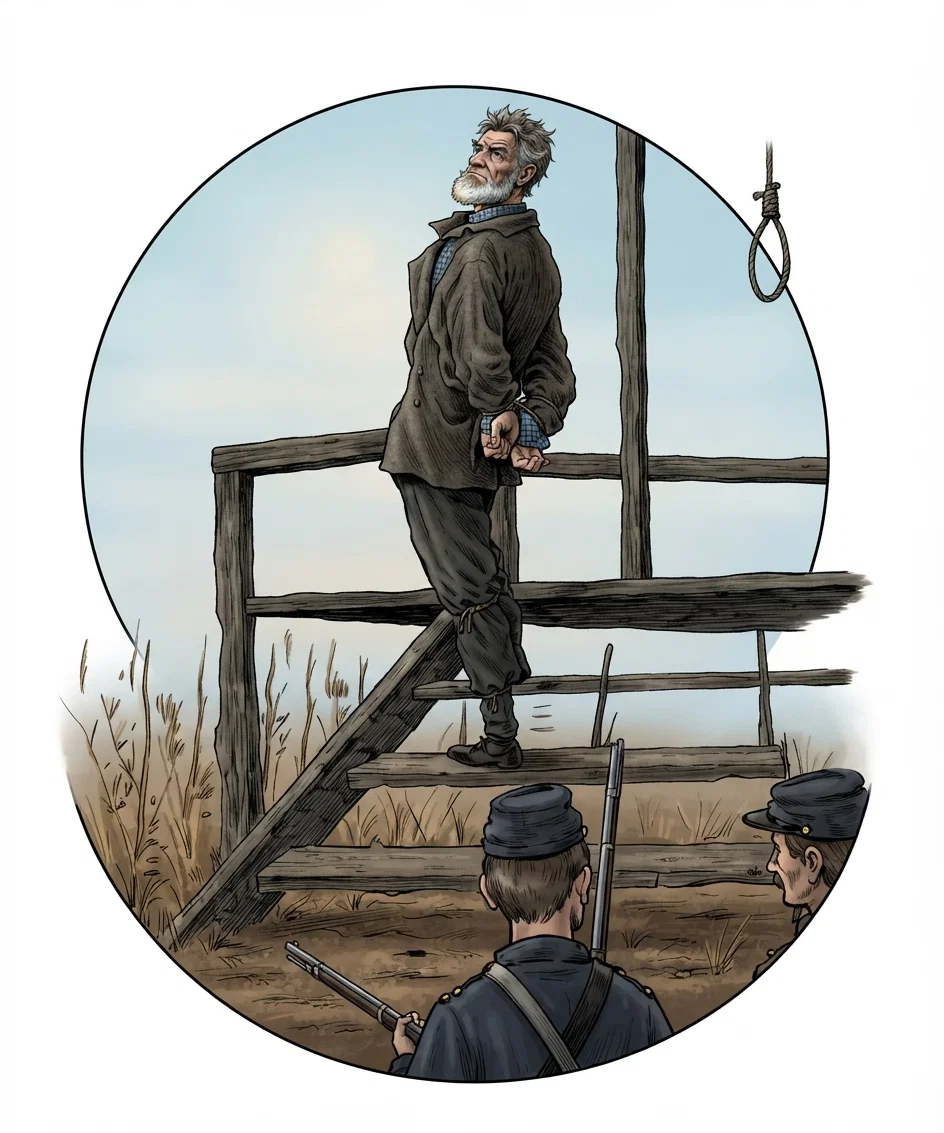
The stock exchange was already a fact before the Civil War. The old nobility of farming had already lost its flavor before the sword was drawn. The free, equal life of the common people was already en route to the pillory when John Brown, with his arms pinioned behind, mounted the steps of the scaffold. The hypocrisies of the exchange, the intrigue of the bank, and the insane glory of the speculator, were already on before the flagstaff of the Confederacy was seen in Montgomery and Richmond.
All of these lamentable and deadly conditions were the fruitage of Greed. Gradually the old poison of servile Europe had begun to work again. Gradually the plague returned. Greed was at the bottom of Southern slavery, and Greed was at the bottom of the rising trade hypocrisies of the North. The trade hypocrisy of the North, offspring of one form of greed, was pitted against the slave tyranny of the South, offspring of another form of the same disease. It was greed against greed. The Southern desire to live in feudal idleness was met by the Northern desire to create a society in which everything should have a price and all men should be buyers. The philosophy of the situation was that one of these forms of greed should extinguish the other. The history of the situation was that the hypocrisy of trade triumphed over the arrogance of slavery.
Greed with his dragons and fiends, and the masterful Spirit of Life with all His angels.
The destruction of the State theory and social polity of the Old South was the opening opportunity for the displacement of what Henry Watterson has recently designated the “idiosyncrasy of liberty”—as tho a nobler sentiment than liberty could ever have possession of the human breast. The result of the Civil War was to make way for a new seed-sowing in which the hand of Greed should scatter its pernicious germs more widely and successfully than at any previous epoch in the history of mankind. Then it was that the sons of Avarice went forth in the darkness and all night long sowed far and wide the seeds of a harvest which has only begun to be gathered at the end of the century.
Alas, what a harvest it is! I am not one of those who would disparage the glory of the age he lives in. I am not slow or dull in recognition of the vast reservoirs of human power which have gathered and are now dispensing their floods of force through all the world. Behold the splendor of the earth, and behold the majesty of the sea! Harken to the footfall of the millions! Mark the white-winged ships! Dazzle mine eyes, O man, with the glory of the cities, and listen, O doubter, to the thunder of the guns! Note the greatness of the nation! Behold how all governments have waxed; how they built their bulwarks and their citadels; how they have stored their arsenals; how they have consolidated their powers. Glance over the landscape of the world and see the shining spires, the double bands of steel, the long, smooth pavements, the wide viaducts of trade and travel, the flying sheets of intelligence that whiten the dawn and retard the twilight of every day. Behold the apparel of the sons and daughters of men. They rob the mulberry groves of the Ottoman Turk for the summer silks, and the wild creatures of the Arctic Zone for the fur cloaks of winter. Mark the habitations of men. How splendidly they are adorned! In them wealth has purchased everything, and with it has decorated both hall and corridor. Behold the tables burdened with viands and fruits and wines. There is ease; there is leisure; there is luxury. Than all this can anything be better and more glorious?—Yes; one thing is better and more glorious—Freedom! Yes; one other thing is better and more glorious—Equality! And still one other thing will be better and more glorious hereafter—the Brotherhood of Man!
the stern onset of the Man-angel with the Man-dragon
when John Brown mounted the steps of the scaffold,—
This one prophecy is historically certain. The future has in store for the human race one of two goals. One of these goals is an Empire supported with the sword, built on gold, nourished by the liveried commissaries of Greed, and administered for the few with the enslavement of the millions. The other goal is the Co-operative Commonwealth, under that democracy of man which was declared aforetime by the Good Revolutionist of Nazareth, exemplified in the free States of the Greeks, and believed in through all the Middle Ages by the sturdy Teutons of the North of Europe. This is the single alternative before mankind,—democracy or despotism. The former springs from the free spirit and aspiration of man, and the latter is the gilded progeny of Greed.
It is said openly at this day that Commerce, and not Liberty, is to be the idiosyncrasy of the twentieth century. It is for the sake of trade that human society is to be translated out of freedom into glory. The scheme contemplates nothing less than the creation of a world-empire founded on the ruin of all local institutions, all individual initiatives, all personal rights, and bound together simply by the ties of commercial advantage. And this is the first great gathering in the Harvest of Greed.
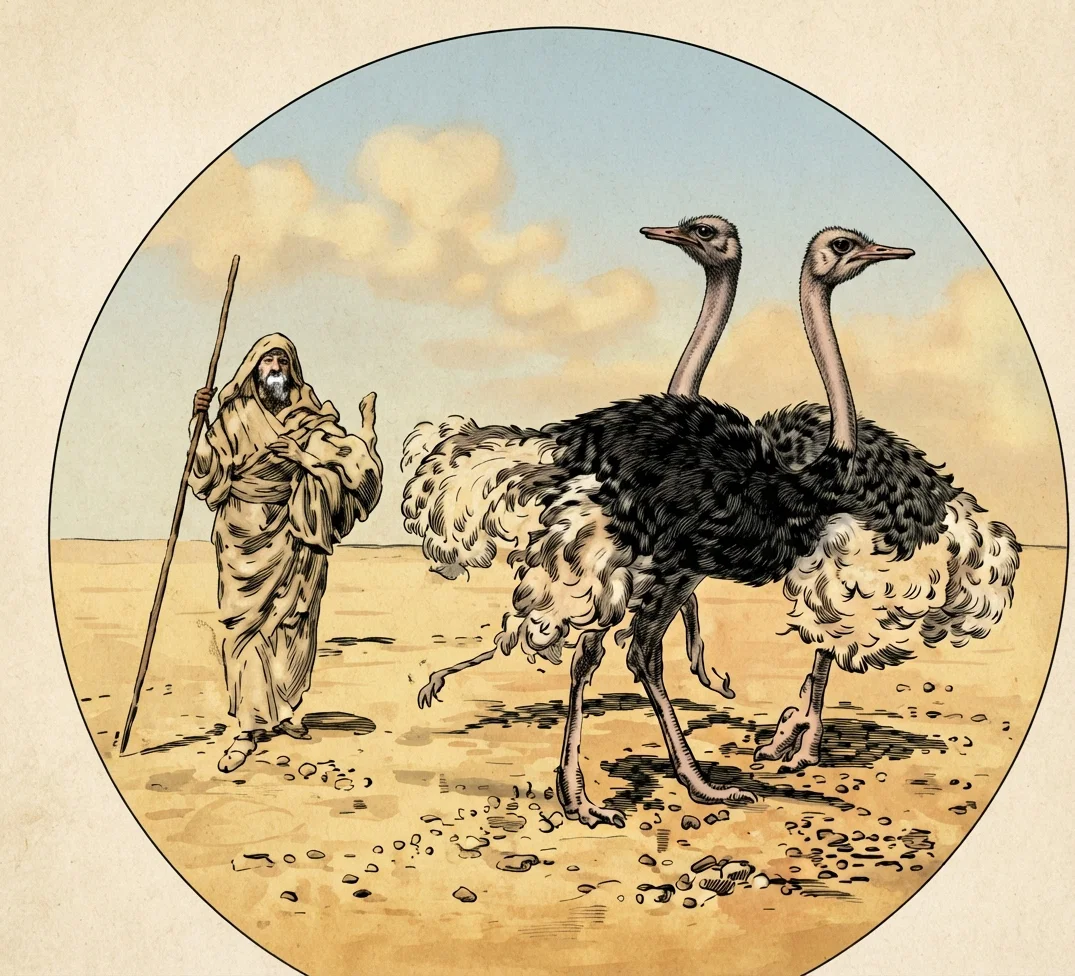
After the Revolution of 1776 we were not satisfied with liberty and independence. After the Civil War we were not content any longer to follow the primary industries and beautiful handicrafts by which our fathers became fellow-citizens and equals in a Commonwealth of Right. We made the fatal discovery that wealth can be accumulated more rapidly in the secondary and tertiary pursuits than in the noble pursuits of production. We found out that getting rich is difficult in the field and orchard, but expeditious in the streets. We adopted the principle that a sufficiency in this world is not enough. We proclaimed superfluity as the end and aim of life. We made it necessary that the sons of the desert should pluck ostriches in order that woman may be respectable. We made it necessary that man should not have pleasure until he has ravaged the Kimberley diamond mines, and that he should not be “honorable” until he has bought an office. We made it necessary that society should learn the speech of an artificial life, should commit a code of inane platitudes, and convert hypocrisy into a fine art before a decent method of intercourse should be established. We poured oil on the fires of material ambitions, and disparaged the ambitions of the mind and heart. Not content with the existing crop of ergot, we scattered new germs of greed from the Penobscot to the Platte—and then sat down to await the harvest.
The seed of our social and national insanity has now germinated and grown to full stalk and efflorescence. The harvest is at hand. We have seen that the first Harvest of Greed was despotism—the dominationof the few over the many—the renunciation of democracy. The second fruit of the harvest is the suppression, or the attempted suppression, of the intellectual life.
Time was when the intellectual life was the glory of these our lands of freedom. Time was when the greatness of the mind was the greatness of the man. Time is when Greed, fearing the assagai of intellect, contrives to choke it into silence. Time is when the organic forces of society offer immense rewards for servility, and breathe out threatenings against all mental and spiritual insurrection. There has not been another time in the history of mankind when the organized agencies of civilization were turned so powerfully and so craftily against free thought, free speech, free literature, and free manhood.
that the sons of the desert should pluck ostriches
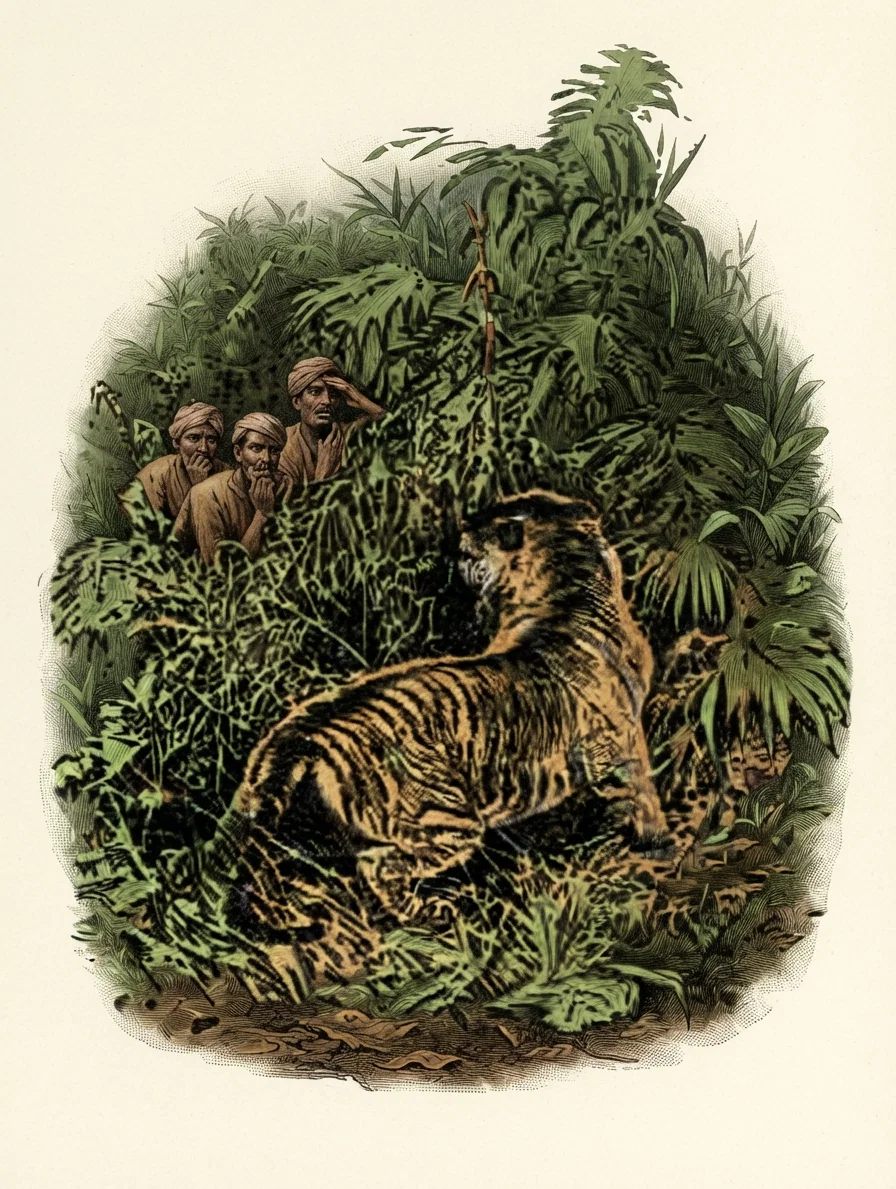
The weeds of Greed are growing high. They are so high that man gropes in the jungle and fears to speak lest the echo of his voice shall arouse the enemy, who never sleeps. Out of this attempted suppression comes paralysis. Only the strongest of the strong are able to stand up and defy the assailants of freedom. And yet freedom is the condition of intellectual excellence in all the world. The human genius flourishes only under conditions of free initiative and equality of rights. All the great intellectual work has been done in epochs of emancipation and reform; it has never been done in the epoch of glory and retrogression.
This is the law of life: He who surfeits does not soar. The intellectual and spiritual age of man is the age when moderation reigns and when Greed has not yet been gratified. There never was yet in human history a time in which the present politics, economics, and social moods of the world were prevalent, when the human mind accomplished great works or dreamed of a glorious future.
The suppression of the intellectual life of men, of peoples, of races, comes swiftly in the wake of surfeit and glory. Art and literature flourish in the age of the primary industries; they languish in the age of commerce. Tyre and Sidon,—all the Phoenician States and the maritime States of Asia Minor,—perished without a book; for trade has no history. Egypt, when she became a maritime power, lost the history which she had made in the days of her independence. So also did Greece lose her splendid ascendancy when her commerce and conquest in the Alexandrian age took the place of the free and unique life of the great Hellenes. Socrates knew well enough how to plant fig orchards and how to gather the fruits; but if any one had proposed that he enter trade, he would have laughed an immortal guffaw, to be heard for centuries.
The age of Shakespeare was not the age of Disraeli. The one was the greatest genius of the world; the other was a jester, a literary mechanician. The age of Irving is not the age of Gould. The two men sleep in adjacent dust. The tomb of the latter is glorious; the tomb of the former is humble. The former was a prophet of humanity; the latter was the Ghengis Khan of Greed.
Greed fills the granaries of the world with the threshed-out hopes and virtues of mankind. Greed has hedged the way of aspiration and made the sincere truth of life read like a lie. In the lexicon of gain, truth and falsehood are the same word. In the Decalogue of Greed, the word not is nine times omitted, and in the fifth commandment the not is inserted. In the New Testament of Greed, the place of the Sermon on the Mount is marked only with a foot-note, which reads, “Omitted for business reasons.” By Greed, the Declaration of Independence and the Rights of Man have been placed on the Index Expurgatorius; and by Greed the Farewell Address and the Emancipation Proclamation are declared taboo.
By Greed the free, outdoor, industrious life of the American people has been converted into a life of turmoil, beginning in competition and ending in fraud and faro. By Greed the great palaces of the avenue have been substituted for the humble homes of the people, and by Greed, the doors and windows of the palaces have been nailed up, while the occupants have gone off yachting to Norway and Venice. Within a single square mile of the New York City Hall, more than three hundred thousand human bodies are left to swelter, and three hundred thousand human souls are left to starve, through all the burning months of summer, while the cool sea washes but a few furlongs away, and the hills of Westchester are green, and the sky bends blue over the Tappan Zee and the Catskills.
Poverty, misery, filth, ignorance, degradation, depravity of life, and dishonor in death—such is the Harvest of Greed.
Greed has a prince for his son and heir, tramps for his grandchildren, and brigands and anarchists for his posterity.
They are so high that man gropes in the jungle and fears to speak lest the echo of his voice shall arouse his enemy, who never sleeps.