SOME SUGGESTIONS REGARDING THE STUDY OF ASTRONOMY.
By Frederick Griggs
IN making suggestions with reference to the study of astronomy, the same as in the study of any other subject, the idea can not be too thoroughly inculcated that it is of great importance to discriminate between the use of an illustration or device in itself, and the child's ability to comprehend the meaning of the symbol, and to form a clear, definite concept of the real thing that is to be taught. A child may be able to go glibly through a certain form, explaining perhaps a diagram which will illustrate the various movements of the heavenly bodies, and yet not have the faintest glimmer of the great educational conception of force, time, or space. This is illustrated in the very vague ideas which children often have of time. They have very little idea of what is meant by an hour, and too often are punished because of a misunderstanding of this very point. They are often permitted to call on some of their little friends, or to do something that is a pleasure to them, involving a definite amount of time, and when they remain away, or engage in their pleasure for a longer time than that specified, they are punished for it; whereas the fault lies in the fact that they have very little idea of the flight of time. I might mention incidentally that children's falsehoods are sometimes brought about in the same way. They do not comprehend what is involved in what they are saying. So parents and teachers need to exercise great care in dealing with children in these matters, so that injustice shall in no way be done them. The very best way to make an unjust grown-up person is to deal with that person unjustly as a child.
The study of astronomy begins naturally in the study of the sun and the moon; for they are the two heavenly bodies which most immediately appeal to the mind of the child. A little babe, long before it can talk, will reach for the moon and derive much pleasure from the light of the sun. Very early in life children can be taught much concerning these bodies; but for parents or teachers to teach the children of them, they must themselves appreciate and be deeply interested in these two great heavenly bodies.
In the very first place I may say that in our search after the facts of astronomy, we must exercise faith in the Word of God, or else we are led into error; so many of the valuable facts which the astronomers give us concerning the celestial bodies are wrapped up in scientific and philosophical theories as to the origin of these bodies, directly contrary to the Word of God, which declares that He spoke the worlds into existence. When we exercise this faith in our talk with the little children concerning these great bodies, there will be developed not only a knowledge of the wonders of the heavens, but a love for God, and an understanding of His dealings with us. Let the parents or teachers possess themselves of all facts possible concerning these celestial spheres.
It will not be found necessary to give fixed lessons to little children concerning what you wish to teach them; for we have only to begin to talk with them about these subjects, when they will ask us an abundance of questions which will keep us continually in search for more facts. Every home should have a globe. One can be purchased for a few cents from any school-supply house or at a department store. It is then very easy to illustrate with the lamp the two movements of the earth, and the causes for day and night and the seasons. It may require a little study to be able to explain concerning the changes which every child will so quickly notice in the moon; but the facts concerning any of these questions can be found in any encyclopedia, to be obtained in every town library if one has not the books at hand.
Professor Jackman makes some most excellent suggestions in his "Nature Study" for the home study of astronomy, which I quote:—
"If an open space on the floor, a few feet square, is available, a spot in the middle should be selected to represent the position of the sun, and ellipses drawn around it with light lines of paint to represent the orbits of the planets.
"The surface of a table may be used if floor-room can not be obtained. Representing the distance of the earth from the sun by 1, the distance of the planets may approximately be represented as follows: Mercury, 1-3; Venus, 2-3; Earth, 1; Mars, 5-3; Jupiter, 5; Saturn 9; Uranus, 20; Neptune, 30. For the purpose of illustration in the following lessons it will be more convenient to represent the earth's distance on a larger scale than that on which it would be practicable to represent the whole solar system. The varying length of shadow should be observed throughout the year. To do this, take a strip of wood two feet long and two inches in width, and to one end nail an upright strip of same width and four inches high. At noon place the long strip in a horizontal position on a north and south line with the upright toward the south. With a pencil and ruler draw a line across the horizontal strip marking the limit of the shadow cast by the upright. Note the date each time such a measurement is made.
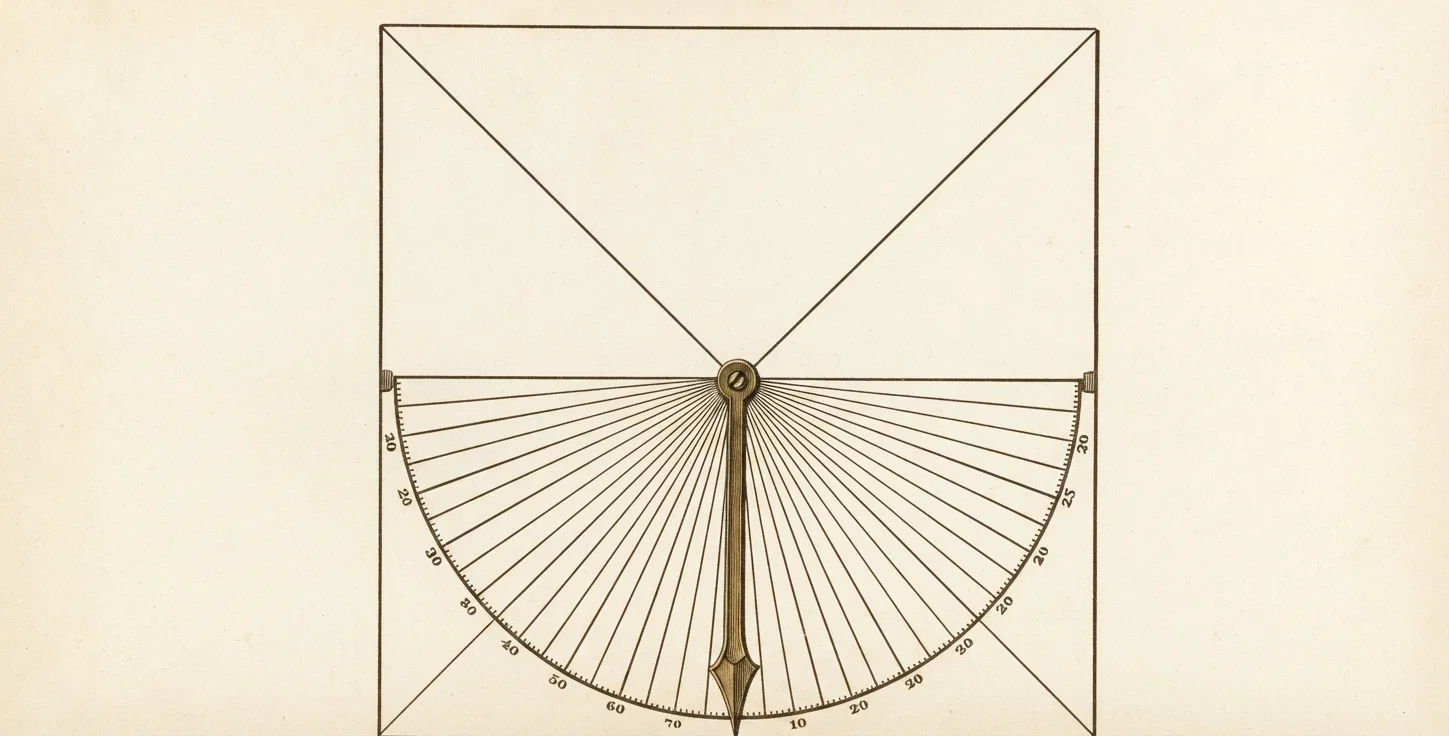
"The angle made by the sun's rays may be found thus: Take a stiff piece of cardboard six inches square, describe upon it a semicircle, and if a protractor be at hand lay off the semicircumference in degrees. Tack or paste this to a piece of wood of same size as the cardboard and one-half inch thick; along the edge of this, which is opposite to the diameter of the semicircle and parallel with it, tack a straight strip of wood half an inch square and one foot long. Cut from a piece of tin or thin brass a pointer three inches long, and swing it upon an axis or pivot fastened at the center of the circle. The pointer will always hang down when the dial is upright. To number the degrees on the dial, place it so that the stick which is fastened to the base will be horizontal, with the dial uppermost. The pointer will then be vertical, and zero degree may be marked at this point. As either end of the stick is raised, the pointer will still remain vertical, and indicate the number of degrees it is raised from the horizontal. To get the angle of the sun's rays, place one end of the stick at the extreme edge of the shadow, and allow the other to rest on the top of the upright which casts it. The pointer will give the number of degrees the sun is above the horizon.
"The most important conception for the children to get in this study is that of time, and a conception of space is next. When necessary, daily practise should be given the children in telling the exact time of day by clock or watch, until they can do so without hesitation. Of course, merely telling the time of day will not in itself give a conception of time, and such exercises as will enable them to grasp brief periods must be given in connection with it. As for example, let them find out how long it takes them to walk home; or, the length of the recitation period, or of the morning and afternoon sessions of school, the recess and noon periods, etc., and they will soon fix in their minds a stock of time units which will be of great service.
I wish again to call attention to the suggestions which I have previously made regarding the use of records. If the child is old enough to write, they will be found very valuable in connection with this study; and not only so, but the habit which every earnest student has of making notes of his observations is thus established.