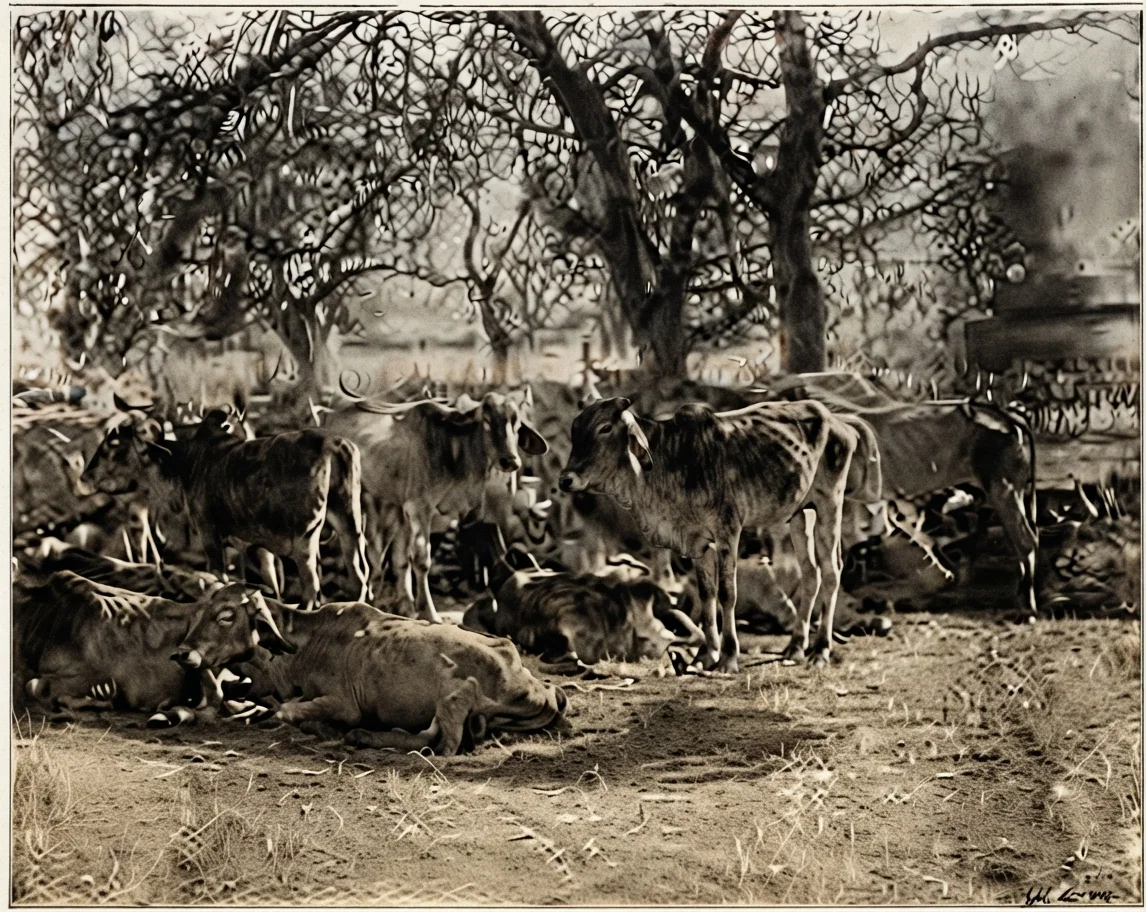
THE causes of famine in India are chiefly these: (1) The lack of rain. Because of this crops fail. The pastures become dry. Man can get neither work nor wages. Want, misery, and starvation of man and beast are sure to follow.
(2) The improvident disposition of the people, common to tropical climates. More than this, the intolerable curse of caste existing renders all efforts of co-operation nugatory. In fact, it precludes all efforts.
(3) Another cause of the famine is the British Government, tho, strange to say, it is to the government's credit. Under the wholly native régime, bloody, intertribal wars and local famines prevented a great increase of population. The people by the thousands were slain by the sword, famine, and pestilence, and of it the world knew but little. But under the British rule the intertribal wars ceased more or less. Efficient measures have been adopted to check famine and pestilence. Life conditions have greatly improved, and the population has arisen under British control from 130,000,000 to nearly 300,000,000 people.
A Problem.
The great question now is, How shall this growth of population be met? How much more may agriculture be developed? What new industrial pursuits can be introduced? Now the government is keeping alive five and one-half millions on relief work. The Famine Relief Committee, who kindly furnish these illustrations from recent photographs, give these statistics:—
Starving Cattle Saved for Plowing.
"The famine area exceeds 450,000 square miles—greater than France and Germany combined, and equal to all New England, New York, New Jersey, Pennsylvania, Ohio, Indiana, Illinois, Michigan, and Wisconsin.
"The population involved numbers over 60,000,000. The number in extreme destitution is from 20,000,000 to 25,000,000, of whom probably 10,000,000 would be in danger of perishing unless aided.
"How far this blessed work shall go on depends largely on those who see this appeal—partly on you."