The Liver

11%

Pacific Press Publishing Company · Oakland, California · Nov 25, 1897

FromSigns of the Times, Vol. 23, No. 46.

Read the full edition

The Liver

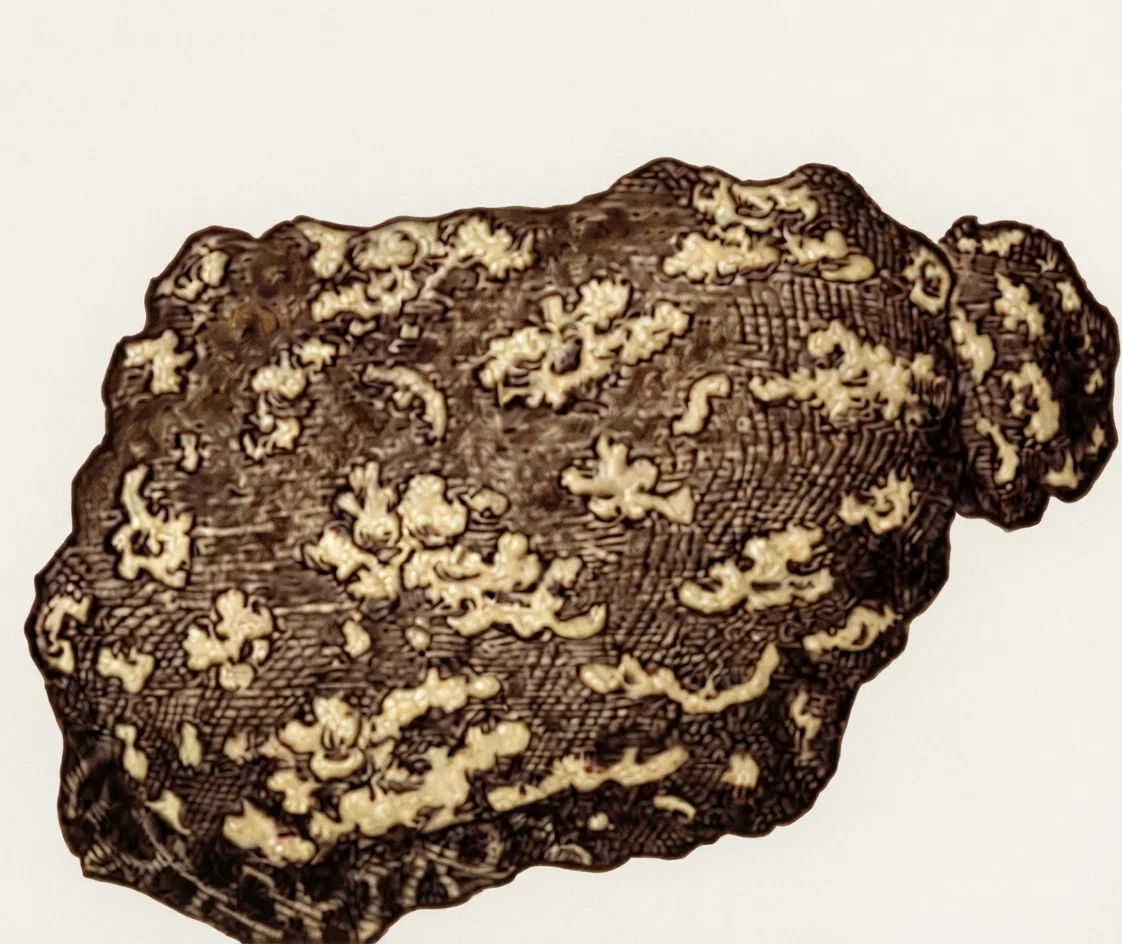
A GIN LIVER.
A GIN LIVER.
THE liver is a wonderful organ which lies close up under the ribs at the right side of the body. It is remarkable as being the largest gland in the body. In a full-grown man, it usually weighs about three and a half pounds. It is of a dark brown chocolate color, and when healthy has a perfectly smooth and even surface. By pressing the fingers up under the ribs of the right side, one can just feel the smooth lower border of the liver, about an inch above the lower edge of the last rib. Notwithstanding the inexcusable and abusive manner in which the liver is treated by many persons, it is a most obliging and useful organ, and it does a vast deal of work for us. The chief business of the liver seems to be to make bile, a golden yellow fluid, which is stored up in the gall bladder, during the interval between the meals, and is poured out into the small intestines through a little duct soon after the digestion of the food begins.
The bile differs from every other vital fluid in the body in being at one and the same time both an excretion and a secretion. It is formed for a double purpose, each feature of which seems to be equally as important as the other. The bile contains a large amount of waste matter, which the blood has gathered up from the various parts of the body, and which the liver has strained out of the blood for the purpose of removing it from the body. In the disposal of these waste and poisonous substances, nature's disposition to economize is exhibited in the highest degree of perfection. Instead of being sent out the shortest possible route, they are poured into the intestine a few inches below the stomach, and made to travel nearly the whole length of the alimentary canal, being mingled with the food and aiding greatly in the
process of digestion. Indeed, there is abundant reason for believing that if the bile were not supplied, not only would certain elements of the food go undigested, but those elements which were digested would not be properly absorbed, and so would fail to nourish the body. The bile also acts as an antiseptic to preserve the food from decomposition while it is undergoing digestion, and is a natural laxative which excites to activity the muscles by which the food is moved along, and brought in contact successively with each portion of the alimentary canal. The usefulness of the bile is so great that even the lowest forms of animal life can not manage to get along without a liver, tho they may be wholly destitute of every other one of the viscera, except the heart and the stomach.
But the liver does other important work besides making bile. It takes an active part in the digestion of certain elements of food. All the starch and sugar which we eat is worked over by the liver, and is converted into liver starch, and afterwards changed into a kind of sugar which can be utilized by the system. Without the liver we could make no use of either one of these important elements of food, and if it becomes disabled, the system at once suffers, through its inability to do its ordinary amount of starch and sugar-making. But the liver has still other important work. It is a sort of rendering establishment, in which many of the waste matters of the body are taken from the blood, and worked over into such shape that they can be removed by the intestines and other organs, which, from their inability to do this preparatory work, without the liver, would be almost totally unable to serve the body to any useful purpose.
Now that we know something about the liver, let us see what alcohol does to it. When alcohol is taken into the stomach, it is sooner or later absorbed, and before going to any other portion of the body, is, by this provision of nature, carried directly to the liver. The liver, in its self-sacrificing devotion to the interests of the body, not only undertakes to remove so much of the poisonous elements as possible, but in addition absorbs into itself as much of the alcohol as it can dispose of in this way, only allowing to escape into the rest of the body such portions as it can neither eliminate nor absorb. This arrangement of matters, while fortunate for the body in general, subjects the liver to greater danger of immediate and serious injury from alcohol than any other organ. This is true, not only of alcohol, but of metallic poisons, and other poisonous substances. The first effect of alcohol upon the liver is that of a paralyzer. When alcohol is applied to the tongue, it benumbs the nerves of taste and feeling, so that the tongue becomes numb and loses its ability to distinguish flavors. When alcohol comes into contact with the liver it lessens the activity of the little cells, stupefying them so they can not perform their proper work, thus leaving the whole body to suffer in consequence. Even a moderate drinker always has a torpid liver. It is this which gives to the white of the eye its dingy hue, and to the skin its dead and leathery appearance. The tippler complains of a brassy taste in his mouth, because his liver is half paralyzed, and can not remove from the blood the impure matters which should be filtered out in the form of bile. Topers are always hunting after some new form of bitters with which to relieve their habitual biliousness.But we have not yet seen the most serious effects wrought upon the liver by alcohol. Here is the liver of a beer-drinker, or of a "moderate" whisky drinker. Notice how enormously it is enlarged.
It is half as large again as it ought to be, or perhaps double its proper size. Its dark brown color has given place to a dirty yellow. The once healthy liver, capable of doing a vast deal of work for the body, has been, through the baneful influence of alcohol, converted into an inert and almost useless mass of fat. This is what the doctors call fatty degeneration of the liver. Enlarged and fatty livers are exceedingly common in wine and beer drinking countries, and are found with great frequency among all classes of spirit drinkers. Here is another liver, the relic of a man who committed suicide by means of the whisky habit. If we cut off a slice, the surface looks exactly like that of a half-grated nutmeg. This is the result of a diseased process set up in the liver by the long-continued use of alcoholic drinks. There are thousands of such livers buried in drunkards' graves every year. It is only now and then that the anatomist finds them, when a drunkard happens to meet with death in a street brawl, or by some accident which makes a post-mortem examination necessary. We have one other sort of gin liver to look at. Here is a regular old bloated sot who has drunk his hogshead of Jamaica rum, besides barrels of liquor, beer, and other drinks too numerous to mention.
The doctors have given him up to die of dropsy. They say that his liver is hardened, and that there is no remedy for his disease. If we make him lie down and push the fingers far up under the ribs of the right side, we may feel the lower portion of his liver, so far up as to be almost out of reach, as it has shrunken down to half its proper size. Instead of the smooth feeling of health, we find irregularly scattered around its surface, nodules, indicating a rough surface. When he dies, some curious doctor will want to inspect his liver more closely, and will take it out. He will find something which looks very much like the picture. The naturally smooth surface of the liver is scattered all over with noles, giving it such a rough, uneven appearance that it has been compared to the sole of an English cartman's shoe, which is filled with hob nails, and so has been called a hob-nailed liver. A man who "takes his whisky straight," and on an empty stomach, is certain to get this sort of a liver, sooner or later, if he lives long enough. If you have a good liver, that attends to its business of bile making, and starch and sugar making, etc., and if you appreciate and respect it sufficiently to care to keep it in good working order during your lifetime, shun alcohol in every form as you would strychnine, or any other poison. J. H. KELLOGG.