In union there is strength. In the right kind of union there is increased power for good; in the wrong kind of union there is increased power for mischief. It is worth everything to know whether we are working with the one or being worked by the other.
There are unions and unions. There is the ideal union in which the leader is working for the good of all, and every member is working for the good of all men, and consequently for the glory of that leader. That is the perfect union—one working for all, and all working for that one, and for all others. That is not of human origin. That is the union which Jesus Christ came into this world to institute among men for their eternal good and for the glory of God.
In the true Christian union there is an eternal principle which the mind of the worldly man can not comprehend. He clings to and works for self and its interests; gains his ends by himself if he can, or else by confederacies with others against those who oppose; but in true Christian union there must be the surrender of self and selfishness. In such a move the worldly man sees only ruin; but in it the Christian finds eternal gain, everlasting riches.
Human Unions.
There are unions in which men bind themselves together under oaths and abjurations, with cruel penalties, to keep hid from the rest of mankind the secrets held in that union and the workings of that union; to keep among themselves and wholly restricted to themselves all benefits which it is in the power of that union to bestow. Such a union is of human origin. Christ had no secrets to hide from the people. The good works that He did were done for whomsoever was in need—the wealthy Zaccheus, the military official, the "teacher in Israel," the impotent, the beggar, the maniac, or the loathsome leper. "In secret," He declares that He "said nothing." Every word of the glorious Gospel He brought was as free to one as to another. The greatest boon that Divinity could bestow upon humanity—eternal life—Christ declared was free to all that would come to Him. So these oath-bound and benefit-restricted unions are not of Him, and are not doing His work.
There are unions in which men band together to bring under their control the industries of the land, forcing out of business all but a favored few who must stand with them in the work they do. Thus they bring into their coffers the entire profits of the handling of that industry, and divide it among themselves without regard to the welfare, the needs, or the wishes of others. When that industry is thus brought under the control of these few, the price of the commodity controlled is forced far above the normal price, and no matter what the needs of the people who require that product, the price must be paid. They may be in the depths of poverty; but this union knows no pity. Therefore it is not of Christ; for He said, "Whatsoever ye would that men should do unto you, do ye even so to them." No member of this union can follow that rule. "Whoso hath the world's goods, and beholdeth his brother in need, and shutteth up his compassion from him, how doth the love of God abide in him?" It does not; therefore this union is not of God. Again: "We ought to lay down our lives for the brethren;" but the members of this union can not even lay down a moity of the inflated price to ease the hardships of the needy brother. God declares Himself the helper of the widow and the Father of the fatherless. This union is the oppressor of both. It can not be—nay, it is not—of God.
There is the union in which men and women covenant with one another to use every means at their disposal to accomplish the financial ruin of some one man or woman or firm—the boycott. In that we have exemplified the cruel extent to which unbridled selfishness and disregard of commonest justice can drive a human being. It is not necessary to say it is not Christian; it violates every principle of Christian treatment. Instead of helping the oppressed, this union lives on its power to oppress, has no aim but the oppression and persecution of the object of its dislike. Reproach is its weapon, and it uses it unsparingly to hound its victim to his ruin. Those who are approved in the sight of God can not indulge in such things. Here are some of the characteristics of such: "He that slandereth not with his tongue, nor doeth evil to his friend, nor taketh up a reproach against his neighbor." Such, He says, shall dwell in His holy hill; but they who do the thing condemned can not be there. Christ's command is, "Love your enemies, bless them that curse you, do good to them that hate you, pray for them who despitefully use you, and persecute you." The boycott is contrary to these principles in toto. The boycotter can not carry out these requirements. The one who is striving to carry out these principles can not be a boycotter. Christianity and the boycott are diametrically opposed to each other; they can not dwell together in the same heart. While one is self-sacrifice, the other is selfishness; while one helps a neighbor, the other crushes him; while one lifts neighbor above self, the other would sacrifice neighbor on the altar of self, and elevate self above all its surroundings. It is anti-Christian on every count.
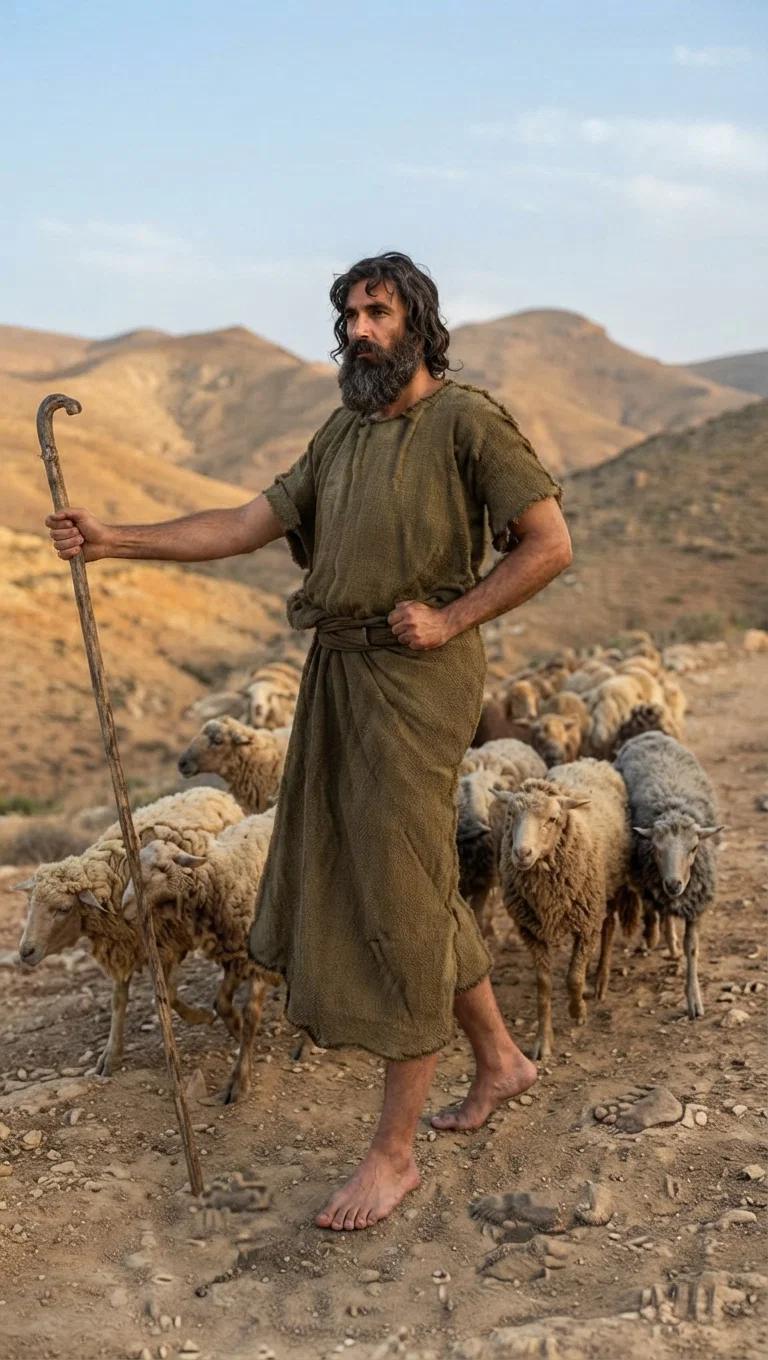
MOSES, a Shepherd. Exodus 3:1.
And then there is that other union—the labor union—in which men band themselves, under pains and penalties, to let no consideration interfere with their own grasping of every pecuniary advantage which they can secure; to drive to the wall every business which they can not control; to prevent every man, woman, or child from obtaining employment who will not, or can not consistently, yield to the control of that combination. It matters not to what extremity the wives or children of its proscribed victims may be driven through the inability of the father and husband to obtain the necessaries of life for those whom he had covenanted to shelter, protect, and provide for. It matters not what institution's hands are tied, what wheels of industry cease, or what homes are disrupted, if the heads of those homes do not wear the badge of the union. If you are a member of that union, strike when the union strikes, boycott whomsoever the union declares "unfair," jeer at the independent worker and do all you can to force him either under your control or out of his job, pay your fine when you patronize an independent firm or an independent laborer, refuse to associate with non-union men, or attend their funerals when they die, obeying this union no matter with what laws of heaven or earth it may conflict,—then you are entitled to all the "benefits" it has to bestow. If you do not choose to do this, its "benefits" are not for you, and all its machinery will be set in motion against you.
This union also is of men; for it opposes the principles of the government of God. He declares, "Thou shalt love the Lord thy God with all thy heart; . . . and thy neighbor as thyself;" but the one who is ruled by the principles of the union can not do this. To do so and act upon it would mean expulsion from the union. The union man must oppose his neighbor who refuses to join; he must refuse to work by his side; he must do his best to keep him from obtaining employment; he must not favor him in any way. The rule of God's government is, "Relieve the oppressed;" and He declares that He will be a "refuge for the oppressed," and a "swift witness" against the oppressor—the laborer who oppresses his neighbor as well as the rich who oppress the poor.
Thus we find in all these human unions, these bandings-together of men, principles that are diametrically opposed to the government of God. In them Self is god, unionism the mode of worship, and all their votaries must kneel before that altar, even though they kneel on the neck of the dearest friend or nearest relative.
Life-Union.
The union which Christ taught is comprehended in the one word, Love. Humanity had severed the cord that should have held it to the Heart of the universe, and infinite Love came down to join again the broken band. God was holding it forth to a world turning its back upon Him, and He holds it forth still. There is infinite harmony in that union. Christ declares: "I and My Father are One;" and again: "That they all may be one; as Thou, Father, art in Me, and I in Thee, that they also may be one in us." "All Mine are Thine, and Thine are Mine; and I am glorified in them." In that union with God through Christ there is no bitterness, no oppression, no envy, no malice, toward any.
Christ illustrates that union by the vine and its branches. "I am the vine, ye are the branches; he that abideth in Me, and I in him, the same bringeth forth much fruit." In that union there is life. It flows from the vine to the branches, and they bring forth fruit as a result of that life union. Separated from Him, the channel of that life stream is cut off; the branch withers, the fruit decays, and the keeper of the vineyard finds nothing but fuel for the flames where there might have been glorious fruit. In that illustration is the story of the Gospel work and its results. There are the two classes: one in union with God, bearing fruit to His glory; one cut off from that union, withering into self and perishing. The union of the human is for a fragment of time, and the birthright of eternity is sold for its mess of pottage. It struggles for self, fights for self, exalts self to be its god, and lies down in the ashes of its idol to wake no more forever. How insignificant, how worthless, how transient, are the fruits of such unions! In the working out, class
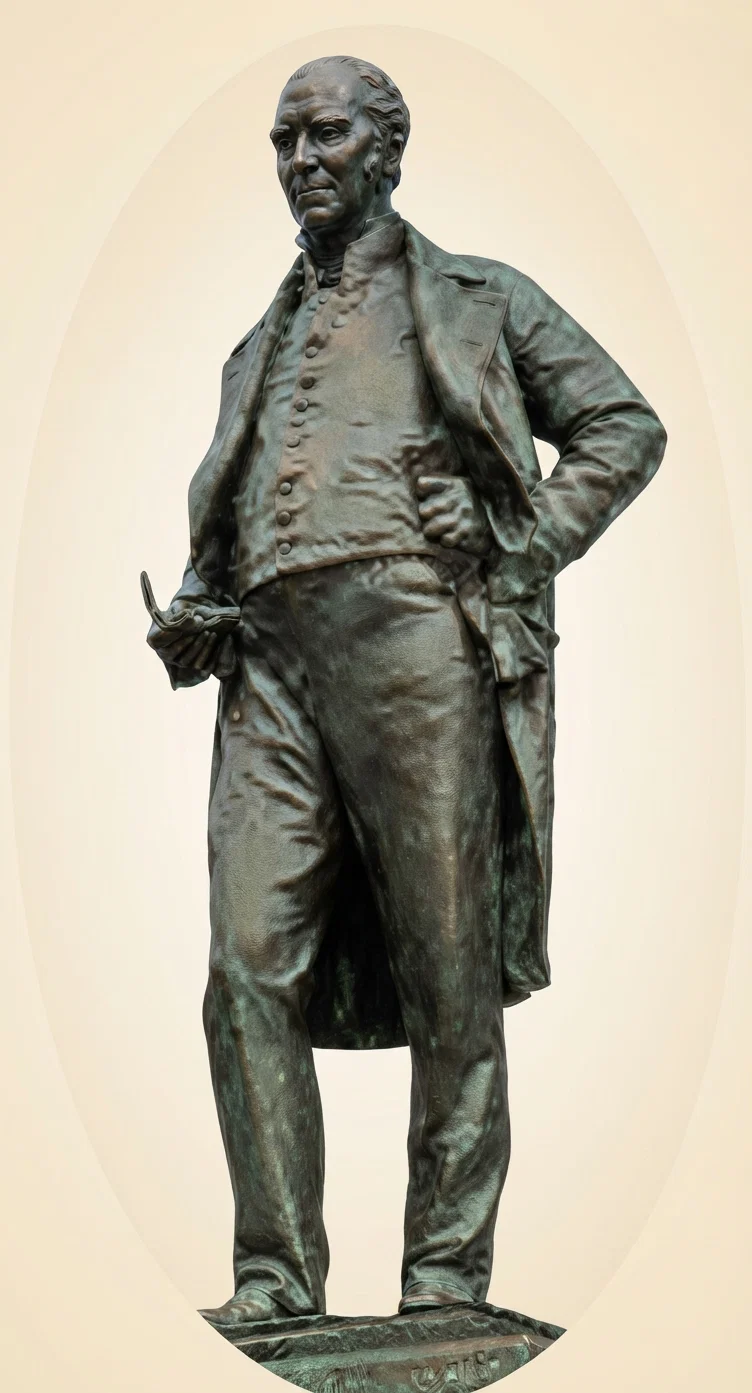
Born in Bordeaux, France, May 24, 1750; died, Philadelphia, Penn., December 26, 1831. Limited education, a sailor, captain, ship-owner, merchant and banker. Left $9,000,000 mostly to charitable purposes. He was miserly in private deal, open-handed in public matters. Nursed yellow-fever sufferers in 1793; bequeathed to hospitals and schools $110,000; to public improvements, $800,000. His principal bequest was for the erection and support of a college for orphans costing about $2,000,000, into which no ecclesiastic or Bible teacher should ever enter.