NATURE has ever been rich enough to afford every human being a comfortable subsistence.
Because of the advent of sin into the world it became necessary for the Father of nature to discipline and educate man by exacting of him systematic labor. The divine fiat, 'In the sweat of thy face shalt thou eat bread,' was not a punitive, but a beneficent, measure. Labor is a means of training, culture, growth, and (other things being equal) virtue. Penury, with all its attendant woes, was never divinely ordained, as is too often supposed. He, who 'delighteth in mercy,' never intended that man should be oppressed and harassed with want.
If, therefore, the wealth of the world, resulting from co-operation of human labor with nature's laws, were justly distributed among men, there could be no actual destitution. Almost boundless are the resources of plain and valley, of field and hillside, of lake and sea, of mine and forest. Yet there has seldom been a time in the history of the race when all the sons and daughters of men were warm and filled and clad and housed;—seldom when there was not standing at the doors of one-fourth of the human family the gaunt specter—WANT. Nearly always has the air under the whole heavens been burdened with the cry of the poor. An eminent historian has recently affirmed that beggary and semi-starvation are the estate of more than four hundred million of Asiatics. But Christ did not decree that the poor should always be with us. He simply foresaw that they would. He understood perfectly how out of the love of money, rooted in the human heart, would spring greed, oppression, and extortion. He foresaw that excessive wealth would steel the hearts of its possessors against the cry of the poor and the voice of justice; that, as a consequence, the 'syndicates,' the 'trusts,' the 'cornerers,' would hold back from the suffering masses the riches of earth and sea and sky. It is in the very nature of avarice to sap from the hearts of her votaries the precious, heaven-born instincts of fraternal sympathy, of brotherly compassion. There is probably no other god that is quite so relentless in gripping the human heart as is that of gold. It finds it flesh, but leaves it stone.
Nations Start Out Relatively Poor.
The truth of these allegations is overwhelmingly attested by the facts of history. The absence of destitution on the one hand and of great wealth on the other has characterized the childhood of every nation of which we have any record. A youthful nation, as a nation, has ever been relatively poor. But few of its people are absolutely poor. There are no money princes and no paupers. Labor is free; enterprise finds no barrier; injustice and oppression are unknown. It is there that every one can make a living, and no one willing to work is oppressed by the fear of want. This absence of destitution, with its concomitant miseries, is owing, not to the comparative meagerness of the national wealth, but to the great fact that what wealth there is, is quite evenly distributed among all the people.
Egypt.
During her first centuries, ancient Egypt knew no beggars, had no almshouses. Some were richer than others, and some poorer, but none lived luxuriously and none squalidly. There was no monopoly of land or of trade or of any phase of production. Every man had his few fat acres, from which he filled his bins and his larder. But 'just as closer settlement and a more intimate connection with the rest of the world, and greater utilization of labor-saving facilities, made possible greater economies in production and exchange, and wealth in consequence increased, not merely in the aggregate, but in proportion to population,' so did poverty become more and more marked. As the villages grew into towns and the towns into cities, squalor and misery, with the vices and crimes which they beget, became more acute and widespread. By some machination, by some adroit manipulation or other, the few really strong, shrewd heads secured a monopoly of the productive forces of the country. Wealth became rapidly concentrated in the coffers of these few. The thousands of small independent holdings of a few choice acres each soon disappeared. The little ranches were welded into large farms, and the large farms in turn into manorial estates.
The augmented wealth of the country was all applied to the building up of a small number of private fortunes. Want and destitution became almost universal. In their wake followed vice, crime, class-hatred, and disaffection. The bands of national unity and integrity became as weak as cobwebs.
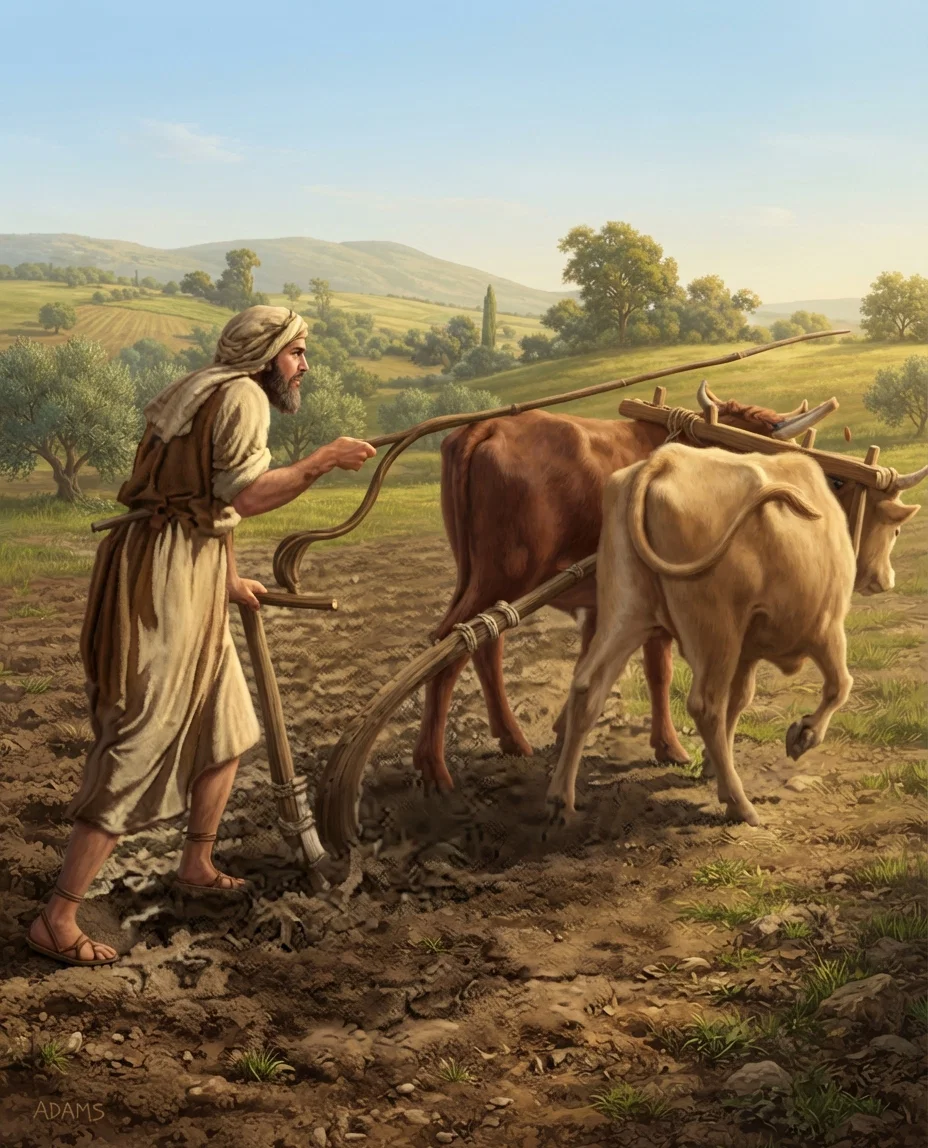
ELISHA, a Farmer. I Kings 19:19.
Her enemies poured in from all sides, and Egypt crumbled into the dust of buried empires. The cause of her inglorious fall was thus epitomized by the eloquent Patrick Henry: 'When Egypt fell, two per cent of her population owned ninety-seven per cent of her wealth.' It was the old, old story of the few oppressing the many by monopolizing all the means of nature and the facilities of art for the production and appropriation of wealth. Barring pestilence, and calamities born of the elements, the people never know the woes of want nor feel the pangs of hunger until the phenomenon of vast private fortunes looms among them. Great wealth breeds avarice, and avarice saps the heart of its sympathetic impulses, and from such a heart spring rapacity and extortion.
Babylon, Persia, Greece.
During the last years of proud Babylon, the opulent and lordly mistress of the world, two per cent of her population were the undisputed masters of her stupendous wealth. Extortion and usurpation had reduced the common people to a state of abject indigence and utter despair. The bonds of patriotism and hope were dissolved. Hence her enemies came 'in like a flood,' and the glory of the 'Chaldees' excellency' was extinguished forever.
Excepting our own country, no people were ever more prosperous, independent, and happy than were those of the earlier period of ancient Persia. Yet when that nation was expunged from the catalog of empires, by the sword of the invincible Alexander, 'one per cent of her population owned all the land. Her people were famishing.'
How free, strong, hearty, thrifty, and patriotic were the early peoples of classic Greece! But unregenerate human nature is ever the same. The few who could began to defraud and oppress the many who could not. Those eminent 'captains of industry' became well-nigh the soul beneficiaries of the industry of all the people. The small farms gradually slipped out from under the feet of the yeoman peasants, and all Greece was soon mapped off into a little more than a score of princely estates. 'Great estates,' said an eminent historian, 'ruined Greece, as afterwards great estates ruined Italy' (Rome). If all the people of Greece during her last years had been comfortably fed, housed, and shod, would those years have been her last years? Would she ever have placed a compliant neck under the iron yoke of Rome?—Never.
Rome.
During the years that Rome carried her victorious arms and bore her proud eagles into all parts of the known world, she had no paupers, no beggars within her borders. All her people were amply supplied with the essentials of temporal wellbeing. It was then that she 'sat upon her seven hills, and from her throne of beauty ruled the world.' It has been said that her iron strength and her Spartan prowess placed the scepter of the world in the hands of Rome. But was it not her primitive simplicity, temperance, and justice that gave her that strength and prowess?
The strength of a nation does not consist in her armies and navies, in her sciences and arts, in her literatures and philosophies, but in the number of her prosperous and happy homes; in the just allotment of her wealth, of intelligence, and of political and religious freedom. But nations, like individuals, can seldom maintain their integrity under the weight of amassed wealth. Having reached the plenitude of her power, Rome became proud, self-sufficient, self-indulgent. Luxury, intemperance, and vice came in like a flood. Wantonness and lechery consumed her virility and dissipated her virtues. Luxury and debauchery engendered waste, and waste led to extortionate exactions. Taxes and rents were soon doubled. 'The man with the hoe' became the unhappy victim of the man with an office or a 'privilege.' Unable to pay these constantly-growing exactions, the peasant soon found his modest acres and humble home wrested from him. He became a vagrant, and often a beggar and a criminal. The little farms were gradually integrated into enormous estates tilled by slaves. The student of history will recall how the Gracchi demanded a re-distribution of the State lands. But the demand was stifled in blood. Great estates created an aristocracy. Aristocracy culminated in imperialism. 'The empire grew corrupt with a few great owners of the soil, in power and luxury, and the masses of the people enslaved and hopelessly poor.'
The landlords were eager to enclose within their grounds, lakes, forests, and mountains. Where one hundred families had lived in comfort, one now found itself cramped. Mr. Duruy informs us that not infrequently the rich man took the peasant's land and paid nothing for it. As the result of foreign conquest
Slaves Became Numerous.
By means of these slaves their opulent owners were enabled to monopolize, not only the more important and lucrative industries, but also the humbler trades. They caused their slaves to be taught all kinds of trades and professions. Every rich family had among its slaves not only weavers, carvers, embroiderers, painters, and gilders, but also physicians, teachers, and architects. Every temple and every corporation held slaves. Hence the free poor of the land had virtually no chance to earn their bread.
Enormous Fortunes.
Having once begun, this process of extortion, of legalized robbery, went on apace, until in Africa six landowners possessed the entire proconsular province. Atticus Herodes boasted that he had wealth enough to pension all Athens; Didius Firmianus that he could buy the imperial purple with ready money; Tacitus that he could pay the armies from5his own purse. Symmachus spent cheerfully, on the festivals of the praetorship, two thousand pounds weight of gold. Robirius found no difficulty to lend, on a moment's notice, one billion sesterces to a fugitive prince.
Because of the exhausted condition of the mines and of the enormous pensions sent out of the country to the Barbarian chiefs, the precious metals became extremely scarce. This very scarcity gave capital a crushing preponderance. Money-lending became the chief and most lucrative business. Interest was so high that in three years the interest would double the debt, and the borrower was quickly ruined. Small holdings were so rapidly abandoned that Philippus, a tribune, could truthfully exclaim, 'There are only two thousand men in Rome who own anything!' The tyranny of concentrated wealth on the one hand, and social, industrial, and economic enslavement on the other, compassed the dissolution of the once cosmopolitan empire of Rome. When she perished, eighteen hundred men were the virtual owners of the known world!
The French Revolution.
The bloodiest social and political upheaval known in the annals of man, was brought about by the same forces. A great thinker has affirmed that during the reigns of Louis XIV. and Louis XV. the intellectual glory of France was in its meridian splendor, yet the same age was characterized by a 'heartlessness in comparison with which the ice of the north pole is warm.' The misery of the provinces during these years was extreme. The tax on salt alone was so high that each year 3,400 peasants were imprisoned because of their inability to pay it. In many communities the peasants were reduced to living on boiled herbs. Want and destitution became universal and gained ground steadily. In 1691, the governor of Burgundy wrote that in all the villages he had passed through, in a journey through that province, he had not seen a single inhabitant who had not begged from him. 'France,' said Fenelon in 1693, 'is only a large hospital, desperate, and without food.' In 1784, an officer reports 'whole families without food; the hungry lie in bed most of the day to diminish their sufferings.' Women burned their fruit trees and wooden bedsteads for fuel.
The weight of taxation was crushing the common people to the earth. This was mainly owing to the fact that the aristocracy, the real owners of the wealth of France, were entirely exempt from paying taxes. Their cupidity made them willing to oppress, and their wealth gave them the power to do so. 'It was ruinous to a peasant to be suspected of not being on the verge of starvation.'
A writer on French history declares: 'One word, 'privilege,' includes a very considerable proportion of the ills from which France was suffering. There were privileges of the clergy, privileges of the nobility, and privileges that had been created to be sold. The one thing common to all privileges was that they benefited the classes at the expense of the masses. The leaders of the church were infidels at heart, allied with the secular oppressors of the people.'
The ultimate fruit that France plucked from the tree of 'privilege' was the Reign of Terror.
Like Cause Produces Like Results.
No unprejudiced mind can deny that the same tendencies have long been operative in our own country. Our aggregate national wealth leaped from one billion dollars in 1800 to ninety billion in 1900. The rate of increase of our wealth during the nineteenth century was six times greater than the rate of increase of the population. Yet one-eighth of the population own seven-eighths of the wealth, or forty-nine times their share. The capitalization of trusts in the United States, including railroads and telegraphs, aggregate one-fourth of the national wealth. A writer in the World's Work, for October, states that it was written a year ago that five millionaires (he names them) represented the control of railroad systems having a total issue of $6,750,000,000 of stocks and bonds. Our country has gone trust-mad. Approximately all the commodities of commerce, all the means of accumulating wealth, are under monopolized control. We are all familiar with the tremendous stress, the awful conflict, which to-day exists between the representatives of capital and those of labor. The independent miners, oil-refiners, and manufacturers are practically all driven from the field.
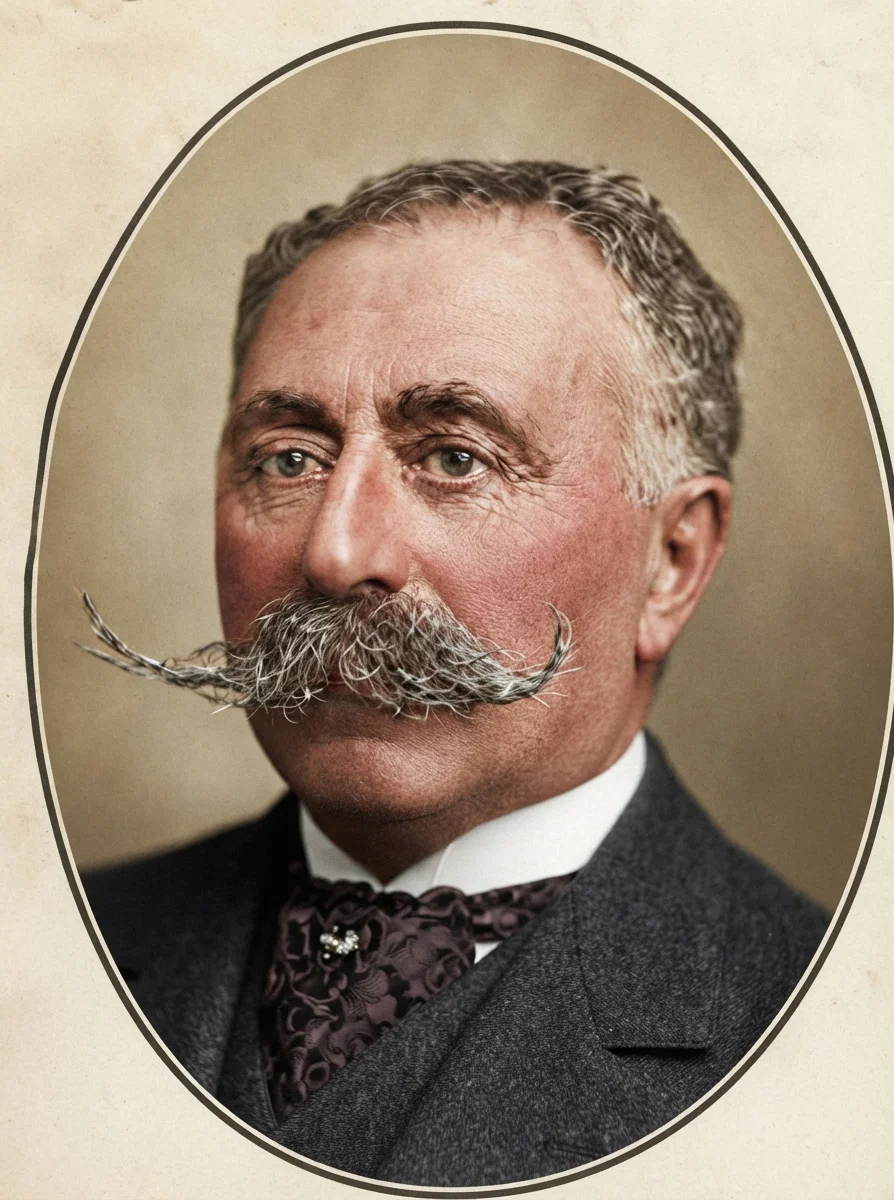
Baron de Hirsch.
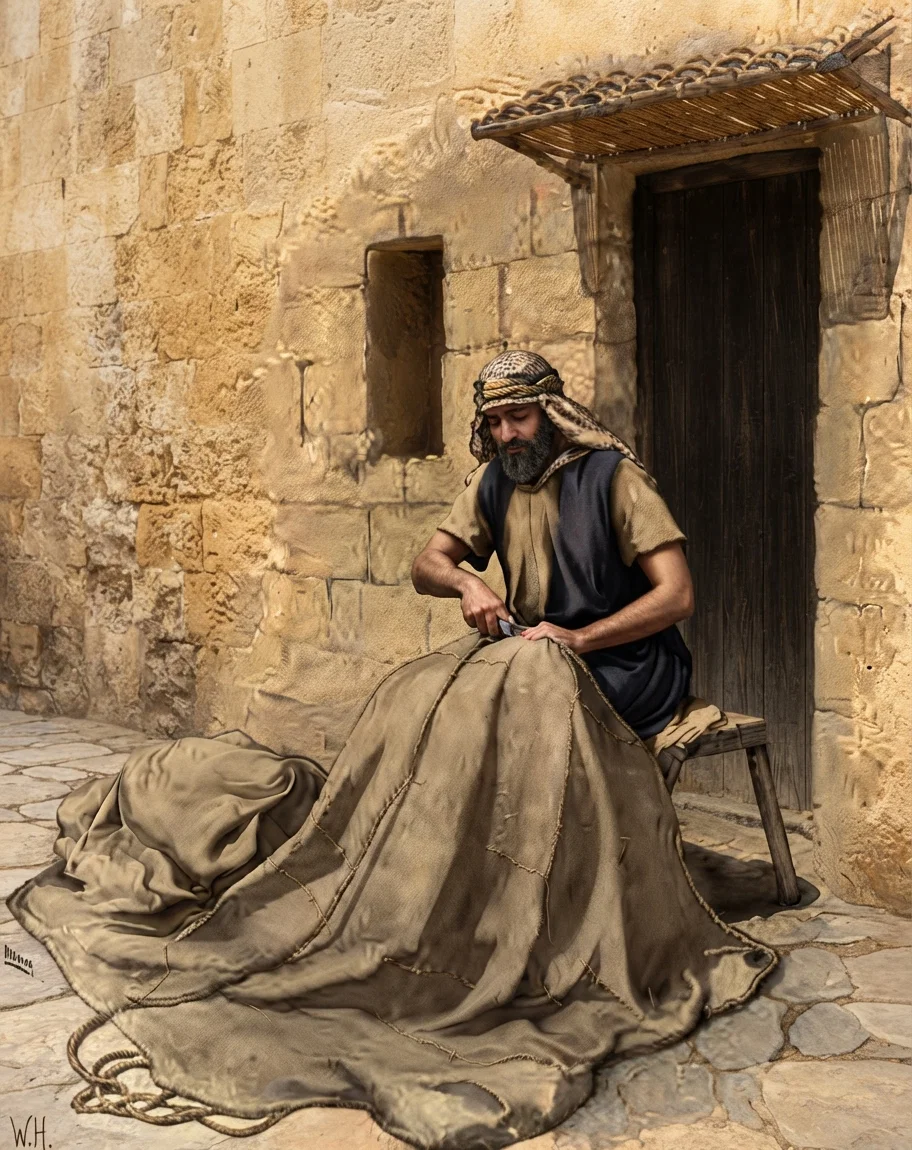
PAUL, the Tent-maker. Acts 18:3.
'Liberty produces wealth, and wealth destroys liberty,' is one of the late H. D. Lloyd's strikingly true epigrams. 'The splendid empire of Charles V.,' says Motley, 'was created upon the grave of liberty.' In respect of the oil trust, Mr. Lloyd wrote: 'It is the most successful of all the attempts to put the gifts of nature, entire industries, and world markets under one hat. . . . It is the best illustration of a movement which is itself but an illustration of the spirit of the age.' 'Rome banished those who had been found to be public enemies by forbidding every one to give them fire and water. That was done by all to a few. In America it is done by a few to all. A small number of men are obtaining the power to forbid any but themselves to supply the people with fire in nearly every form known to life and industry, from matches to locomotives and electricity. They control our hard coal and most of the soft, and stoves, furnaces, and steam and hot-water heaters; the governors on steam boilers, and boilers; gas and gas-fixtures; natural gas and gas-pipes; electric lighting and all the appurtenances. You can not free yourself by changing from electricity to gas, or from the gas of the city to the gas of the fields. If you fly from kerosene to candles you are still under the ban.' 'A new law of industry is rising into view. Ownership of the highways [railways] ends in ownership of everything and everybody that must use the highways.
Florence Nightingale.
. . . The railroads compel private owners to sell them their mines or all the product by refusing to supply cars for their business, and by charging rates for the transportation of coal so high that every one but themselves loses money on every ton sent to market. When the railroads elect to have the output large, they furnish many cars; when they elect to have the output small, they furnish few cars; and when they elect that there shall be no output whatever, they furnish no cars. . . . These high freight rates serve the double purpose of seeming to justify the high price of coal, and of killing off, year by year, the independent coal-producers. What the railroad coal-miner pays for freight returns to its other self, the railroad.'
Through collusion with the railways and the infallibly successful trick of 'rebates,' the organized 'captains of industry' are remorselessly wresting all the great lucrative industries of the country from private or individual ownership and bringing them under their own exclusive (and seemingly irresponsible) control. How aptly the individual trust magnate is characterized by the words of inspiration. He 'enlargeth his desire as hell, and is as death, and can not be satisfied, but gathereth unto him all nations, and heapeth unto him all peoples.'
'The greatest calamity that can befall a nation is the concentration of its wealth,' is the verdict of all history. Long ago that great statesman, Daniel Webster, declared that liberty can not long endure in a nation whose wealth is congesting in the coffers of the few. Are we not following in the wake of the nations of old? 'Whatsoever a man soweth that shall he also reap,' and 'What shall the harvest be?'