THE TARANTULA

17%

Pacific Press Publishing Company · Oakland, California · Oct 7, 1897

FromSigns of the Times, Vol. 23, No. 39.

Read the full edition

THE TARANTULA.

THE tarantula is a large, burrowing spider, which dwells in a shaft-like hole it sinks in the earth. Its appearance is most repulsive, and inspires any one who examines it with a feeling of profound disgust. As it stands, it frequently covers an area as large as the palm of a man’s hand, and over its body and legs there bristles a thick covering of red-brown hair. It may be said that its home is in many lands, but its greatest size is attained in tropical and semi-tropical countries. In the south of Europe, along the Mediterranean coast, it has been known for centuries as the “mad spider,” because the symptoms following its bite are similar to those of hydrophobia. There the peasantry, especially those of Sicily, regard it with mingled feelings of hate and superstitious dread.
They will tell you that the only chance of recovery from its bite is for the patient to commence dancing without delay, and to continue until he falls senseless from exhaustion,—a remedy which, ridiculous as it seems, has something to be said in its favor, when we know that the one danger to be overcome is the tendency to sleep, says the Chambers’ Journal. As long as this can be successfully avoided, the patient is in no danger; but if he gives way, and allows himself to fall into a stupor, then he is likely to succumb, even from the comparatively mild poison of the European variety.
It is in the tropical countries of South America, however, where all forms of insect and vegetable life attain their highest development, that this great spider is most deadly. And farther north, in the provinces of Mexico, where it is quite as numerous, its poison is only a slight degree less dangerous. There we have met it everywhere, and studied its habits. In the orange orchards, the vineyards, and the open prairies we have watched it attack enemies many times its own size, and marveled at the ease with which it overcame them. Even its own kind are not exempt from its fierce onslaught, and we remember once seeing a pair of them meet on the upturned root of a fig tree, and fight a duel to the death—the death of both.
Of man it seems to have no fear whatever, and will attack without hesitation either his hand or foot, if it comes within striking distance. In doing so it stands upon its four hind legs. It opens wide its enormous fangs until the mandibles protrude in a straight line from its face; then, with all the muscular force it is capable of, launches itself forward, sinking them, with a vicious thrust, deep into the flesh of the enemy.—Selected.
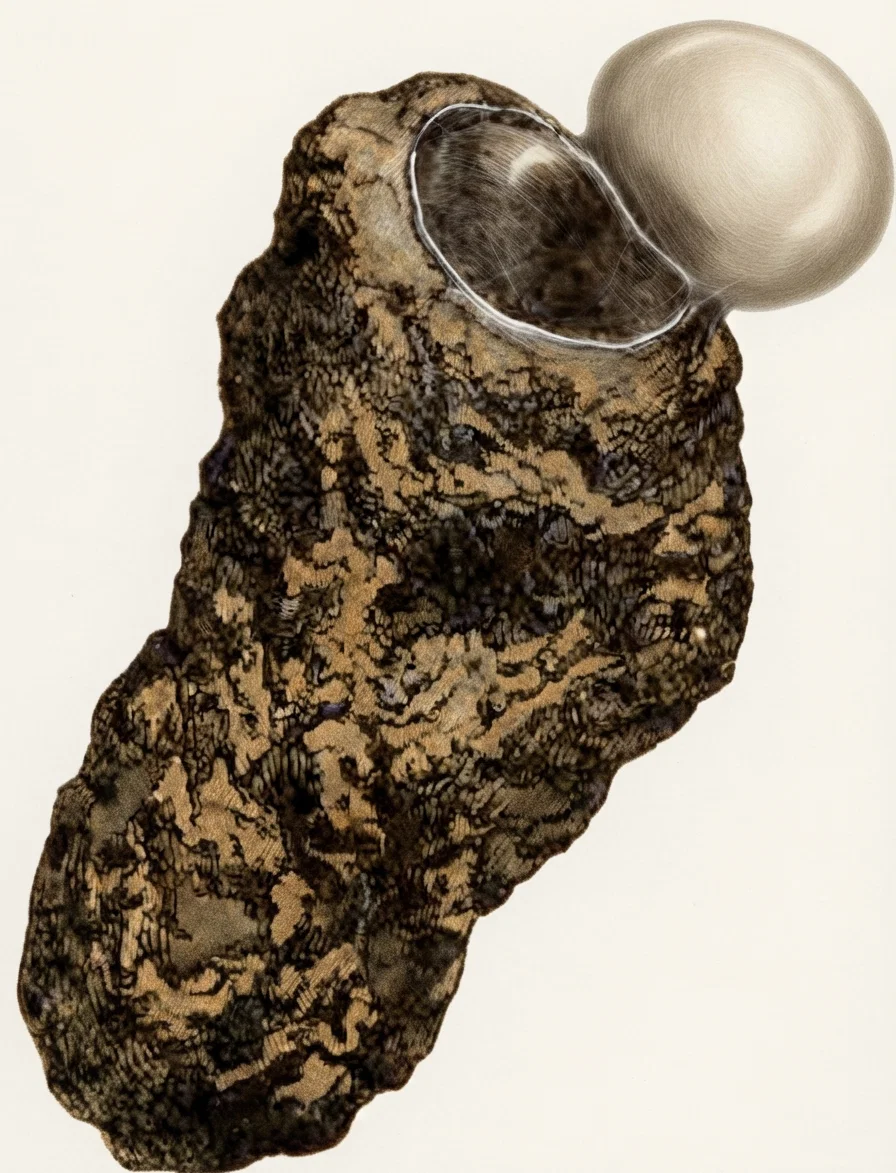
A Tarantula's Nest.
A Tarantula's Nest.