TAKEN UNAWARES

8%

Pacific Press Publishing Company · MOUNTAIN VIEW, CALIFORNIA · Sep 27, 1905

FromSigns of the Times, Vol. 31, No. 39.

Read the full edition

TAKEN UNAWARES.

THE strong man may be taken unawares and overcome. The great army may be taken unawares and defeated. Even the temporary victor may become too much elated and be cast down. So the Christian worker who for a moment forgets his dependence, lays aside his faith, and exults in any achievement as a result of his own effort, is liable to be taken unawares and thrown into discouragement and doubt. Hence the Saviour's counsel, "Watch and pray, lest ye enter into temptation."
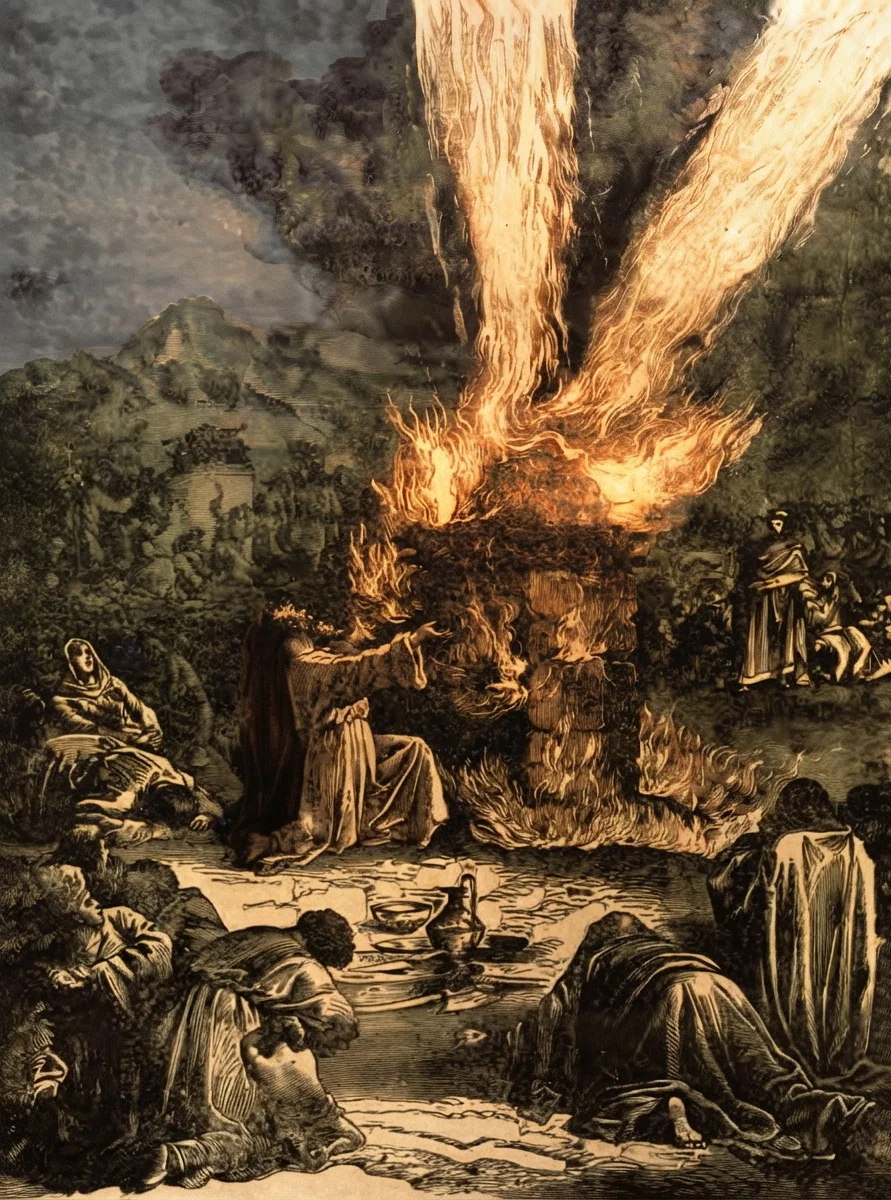
ELIJAH was a strong, courageous man of faith. He was a man mighty in prayer, at whose petition the heavens were closed that it did not rain for three years and six months; and again when he prayed, they gave forth rain in abundance. Elijah had been miraculously fed during the famine, and had himself been the instrument of miraculously providing food for others; he had even been instrumental in raising the dead. He had met, single-handed, eight hundred and fifty priests of Baal, and after proving by a test of fire from heaven that the God of Israel was greater than Baal, he slew the priests of Baal in the presence of the king, who was their special patron.
AFTER thus humiliating the king before his people, Elijah took the position of a servant and ran before Ahab's carriage from the top of Mount Carmel to the gates of Jezreel. It was now night, and as the king went into his palace to relate the story of his own humiliation and the fate of Baal's priests to Queen Jezebel, Elijah wrapped himself in his mantle and lay down for a much-needed rest. He evidently felt that the victory was complete,
and that the morrow would witness the beginning of a great revival in Israel—even the vindictive Jezebel yielding to the overwhelming evidence that Jehovah was God over all.
So, WHEN he was awakened by a messenger from the queen bearing the threat that on the morrow his life would be forfeited, Elijah was taken unawares. He was not expecting such an attack from the enemy just then, and was not prepared for it. Alas! after all, Elijah was "subject to like passions as we are" (James 5:17); therefore, in the surprise and confusion of the moment, he "arose, and went for his life." Taking his servant with him he fled to Beersheba, about seventy-five miles southward. Leaving his tired servant there, he went on a day's journey farther, on into the wilderness country.
HAVING fled to the wilderness, he "sat down under a juniper tree, and requested for himself that he might die." What a strange request, after such a race to save his life! but discouraged people always do the most inconsistent things. In this condition the poor man went to sleep. But God did not forget His servant, nor did He leave him to his fate, even if he had run away at a most critical moment in the conflict with the enemy. As He slept, "an angel touched him, and said unto him, Arise and eat." Looking around, "behold, there was a cake baken on the coals, and a cruse of water at his head. And he did eat and drink, and laid him down again."
AFTER another refreshing sleep, the ministering angel came and fed him again, and he "went in the strength of that meat forty days and forty nights unto Horeb the mount of God." When one is taken unawares, and fails and runs away from the work just on the eve of victory, the best thing for him to do is to go to the mount of God and take a new start. God will help him on the way, if he is still willing to be led.
ARRIVING at Horeb, Elijah found a cave and lodged in it. "And, behold, the word of the Lord came to him, and He said unto him, 'What doest thou here, Elijah?' Sure enough, what was the minister of God doing so far away from the scene of his victory, and the place of the revival for which he had so earnestly prayed and worked, and of which God had given him the earnest? Why was he there?—Because he "was a man subject to like passions as we are," and he was taken unawares.
The Answer by Fire on Mount Carmel.
ELIJAH further illustrated this passion like unto us in his answer to the Lord's query. He began at once to accuse the brethren. He said: "I have been very jealous for the Lord God of hosts; for the children of Israel have forsaken Thy covenant, thrown down Thine altars, and slain Thy prophets with the sword; and I, even I only, am left; and they seek my life, to take it away." Like alldiscouraged people, the poor man thought that, because he had fled from the battlefield, the cause must be hopelessly lost. But God showed him his mistake, and assured him that there were yet seven thousand in Israel who had not worshiped Baal. So the standpoint of the discouraged man is not the place from which to estimate the Lord's forces or the prospect of His cause.
But Elijah had taken up his abode in the mount of God, and there was hope for him. The Lord reinforced him and set him to work again. Elijah was never taken unawares again; God used him to the glory of His name, and to the advancement of His cause, and translated him without his seeing death. In this the Lord has given us two lessons: (1) How to treat a brother who is taken unawares and becomes discouraged; (2) if one should become discouraged, he should not begin to find fault with his brethren, or suppose that the cause of God is lost; but go straight to the mount of God, and take a new start. The Lord does not change. His sure promise is, "Him that cometh unto Me, I will in nowise cast out."