PICTURES OLDER THAN THE FLOOD

5%

Pacific Press Publishing Company · Oakland, California · Aug 13, 1902

FromSigns of the Times, Vol. 28, No. 33.

Read the full edition

PICTURES OLDER THAN THE FLOOD.

(Concluded.)

Discoveries in the South of France.
I HAVE not the space here to show the antiquated methods and doctrines of geology, or how the whole system seems about to fall to pieces from very absurdity. The heading of this article calls for an account of some recent discoveries made in the south of France, and I must confine myself to this one point.
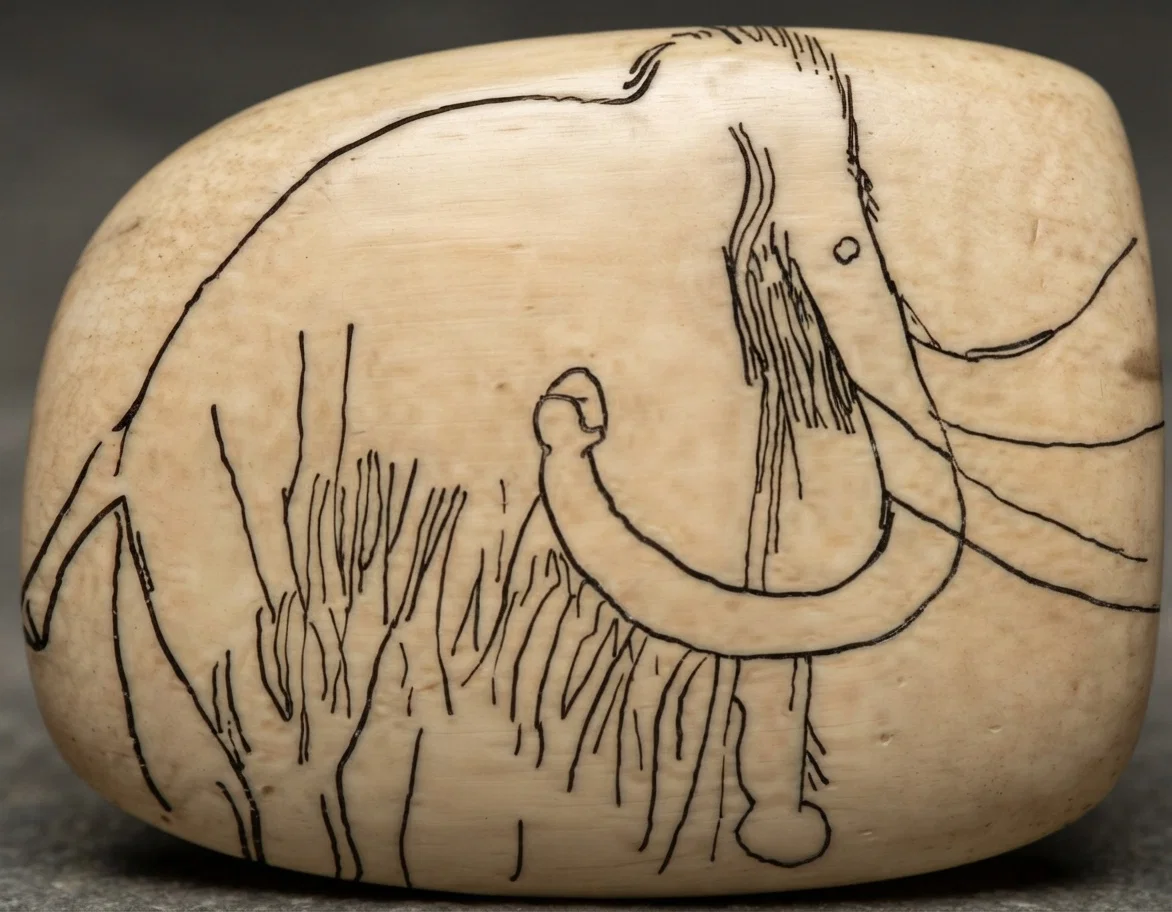
Dana, in his "Manual" (p. 1009), and also in some of his smaller works, gives an illustration showing the picture of a mammoth carved on a piece of ivory which was found in the La Madeline cave a great many years ago. Next they found pictures on the walls of some caves, and not only engraved, but painted. From the first it has been known that these ancient men were almost giants in stature, and even out-of-out evolutionists acknowledge that "their cranial capacity was above that of average Europeans of the present day."—Nature, March 7, 1901, p. 456. But the artistic character of these pictures has well astonished those who persisted in looking upon the men of the "mammoth age" as quite degraded savages.
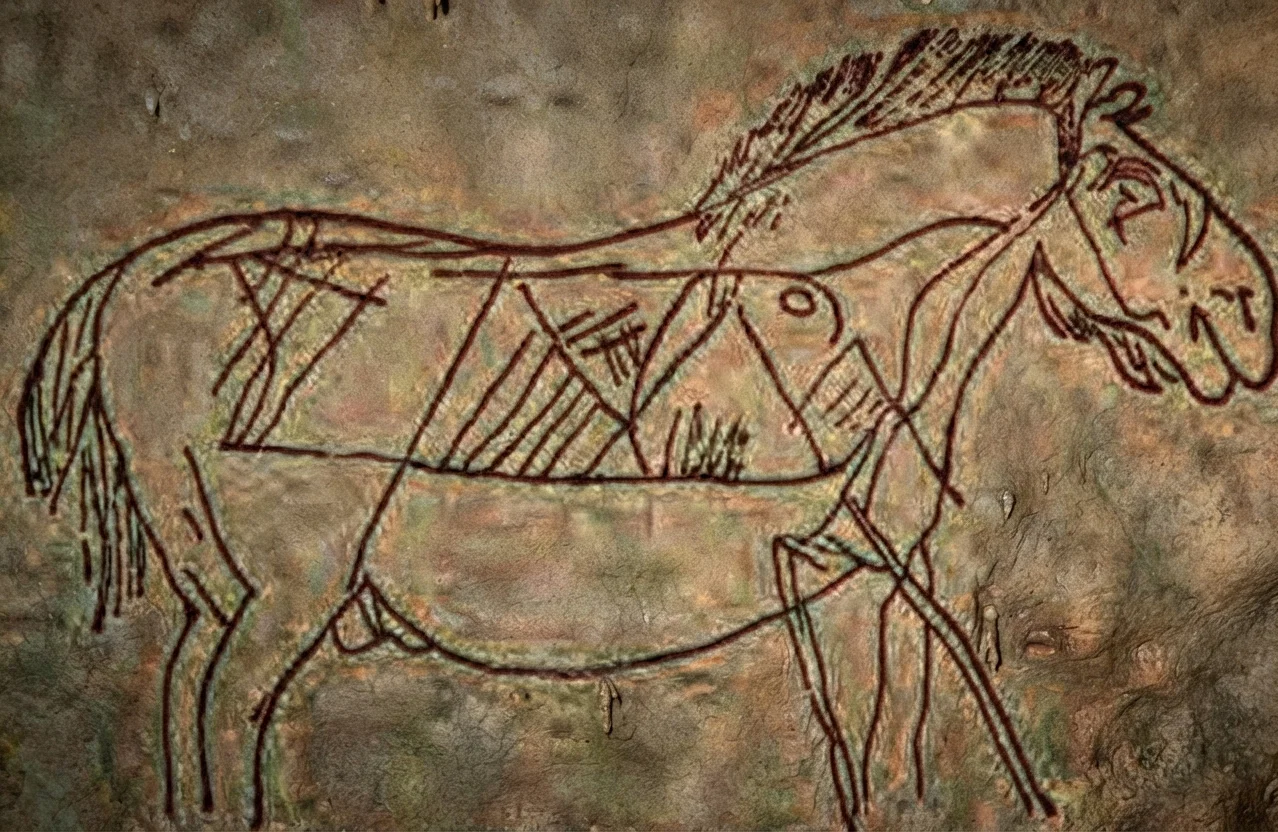
The latest of these discoveries was made about six months ago, and I shall quote from a description by the Marquis De Nadaillac, in Popular Science News, February, 1902, pp. 31, 32. The author describes the first cavern, that of Combarelles, near Tayac (Dordogne), as "a long trench measuring 230 metres in length, m. 1.50 in breadth, and from m. 0.30 to m. 3 in height. The first figures, easily identified, begin on both walls at m. 119 from the entrance of the cavern, and continue to its end. These figures vary considerably in size, while some measure one metre and more in height, others are no longer than m. 0.10. Often they crowd and overlap one another; some, especially at the end of the cavern, are shown of a bluish paint, and covered by a thick layer of stalactites.
A HORSE FROM THE CAVE OF COMBARELLES.
From a few lines about them in Nature, October 3, I learn that the figures in this cave that the lion and hyena, "altho of unusual size," and even the hippopotamus (H. major) lived in great numbers in England along with the mammoth, rhinoceros, and reindeer (See Dana's "Manual," p. 1,004). They have always insisted that the presence of this latter animal is proof that the climate was much colder than at present; but they have failed to show how these other animals could exist even in the present climate of England. The modern lion and hyena, which are admitted to be not only of the same type, but the very identical species that lived in Britain—"altho these modern kinds are dwarfs in comparison," as Dana says—are now found only in tropical or semitropical countries.
Elephas Primigenius-Mammoth.
Especially is this true of the hippopotamus, or "river-horse," which, as Professor Nicholson remarks, could not possibly live in a country where the streams froze over, even in the most severe winters. How, then, could these animals have lived in these northern countries—for England has about the same latitude as Labrador—when the larger part of the North Temperate Zone is said by the geologists to have been covered with glaciers all the year round? The thing is almost too absurd for discussion. No, we have abundant evidence, from the fossils as well as from the Bible, that in those antediluvian days a nearly uniform climate of spring-like loveliness spread over all the earth. It is quite reasonable to suppose that the reindeer has since become adapted by a wise Creator to the terrific frosts of the arctic regions. Or we may suppose that it was originally, like the modern chamois and ibex, adapted to the high mountains of that ancient world. Certainly, with semi-tropical animals and plants over the land, and tropical shell-fish in the seas, there is no room for their imaginary ice-sheets down to the sea-level in both Europe and America.
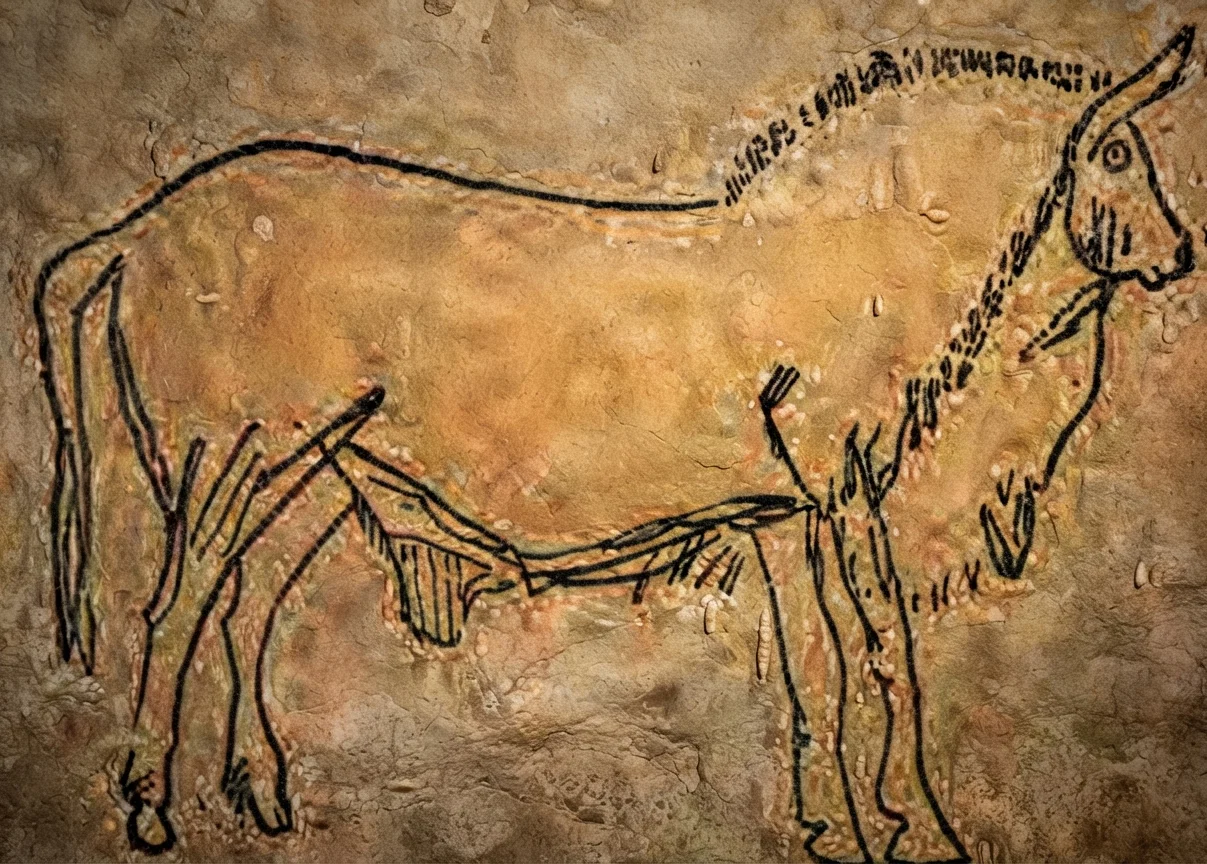
A Gnu,
A Gnu,
The other cave described by this gentleman, is only about two miles from the former, and is much broader and higher—six to ten feet wide, and twenty to twenty-five feet high—tho not so long.
The first animal figurations begin at sixty-five metres from the opening; they are reached by a narrow passage between two walls of stalactite. Their character is different from all we have seen at Combarelles. The figures are represented by slight lines filled with black paint, and often the body and the legs of the animal are entirely covered with the same black paint.
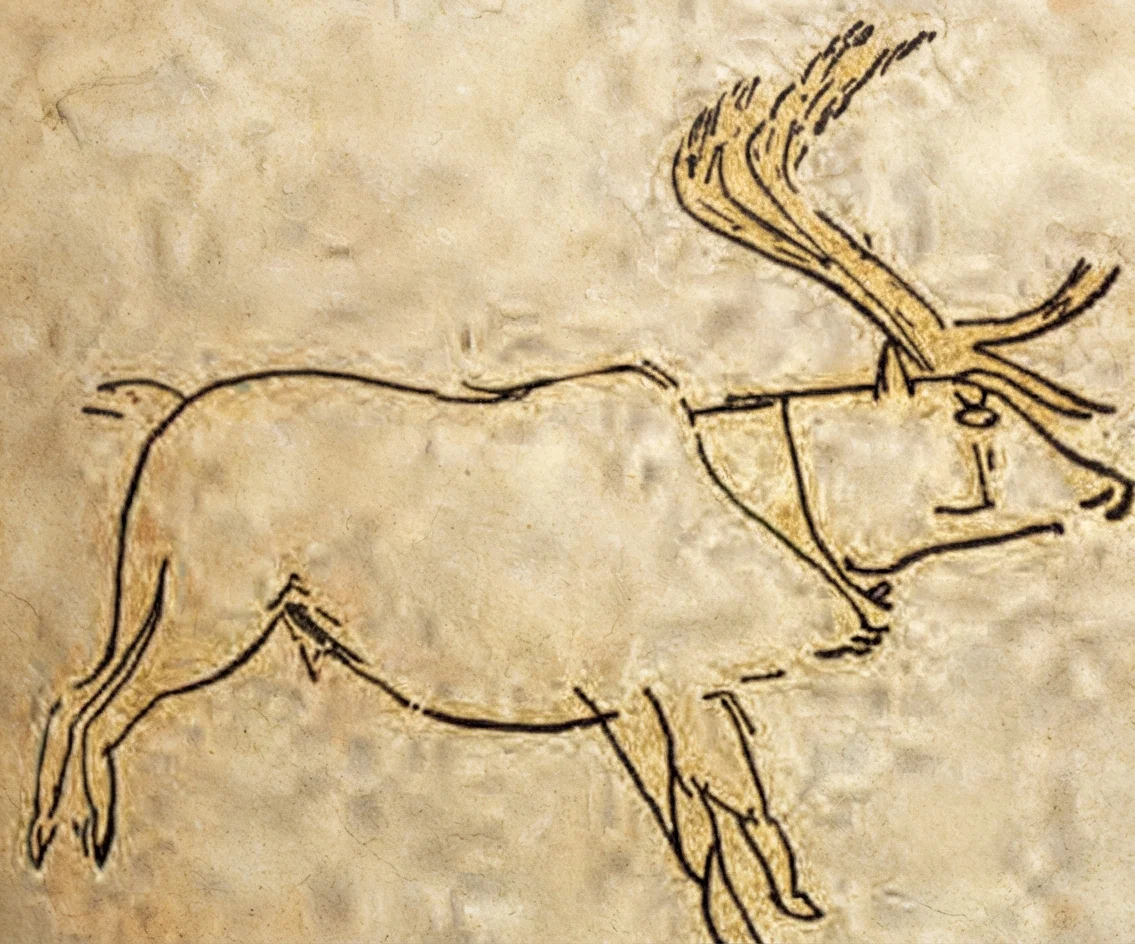
Some of these pictures are quite large. He mentions one of a reindeer "measuring m. 1.50," or nearly five feet, and says that the heads of some of them were "first painted in black, and then in red, obtaining a brownish color. On the others the hind parts were brown, and the heads black. Some are covered by stalactites measuring two inches in thickness."
There are seventy-seven figures in all on the walls of this cave, of which the majority are horned cattle and deer. There are four reindeer, but only three mammoths.
In conclusion he says of the pictures in these caves:"In both cases we are justly astonished to find such artistic performances in times so distant from ours, and in which we did not suppose a like civilization."
I can only say a few words in conclusion. When the reindeer lived in the most southern part of "sunny France," the present home of the grape and the silkworm, and when at the same time lions, hyenas, elephants, rhinoceroses, and even the hippopotami, lived in England, and some of them even in northern Siberia, we know that the present extremes of climate were unknown. All talk about a "mammoth age" and a "reindeer age" succeeding one another, is absurd; for we not only find their bones together over great regions of country, but here on the walls of these caves their pictures are drawn true to life by the same artists, showing that man and these animals lived there together. But when in addition to all this we remember that geology and the Bible alike testify that these conditions were changed by some great aqueous catastrophe, and that at this same time similar events were taking place on all the other continents, we see that this out-of-date system of uniformitarian geology has been fooling us all these years by trying to cover up the evidence that "the world that then was, being overflowed with water, perished." 2 Peter 3:6.
GEO. E. McCREADY PRICE. Tracadie, N. B.
A Reindeer. Copyrighted. Courtesy Popular Science News.