AFTER a stay of one week at Suva Vou, during which several meetings were held, we started in the mission cutter "Cinna" for a cruise among the other islands of the group. It being hurricane season, we were running some risks in taking an extended trip in a craft only thirty feet long; but no disasters happened to us, tho several ships were wrecked a few days before we started. Besides Elders Fulton and Parker there accompanied us Brethren Ambrose and Pauliasi, and two native students, Elaisa and Alipate.
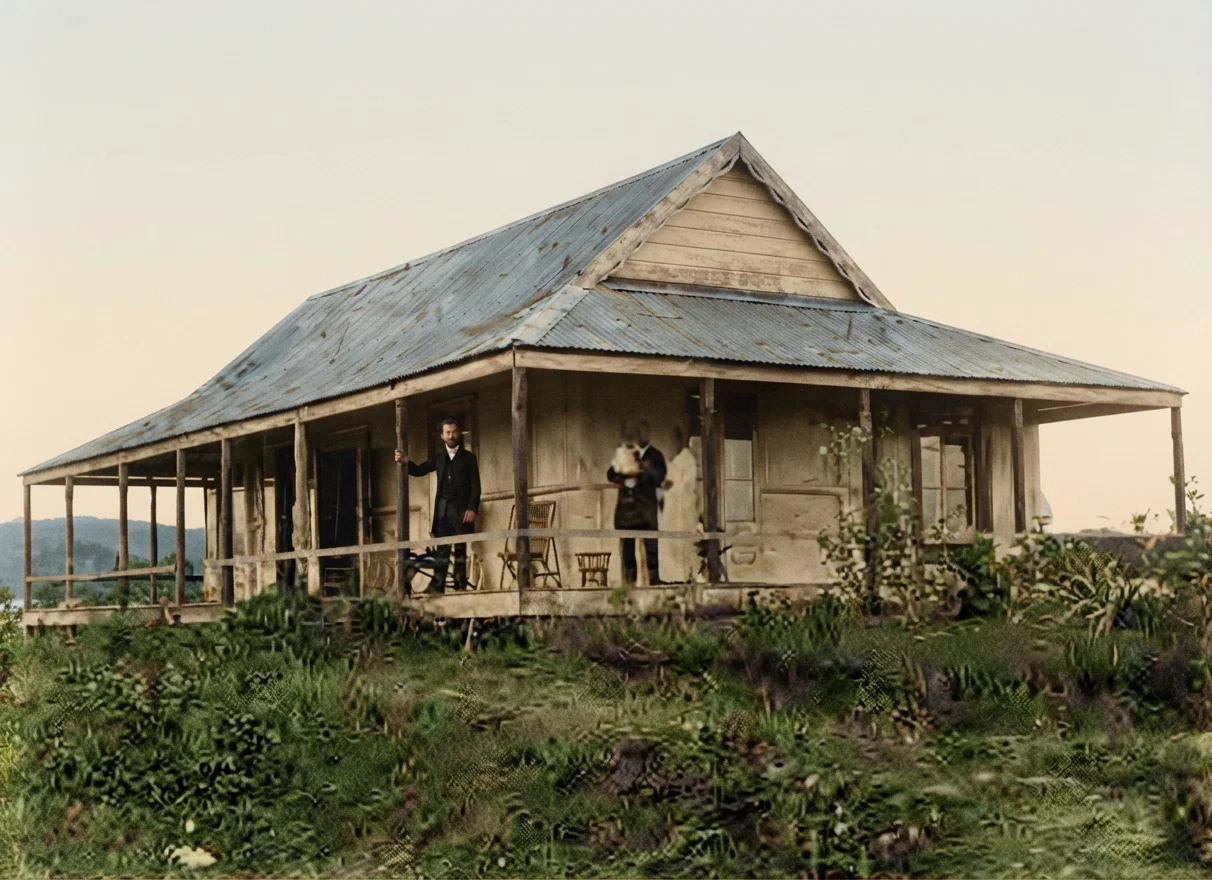
Mission House at Suva Vou, Fiji.
The first night we stayed at Rewa, being entertained at the house of the native magistrate. Here we met one of the high chiefs of Fiji, a near relative of Brother Ambrose.
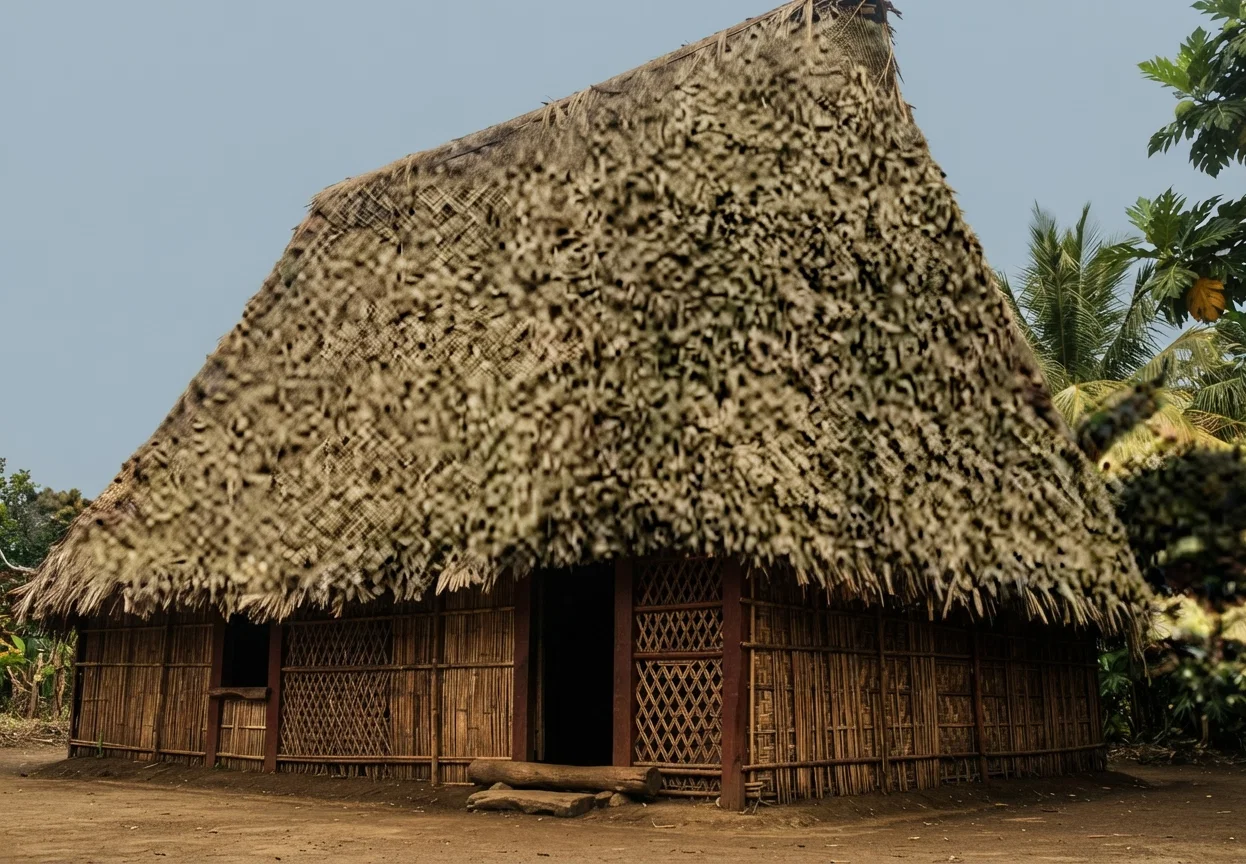
At his house, perhaps the finest native house in Fiji, he and our two native brethren sat up and talked on Bible truths till daylight. From Rewa, which is on a river of the same name, we passed out into the ocean, and at night were at Ovalau, a small island a few miles from the large island of Viti Levu, sixty miles from home, with tired bodies and faces blistered by the hot sun.
Not being able to quite reach Levuka, the old capital of the group, we stayed overnight at a little native village, where we were hospitably entertained by the natives. Having nothing but a bare mat for a bed—not even a pillow—and having to contend with heat, tobacco smoke (for the natives persisted in sitting up most of the night smoking), mosquitoes, fleas, and ants, I slept but little. The native houses are made very tight, and are closed up at night, probably in an effort to shut out the mosquitoes. In this they differ from the houses in most of the other groups, which allow the free circulation of air.
After spending a little time in and around Levuka, where we had spent considerable time on the occasion of our first visit here, in 1891, and finding the wind unfavorable for sailing north to the big island of Vanua Levu, we decided to try to reach Somai Viti—Middle Fiji—before the Sabbath. This division of Fiji consists of several small islands occupying the central portion of the group.
On account of light winds we did not reach our first stopping-place—Batiki—till 11 P.M. Sabbath, and were compelled to anchor outside of the reef till morning, it being dangerous to attempt to go through the reefs in the dark.
In the morning we passed through in safety, and took breakfast at the home of a sister of Brother Ambrose. This meal was served to us as we sat on mats on the floor, and consisted of boiled taro and yams, without plates or spoons, knives or forks. But the food was excellent and plentiful, and we ate it with thankful hearts.
When the meal was finished, a basin of water was brought, into which Ambrose dipped his hands. As soon as he had done that, some of the natives clapped their hands, which I learned was the customary way of showing respect for his superior rank as high chief.
At night Brother Fulton preached to a fair-sized congregation of natives in the house of this lady, and the next night spoke by invitation in the house of the buli, or district chief. Brother Pauliasi, who was well acquainted here, labored in his quiet way to interest the natives in God's truth for these days. There are no white people in this island, and the people were anxious that some of us should locate among them and teach school. Land was offered for that purpose.
From Batiki we sailed to Ngau, reaching there just at dark, in a heavy storm.
Not being able to see the sunken reefs, we struck one of them, but not with sufficient force to damage our ship. The many hidden reefs around the islands of this group are a constant menace to navigation.
Our time here was spent in trying to interest the natives in God's truth, and in looking for a place which would be favorable for a mission location. Among the natives we found one or two old men who told us that they had been cannibals before the introduction of the Gospel. Our next stop was at Nairai, where we found that there was some prejudice against our work on the part of the religious teachers.
Residence of Old Chief Vanua Levu.
Wishing to reach Savu Savu Bay on Vanua Levu, sixty miles north, before the Sabbath, we decided to run the risk of sailing all night, and so left Nairai Thursday noon with a light wind. All night and all day Friday we sailed, and just before sunset found ourselves apparently but a few miles off a point of land extending into Savu Savu Bay. As the darkness came on, a rain-storm arose, which shut off entirely our view of the land.
Just before the darkness finally shut down on us the clouds lifted, and for a few minutes we saw the point of land, then nothing could be seen clearly. Supposing that we were running directly toward the entrance, we kept on our course for some distance, till we thought we were inside the bay, then came about to run behind the point of land; but we found that we were deceived by the darkness, and were still in the open sea, having lost our bearings, with nothing to guide us into the entrance. Had a storm come on, we would have been in a dangerous position. Brother Pauliasi now took charge of matters, and, guided by the faint roar of the seas on a distant reef, took us through the intense darkness to a place of safety, where we anchored at 2 A.M. Sabbath morning.
After a late breakfast we held a religious service in a grove of coconuts, and spent the rest of the day with the family who owned the grove, whom I had met nine years before.
The next day we crossed the bay and spent a few days with some of our old acquaintances. Our native brethren stayed at the home of the old chief of the native village near by, and found a real interest to investigate the special truths which God had given him.
The old chief, who was formerly a cannibal, urged that one of our missionaries settle among them and teach their children. There being no school near, others in the community among the whites also made the same plea. As soon as possible we hope to comply with their wishes. After spending a few days in this place, we started on our return to Suva, taking with us a young man to attend our school at Cooranbong, Australia. This time we had no lack of wind. At 10 A.M. a strong trade wind came up and continued till night. On we rushed like a race-horse, first on the crest of the waves, then in the trough of the sea, now almost on13our beam ends, the spray dashing over us every few minutes. Soon Brother Pauliasi, Brother Fulton, and the young student were seasick, and lay flat on the deck, drenched every few minutes with sea water, too helpless to move.
About noon we passed a small island and for half an hour were inside of the quiet lagoon, which enabled the sick ones to get up and take their bearings. Getting into the open sea again we rushed on, with no opportunity to take our dinner, till, tired and hungry, we put in at a native village on Ovalau for the night. The next morning early we started for Suva Vou, which we reached about 7 P.M., thankful to God for His care over us.
Having now looked over the field, we held daily councils for prayer and deliberation over future moves. It was decided to begin work at Savu Savu Bay as soon as possible; to get translations of tracts and books on different subjects for circulation among the natives; to engage Brother Pauliasi to assist in translation and in work among the villages near home; and to educate native young men to become missionaries for their race.
Brother and Sister Parker have since this been compelled, on account of poor health, to go to Australia for medical treatment, but they hope to return next year to the work which they love.
March 9, in company with the young student, I left Fiji on the steamer "Birkagate," and nine days later was with my family in New South Wales, after three months' absence.
E. H. GATES.