Untitled article

2%

Pacific Press Publishing Association · Mountain View, California · Jan 30, 1912

FromSigns of the Times, Vol. 39, No. 5.

Read the full edition

From the Troubled Land of Sinim
WE wish that we had space to print the excellent articles and reports which we have received through the kindness and energy of our correspondent in China, Mr. F. E. Stafford. He has not only written himself; but we are sure that it is through his zeal that we have received reports from Mr. O. J. Gibson, missionary in Chang-Sha, Honan province; Mr. O. A. Hall, also from Honan province; and Mr. Esta L. Miller, an eye-witness of the battle of Hankow. The very best that we can do is to attempt to condense in one article the seven or eight which lie before us. We do this for two reasons: first, many of the events which they relate have already been chronicled in American papers; and secondly, we have not space for all that has been sent us. Therefore we will do the best we can, under the circumstances, being compelled, of course, to omit much that is of interest, in the hurried, broken narrative which follows.
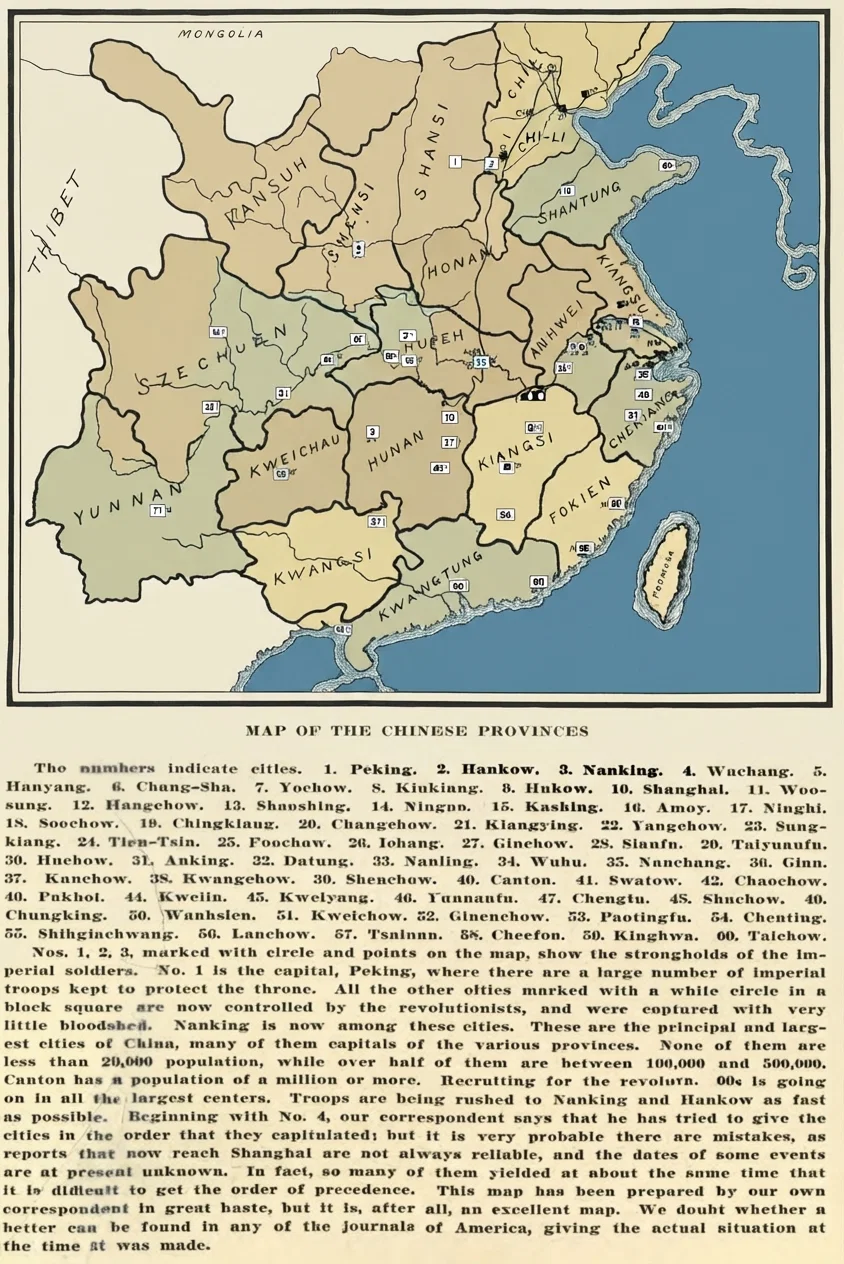
MAP OF THE CHINESE PROVINCES
One thing that will strike our readers as peculiar is that we learned of the proposed revolution, or rebellion, in China even before some of our missionaries did in the interior. Brother O. J. Gibson's report from Chang-Sha tells us that that city was captured by the rebels ten days after the Wuchang uprising. Previous to the time that the revolutionists took control, on account of these reports hundreds had left the city of Chang-Sha, crowding the river ferry-boats to the limit. But the new government had issued proclamations declaring their intention to protect all foreigners and foreign interests, threatening severe punishment to any who should disturb foreigners or their property. This of course gave some confidence. And yet, owing to the excited condition of the people, and the antiforeign spirit which has previously been manifest, nearly all foreigners considered that they were remaining in jeopardy of their lives. What heightened their fears was that there was dissension in the ranks of the revolutionists, especially when Chao Ta-feng, general of the "people's army," who hesitated to take charge of the new government, was beheaded. Many others were killed in the same way; and yet the very day after his death, message was received from Canton stating that Kwangtung province had joined the revolt through the influence of Chao. Finally, when the United States consul advised all to leave Chang-Sha, there was nothing to be done but to accede.
It seemed hard for the missionaries to leave their station, and especially as they were just situated in a new home. As soon as they struck the real war zone they found decided desolation, finally looking upon the smoldering ruins of the native city of Hankow. It was at first reported that many of the 700,000 inhabitants had been slain, or burned; but Brother Gibson assures us that comparatively few lives were lost in the fire. One of the conditions which brought very much unrest among not only the native but the foreign population of China, was the question as to whether the revolution would result in a monarchy or a republic. There is no question about it, that if the Manchus had made the concessions in the beginning that they were compelled to make later, the revolutionists would probably have been satisfied, and the monarchy, tho limited by a constitution, would have continued. But delay seems to have been fatal. The agitation, however, has taken hold of China with a tremendous grip. Other revolutions and local rebellions have found a great mass of people indifferent. This has been marked in America. But not so with this revolution. All, we learn, are taking sides on this question, and two great political parties have been formed already among the revolutionists themselves. On the one hand are the conservatives, or constitutionalists, who favor a constitutional monarchy. They feel that it is the only way in which the Chinese Empire can be saved from a disruption into factions; that the Mongols will go to Russia, the Tibetans to England, and Manchurians to Japan. Others, however—the radical party—hold that the only thing is a republic, and that the republic will be able to hold all China as well.
At the writing of this report, sixteen out of the eighteen provinces were practically governed by the revolutionists; and with such men as Sun Yat Sen and Wu Ting Fang, it has been felt by many that a republic would be a safe proposition. But the great danger lies in this,—that there are strong men in the different provinces, and these provinces, many of which rebelled in and of themselves, synchronous with this movement and yet in a measure independent of it, will desire to see their favorites pushed to the front. Dr. Wu Ting Fang's idea is that the government should be modeled after the United States of America or perhaps the German confederation. Others look to the Australian commonwealth; still others to the Swiss confederation. Even the republican party is divided between the liberals and the radicals. And yet it is felt that these divisions are not sufficiently marked to cause unfriendliness among those who are pushing forward the republic.
The same report tells us that one hundred and fifty missionaries from various provinces arrived in Shanghai that week, and still more were on the way, while foreign consuls have called all the various missionaries from their respective countries to Shanghai in order to insure their safety.
Brother O. A. Hall, of Chowkiakow, of Honan province, tells us of the flight from that city to Shanghai—how closer and closer the danger pressed day by day, until finally the American minister told them that it was advisable to remove women and children as soon as possible. It took them a two days' journey from that city to reach the railway. It being impossible for them to proceed to Shanghai, they went to Peking, and from there proceeded by boat to Shanghai. The boat which they boarded was planned to carry 1,300 imperial troops to Shanghai, but the authorities had received a note from the revolutionists that if they attempted this they would not reach their destination. So the troops were not sent.
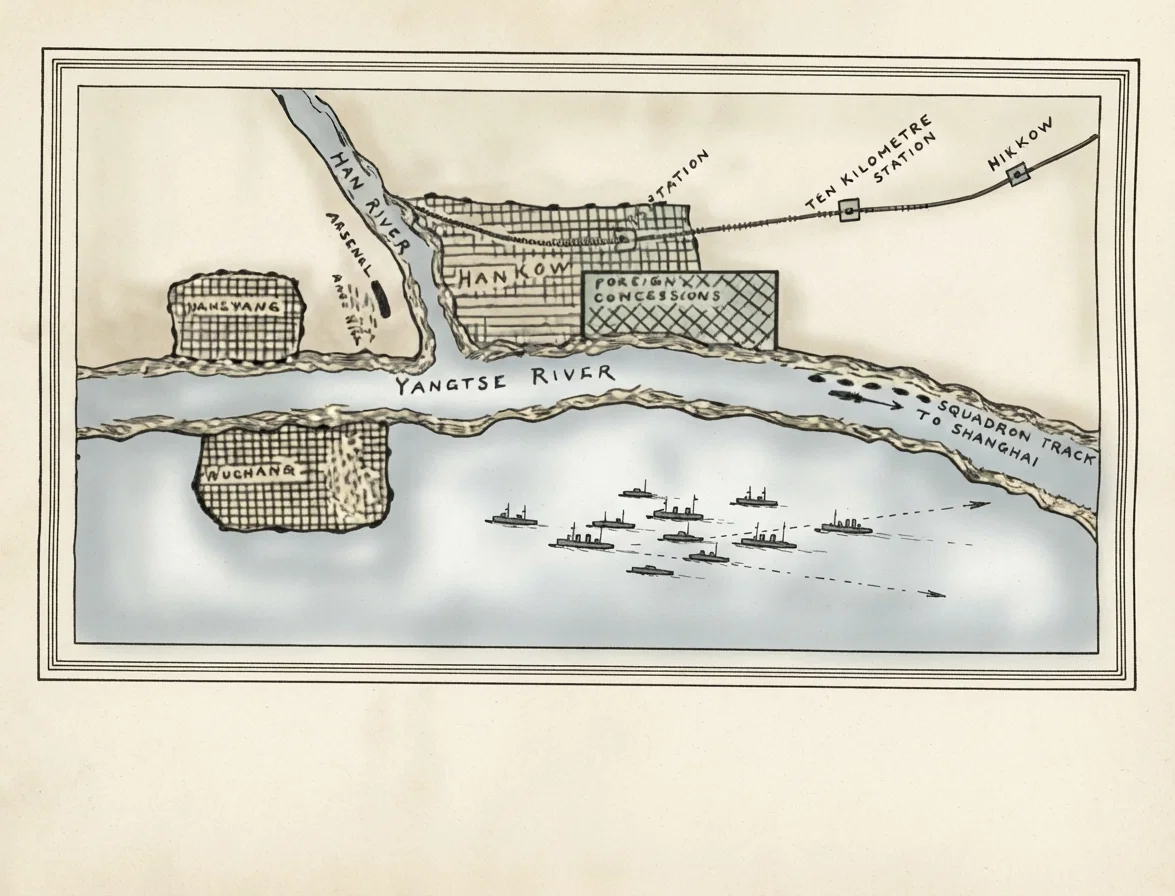
Map of Hankow, Wuchang, and Hanyang on the Yang-tse River where the revolution struck its first great blow
Brother Hall writes under date of November 20, and says that just as soon as there is quiet, or opportunity, he will return to his work in the city from which he was forced to flee.
Under the same date, Mr. Stafford writes again of the defection of the Chinese navy by at least eleven gunboats and one torpedo-boat of Admiral Sah's fleets in the Yang-tse River, near Hankow. All raised the rebel flag together, and were joined by three gunboats from Shanghai, thus making fourteen boats, all men-of-war, to constitute the nucleus of the new navy of the Chinese republic. At that time the old capital city of Nanking was the central point of interest. It was held by the imperialists. The revolutionists were determined to capture it. The viceroy would probably have yielded to the rebel cause, under pressure, altho himself a Manchu; but the old general, Chang Hsun, a native Chinese but loyal to the Manchu government, determined to hold the fort to the very last. He insisted that he must be loyal to the emperor. He declared that he would not only defend Nanking, but would lead his troops on through various towns to Shanghai and bring back those places. He had already beheaded four hundred men who were attempting to establish a new government. Of course he held a strong position, and did not think that it could be carried by the light guns of the rebels.
Writing of Hankow, Mr. Stafford tells us that the British gunboats were lying in the river, and, knowing the poor marksmanship of both revolutionists and imperialists, seemed to have no fear at all. In fact, one of the men on a British gunboat said that he didn't mind so much the shells, except the annoyance that one gave him in striking the water close by and splashing and spoiling a book that he was reading.
Our correspondent also gives us an incident of how an unarmed Chinese boatman sought to serve the revolutionary cause without going to war. Four men whom he rightly suspected to be spies, asked him to take them over to Wuchang. He told them to jump into his boat. They fell to arguing about the price they should pay. He charged them a ridiculously low rate, and the party set out. But when they were out in the middle of the stream, the boatman suddenly jumped overboard, grabbed the side of the boat, and capsized it. The soldiers, driven down by the current, vainly clutched at each other for help, and swiftly were carried out of sight. The boatman got into his boat and pulled back to the river bank, but little worse for the wetting, while the spies were all drowned.
Another of the uncertainties was the position that was taken by the noted Chinese Yuan Shi Kai. He was called back by the imperial government, as our readers all know, but for a long time he took no decided stand. While seeming to hold for a constitutional monarchy, he seemed also to have more or less sympathy with the revolutionists. And for aught we know he stands there at the present time. Evidently he does not want to make any mistake as to the stand that he shall take. But during all this hesitancy on his part, he is losing the wonderful confidence that all China, nearly, seemed to have in him; while on the other hand Dr. Wu Ting Fang, former minister of the United States, has been gaining in strength and interest. Dr. Wu also wishes it understood that the rumors which have gone out that the leaders of the republican movement are divided is not true, but that perfect unison exists among them. All are aiming for one common purpose. Monarchy can never be considered by them; it must be a republic. This well-known Chinese seems also to be taking hold of the situation with a good deal of statesmanship. He has been asked to serve as secretary of foreign relations to the new republic of China, and has asked for recognition from the powers of earth.
Types of rebel flags on display in Shanghai, of which there are many. The one with the star in the corner is seen at all the rebels' headquarters. The one with the large central star is evidently designed to represent the entire empire; the star representing the empire the nine points lending themselves to a division, with eighteen circles in white representing the eighteen provinces of China.
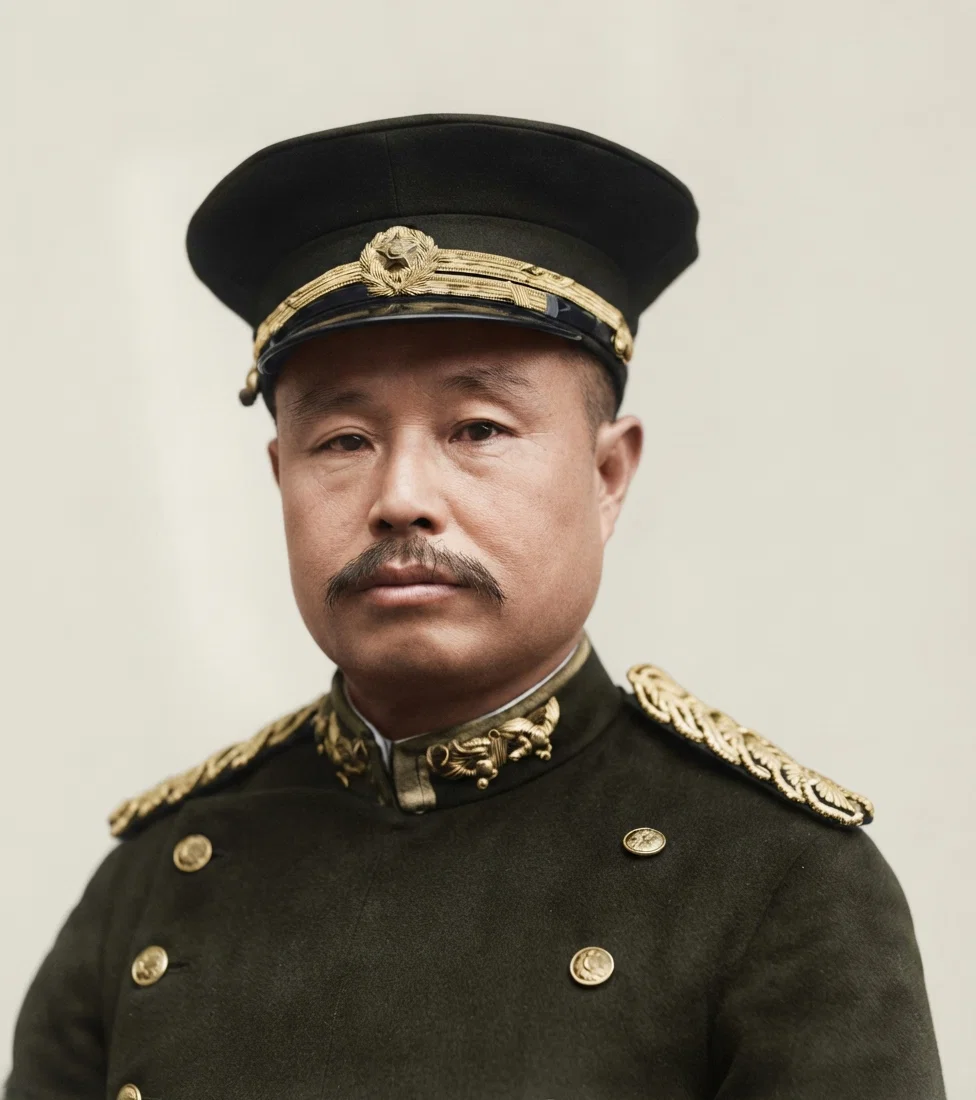
General Li Yuan Hung, commander-in-chief of the revolutionary army, and leader of the republican party in the absence of Sun Yat Sen
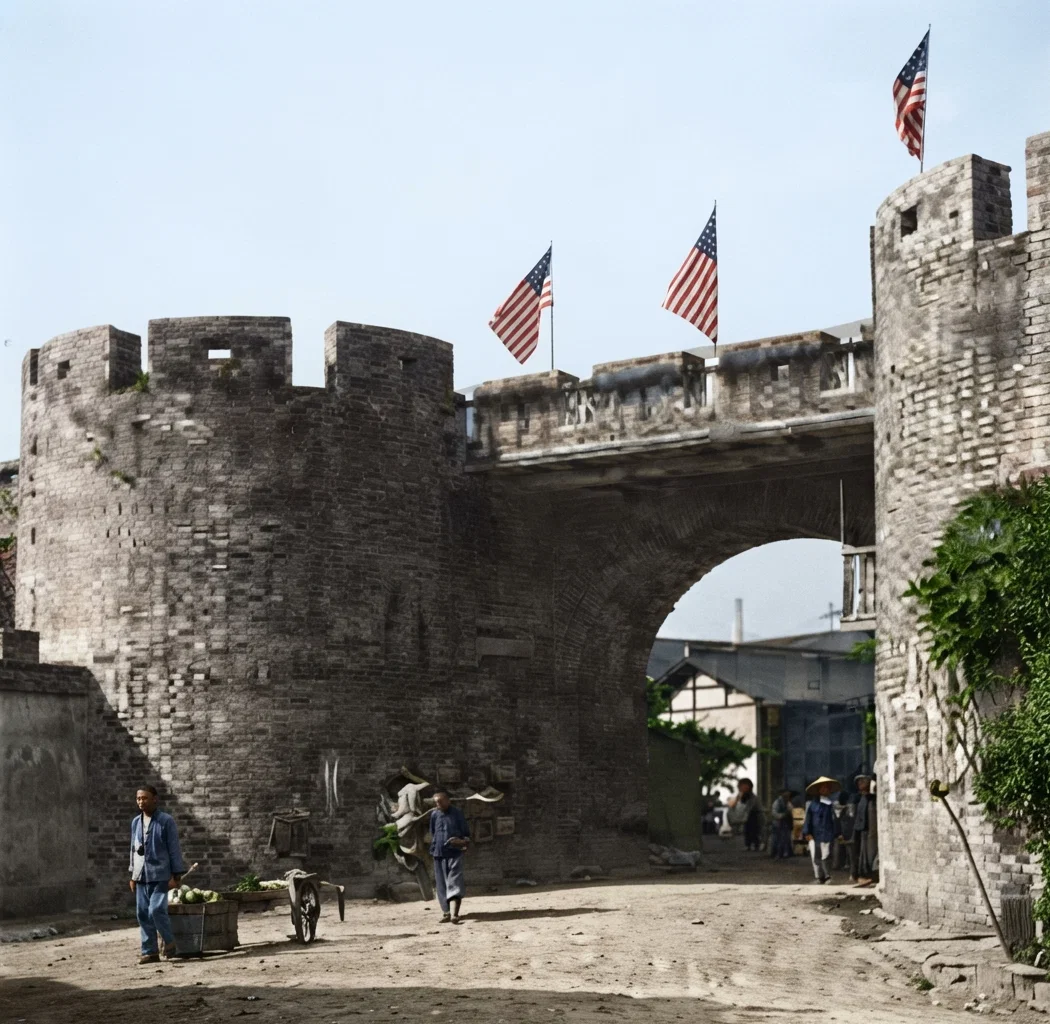
Gate of the Kiang Nan arsenal, Shanghai, with rebel flags floating
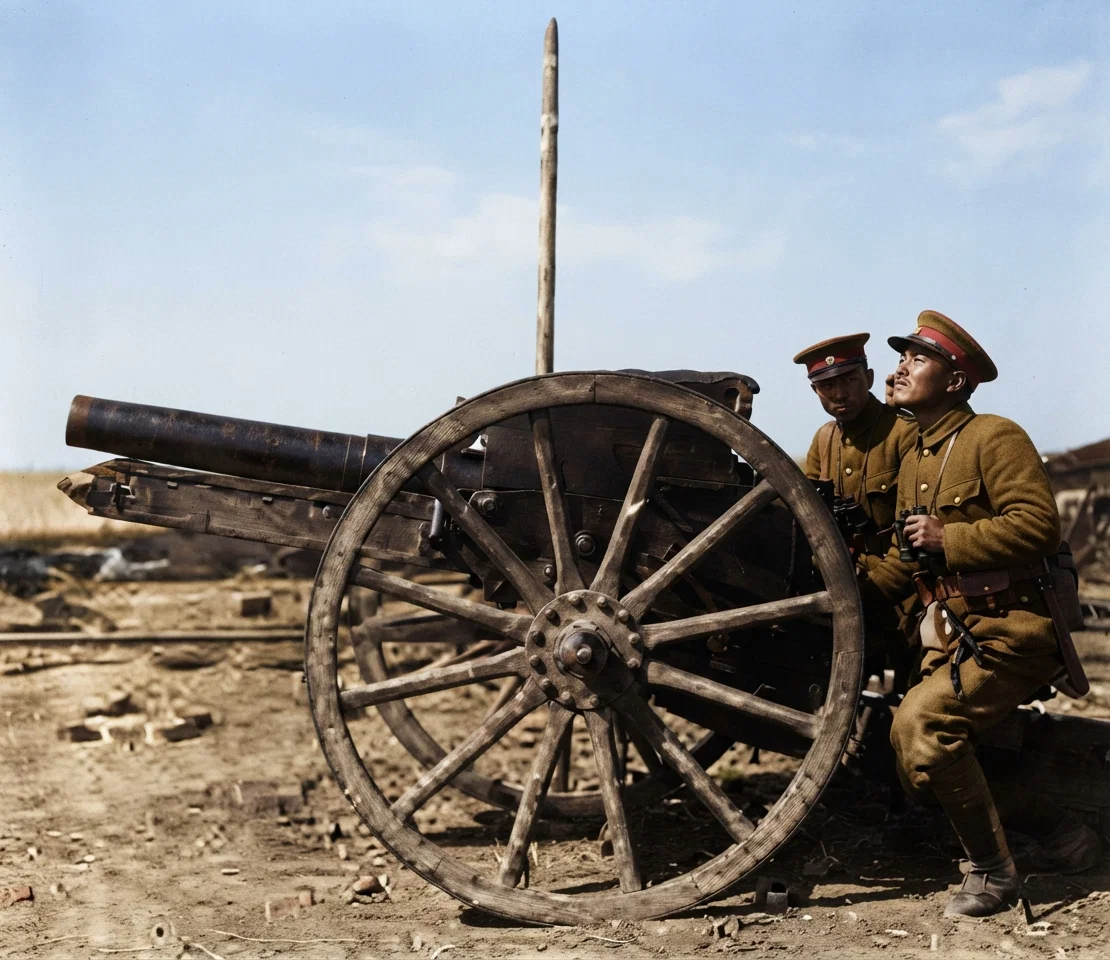
Imperial siege-gun
Imperial siege-gun
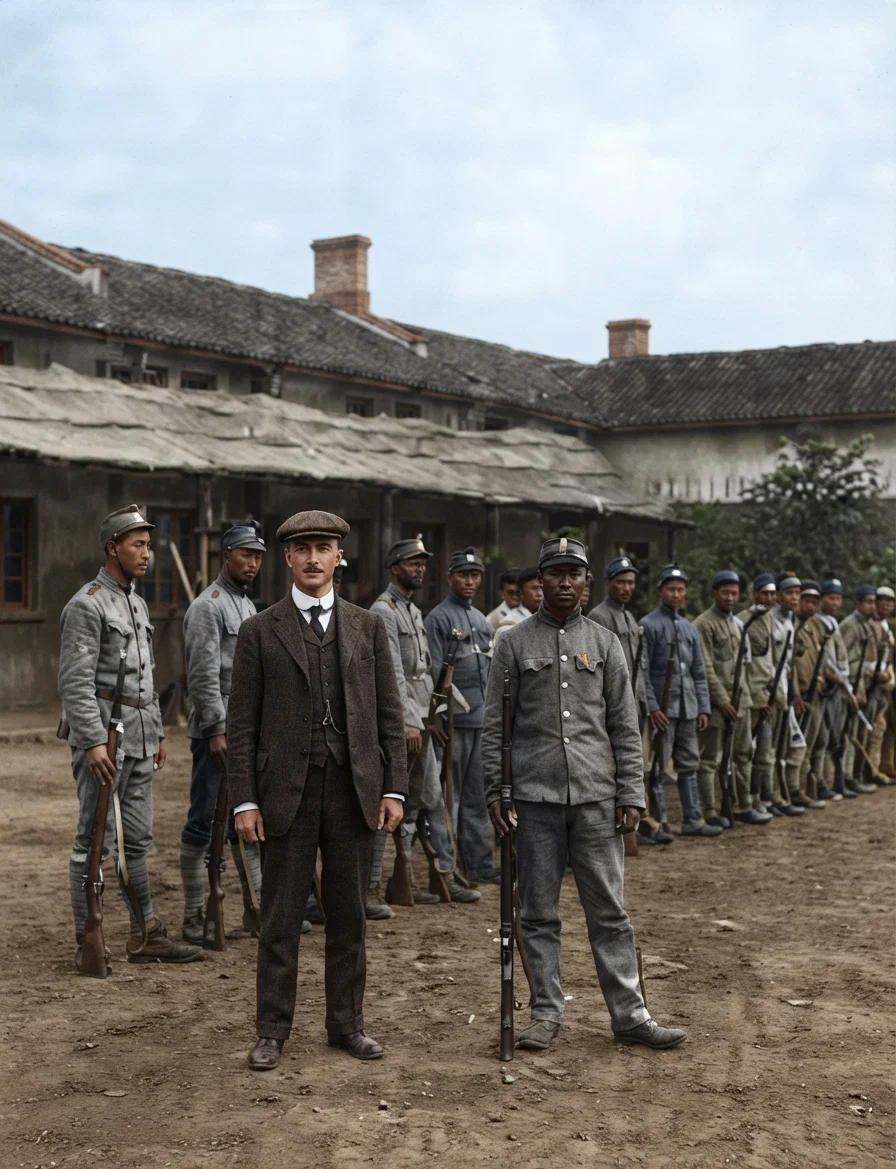
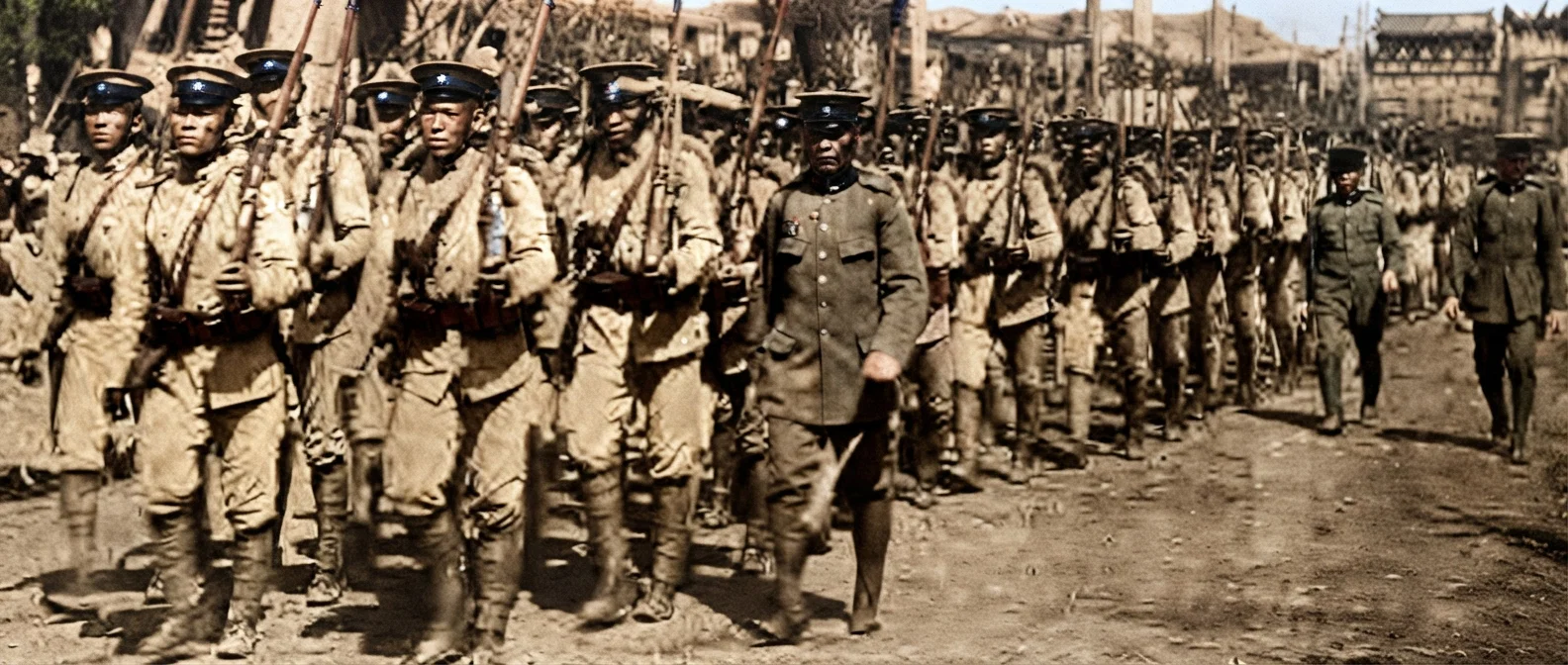
Company of rebel soldiers. Mr. Stafford, our correspondent, in the foreground at the left; at his left a soldier who was formerly his principal man at the Commercial Press, doing all the three-color photograph work, and all the photo-finishing, and has finished nearly all the pictures which we have received for the "Signs" since Mr. Stafford went to China.
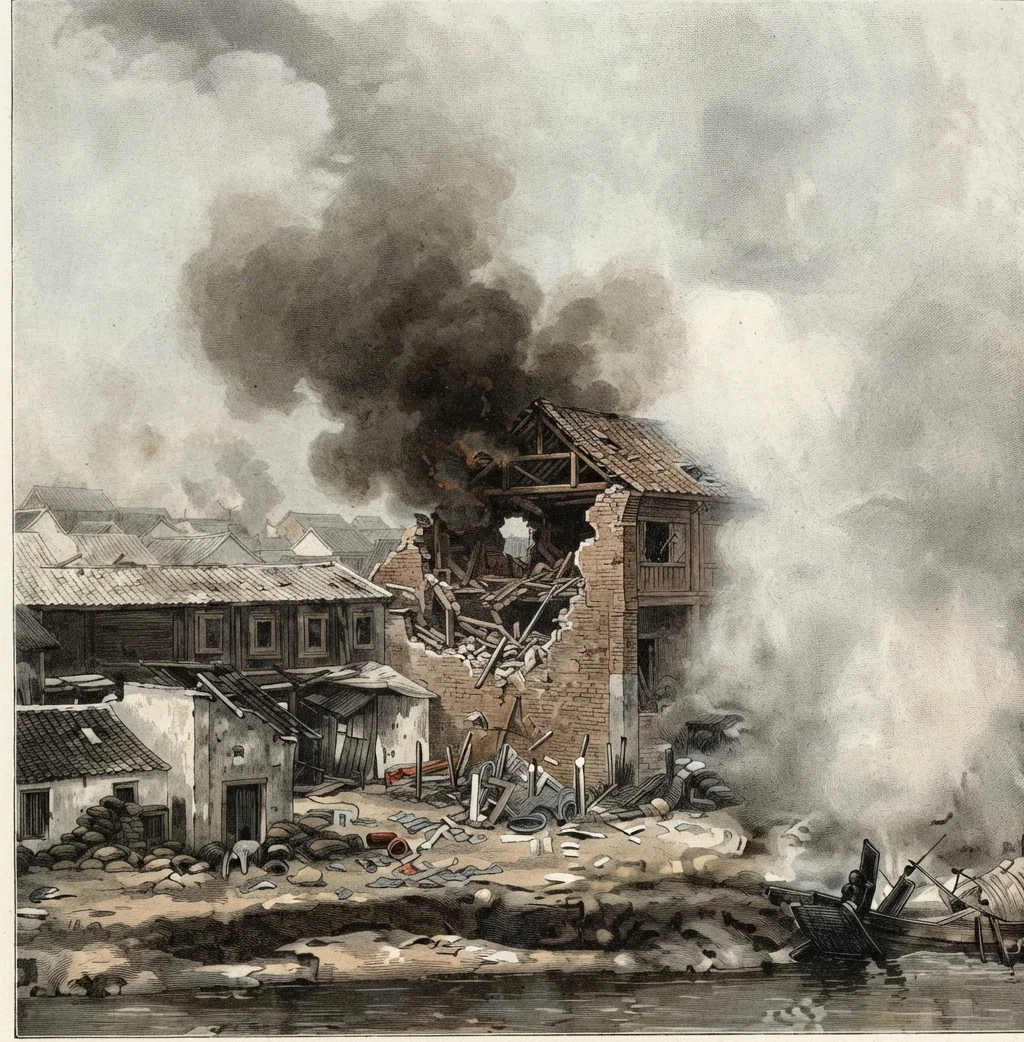
The fearful effect of a shell. The illustration does not show all.
In that appeal to foreign powers he says, "The Chinese nation, born anew in the travail of revolution, extends friendly greetings and felicitations to the world." He also declares that "the Chinese people are not untried in self-government. For countless ages they ruled themselves; they developed observations of law to a degree not known among other races; they developed arts and industries and agriculture, and knew a peace and contentment surpassingly sweet. Down upon them swept the savage hordes of an alien and warlike race (the Manchus). The Chinese people were conquered and enslaved. For 270 years this bondage existed. Then the Chinese people arose and struck a blow for freedom. Out of the chaos and dust of a falling throne emerges a free and enlightened people—a great natural democracy of four hundred million human beings. They have chosen to set up a republic, and their choice we believe is a wise one. There is no class of nobility among the Chinese, and they have no recognized royal family to set up in the place of the departing Manchu royal house. This is a great democracy."
In view of this, and more which his appeal contains, Dr. Wu says: "We ask recognition in order that we may enter upon our new life and our new relationships with the great powers. We ask recognition of the republic, because the republic is a fact. . . . The most glorious page in Chinese history has been written with a bloodless pen." But it has not been wholly bloodless. It has been decidedly bloody down on the Yang-tse River and in the great battle at Nanking.
Of the beginning of those days, under date of November 6 Mr. Frederick Lee writes that he and other missionaries would have remained in the city; but Admiral Murdock, commander of the Asiatic division of the United States navy, and Consul Gracey of Nanking, issued mandatory orders that all American missionaries should leave the city who could possibly go, or forfeit their passports. Mr. Lee tells us of the reign of terror which preceded the capture of Nanking, of the cruelty that was shown by the Manchu rulers, of the setting aside of the police force and the proclamation of martial law, which resulted in utter confusion and a reign of terror, the soldiers taking advantage of their position to terrorize the people. Martial law, he declares, was no law at all. However, the presence of the American consul and a good, strong force of American marines, saved the Americans who were there with their wives and children, from violence; and when the time camethat they were to go they were passed out of the city, placed on the train, and sent to Shanghai.
Imperial troops leaving Peking for the seat of war. They are older and more experienced than the rebel soldiers.
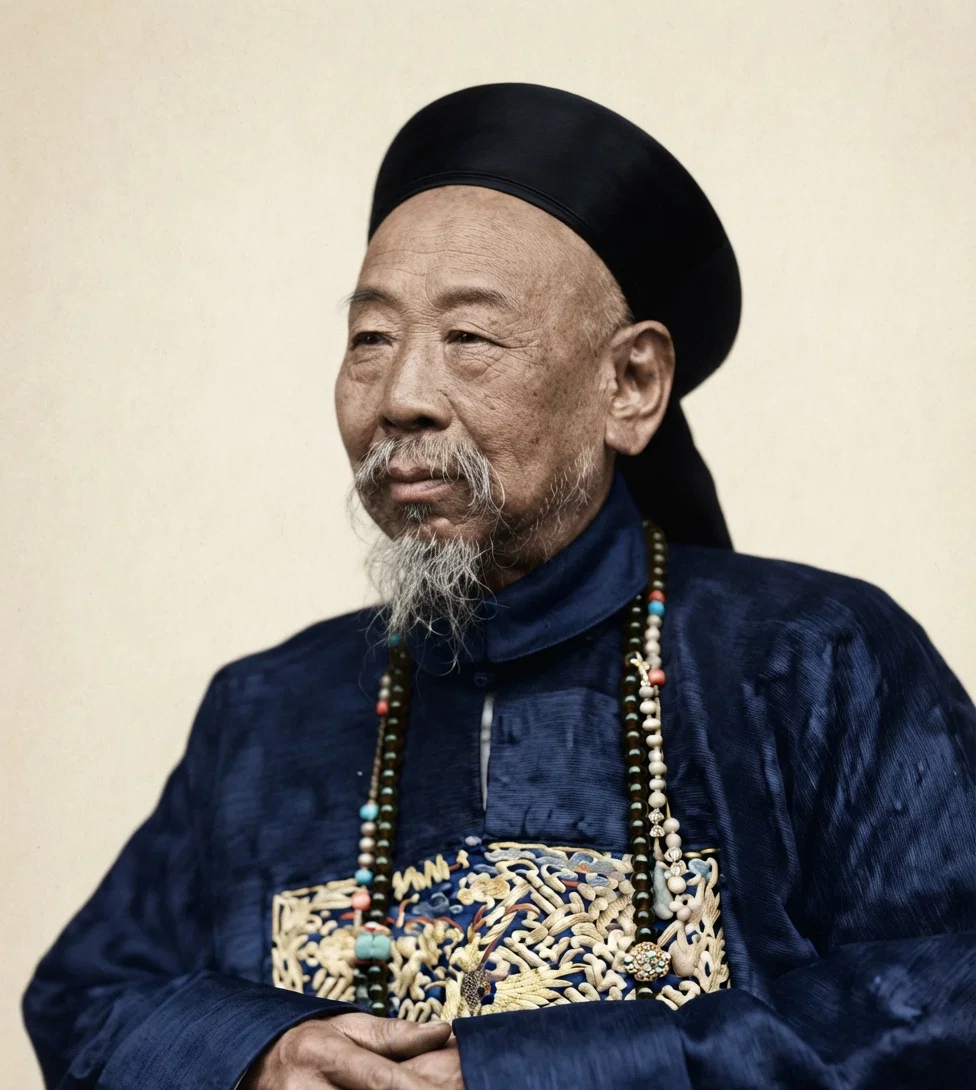
Chang Ching Ching, viceroy of Liang Kiang province, headquarters at Nanking
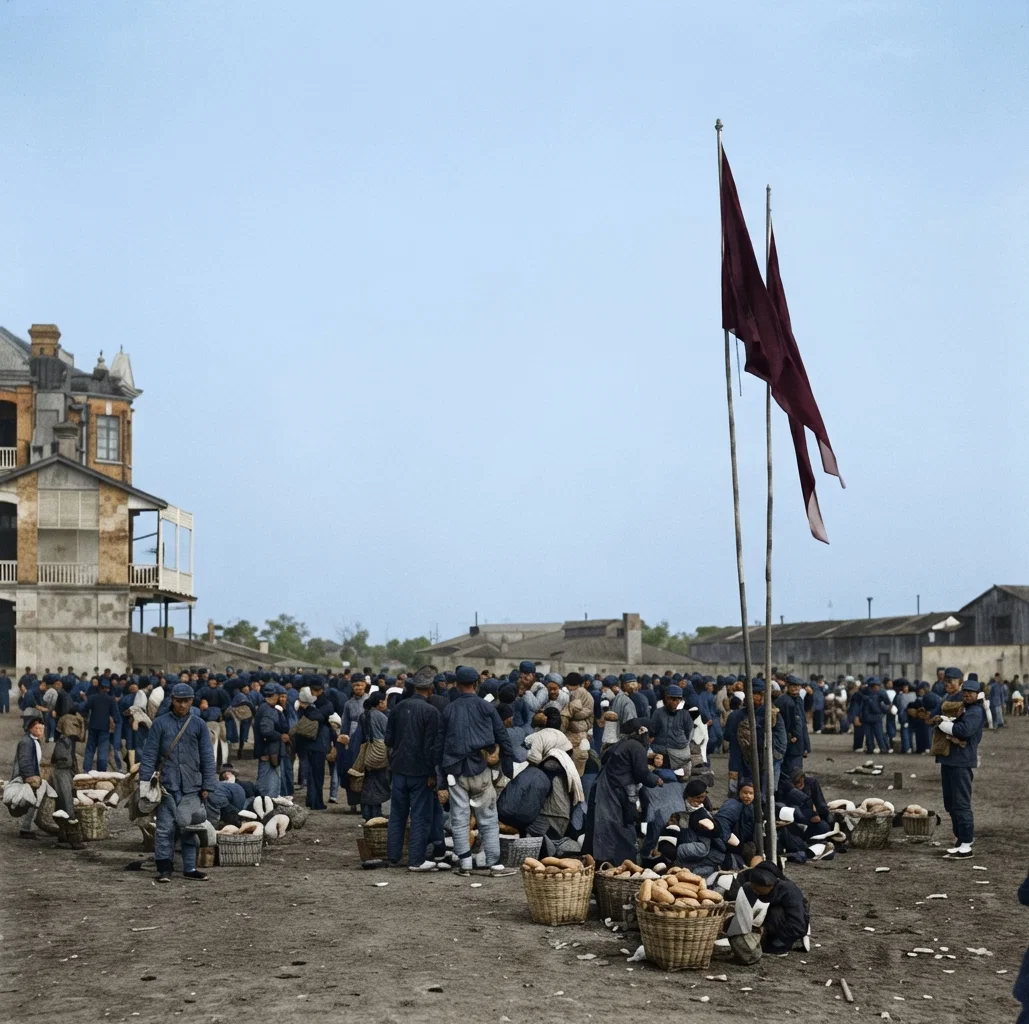
Baskets of foreign bread for the new recruits at Shanghai
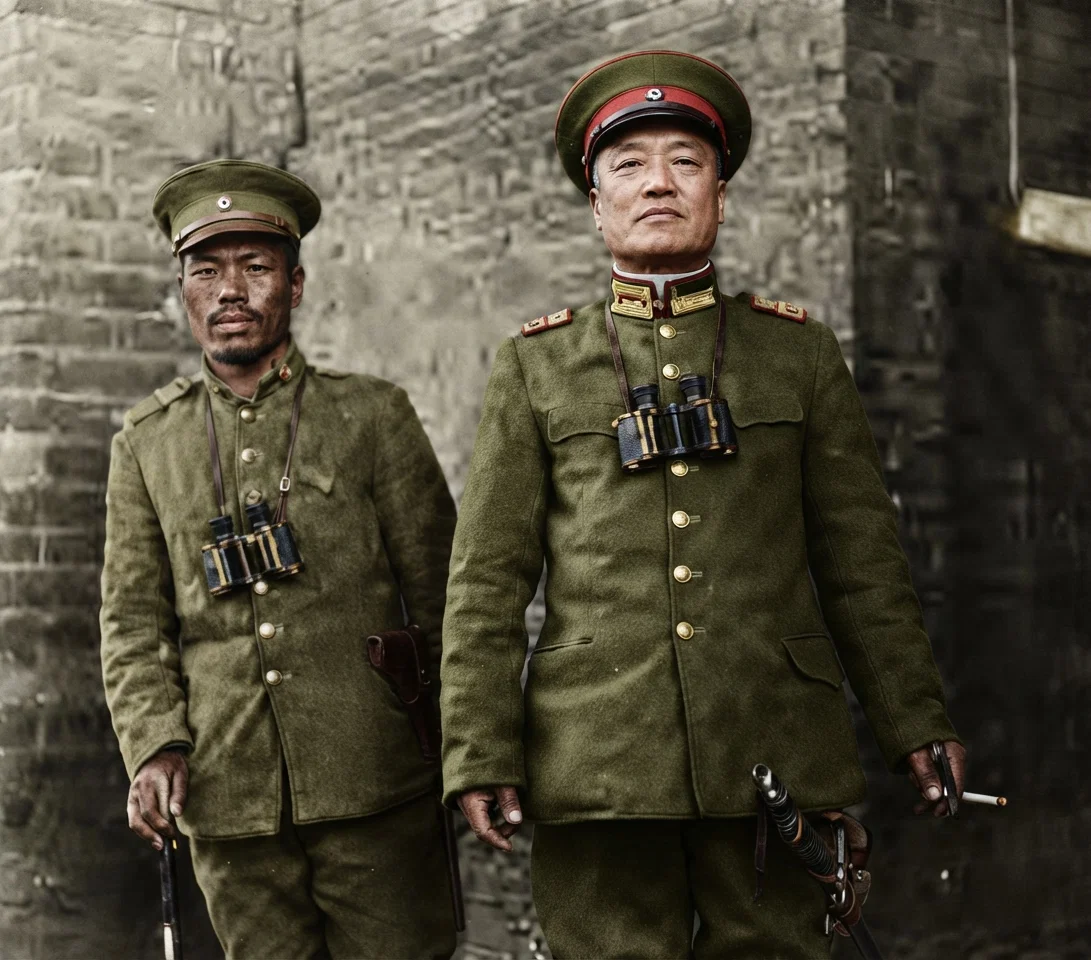
General Lee, imperial commander, and his aide at Hankow. Do not confuse this with General Li, the revolutionary commander.
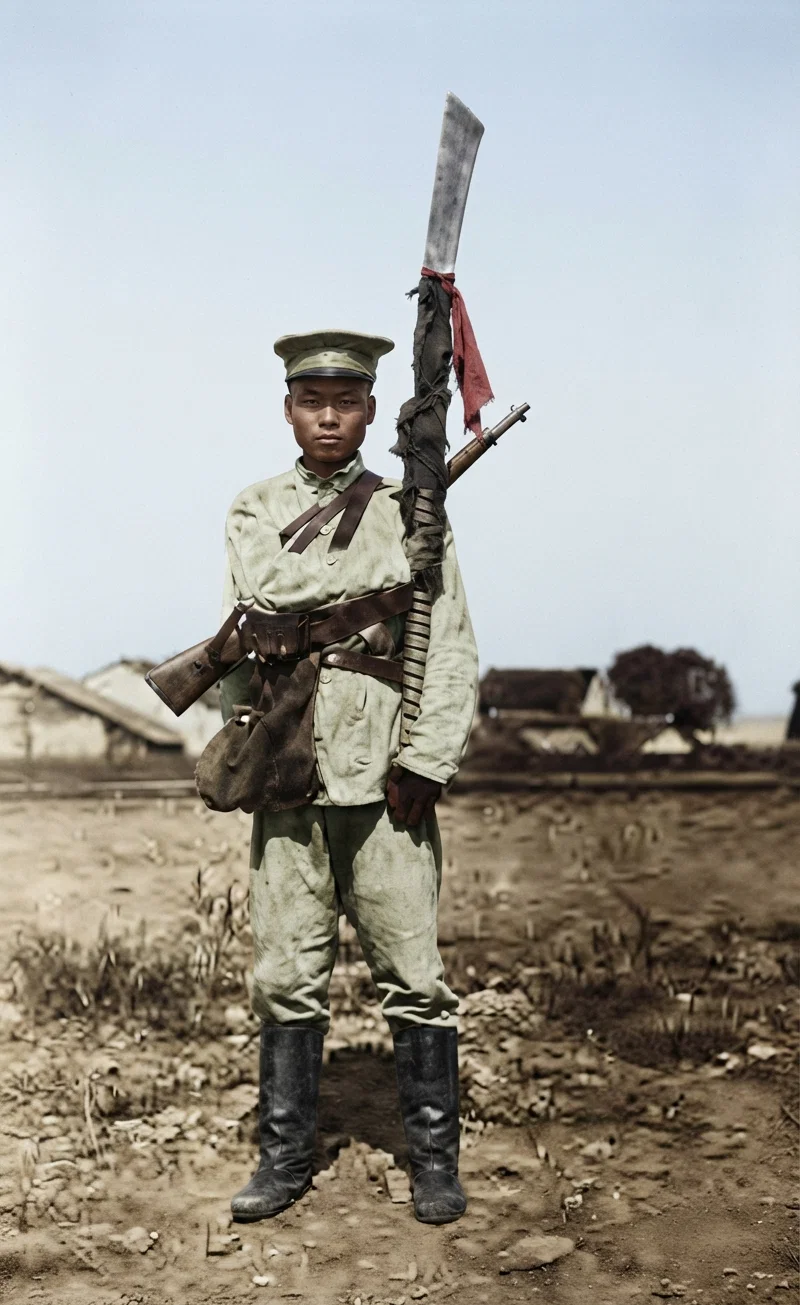
Decapitating knife, decorated with a red cloth, to show that it has cut off 300 heads of Manchus
Immediately after his leaving Nanking the war began in earnest. All who were thought to be in any wise in sympathy with the revolutionists were mercilessly slaughtered. Any one bearing a sign of white upon his body was beheaded as he walked along the streets. One man saw a Red Cross Chinese beheaded because he wore the red and white on his arm; and the coolie who was drawing his rickshaw was also killed. Men with short hair, or who were careless, were slain without mercy. Yet, notwithstanding the strong walls of Nanking, something like twenty-three feet thick and sixty feet high, the city was taken.

Battle at Hankow

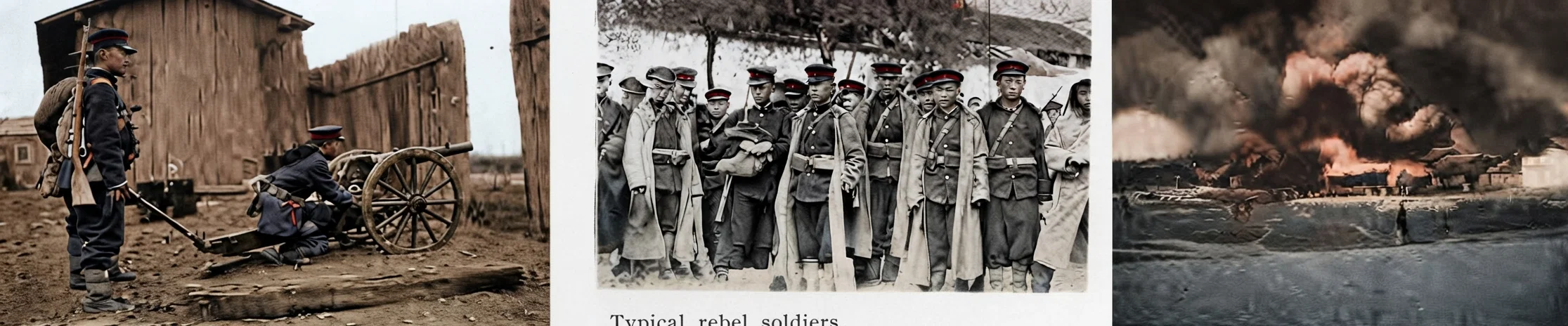
Brother Esta L. Miller, who was an eye-witness of the battle at Hankow, tells us of some of the impressions that he had as the conflict raged, and of the decided bravery that was manifested by the revolutionists, altho they were outnumbered five to one, and were also without the heavy arms and guns possessed by the imperialists. For a long time the 3,000 rebel troops held the 15,000 imperialists in check, notwithstanding they possessed their heavy guns; but when the re-enforcements came the rebels were forced back, and the city of Hankow was set on fire and burned to the ground.
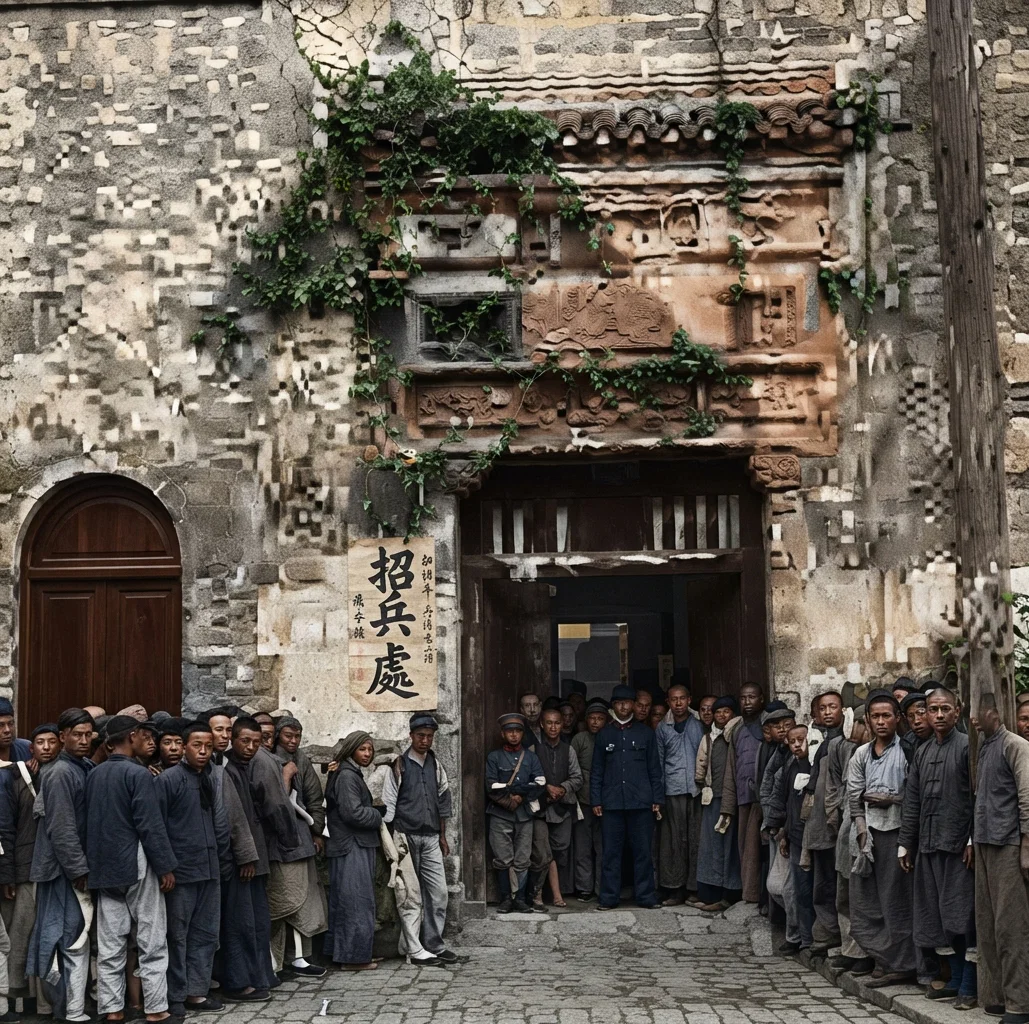
Entrance to recruiting station in Shanghai
One thing of which he makes especial note is the poor marksmanship that was manifested on both sides. But notwithstanding this, there was a spirit of determined bravery shown that was worthy of admiration. Of course the retaking of Hankow was a blow to the revolutionists, and yet the burning of the city aroused sympathy for their cause throughout China.
Our correspondent draws decided contrast between the actions of the two forces. "On the one hand, the rebels have carefully protected all property, and preserved innocent lives; while on the other hand, the imperialists have been cruel, atrocious, and bloodthirsty. They have shot hundreds of innocent men, women, and children, or pierced them with their bayonets and left them to die in agony. That great city of 500,000 people was set on fire; and the innocent people swarmed out in droves, only to be cruelly slaughtered, while hundreds were burned to death." Before this the revolutionists would have listened to almost any talk of compromise, with a Manchu prince as a figurehead upon the throne; but that was the last straw. After that nothing but a republic would satisfy. The end of the Manchu reign could be the only goal.
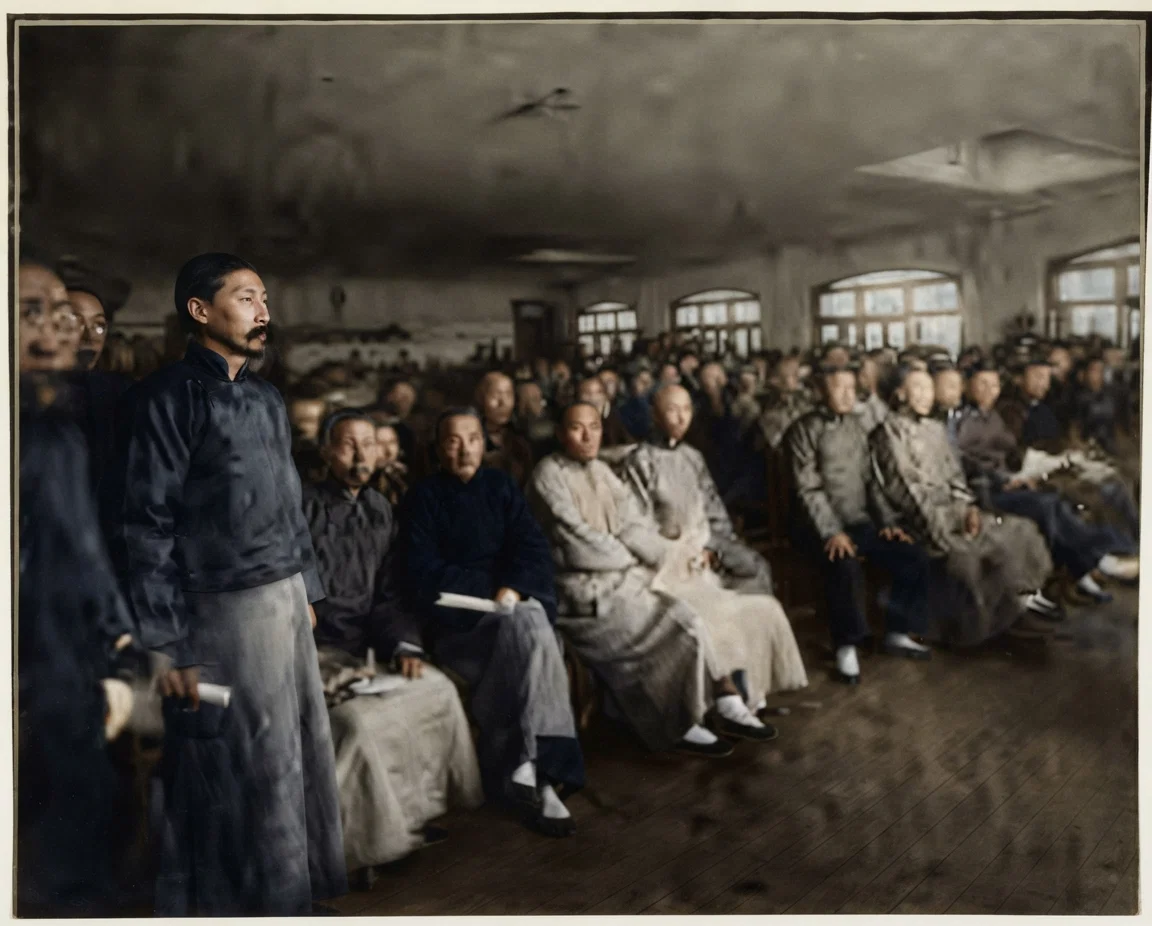
The first meeting of the provincial delegates of the republican party, held at Shanghai, November 21, 1911
In the beginning the revolutionists were willing to admit that they were rebels, and were so called even by themselves, but after a little the title of the "people's army" was given to their forces. City after city yielded to them in rapid succession—the whole of the Yang-tse Valley, with one or two exceptions. Cities that were supposed to be absolutely loyal to the Manchu reign hoisted the flag of the revolution.
Tien-Tsin, an important city on the north coast, controlling in a large measure the trade of Peking, surrendered with hardly a struggle. Canton, the largest city on the south coast, where the Tartar general was killed by a bomb at the beginning of the war, shook off the Manchu yoke and ran up the flag of the revolution. When it did so, one report declares, "the city went mad. Merchants all the length of Shakee Street let themselves loose, and firecrackers blazed and spluttered by hundreds for hours. From every house came the sound of cheering. In every one of those narrow, evil-smelling lanes which go to form Canton, were merchants joyously and tumultuously celebrating the event. For hours it went on, and after one went to bed there was still heard the jumpy rat-tat-tat of crackers and the sound of cheering. Yet, when it died down in Shakee Street, about nine o'clock, they went back nonchalantly to the making of wares and money; and the sound of hammering, of buying and selling was heard in that busy mart. Only in China could men so have settled to work after such an event."
Shanghai yielded in about the same way. The men have gone to work in the arsenal, and are working night and day making guns and ammunition for the new recruits, who are being enlisted as rapidly as possible. A temple had been converted into a temporary headquarters, and there, under the shadow of the "god of war," men were enlisted to fight, sworn in, and passed on to the drilling ground. Great baskets of bread and meat were dealt out to the recruits. As the Chinese ordinarily never eat any bread as the foreigners make it, our correspondent was surprised to see it, and asked one of them how it was that they were eating such luxurious food; and the Chinese replied that they were establishing a republic, and must eat republican food. Nearly all the gunboats and war-ships have hoisted the flag of the revolution. There are some in the Yang-tse River with Admiral Sah, but these are bottled in by rebel batteries above and below, so that really about the only effective navy connected with China is that of the revolutionists.
The whole question now of the new movement hinges on the appearance of strong leaders. At the last writing, Sun Yat Sen, the remarkable man who has probably done more to shape and mold the revolution than any others, had not arrived in China, or had not manifested himself. All are looking to him, however, for relief.
The last article, under date of December 3, points out what we have already learned through the cables,—that Yuan Shi Kai, seeing how rapidly the revolution is advancing, is very anxious to secure terms of peace. Just what those will be were not at that time determined, nor are they now. Funds of the republic are running short; and yet, on the other hand, men are so thoroly believing in it that they are donating largely to support it.
The imperial government, under date of November 26, issued a constitution consisting of nineteen articles, and with that a determination to continue the present Manchu rulers under that constitution; but this seems to be without any effect. These things would have been considered in the beginning; they are too late for consideration now. Two months ago these propositions would have been hailed with delight. Now they are unworthy of consideration.
Sighting a rebel field-gun at Hankow. Typical rebel soldiers. Note they are mostly young men - students. A view of the burning of Hankow.
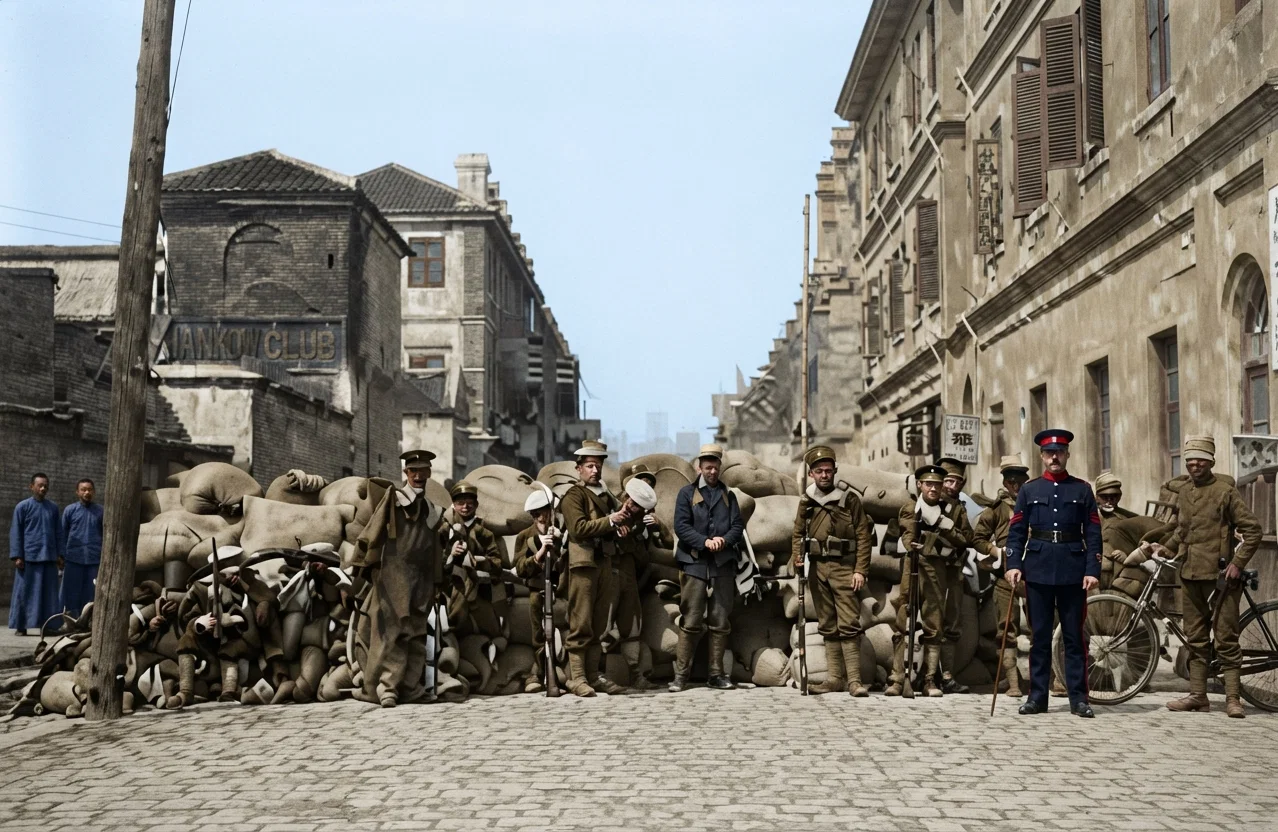
Barricading of British concession at Hankow. Marines guarding the entrance from the native city to the concession.
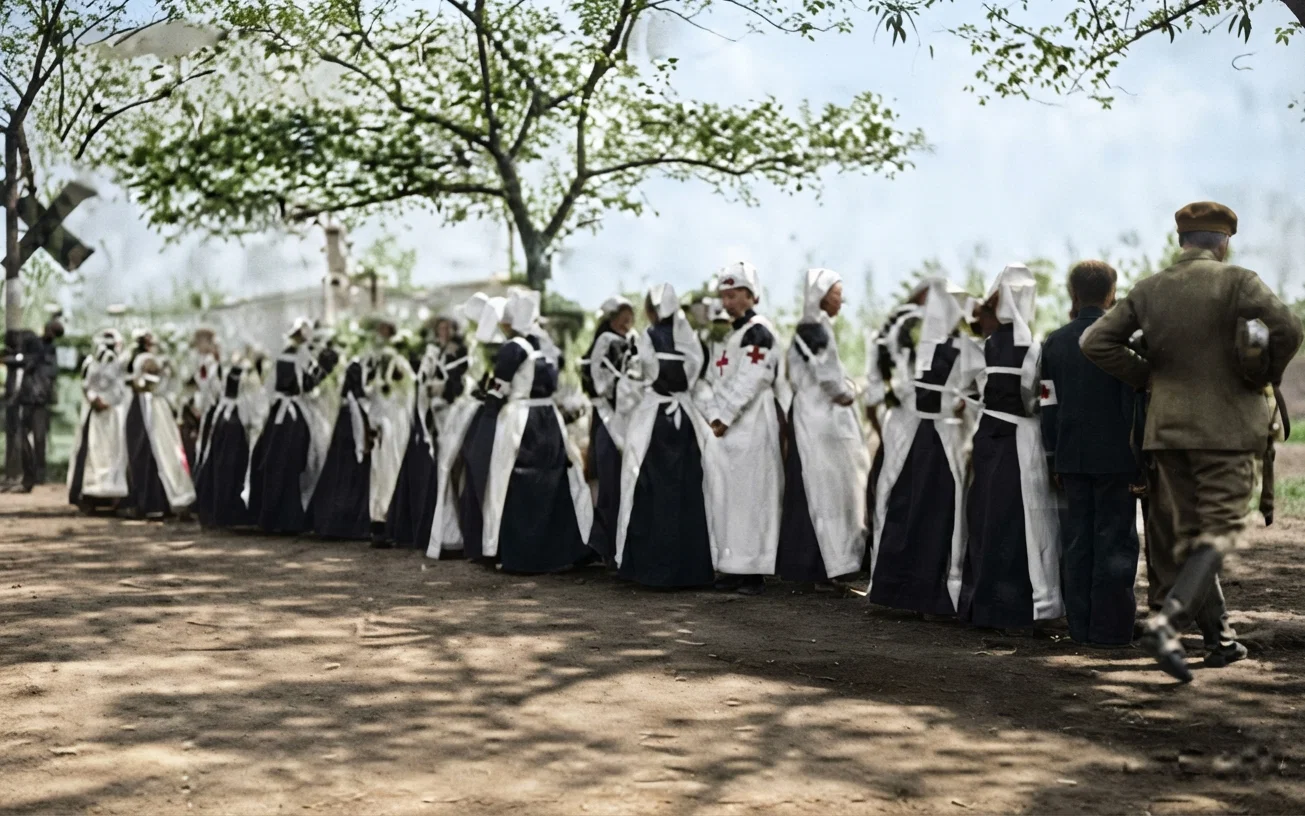
Red Cross nurses waiting for call to duty at Hankow. They were in some cases murdered by the imperial soldiers because they wore white.
Prices have been put upon the heads of some of the great leaders of the revolutionary party. About sixty have been classified for destruction, divided into about three classes. $100,000 is offered for the head of any of the first class, $30,000 for the head of any of those mentioned in the second class, and $10,000 for those in the third class. Among those in the first class are Sun Yat Sen, Li Yuan Hung, Wang Hien, Tang Hua-lung, Chan Chao-tang, Tang Shao-chien, Wu Ting Fang, and five others. The second class comprises twenty noted men, and the third class thirty men. New names are added to the list from time to time.
Among the reforms which the revolutionary party is adopting is the Gregorian calendar; that is, the same calendar that is held by all the civilized nations. The Chinese calendar is a lunar one, and the months are lunar months. It is difficult for foreigners to harmonize with it at all; but the revolutionary government proposes to adopt the Gregorian calendar, making the year, the month, and the week consonant with the calendar and year divisions of other nations.
A foreign residence in Nanking stripped by the hungry, starving mobs. Everything inside and outside which could be taken for use as fuel was carried away, including all the doors, windows, and window casings.
This will also settle the week. One of the difficulties in China regarding the week is that Sunday is counted as the worship day, the idea coming from a missionary of a long time ago; and then Monday is counted as workshop day one, Tuesday workshop day two, and so on to the last day of the week, workshop day six. This, of course, has confused the Sabbath to them to some extent, and made some of the Chinese believe that Sunday is the seventh day. The calendar will set this right, and give them a right understanding of the week.
In the meantime, most of our missionaries are in Shanghai, as are the missionaries of other denominations. And the perplexity and unrest still exist. The great danger lies in these two factors, that must be considered: There have been great sufferings in China during the last year, from floods and famine. Many are in the greatest want. If the revolutionary party, tho successful, is pressed for funds so that soldiers can not bepaid, these men will doubtless turn brigands, and loot and capture and kill and rob. Great wisdom will be needed in the settling of China at the close of the revolution. It behooves Christians everywhere to pray that God may so overrule that good may come to His cause, and that peace and quietness may reign until His message is given to the four hundred million souls of China.
Continue reading