TUESDAY, November 21, was the last day of the conference. At the morning meeting the first business was, that the Committee on Correspondence reported the draft of a letter from the conference to the churches that were represented in the conference. This letter was rather a report in brief that the design of the conference had been attained, that federation had been accomplished, and asking their ratification of the action of the conference. The letter took particular pains to reiterate that it is only by federation of the churches that the evils of the liquor traffic, divorce, and the desecration of the Lord's day, can be corrected. The letter was adopted.
The Business Committee made an additional report,—on resolutions; on the family; uniform divorce laws; urging ministers to guard the family; on the liquor traffic; on labor and capital; on "graft;" to set aside the idea that corporations have no souls, and inculcate the idea that corporations are moral persons; on gambling; for laws against impurity—to make it hard as possible to do wrong and easy as possible to do right; and on international affairs.
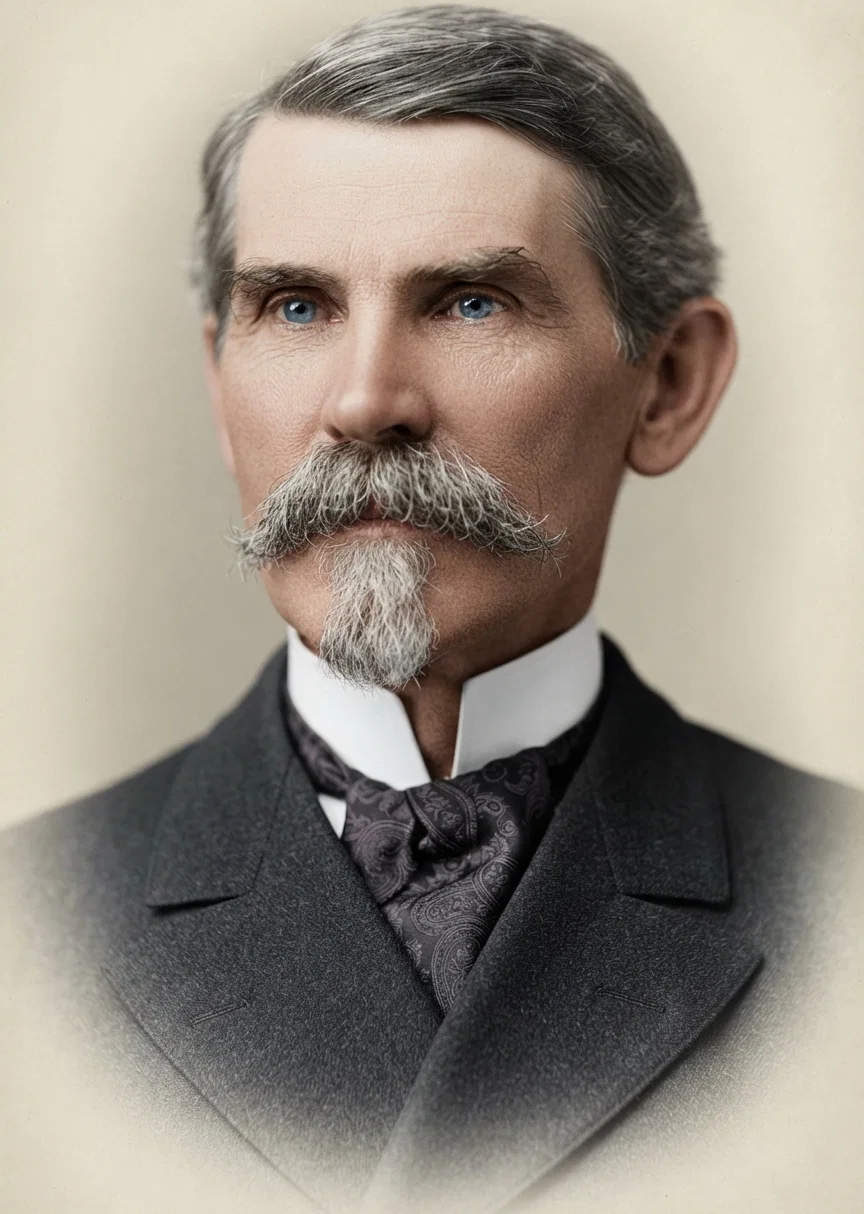
Robert R. MacBurney.
A motion was made to substitute the word "dishonesty" in place of the word "graft." The chairman suggested that it might be well to educate the world on that word. The motion was seemingly lost, and division was called for, and it was overwhelmingly lost.
The recommendation of the liquor traffic brought out a discussion on prohibition or license. A motion was made for prohibition. The chairman of the committee stated that just seventeen resolutions, on all phases of the subject, from Carrie Nation up, had been referred to the committee, and that what had been presented by the committee was that which seemed to the committee most feasible. It was moved to recommit; lost. It was adopted; one vote "No." The whole report was adopted. All other matters were referred to the Committee on Correspondence.
Next was presented the final report of the Committee on Correspondence, recommending that the eighteen million people represented in this conference express their appreciation of the newspaper press, and extend to it an invitation for co-operation; that since the national government is already under pledge to the Five Civilized Tribes of the Indian Territory to exclude from the territory all traffic in intoxicating liquors; that when that territory shall be admitted to statehood this pledge shall be continued; and that a letter from this federation shall be sent to the Congress reminding it of this obligation; all other subjects referred to the General Executive Council.
FOURTEENTH MEETING.
The Kingdom of God the Transcendent Aim of a United Church.
In the final session, Tuesday afternoon, November 21, 1905, the first thing was the passing of a resolution of greeting to foreign missionaries; and a resolution to publish in pamphlet form the plan of federation and connected official matter. The general subject for the meeting was, "The Kingdom of God the Transcendent Aim of a United Church." The first address was by Bishop Hendrix, of the Methodist Episcopal Church, South, on "The Ideal State." The state is the most complete, as well as the most universal, of all the associations of man. The petition, "Thy kingdom come," is interpreted by the words that follow, "Thy will be done on earth, as it is in heaven." This is the ideal state, and to this end we labor. Every true prayer looks to the perfect government on earth as in heaven. The kingdoms of this world seem very little things, as compared with the kingdom of this world. The nation is the last product of the church. A nation is a spiritual fact, more than a physical fact. Our Lord is not the Saviour from the world, implying separation from the world. He is the Saviour of the world. Jesus Christ is the world's first citizen. He commanded Peter to put up his sword,—that the kingdom of God comes not by violent force, but by the quiet processes of civic righteousness and social upbuilding. God never gave to man dominion till He had made him in His own likeness. And as man has lost that likeness, he has lost the dominion of the world. Our Lord distinctly taught a universal kingdom. Nations, like the individual who seeks first the kingdom of God and His righteousness, will equally find that all other things shall be added. We rejoice in every attempted realization of the ideal state, as that of Calvin in Geneva, and John Knox in Scotland. We are less concerned for the Bible in the public schools than we are for the Bible in the teacher in the public schools. Our concern is not for the state to establish a religion, but for religion to establish the state. What we need in our country is not an established church, but an established state. Part of the general mission of the church is thus to establish the state.
Mr. John Seely Ward, Jr.
The Ideal Church.
Coadjutor-bishop Greer, Episcopalian, spoke on "The Ideal Church." The Christian Church should be God manifest in the flesh; so that in their search for God, men might be able to find Him as a living Presence, dwelling in their midst, whom their eyes can see, whom their hands can touch and handle, in the church. Our Roman Catholic brethren, who are not with us in this conference (and I am sorry they are not), have something to teach us here. In the world the mission of the church is to extend that incarnation of God, and to try more and more to help all human life, all human flesh, to be it, and in that way to extend God's kingdom in the world.
At 3:30 P.M. a resolution was presented embodying the views of the Lutheran speaker, to get the authorities to dismiss the public schools Wednesday afternoon of each week for religious instruction supplementary to that of the Sunday-school. It was passed without any discussion, and without any dissenting votes.
Samuel B. Capen, president A. B. C. F. M., Congregationalist, said: We have passed out of the age of individualism into that of federation; and combination, not competition, is moulding methods of action. Co-operation, through closer federation, is the need of the hour.
Rev. Charles Cuthbert Hall, D.D., LL.D.
Rev. Josiah Strong, D.D.
The Federation a Fact.
Bishop Vincent, of the Methodist Episcopal Church, gave the closing address of the conference: It is moving with us. The sunrise is past, and the day has begun. The federation has become a fact, and this is a pledge of power. The federation is a pledge of unity, in faith, in doctrine, and in spirit.7This federation will greatly promote the activity of an aggressive Protestantism. A Roman priest can be an acceptable adviser in sorrow or at death, but is not a safe adviser in politics. Let Protestant ministers qualify for that position. Let us have freedom of speech, and let us give warning to politicians that they can not dictate to us what we shall declare on the platform or in the pulpit. The manifold forms of Sabbath desecration call for careful attention and greater devotion, more energy, more positiveness. We need not a will that waits on public sentiment, but that will go to, and make, public sentiment.
A. T. J.