ON the surface a ruin is not an inspiring sight; yet it may teach an inspiring lesson. Its still voices may whisper to our despondent souls hopelessness and despair; yet they may also ring, to the ear rightly attuned, a glad note of triumph. It will depend upon our attitude as to what we shall see and hear.
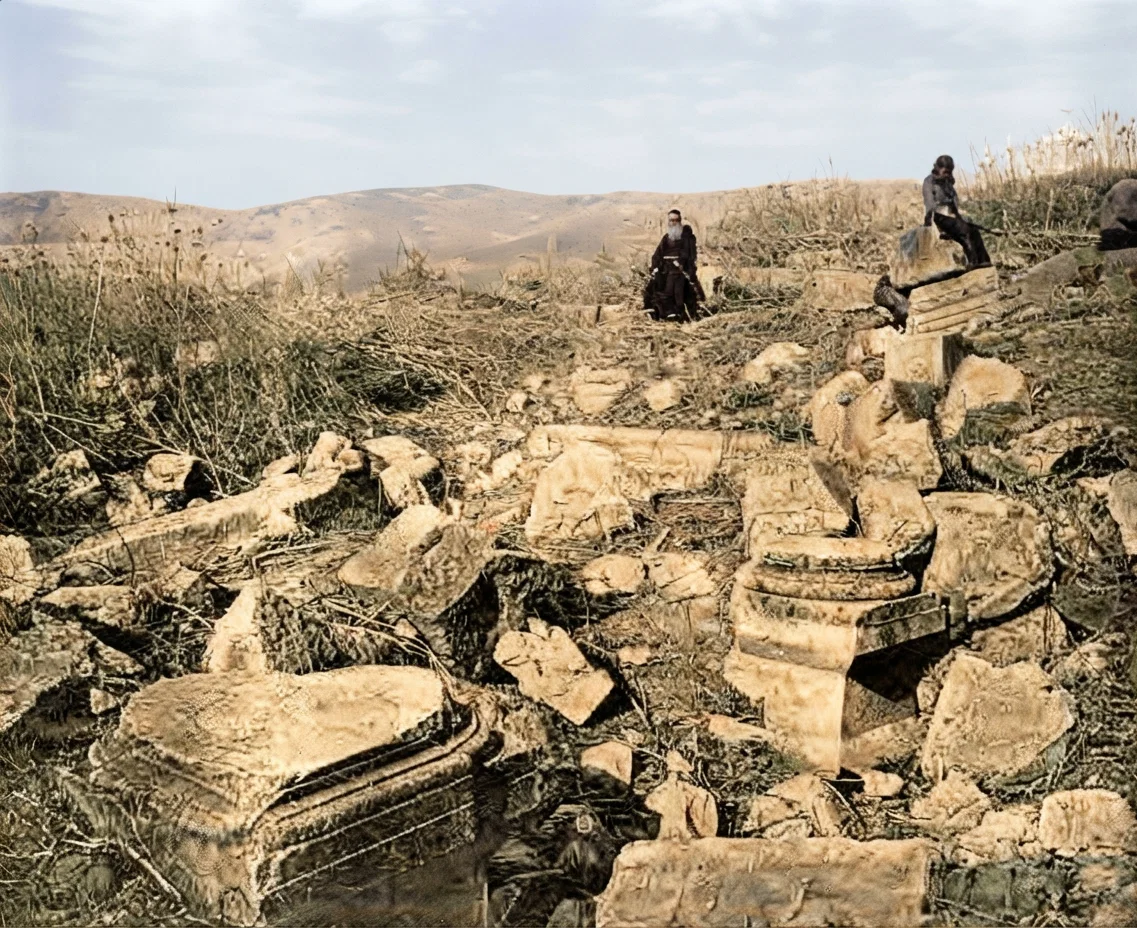
ON this page is a photographic reproduction of the ruins of ancient Capernaum. All there are of the once proud city of beautiful Galilee is the record of its past and its ruins.
Ruins of Capernaum.
It was a busy city, surrounded by a populous and wealthy country. The ruins themselves speak of its former greatness. A colony of Jews were here, and for them a wealthy Roman centurion had built a synagog. It was a city exalted in pride unto heaven, doubtless on account of its growth and prosperity.
THIS city, with its active teeming population, Jesus made His earthly home; it was "His own city." Mark 2:1. Here Matthew-Levi was chosen for apostleship. Matt. 9:9. Simon Peter and Andrew belonged here, and it was probably near Capernaum on the beach of the sea that Jesus called them from the fisherman's net to follow Him and become fishers of men. Mark 1:16-21. Here also, doubtless, lived John and James.
IN Capernaum many of Christ's miracles were wrought. Here He healed the centurion's servant. Here His cooling touch drove from Simon's wife's mother the fierce burning fever. Here, in "His own city," He spoke forgiveness to the soul of the paralytic and healed his body. Here the spirit of an unclean demon was cast from a chained soul. Here virtue went from Him in response to the touch of faith upon the hem of His garment, and stayed the ebbing of the life current in the poor, timid, nameless woman. And this immediately preceded the giving of life to the daughter of Jairus, the ruler of the synagog. Here, too, was given the wonderful instruction of John 6 to a people so gross that they understood not its meaning. Capernaum not only prospered in material things; but great blessings and opportunities came to her direct by the literal presence of the Son of God.
AND yet all these blessings touched but the hearts of the few. The great mass moved on unheeding, uncaring, till her day of blessing had passed and the curse came: "And thou, Capernaum, which art exalted unto heaven, shalt be brought down to hell [hades]; for if the mighty works which have been done in thee, had been done in Sodom, it would have remained unto this day. But I say unto you, it shall be more tolerable for the land of Sodom in the day of judgment, than for thee." Matt. 11:23, 24.
IT was no arbitrary curse that our Lord pronounced upon the populous city because He was offended. He was but stating her chosen doom. She had sowed to selfishness, lust, pleasure, worldly gain; she must reap the legitimate fruit of sowing—destruction. She had rejected the mighty Word which would save her; she must meet the destruction of the power of that Word perverted. "The ways of Jehovah are right, and the just shall walk in them; but transgressors shall fall therein." Hosea 14:9.
BUT the ruins of Capernaum have their cheering as well as their solemn lessons. We may go on carelessly as she, and die in our sins and by our sins. The mighty Word, by which we would not live, is perverted to our own destruction. "The strength of sin is the law." But we may also know that as the might and power of that Word was the destruction of the careless city, so it is "mighty to save" all who trust in it. Its potency is exhibited in the character of Jesus Christ, triumphant over all sin and death and the evil one; and through Him it may be equally potent in us. God's Word abides. Kingdoms may wax and wane, empires flourish and decay, men and their plans and schemes may come and go; the mighty Word of God abides and prevails forever. Rejected, and the fate of Capernaum is ours; received, and we abide with it eternally. 1 John 2:15-17.