A FUTURE life is contingent upon a resurrection from the dead. "In Adam all die." As head of the race, his transgression brought his posterity, with him, under the decree of death. God could have cut him off, and, in cutting him off, cut us off also, and so have allowed His purpose in the creation of man to be frustrated by him who is at once the enemy of God and man.
God did not elect so to do. Death must come as the result of the transgression; but death must not be allowed to frustrate His glorious purpose. So Father and Son provided a way by which death is compelled to release its prey, Satan's plans be frustrated, and the purpose of God be accomplished. "As in Adam all die, even so in Christ shall all be made alive." Just as true as is the fall, just so true is the rising again from that fall. Just as sure, then, as Adam lived and died, and Christ lived, died, and rose again, just so sure is it that, tho we die, we may live again beyond the clutch of death, beyond the bars of the tomb. There is one condition—that we come into that relation to Christ known as being "in Him." It was being out of Him, out of harmony with His will and purpose, that made sinners of men, and put a gulf of separation between heaven and earth in a spiritual sense. That put God's own handiwork under a curse, and brought weeds, waste, and desolation into the fruit and flower-bearing fields of this earth.
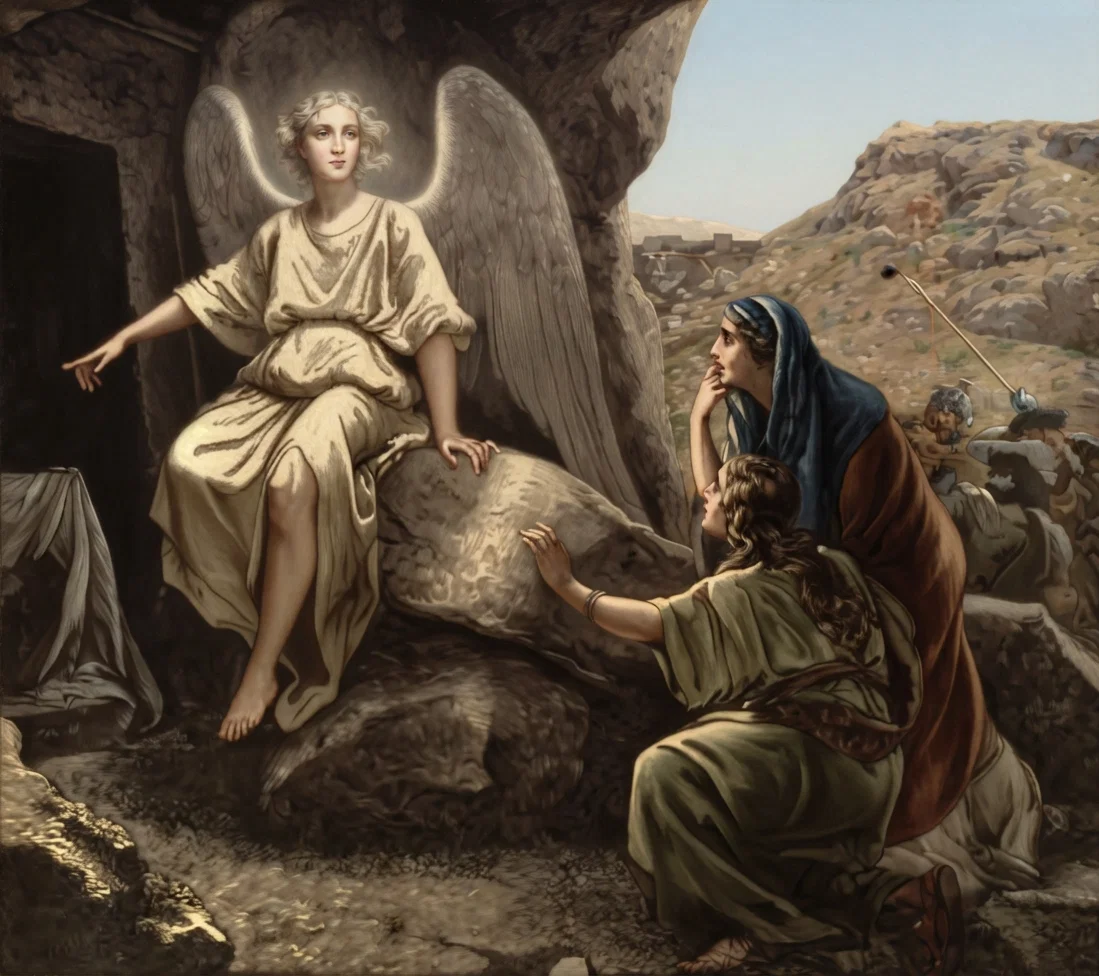
"And . . . He rose again the third day according to the Scriptures."
But, true as it is that death and desolation have come, and destruction is decreed upon all that continue outside of God, yet "in Christ shall all be made alive." They "shall come forth; they that have done good, unto the resurrection of life; and they that have done evil, unto the resurrection of damnation." John 5 : 29. There is no place in this for misunderstanding. Life and immortality are bestowed at the resurrection to those who are accounted worthy to receive them; and at that same time those who are living and are accounted unworthy of life, are slain by the brightness of His coming, to be reserved for the resurrection of the unjust. Again: "There shall be a resurrection of the dead, both of the just and unjust." Acts 24 : 15. Through the resurrection, men are ushered into eternal life or eternal death. Without a resurrection, there is no promise of life eternal.
The resurrection of Christ to life is a pledge of God that there shall be a resurrection of those who are His to the life He has to give. We read: "If we believe that Jesus died and rose again, even so them also that are fallen asleep in Jesus will God bring with Him." 1 Thess. 4 : 14. Some in the early church had been teaching that there would be no resurrection of the dead. Paul took direct issue with such teachers, and declared: "But if there is no resurrection of the dead, neither hath Christ been raised; and if Christ hath not been raised, then is our preaching vain, your faith also is vain; . . . and if Christ hath not been raised, your faith is vain; ye are yet in your sins. Then they also that are fallen asleep in Christ have perished." 1 Cor. 15 : 13-18.
There is one conclusion that must necessarily be drawn from this scripture, and that is, that men do not have inherent immortality. For, if there be no resurrection, all who die are perished. If men are now immortal, then, whether there be a resurrection or not, death does not end existence. The immortal man, at death, would simply pass from one state of existence to another, and would not—could not—perish. But the Scripture leaves no ground for such an hypothesis. Without the resurrection, heathen and Christian alike would remain in their graves forever.
Immortality is a part of the reward which Christ is to bring with Him when He comes back to this earth, to close the epoch of sin and usher in the reign of righteousness. He tells us, in His last letter to His church: "Behold, I come quickly; and My reward is with Me, to render to each man according as his work is." Rev. 22 : 12. At His coming, this is what occurs: "The Lord Himself shall descend from heaven, with a shout, with the voice of the archangel, and with the trump of God; and the dead in Christ shall rise first." 1 Thess. 4 : 16. "We all shall not sleep, but we shall all be changed, in a moment, in the twinkling of an eye, at the last trump; for the trumpet shall sound, and the dead shall be raised incorruptible, and we shall be changed. For this corruptible must put on incorruption, and this mortal must put on immortality." 1 Cor. 15 : 51-53.
From these scriptures we see that this change from mortality to immortality and the resurrection of the righteous dead and the second coming of Christ, all take place at the same time. Immortality is bestowed upon those who are worthy of it when Christ comes back to earth. Therefore, it could not have been in the possession of men and women up to that time. Immortality would not be bestowed upon those who already had it. The righteous dead had not received life up to that time, except in promise. They receive it then. They had not possessed immortality up to that time. They receive it also at that time.
But mark this: In none of these scriptures, nor in any other scripture, is there assurance given to any that they will receive immortality and eternal life, save through the door of the resurrection. Of course, those who are alive at the time of the second coming of Christ, at the time the righteous dead are raised, are exempt from death, and so from the necessity of a resurrection; but the "change" of which the apostle speaks, and which takes place in them at the time of the first resurrection, is just as much a change from mortality to immortality, as it is in the case of those who pass through the tomb. The "corruptible" living mortal, and the mortal who has seen "corruption" in the tomb, are both made "incorruptible" at the same time, according to the plain teaching of the scriptures above quoted.
The modern church makes but little of the resurrection; the early church made much of it. The modern church is making much of present, inherent immortality; the great apostle of the early church contended against it with all the power of pen and voice. The popular modern church teaches the reception of the Christian's reward at death; the Revelator declares, through the prophet John: "Behold, I come quickly; and My reward is with Me, to render to each man according as his work is."
So I repeat, without the resurrection from the dead, none of the dead shall ever see eternal life; and that resurrection does not take place until Christ shall come in the clouds of heaven. In the resurrection lies the hope of the Christian.