It was that truly great American, James Russell Lowell, scholar, poet, statesman, who said:
"And they are slaves most base
Whose love of right is for themselves
And not for all the race."
The Roman Catholics thru the long centuries of medievalism believed in religious liberty for—Roman Catholics.
The Church of England, which broke from the power of Roman intolerance, believed in religious liberty for—the Church of England. Therefore she forced out the Puritans.
The Puritans believed in religious liberty for—the Puritans. Therefore they banished Roger Williams.
But Roger Williams believed in religious liberty for all; for the other man as truly as for himself. A brief sketch of his early career may be of interest.
The year of his birth wanders all the way from 1599 to 1606. He is said to have been born in Cornwall, in Wales, and in London, and to have been educated in Oxford and in Cambridge. But to adopt and adapt the words of a noble-minded Briton in a eulogy of Washington, "It matters but very little what immediate spot may have been the birthplace of such a man as Roger Williams. No people can claim, no country can appropriate him. The boon of Providence to the human race, his fame is eternity and his dwelling-place creation." In a land which gave the highest type of human civil liberty to the world, his name should be engraved and penciled in glowing letters of gold, highest among her sons in her granite tablets of fame, but more indelibly still should the divine principles which made him the man he was be written upon the hearts of all Americans.
Sifting the evidence of his early years, he was probably born in Cornwall, Briton, in 1599. At an early age he went to London and became acquainted with the eminent lawyer, Sir Edward Coke, who, noting his quickness to learn and ability as a reporter, placed him in Charter House School (then
Sutton's Hospital). He matriculated in Cambridge University in 1624, July 1, and received his B.A. in January, 1627. He studied first law, then theology. He was invested with holy orders by the Church of England, but soon after espoused the cause of the Puritans.
In December, 1630, he sailed with his wife for America, arriving in Boston, Feb. 5, 1631. Recognizing his learning and eloquence, he was, April 12, 1631, made assistant pastor to Mr. Sketon of the church at Salem, but on that very day the court of Massachusetts at Boston disapproved the act.
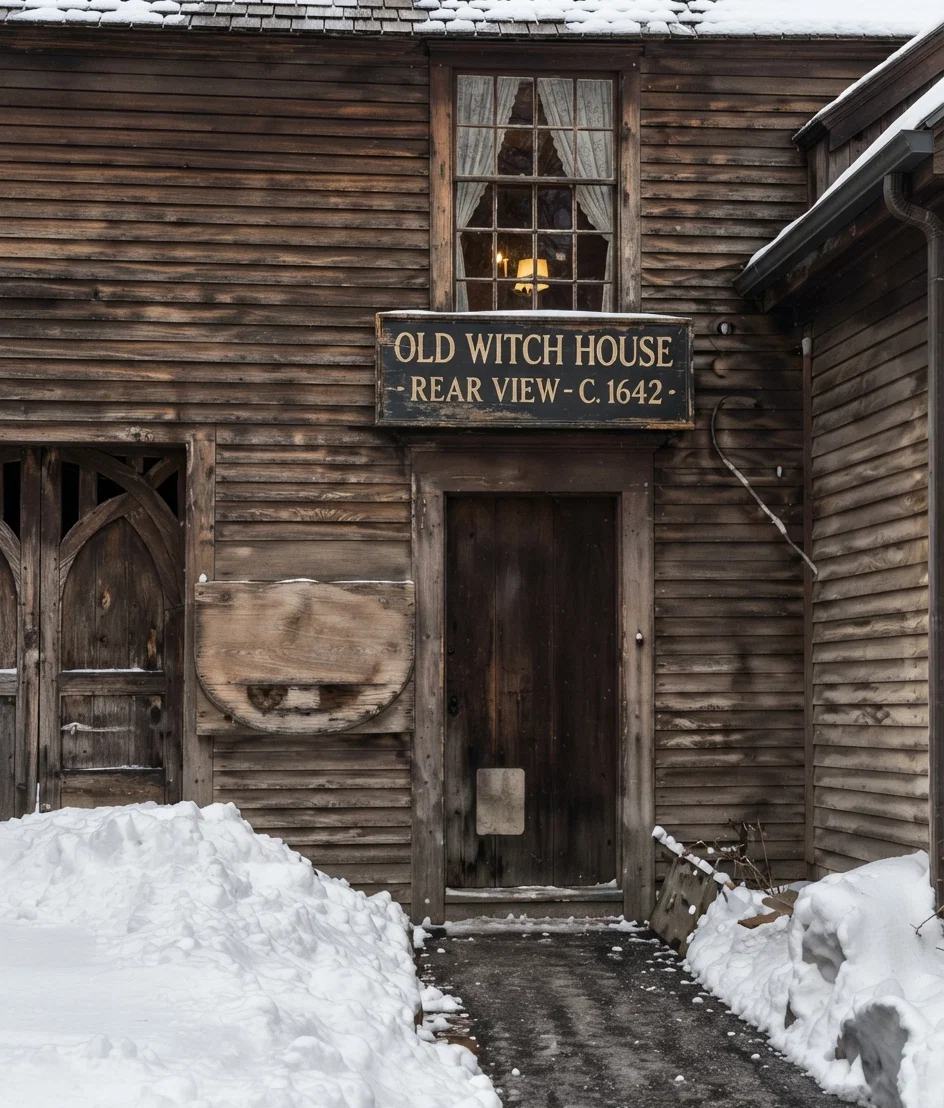
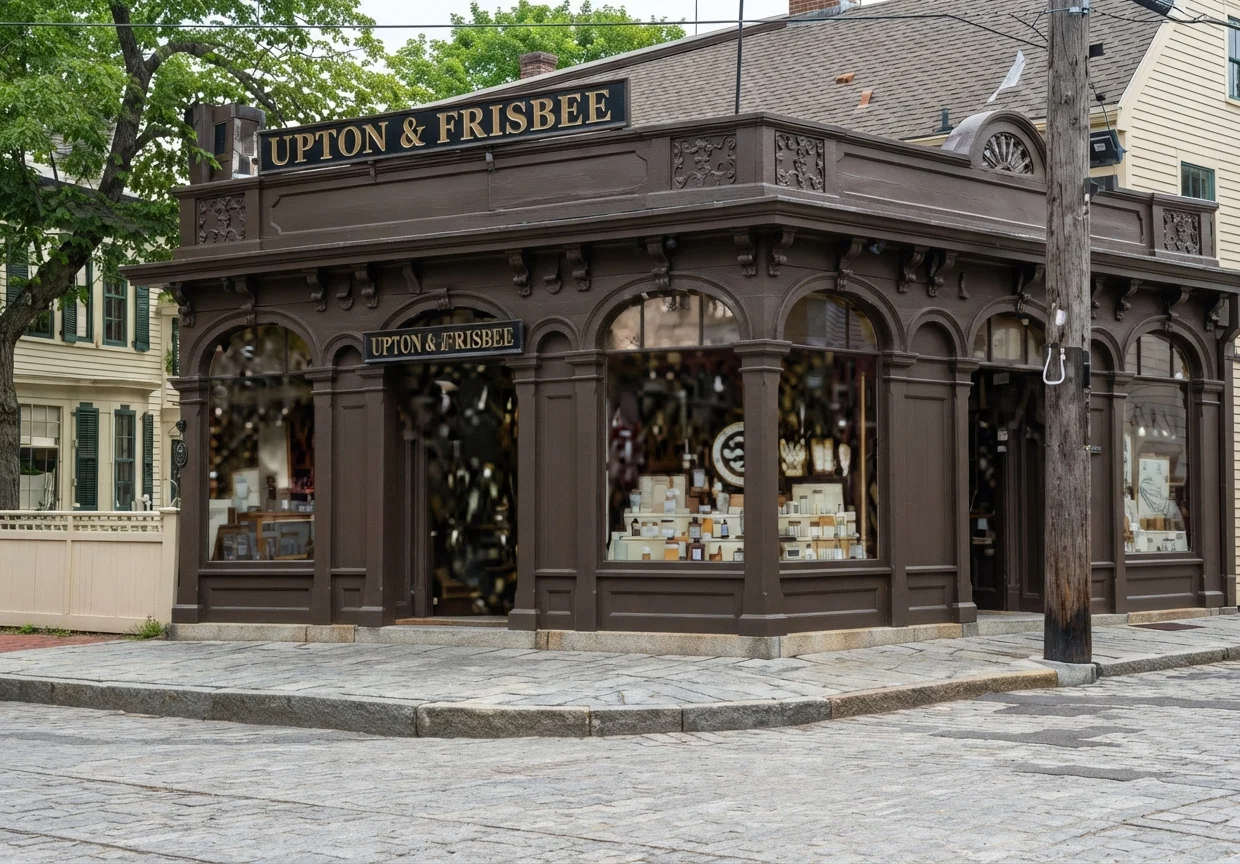
Front view of "Old Witch House," Salem, Mass., where Roger Williams lived, and which a half century later was used as a court-house to try "witches." The building, rejuvenated, is now used as a drug-store.
Williams was too outspoken to suit them. He contended that the lands taken from the Indians should be paid for.
Opposition was so great that he left Salem that year and became assistant pastor at Plymouth, where he learned the language of two Indian tribes. Here he was suspected of Anabaptist principles. In 1633 he returned to Salem, first as assistant, then sole pastor.
In 1636, because of his liberal principles, he was banished from Massachusetts Colony, leaving with a few followers in the dead of winter for a home among the Indians, first settling on a tract of land given him by the great chief Massasoit on Seekonk River, but finding this claimed by Plymouth, they pushed on to the site of Providence, so named in gratitude to God, on land bought and paid for from the chiefs Canonieus and Miantonomoh.
Here Mr. Williams became a Baptist, and founded the first Baptist Church in America. Here he founded a colony on the broadest, freest principles of civil and religious liberty, composed of people of various beliefs and no beliefs, which endured longer and in greater peace and stability than any other American colony. A charter was granted to the new colony, March 14, 1644, on the solicitation of Williams, who went to England for the purpose in 1643. Great was the rejoicing of the colonists that they were free from the intolerance of Massachusetts and Plymouth. Williams went to England again in 1651, remaining to 1654, meeting and becoming friendly with Milton and Cromwell. He acted as president of the colony, 1654 to 1658. After the English Revolution, Charles II, in 1663, reissued, with no restrictions, the liberal charter of Rhode Island plantation, its principles forming the fundamental law of Rhode Island for 180 years.
The following are the principles which made Roger Williams the grand character he was, which led Massachusetts, under the intolerant teachings of Cotton Mather, to banish him; and which founded the freest and most peaceful of all American colonies, Rhode Island.
Roger Williams was a Christian by personal faith and relationship with Jesus Christ.
As such, he opposed infant baptism, or sprinkling. One of his declarations was, "Christening does not make Christians."
In simple justice he denied the right of Massachusetts to "take the Indian's land without purchase," the opposite of which custom he faithfully followed in all his dealings with the Indians, and so by his influence over great chiefs, saved the Massachusetts and Plymouth colonies from destruction by a federation of the Indian tribes. In their troubles, the men who banished him sought his wise counsel, and he freely gave it.
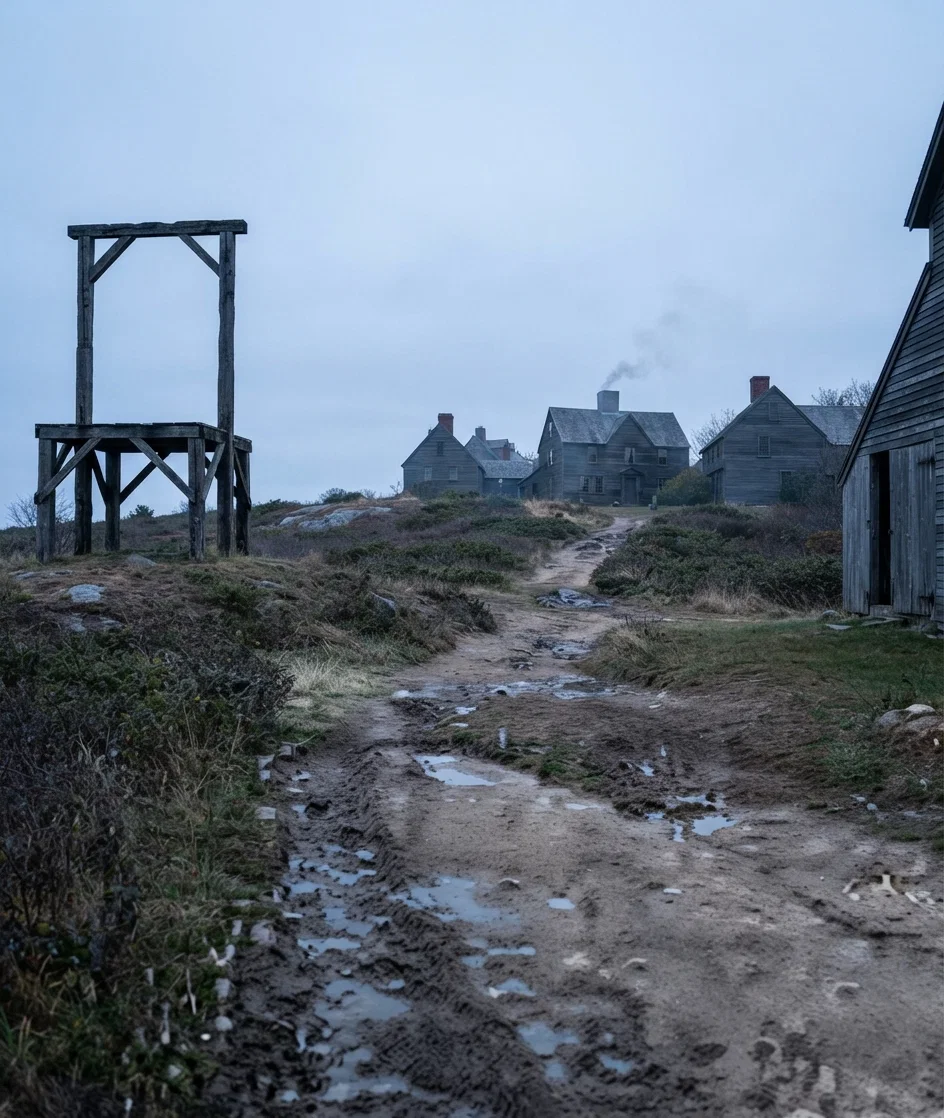
Gallows Hill Where “Witches” Were Executed.
Roger Williams, the Apostle of American Liberty.
(Continued from Page 3.)
"He held that it was not lawful to require a wicked person to swear or pray, which were both forms of worship, and that the power of the civil magistrate extends only to the bodies, goods, and the outward state of men, and not to their souls or their consciences."
He maintained that "no human power had the right to intermeddle in matters of conscience, and that neither Church nor State, neither bishop nor king, may prescribe the smallest iota of religious faith."
As a Christian, he did not believe in any union of Church and State, or any legal complications, ties, or obligations between religion and the civil authorities. His first trouble at Salem was for "denying the right of magistrates to punish Sabbath-breaking and other religious offenses, as belonging to the first table of the law."
He held that in matters of religion "man is responsible to God alone."
In defense of these views, he published in 1644, in London, his book entitled, "Bloody Tenent of Persecution for Cause of Conscience." It was written in the form of a dialog between Truth and Peace.
Such was Roger Williams. God in His providence sent this servant of His to Massachusetts to save those new-planted colonies from the curse of religious tyranny. The city of Salem might have been a glorious beacon light, if, instead of banishing Williams they had retained him. When Williams was driven out in the pitiless forest cold of January, 1636, the people of Salem drove out from their own hearts the love of truth and liberty.
Behold the result: The very city where Williams preached, only fifty-five years later was putting innocent persons to death as witches. In the very house where Williams lived, those accused witches were tried, and from there led forth to Gallows Hill for execution. If Williams had been permitted to remain, this black blot had never been
seen on Massachusetts, and the term "Salem witchcraft" would have never been heard.
Williams died at the ripe age of eighty-four, eight years before the Salem witchcraft, but the colony which he founded knew naught of such troubles. There were agitators and opponents, whom he contended against by speech and pen, whom he could have banished, but would not, because they had the same rights as did he.
America may forget him or honor him; it matters little; but forgetting his principles, leaving them out of her life, the blood of souls will stain her garments, and Ichabod shall be written over the ruins.