Civility and Morality

4%

Pacific Press Publishing Company · Mountain View, California · Jul 10, 1907

FromSigns of the Times, Vol. 33, No. 28.

Read the full edition

Civility and Morality

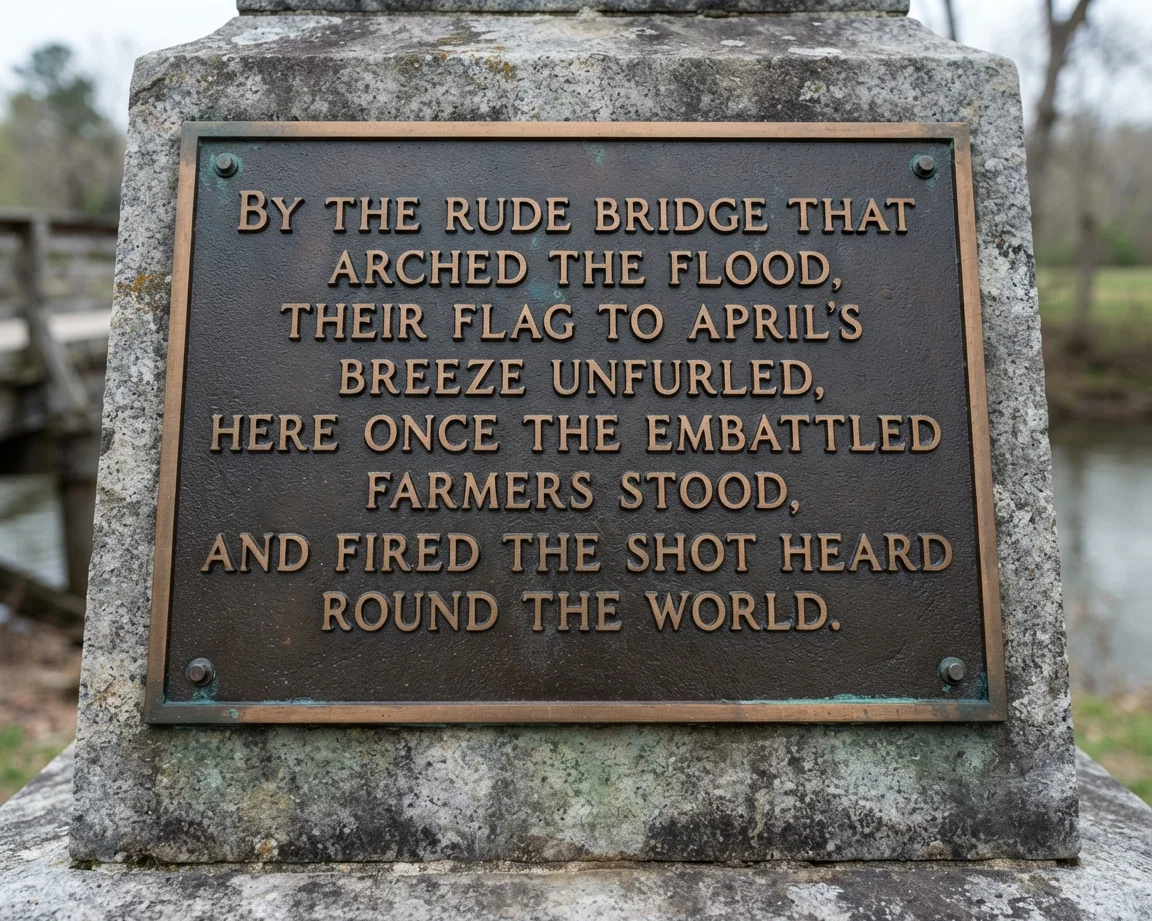
Patriot Monument, Concord.
We often hear persons being spoken of as "good moral men," but that "they are not religious." To be strictly correct, however, we should say that such persons are good civil citizens, and this statement includes the type of morality that is generally intended when we speak of the "moral man."
Civility requires that we respect the civil law of the land, and that we have a decent regard for the courtesies and customs of our neighbors and associates. A person may be a good peaceable citizen of the land, giving careful heed to every law of his country, and yet fail to live in harmony with the requirements of the great, perfect, moral law of Jehovah.
Civility, closely analyzed and correctly understood and applied, has to do with our ordinary every day relations with our fellow men, but would not include our higher relations to God and to His moral law. In the field of civility the State may properly legislate, and may rightfully govern all its subjects. But into that higher realm of morality where man communes with his Creator, the laws or restrictions of no legislature, civil ruler, or potentate may ever come.

Morality and Conscience.

Morality has to do in reality with the conscience in its exercise toward God. Man may refrain from committing the overt act of killing a fellow being, and thus he could not be said to violate the law of the land that makes it a crime to commit murder. But God's moral law which says, "Thou shalt not kill," is much broader than the State law against homicides. Hear the words of Him of whom it is said, "It pleased Jehovah, for His righteousness' sake, to magnify the law, and make it honorable." His words are:
"Ye have heard that it was said to them of old time, Thou shalt not kill; and whosoever shall kill shall be in danger of the judgment: but I say unto you, that every one who is angry with his brother shall be in danger of the judgment; and whosoever shall say to his brother, Raca [an expression of contempt], shall be in danger of the council; and whosoever shall say, Thou fool, shall be in danger of the hell of fire. If therefore thou art offering thy gift at the altar, and there rememberest that thy brother hath aught against thee, leave there thy gift before the altar, and go thy way, first be reconciled to thy brother, and then come and offer thy gift. Agree with thine adversary quickly, while thou art with him in the way; lest haply the adversary deliver thee to the judge, and the judge deliver thee to the officer, and thou be cast into prison." Matt. 5: 21-26.
Inscription on the Patriot Monument Above at the Left.
The foregoing scripture is from Christ's sermon on the mount. It has been spoken of as His inaugural address in the which He opened His ministry upon earth and outlined the principles that govern His kingdom. In this text we see the law of Jehovah as He would have us understand it; we see it under the divine magnifying glass and thus get a glimpse of the depth and the breadth of its infinite spirituality. The laws of men can only take cognizance of outward acts that have been really committed. But the law of God meets us long before the evil deed has been actually done by revealing to us that it is wrong to entertain the thought of committing sin or crime. The laws of men seek to deter from crime by the fear of punishment, should the overt act be committed. But the law of God meets us in the secret chamber of the heart and conscience where it is impossible for man to enter, and tells us that if we hold men in contempt and rail at them even in our thoughts we have already entered on the road that leads to actual murder, and so God will call us to account.
Inscription on the Monument Above at the Right.
Where First British Fell.

His Morality Begins with Mind and Heart.

The spiritual depth and the breadth of meaning of the sixth commandment, as set before us in the words of the Master, are in harmony with His teaching in the same discourse concerning the seventh commandment. His words are:
"Ye have heard that it was said, Thou shalt not commit adultery; but I say unto you, that every one that looketh on a woman to lust after her hath committed adultery with her already in his heart." Matt. 5: 27, 28.
Thus has the Lord shown us by His comments on two of the commandments that His law takes cognizance of sin when it is only in the mind and heart, and long before it is worked out in the actual committing of any evil deed. Then to obey the moral law requires the regulating of the thoughts to bring them into harmony with that law. And when this is done it is perfectly evident that no overt act of wrong-doing will ever be committed by the individual so keeping God's law.

Inspired Poet and Apostle.

The psalmist had this same magnified view of the law of God, for we hear him praying, "Let the words of my mouth and the meditation of my heart be acceptable in Thy sight, O Jehovah, my Rock, and my Redeemer." Ps. 19: 14. He saw by inspiration and also taught that the meditations, the thoughts, must be made acceptable to the Father in heaven if men would have the perfection of character that meets the morality of the law of Jehovah.
And in harmony with this teaching of the psalm are the words of the Apostle Peter upon the same subject:
"Wherefore girding up the loins of your mind, be sober and set your hope perfectly on the grace that is to be brought unto you at the revelation of Jesus Christ; as children of obedience, not fashioning yourselves according to your former lusts in the time of your ignorance; but like as He who called you is holy, be ye yourselves also holy in all manner of living; because it is written, Ye shall be holy; for I am holy." 1 Peter 1: 13-16.
The "girding up of the loins of your mind" is plainly the first and most essential requirement of morality. And such morality as is thus required by the law of God is far beyond the ideals of those who speak of people who are "good moral men," but are not religious. A "good moral man" in the sense which Christ in the Bible teachesmorality is the highest type of manhood, and being the highest it includes all types of true civility that are below it. The person who is truly moral in God's sight is in reality the very best type of citizen for the State. For such a person is so far removed from breaking the law that he will not allow the thought of anything that is wrong to be harbored in his mind to break out in evil deeds. He keeps himself free from the burning fire of crime by always keeping himself clear of all the materials that can be made to blaze forth into sin and iniquity.

The Civil Power and Morality.

It should also be very clear to any one that the civil power of the State can not take cognizance of the morality of the law of God. For the morality of that law has its very essence and substance in the obedience of the mind itself to the divine commandments. And as the civil ruler can not know what men are thinking about he can not try nor punish them for immorality, only as that immorality is represented in overt acts that violate a civil statute.
The civil law, then, can properly only take cognizance of some outward word or act of men. The civil law must confine itself in its operations to the things that have actually been said and done. But the divine law begins its work long before the deed or word is outwardly expressed. The divine law is obeyed by right thinking and by right meditating, and contrariwise it is violated by wrong thoughts and wrong meditations.
The foregoing facts were recognized by the founders of this government and were made a chief corner-stone in the foundations of the new Republic. It was clearly set forth by the men who established the independence of this nation that the civil power could of right have nothing to do with men in matters of religion. As religion was between God and man and not between the State and man, the question of religion must be left for the man to settle with God and not with the State. Such principles are so clear that it would seem that men could never forget or depart from them.
All genuine Christians will be civil because they are obeying the higher law of Jehovah. And all who do not submit themselves to the higher law must be required to be civil by human law. Otherwise anarchy and disorder would soon depopulate the earth. But when the State has gone to the extent of requiring men to be civil one to another, and thus to respect each other's natural rights, it can properly go no further. It can not in reality enter the realm of religion, which is the realm of the secret thoughts and of conscience, and therefore it should not attempt it. Wherever the attempt has been made it has only resulted in the cruelties of persecution.
The man's civility is what we can see and hear in his words and behavior. His outward civility may represent truly what the man is on the inside, or it may be only a sham. But the man's morality represents what he is in reality. It goes down to the very secret purposes of his soul life and is the man in very fact, and not the man as he appears on the outside to other men. To enforce civility is to work in the open where all can see and the rights of none are thus invaded: to attempt to enforce morality is to presume to invade the realm and prerogatives of God, for God alone can read the thoughts and the motives of men. And the legitimate fruit of the effort to regulate not merely the civil relations but also the morals of men is the inquisition and all the attendant tortures and horrors of persecution.