The Word of Prophecy

3%

Pacific Press Publishing Association · Mountain View, California · Feb 10, 1909

FromSigns of the Times, Vol. 36, No. 6.

Read the full edition

The Word of Prophecy

By B. G. Wilkinson, A.M., Ph.D.

Daniel's Night Vision—A Revelation of the Future.
[This article on Daniel 7 is complete in three issues. We ask our readers to compare its symbols and predictions with history and fact.—EDITOR.]
It was Nebuchadnezzar, a heathen, who had the first dream. None, therefore, could say that the prophetic dreams of this book began in the religious excitement of a Jewish believer. The next dream was given to Daniel. Nebuchadnezzar's vision was introductory; its development was found in the vision of Daniel. The dream of chapter two dealt with metals; these, however, were little adapted to express many important movements running along with this line of history. In Daniel's vision of chapter 7, new features of these events are brought out by new symbols.
"In the first year of Belshazzar, king of Babylon, Daniel had a dream and visions of his head upon his bed; then he wrote the dream, and told the sum of the matters. Daniel spake and said, I saw in my vision by night, and, behold, the four winds of the heaven strove upon the great sea."
The "great sea" represents humanity. "And He saith unto me, The waters which thou sawest . . . are peoples, and multitudes, and nations, and tongues." Rev. 17:15. God lifts Daniel up to a high viewpoint and lets him see the forces which play upon humanity. Men are swayed by the fire of ambition and driven by the storms of war. The Scriptures use the winds as a fitting figure to represent the strife between nations. "And upon Elam will I bring the four winds from the four quarters of heaven. . . . For I will cause Elam to be dismayed before their enemies." Jer. 49:36, 37.
As Daniel gazed upon the nations in tumult, he beheld arise one after another the successive empires of history.
"And four great beasts came up from the sea diverse one from another."
Like the wild quadrupeds of mountain and jungle, the bellicose nations of earth prey upon each other. Unwittingly, man has, like God, chosen the same symbols to represent martial governments. We hear to-day of the lion of England, the bear of Russia, and of the American eagle. A glance thrown upon the postage-stamps of the different nations, upon the coins or on the national flags, will discover these different creatures, whether bird or beast, which have been selected to mirror the intended characteristics of the pictured country.

Babylon.

As the head of gold was made from the king of metals, so the king of beasts is the first animal which Daniel sees arise.
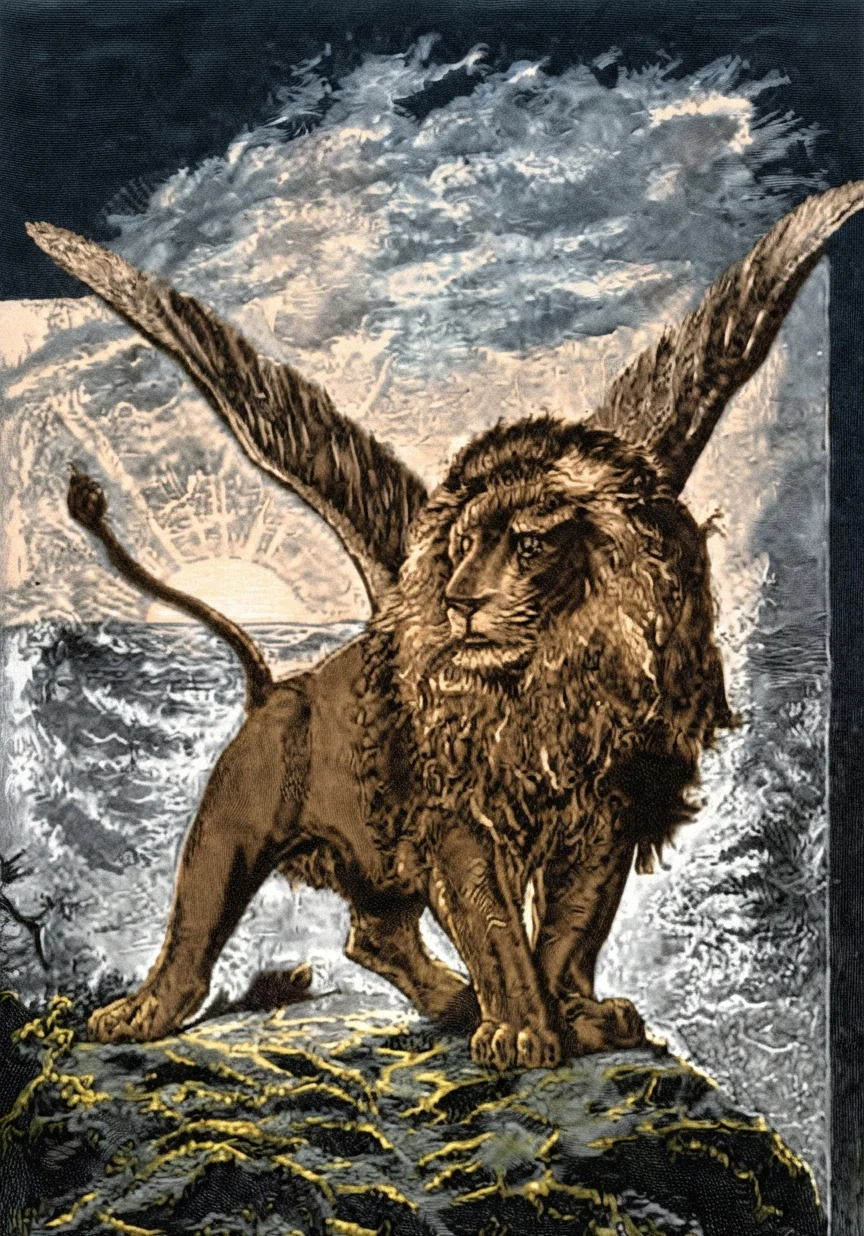
"The first was like a lion, and had eagle's wings: I beheld till the wings thereof were plucked, and it was lifted up from the earth, and made stand upon the feet as a man, and a man's heart was given to it."
By consulting further the Bible we find that the empire of Babylon is many times brought before us under the figure of a lion. "The lion," says Jeremiah, announcing the invasion of the Babylonians, "is come up from his thicket, and the destroyer of the Gentiles is on his way." The ancient palaces of these kings had their entrances flanked by the massive stone figures of winged lions; these have been brought to light by the excavator's spade. The eagle's wings denote the rapidity of Babylon's conquests. But Daniel lived to see the wings plucked when he beheld the conquering spirit of Nebuchadnezzar's successors diminish and their armies turn back before their enemies. The fearless heart of the conquering lion underwent a change: the heart of man, naturally weak when unsustained by God, as was Belshazzar on the night of his impious feast, supplanted the other. The lion stays his marauding and rises upon its feet as a man.

Media-Persia.

The kingdom of Babylon, however, fulfilled its mission. It had torn God's people. Led on by the Most High, it had given Israel a wholesome punishment. The Jews henceforth were the sworn enemies of idolatry. Another nation was already in sight to carry further the plans of the Eternal.
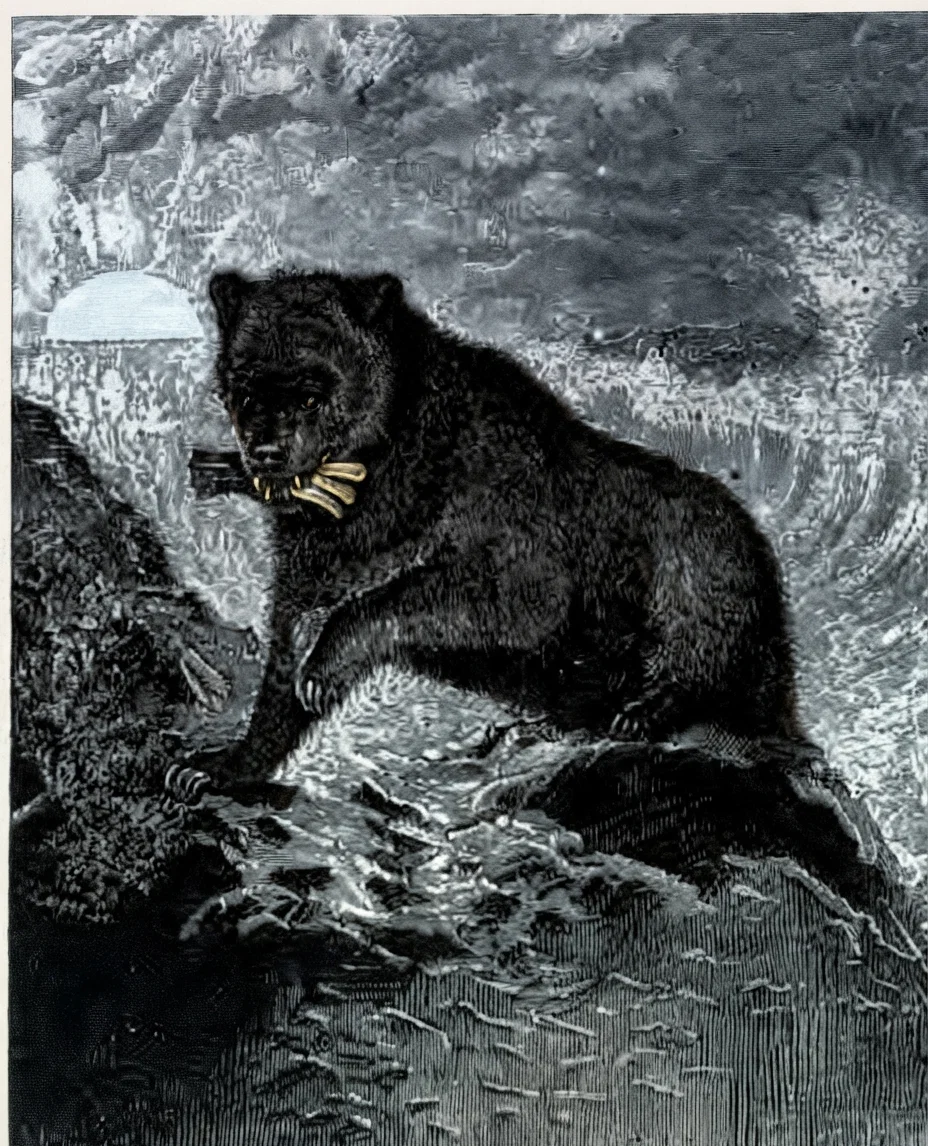
"And behold another beast, a second, like to a bear, and it raised up itself on one side, and it had three ribs in the mouth of it between the teeth of it; and they said thus unto it, Arise, devour much flesh."
The bear-like beast, which now appeared in sight, was the Medo-Persian kingdom. That it raised itself up on one side was due to the fact that the Medes were, first, the more prominent of two; later, however, under Cyrus the Great (538-529 B.C.) the Persians secured and held the leading place. Under him and his active son, Cambyses (529-522 B.C.), three great nations—the three ribs in the mouth of the bear—Babylon, Lydia, and Egypt, were successively conquered. The Persians were led to believe that their arms were irresistible, and the spirit of conquest kept saying, "Arise, devour much flesh."
But riches came in. The Persians were led, as is given in Daniel, chapter 11, to trust no longer in God, but in their riches.

Greece.

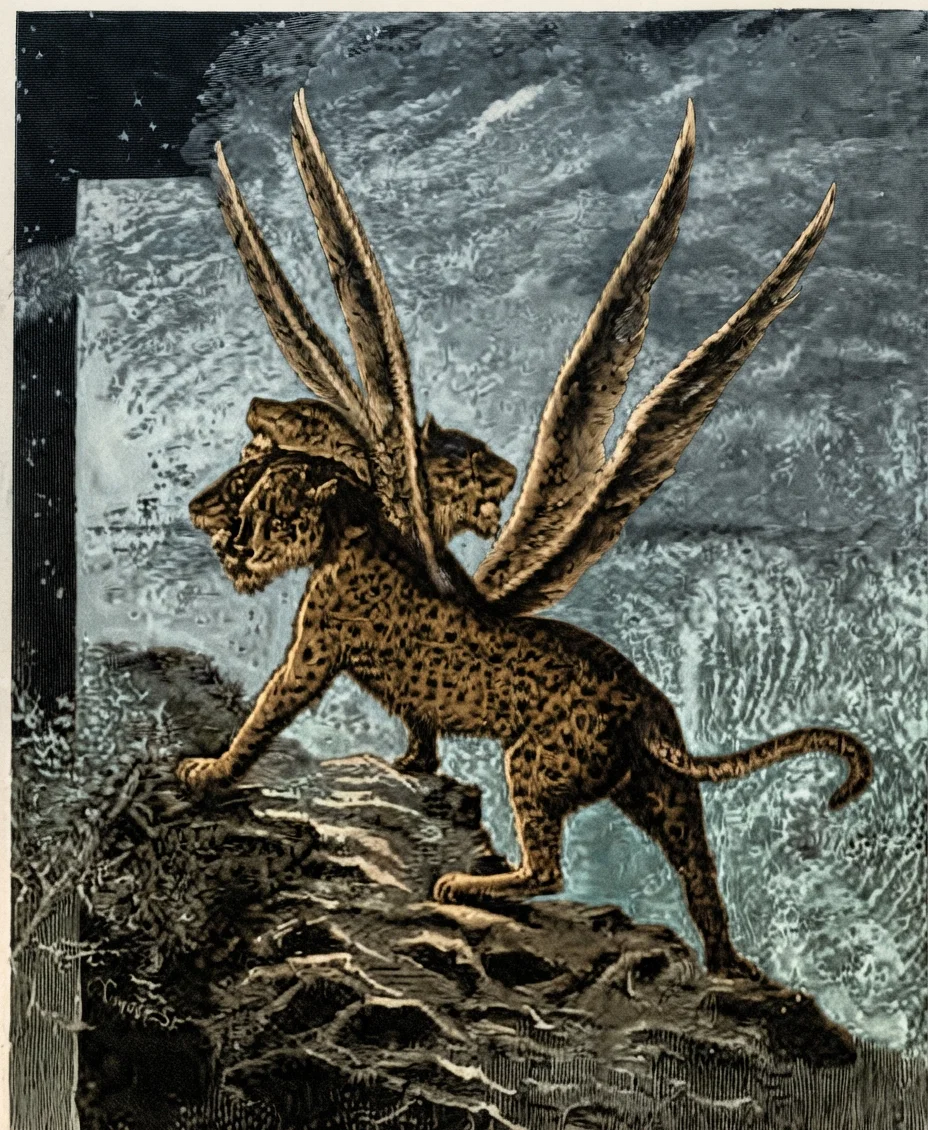
"After this I beheld, and lo another, like a leopard, which had upon the back of it four wings of a fowl; the beast had also four heads; and dominion was given to it."
Lighter afflictions failing to reform the Israelites, God brought upon them a heavier one. The rough handling by the bear was followed by the attacks of the leopard, or Greece. "The children also of Judah and the children of Jerusalem have ye sold unto the Grecians, that ye might remove them far from their border," cried Joel against Tyre and Sidon. Removed far from their native land and often treated as slaves, the Jews remembered the prosperity of the days when they walked in God's commandments. Their conquerors, the Grecians, scattered them widely over the earth, for the conquests of the Greek were wide. The four heads on the leopard represent the four generals to whom fell the great empire of that conqueror, in 301 B.C. Cassander received Greece and Macedon; Lysimachus, Thrace and Asia Minor; Seleucus, Syria and the East; and Ptolemy, Egypt.
Thus wonderfully do the records of man write afterwards the history which the record of God has written before. The dominion of the leopard ran the course foretold of it by God's word.

Rome.

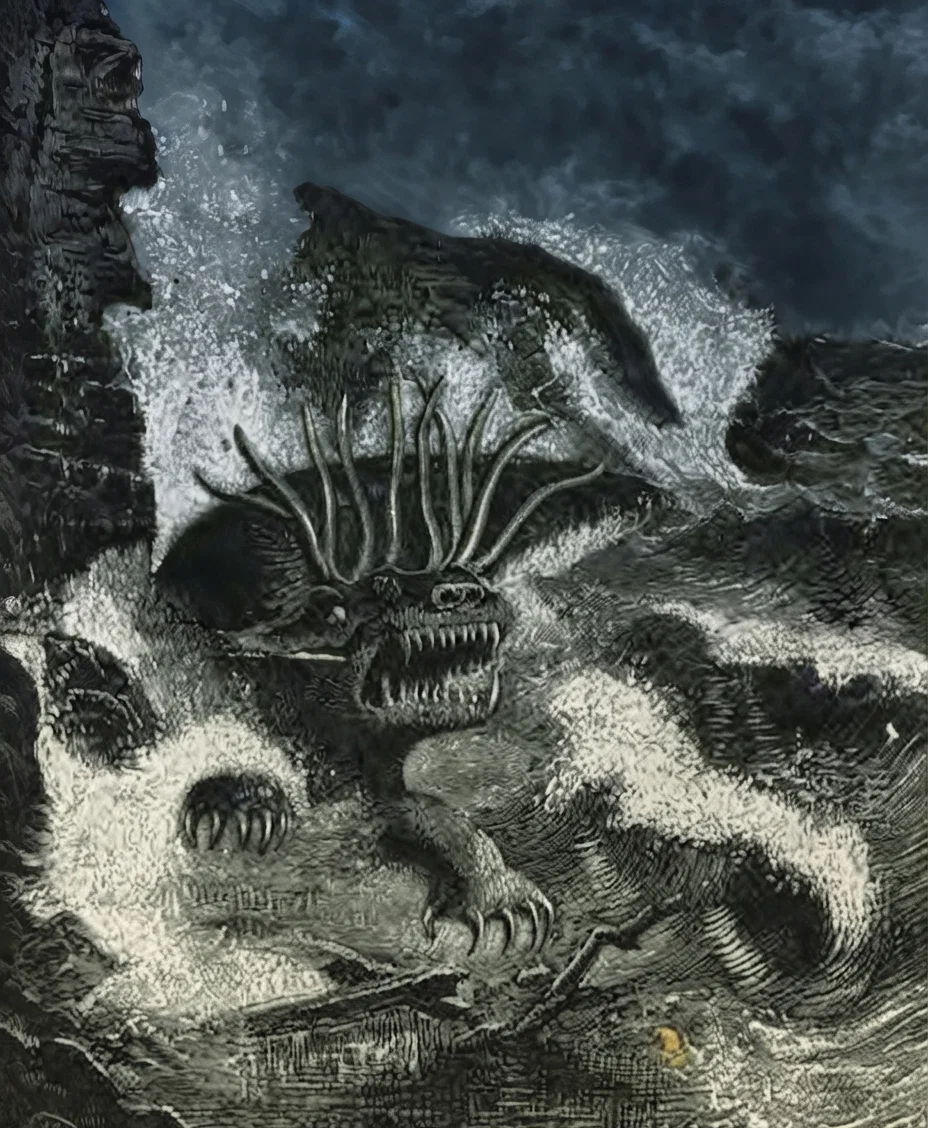
"After this I saw in the night visions, and behold a fourth beast, dreadful and terrible, and strong exceedingly; and it had great iron teeth: it devoured and brake in pieces, and stamped the residue with the feet of it: and it was diverse from all the beasts that were before it; and it had ten horns." Interpretation: "Thus he said, The fourth beast shall be the fourth kingdom upon earth, which shall be diverse from all kingdoms, and shall devour the whole earth, and shall tread it down, and break it in pieces."
If the Jews had found a master in the Grecians, in the Romans they found a more terrible one. The Roman Empire was the great leveler. So constantly had the Roman people under the Republic been engaged in war, that, during the space of about 475 years, the temple of Janus, whose gates were open in war and closed in peace, had been shut only twice. During the reign of Augustus, however, the whole world slept in peace. As the prophet had foreseen, Rome had trodden down all nations and had brought them into subjection. This was true not only physically, but also religiously. "During the whole duration of the Roman domination," says Gaston Boissier in his "La Fin du Paganisme," Vol. I, "I see not a single wise man, were he a skeptic like Pliny the Elder, or a freethinker devoid of all prejudices like Seneca, an honest and gentle philosopher like Marcus Aurelius, who appeared to have suspected that equal rights might be granted to all the religions of the Empire." (See Baron Pierre de Coubertin, in his "Evolution of France," page 305.)
(Continued next week.)