AT the outbreak of the Civil War in this country, scarcely half a century ago, the war-ship was a clumsy, wooden vessel after the type of some of the illustrations in these pages. But during that war the Confederates built a very crude iron-clad vessel, the "Merrimac," and the Union forces met her with the first revolving turret battle-ship, the "Monitor."
For over two decades following that war, very little was done to further develop Erickson's revolving turret, monitor idea. Then suddenly the minds of men became stirred, and a floating fortress comes riding over the waves that is simply terrible in its powers for destruction, and seemingly invulnerable in its armor.
The naval battle of the Yalu was fought between the Japanese and the Chinese, but the modern war-ship was so new to both of these powers at that time that but very little was learned, and no particular stimulus given to the world in naval construction. A little later, however, came the war between Spain and the United States, and modern war-ships met each other in action, and so far as this country was concerned, under the direction of skilful men. Just a little after this came the Russo-Japanese War, and then a mightier frenzy than ever takes hold of the minds of men to lead them to build fighting ships still more terrible than ever.
When the war with Spain broke out in 1898, the United States had but four first-class battle-ships. These were the "Oregon," "Indiana," "Massachusetts," and "Idaho." In the brief ten years that have elapsed, the advance in naval construction has relegated these ships, regarded as so powerful in their day, to the
class of coast defense vessels. The "Oregon" accomplished the record-breaking feat for those times by steaming from San Francisco Bay all the way around Cape Horn, reaching Santiago in time to participate in the destruction of Cervera's fleet. But this powerful battle-ship of just ten years ago, which in its day attracted the wonder and admiration of the world, is now away behind the procession.
The Spanish war brought the United States to consider herself a world power in a light in which she had never been looked upon before. Then began, with most strenuous earnestness and vigor, the building up of a great battle-ship fleet.
The "Oregon," which was a representative of the first-class battle-ship of ten years ago, had a displacement of 10,288 tons; and the muzzle velocity of her greatest guns was only about 2,000 feet a second. The "Kentucky" and the "Kearsarge" were the first battle-ships to go into commission after the Spanish war, and they each had a displacement of 11,520 tons. Then follows in rapid succession the construction of one battle-ship after another until now there are nineteen of these monster fighting machines in commission that have been built in the last ten years, and four more are under construction, making twenty-three in all. The present Congress is being urged to authorize the construction of four more right away, and it is quite certain that two at least of these will be voted, and the probabilities are that the four will be placed under way.
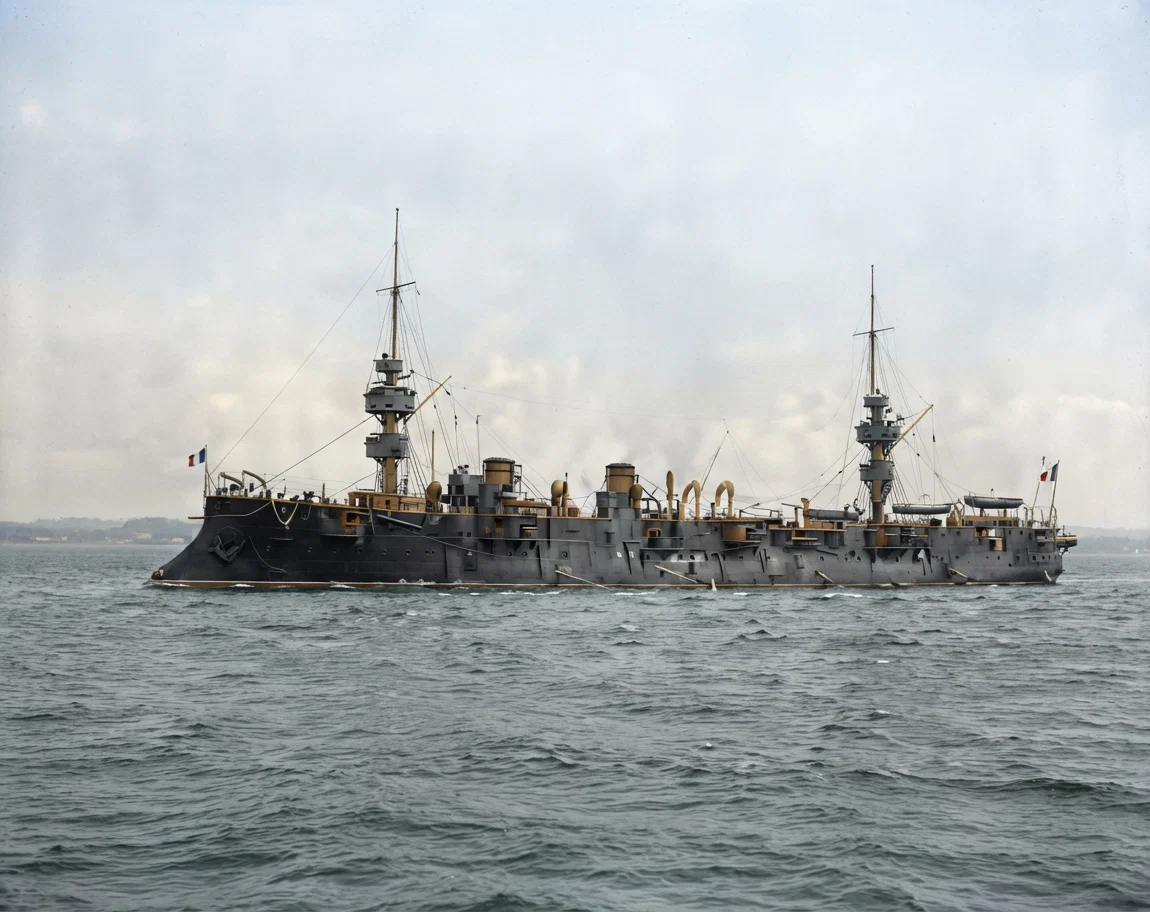
The battleship Richelieu, 1915.
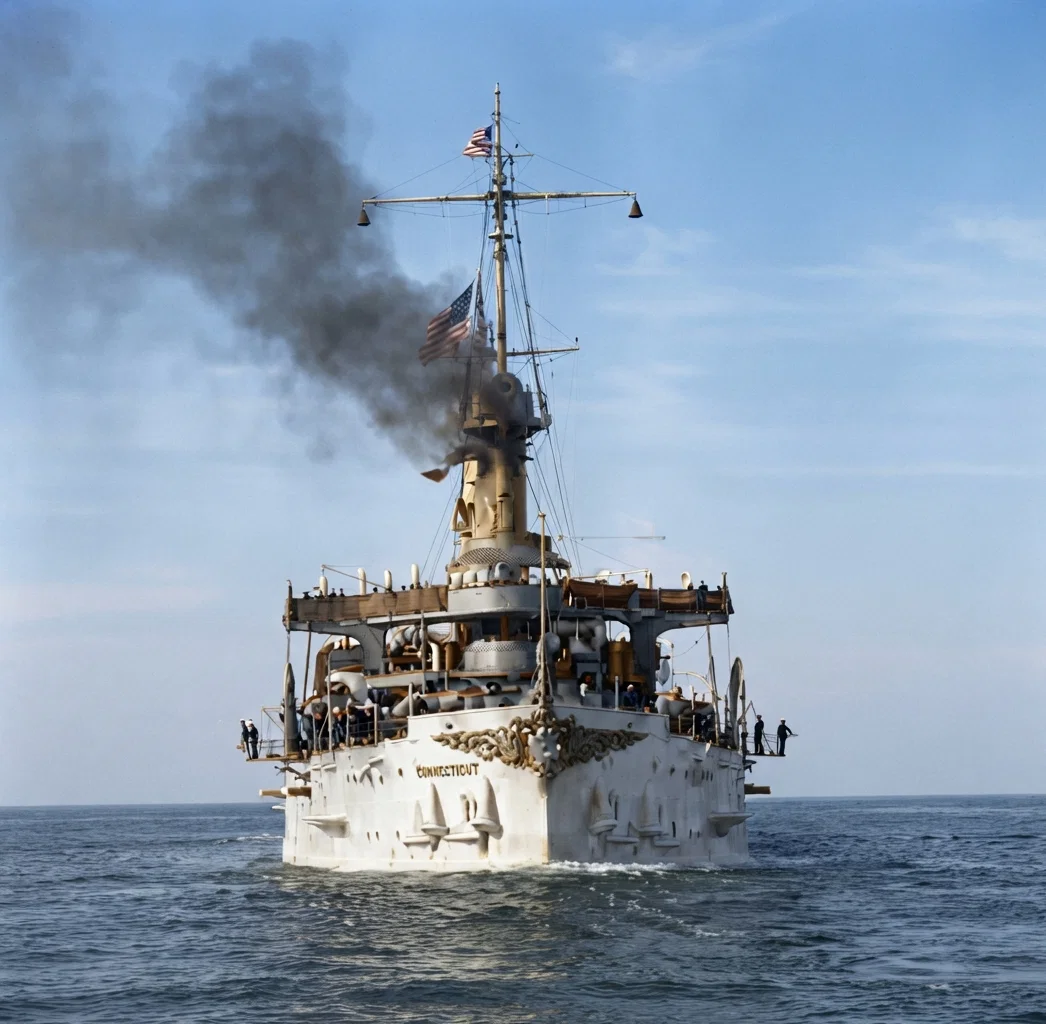
The size of the "Kentucky" was raised to the extent of 1,232 tons above her immediate predecessors. Then the size of the battle-ship jumped up to a displacement of 14,948 tons, and this was soon followed by the ships of the "Connecticut" class with the still greater displacement of 16,000 tons; and two of the
ships now building are to have a displacement of 20,000 tons.
These marvelous strides in the building up of her navy by the United States, has led Great Britain to quicken her pace also, for she aims to maintain a navy that will be fully equal to any two of the other naval powers of the world. She has fifty-five battle-ships in commission of which twenty-six have been launched since 1897. In addition to these she has three others of the "Dreadnaught" type that are nearing completion, and still three more that are under construction.
The "Scientific American" says: "In the interval that has elapsed since the Spanish War, the growth of the naval power has been something phenomenal. During the same decade, and mainly as the result of the Russo-Japanese War, there has been a marked change in the theory of war-ship design and construction." It may be of interest to note some of the most prominent of these changes.
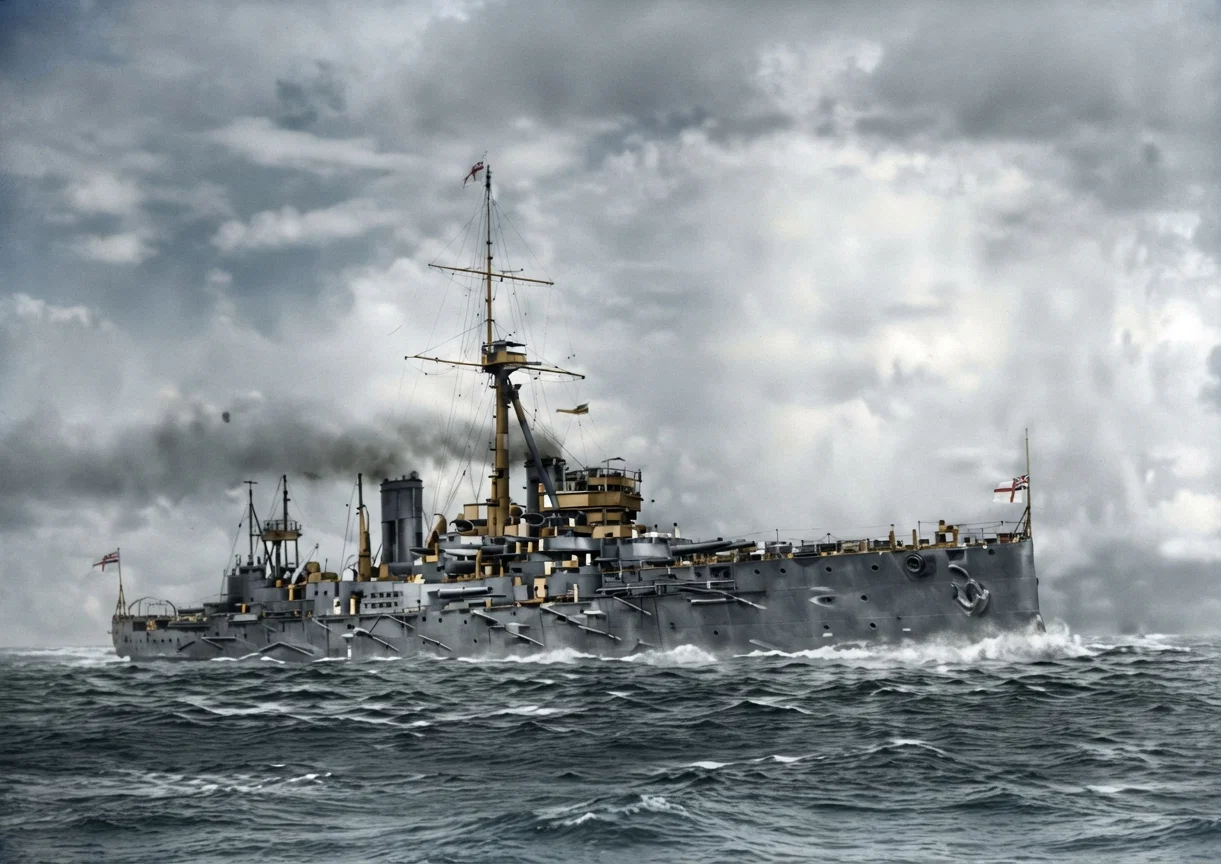
The British Admiralty had their officers on the war-ships of the Japanese navy in their war with Russia. As an ally to Japan, Great Britain was thus afforded every opportunity to study closely the question of what improvements could be made in these floating engines of destruction. Immediately after the war was over, these naval men got down to the work of designing a ship that would outdo anything that had previously appeared, and in 1906, within one year from the time her keel was laid, England13had completed the "Dreadnaught," the most powerful ship yet built. Her displacement is 17,900 tons, and her speed is 21 knots. She is armed with ten twelve-inch guns, each gun forty-five feet long, and the projectile has a muzzle velocity of 2,900 feet a second. When it is considered that only recently it took from three to four years to build one of these great ships, the speed with which "conservative and steady, plodding, old England" has built the mightiest floating fortress of the age is truly marvelous.
Copyright, Enrique Muller, N. Y.
Ten years ago the muzzle velocity of the big guns, as already stated, was about 2,000 feet a second. But observe that the guns in the main batteries of the "Dreadnaught" have a muzzle velocity of 2,900 feet a second. That would mean that, if a projectile could be made to keep up that speed for a little over twelve hours, it would entirely encircle the globe. Manufacturers have been increasing the resistance of armor-plate, and these powerful guns are the efforts of the gun manufacturer to produce a weapon that will pierce the improved steel with which the modern ship is protected.
Ten years ago it was considered that the battle-ship must be a slow vessel in order to be powerful. But the inventions and the improvements of these few intervening years have completely antiquated that idea, and it will be observed that the powerful "Dreadnaught" has a speed of twenty-one knots.
The three British ships of the "Dreadnaught" class that are nearing completion in their shipyards are of 700 tons greater displacement, and mounting twelve-inch guns fifty feet in length of a more powerful type. The three that have just been laid down are still more powerful ships.
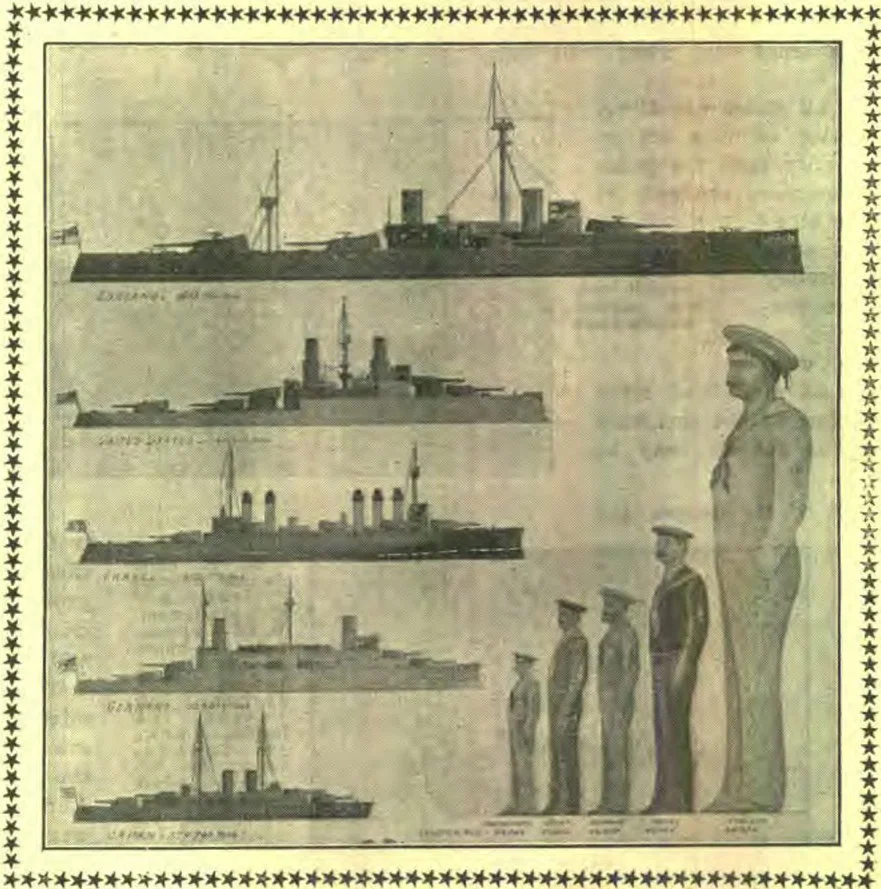
Courtesy of the Scientific American, copyrighted. Comparative strength of leading naval powers in ships and enlisted men. England in ships, 1,633,116 tons; United States, 611,616 tons; France, 609,079 tons; Germany, 529,032 tons; Japan 374,701 tons. Enlisted men: England, 98,973; France, 51,926; Germany, 42,400; Japan, 41,070; United States, 34,062. The United States is the second naval power in ships, the fifth in men.
Thus it will be seen that even the "Dreadnaught" herself is scarcely two years old before she is outclassed by considerable odds, and may soon be expected to be obsolete. The 20,000-ton vessels which are building now in this country, to use a current phrase, are
the "answer of the United States to the battle-ships of the 'Dreadnaught' type which are being constructed for other navies." And some of the naval experts are even now suggesting that the battle-ship of a few years hence will be one of 30,000 tons displacement, a still higher rate of speed, and with much more powerful guns.
It is very difficult to get hold of the facts in regard to what the Japanese are doing. But some of the current reports say that they
are attempting to outdo Great Britain by completing some ships of the "Dreadnaught" type in eight months. But be that as it may, we know that Japan has come to be one of the great world naval powers. In the efficiency of her ships she stands fifth, and in the efficiency of her men she stands fourth. And having come to consider herself the special guardian of the interests of the Orient, all the energies of her youthful vigor will be expended to increase her power on the waves.
France has kept pace with this strenuous, yes, furious, increase in the efficiency of her navy, and maintains her position as the third naval power of the world in point of ships, and the second in point of men.
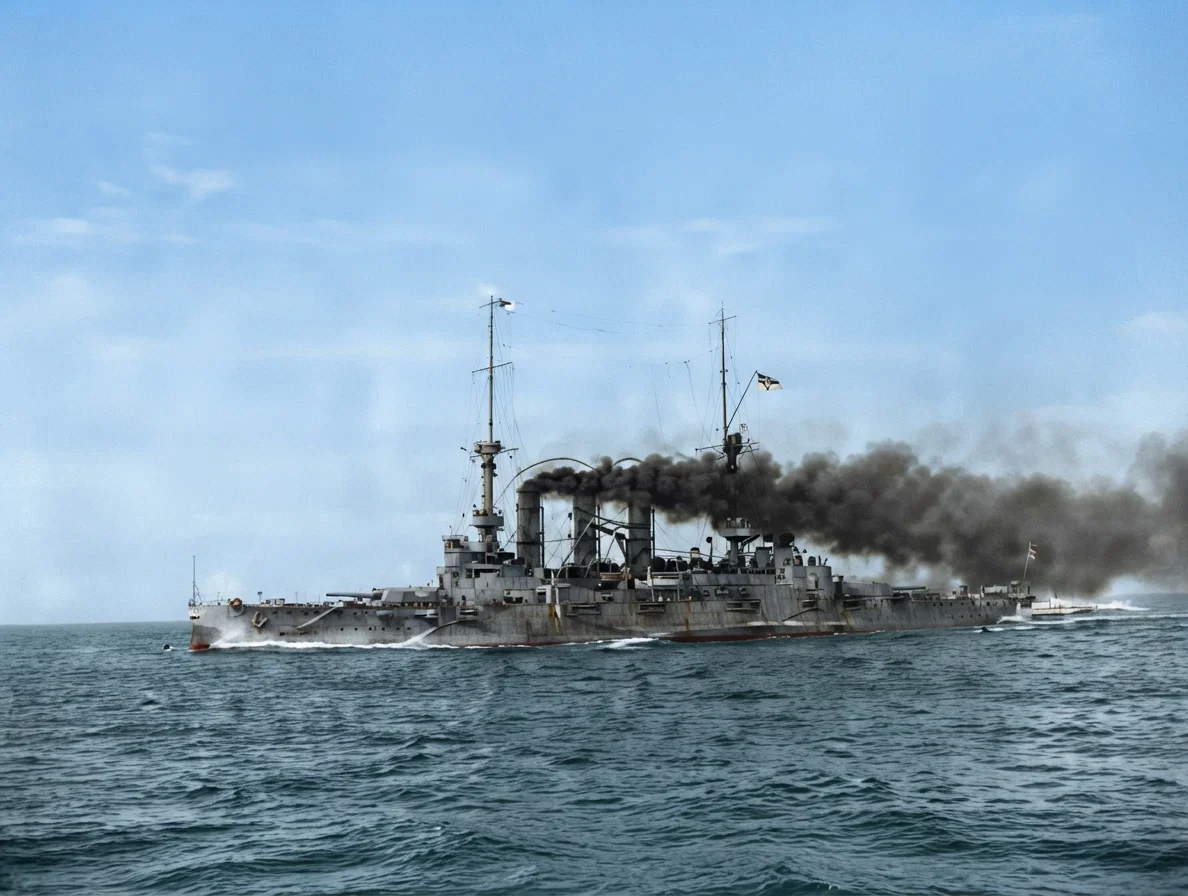
Twenty-five years ago Germany had no navy. But the ambition seized her to become the equal of Great Britain in naval strength, and to-day she is the fourth power in the strength of her ships, and the third in the efficiency of her men.
In the foregoing paragraphs the attempt has been made in the plain language of the layman to tell some of the marvelous developments in naval lines, particularly during the last few years.
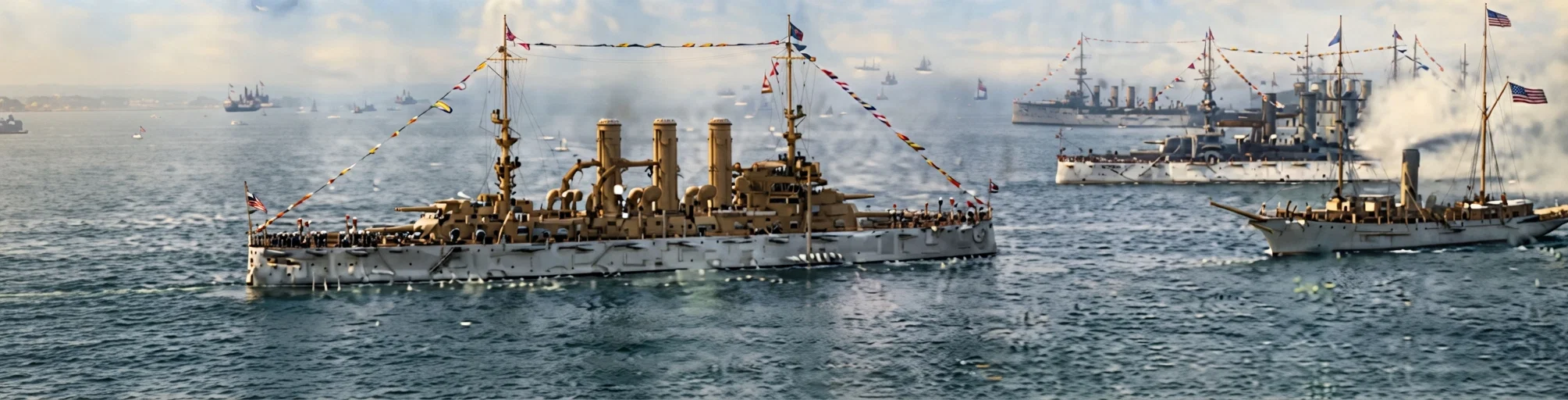
"Jean Bart," representing the French navy in the naval review of Hampton Roads.
We could not go into detail, for it would make an article entirely beyond the limits of these pages, and what has been said has been confined largely to the development of the battle-ship. There are, however, other implements of the navy that should be mentioned in passing, for they have been developed within a very few years, and have come to be considered quite an essential adjunct to the battle-ship itself.
The practicability of the submarine torpedo-boat was very much in doubt ten years ago. Indeed at that time it had scarcely come into notice. But now every navy has numbers of them, and they have been perfected until they can be relied upon to do their work with as much certainty as any other vessels. The submarine torpedo-boat moves along scarcely discernible above the water; and when it approaches the enemy, it dives completely out of sight, propels itself to the enemy's ship, discharges a torpedo against her while at a safe distance herself, and the great fighting monster is so torn by the explosion that she settles to the bottom of the deep from the effects of this single stroke. In case of war, no vessel is ever safe from the attack of the submarine, and there is no knowing when they are lurking around ready to strike their death-dealing blows.
Wireless telegraphy is another product of the last few years, and by means of this invention the great battle-ships can keep in touch with each other, and commanders can receive reports and give directions at sea, even the many of the vessels under them are far removed from their ability to see them. All the battle-ships are now equipped with wireless instruments, and their efficiency is thereby incalculably increased. Even the torpedo itself has been revolutionized during the last ten years, and among the improvements made has been the application of the wireless electricity principle to the guiding of the torpedo thru the sea while it is being driven by its own power against the enemy's ship.12Having touched a few of the leading facts concerning this startling development in naval lines during the last ten years, it will be well to close with a statement made by General Murray to a number of guests of the United States Government while visiting the Sandy Hook coast defenses something like a year ago. While what he says has reference to the gunnery of fortifications, it applies equally to the improvement and efficiency of the gunnery of the navy. The general's words are:
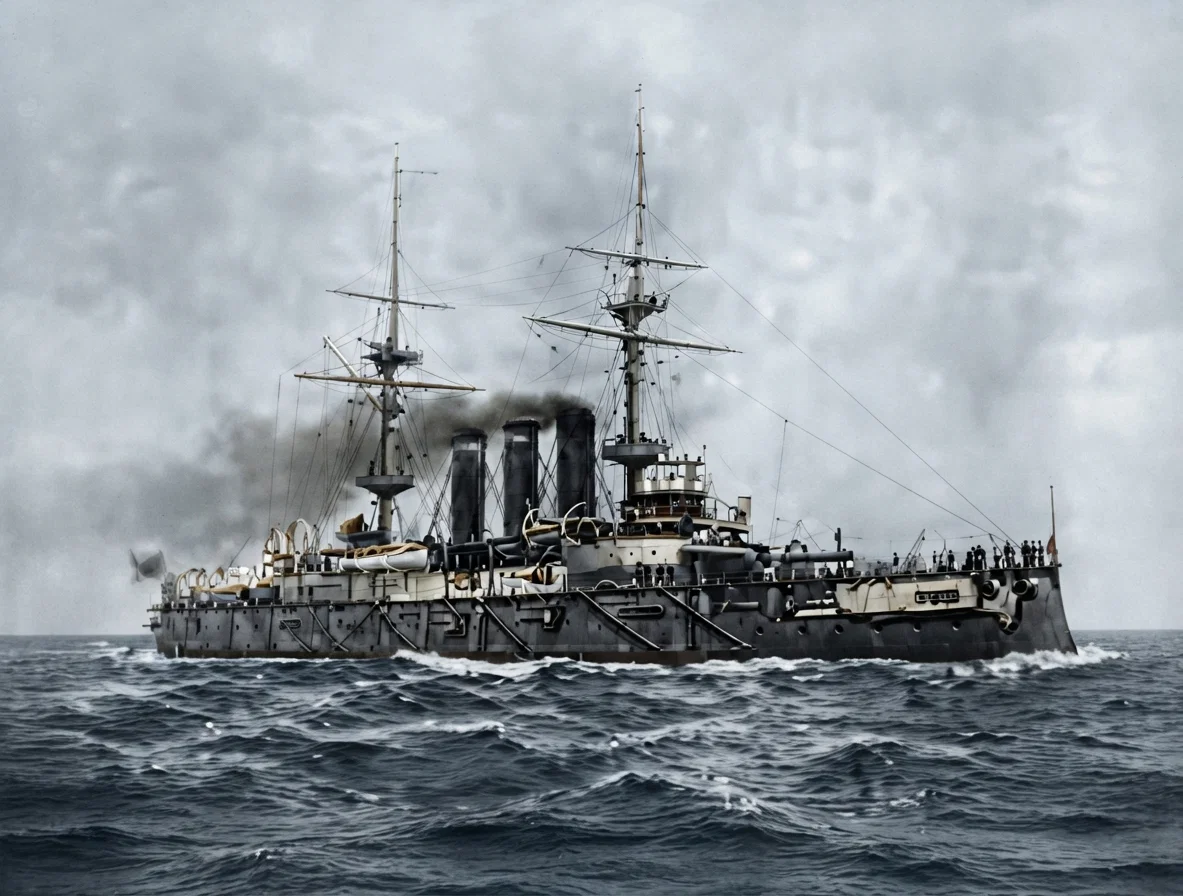
Japanese battle-ship "Shikishima." Displacement, 15,000 tons. Speed, 18 knots. Guns: 4 12-inch; 14 6-inch; 20 12-pounders, and 8 3-pounders.
"Five years ago the best results that could be obtained with the twelve-inch gun were one shot in three minutes, and the percentage of hits was fifty at a range of from 4,000 to 5,000 yards. During the intervening years, thanks to the admirable system of fire control [that is, the method of locating the target, and ranging the guns], the work of our gunners has improved so greatly that last year more than half of the guns fired made a record of 100 per cent in hits; the range has been increased to 6,000 yards, and the average time between shots reduced to one minute."
We have already shown that the gun of to-day strikes with one-third greater force than it did a few years ago, and General Murray now informs us that it also strikes twice as accurately and three times as fast. T.
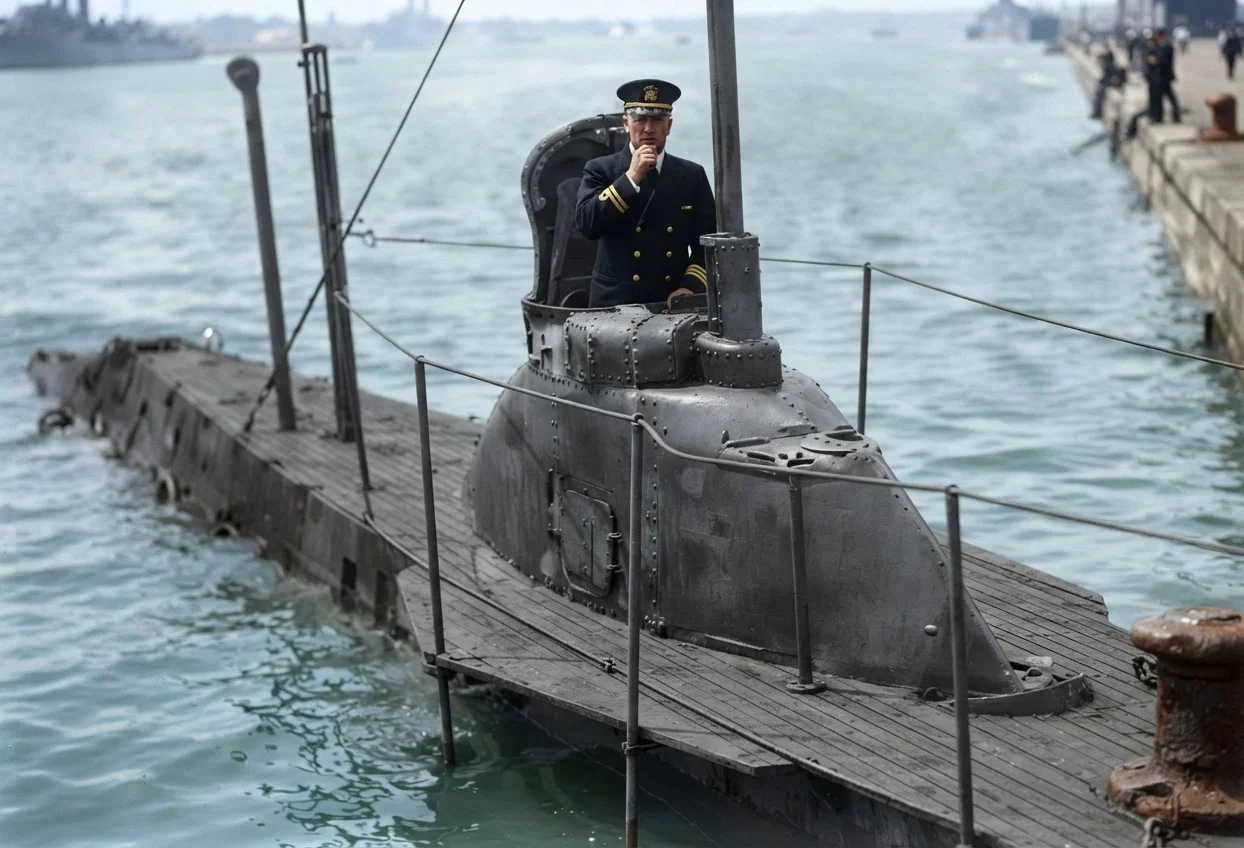
U. S. submarine torpedo-boat "Plunger." Whole number submarines, 8.