BOYS, in your play be very careful not to leave the garden-gate open. There are some pigs running about, and if the gate is left open, my fine garden will be ruined. Now be sure to remember."
With these words and a parting glance at the weedless rows of beans, peas, and potatoes, of which he was justly proud, Mr. MacOwen sprang into his buggy and drove to his office in the city.
Mr. William MacOwen was a prosperous business man, and his suburban home was ideal in its arrangements and surroundings. The garden was his special delight, and he had spent much of his leisure time that spring in caring for it. It now gave promise of rich returns for the labor bestowed.
The determined nature and rather austere manner of Mr. MacOwen made him distinctly the head of the family. His sweet-faced wife, with true Christian grace, had done much to soften the hard lines of his character. He loved her devotedly, and her womanly influence was exerted with so much tact and in so gentle a manner that he was almost unconscious of its power. The two boys, John and Will, feared the respected papa, and loved mama. They were manly little fellows, full of fun, but possessed of a true sense of honor and justice.
That evening when Mr. MacOwen returned to his home, what was his consternation to find the garden-gate open, the beds uprooted, and his fine garden plants torn and trampled into fragments. He stood at the gate a moment looking upon the ruin that had been wrought, then turned toward the barn, where he heard the voices of his boys at play. As he passed the low boughs of an apple-tree, he carefully selected a suitable switch, and trimmed it to his liking. His air was that of a just man about to inflict punishment upon the guilty.
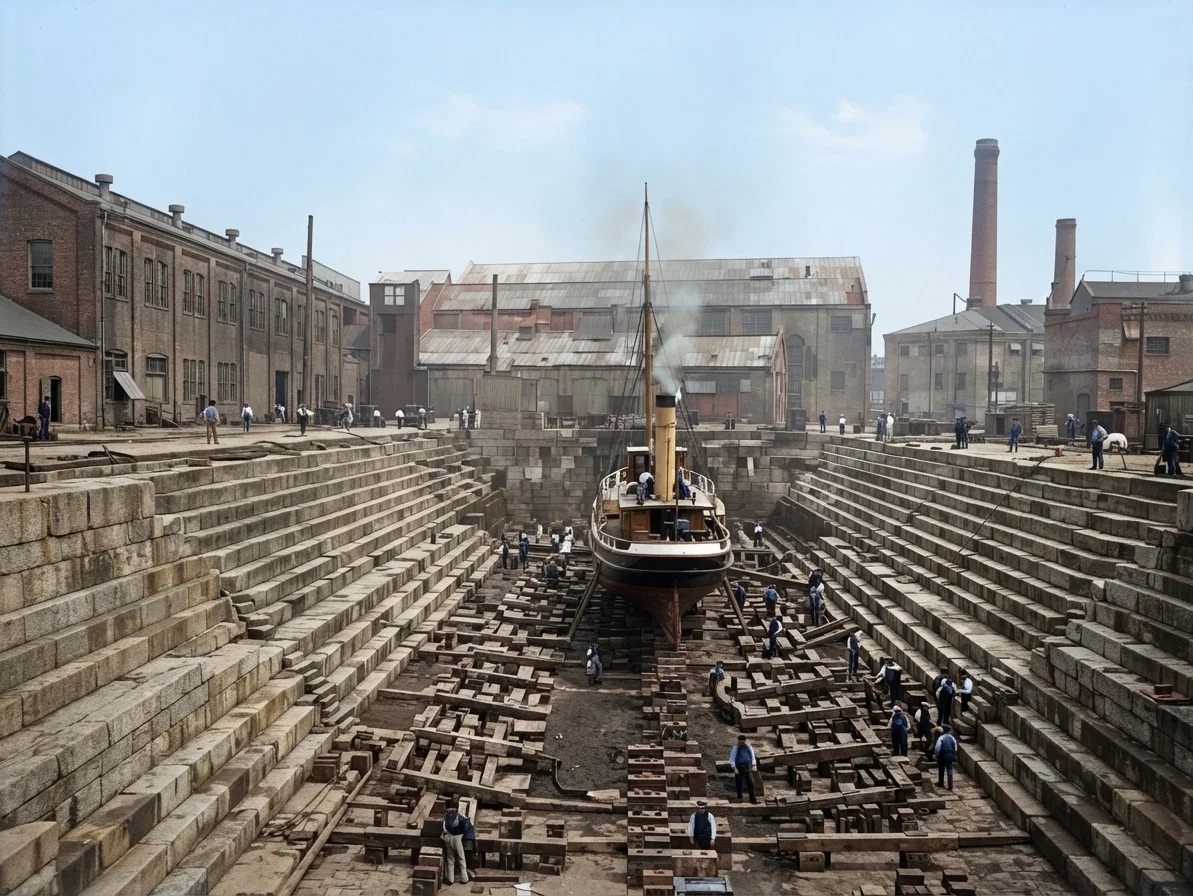
Dry Dock, New York Navy Yard. There are three dry docks at the New York (Brooklyn) Navy Yard. One of wood and two of stone. The largest is 650 feet long, 70 feet wide, has a draft of 29 feet, and cost considerably over $2,000,000. The great steam pumps of this dry dock can completely empty it of water in about four and one-half hours.
When John and Will saw their father coming, they stopped playing and held a hurried consultation; then John, the elder, stepped forward and said:
"We are sorry the garden is spoiled, father, but —"
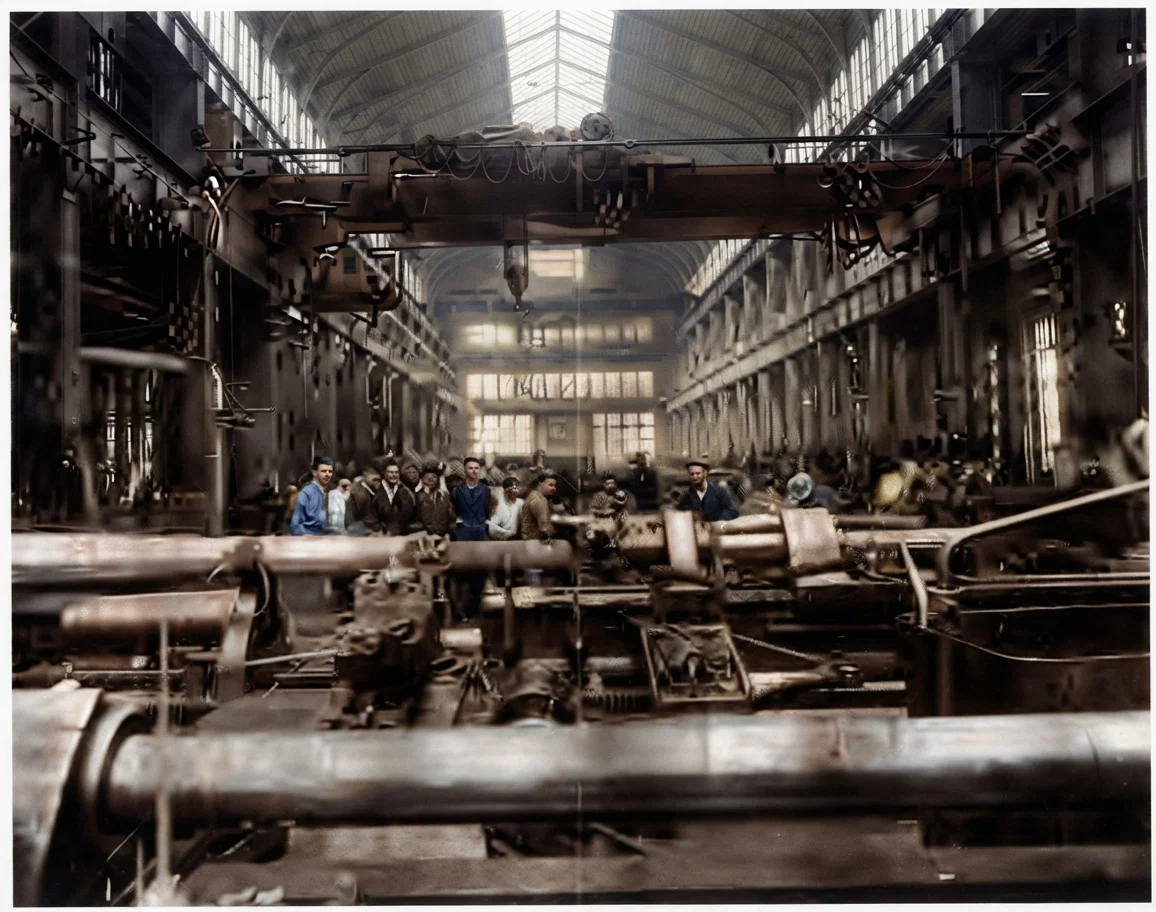
Gun shop of the Navy Yard, Washington, D. C. The cut shows the monster traveling cranes overhead that can pick up any of those large guns and place them in whatever position may be desired by the workmen. It also shows the work of turning and boring the guns.
"No explanation is necessary. I must teach you boys to remember what is told you. No excuse can justify such disobedience."
"But, father," began poor John.
"Not another word," replied Mr. MacOwen; and strong and steady were the strokes that fell upon the unresisting boy.
Little Will stood by with white face and trembling lips. When his turn came, a hard look crept into his little face, making it resemble in a marked degree the older, sterner face that bent above him.
When the demands of justice had been fully met, Mr. MacOwen attended to some work about the barn, and then went to the house. He entered the pleasant sitting-room, and found his wife in her easy rocker, with an arm around each of the little culprits. After a moment or two had passed, she quietly asked:
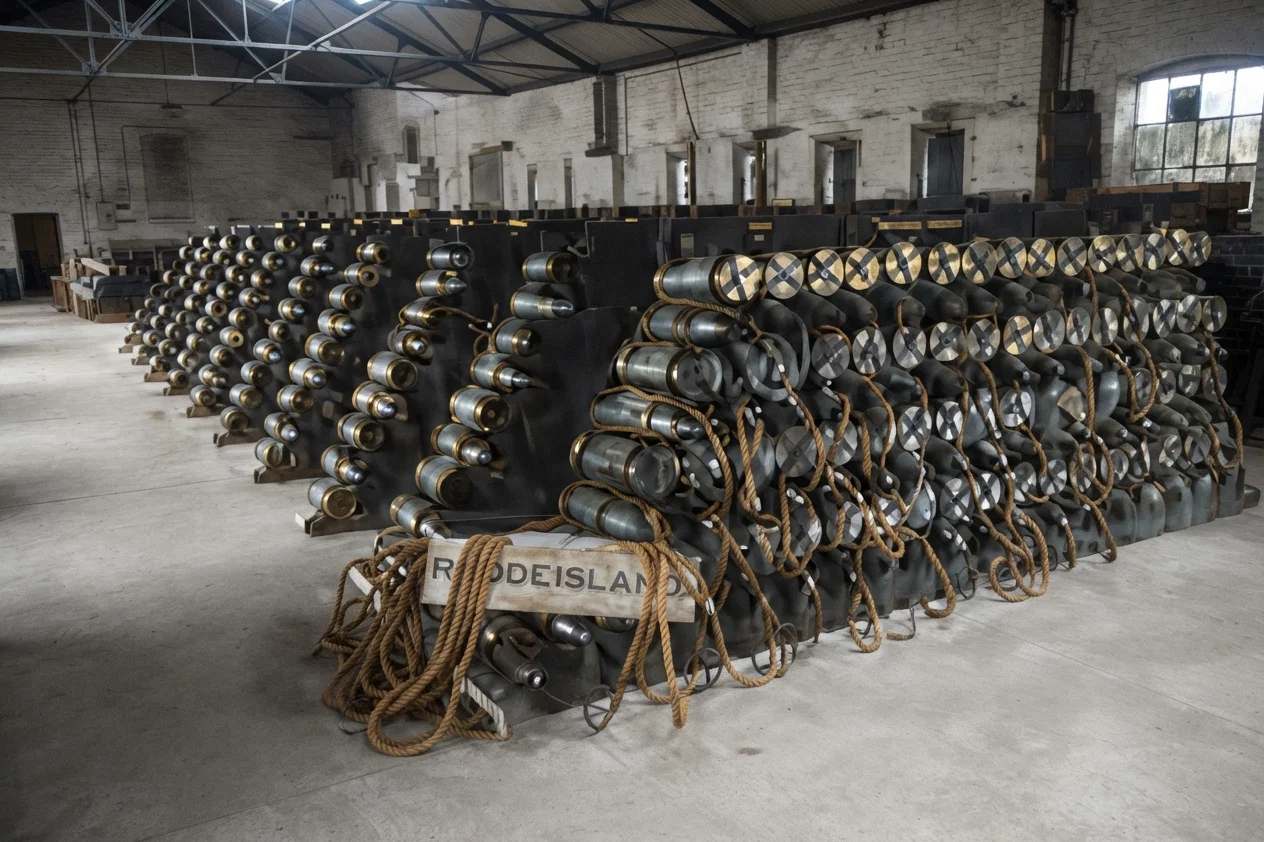
Courtesy of the Scientific American. Interior of shell-house, showing pile of loaded shells for U. S. Battle-ship "Rhode Island," incased in rope slings ready to be loaded on board.
"Why did you whip the boys?"
"Why did I whip the boys?" her husband repeated in a tone that betokened much surprise. "Have you not seen the garden, Mary? It is completely ruined. Not a thing left. The pigs have utterly destroyed it."
"Yes; but why did you whip the boys?" the mother again asked.
"I have told you why I whipped them. I warned them this morning to be very careful not to leave the gate open. Such carelessness is not to be tolerated."
"But, William, why did you whip the boys?" This time particular stress was placed upon the word "boys."
Mr. MacOwen looked at his wife in amazement. Slowly the thought forced itself upon him that in some way he had made a mistake. His wife rose, gently placed her hand upon his arm, looked up into his face and said: "Husband, it was I who left the garden-gate open."
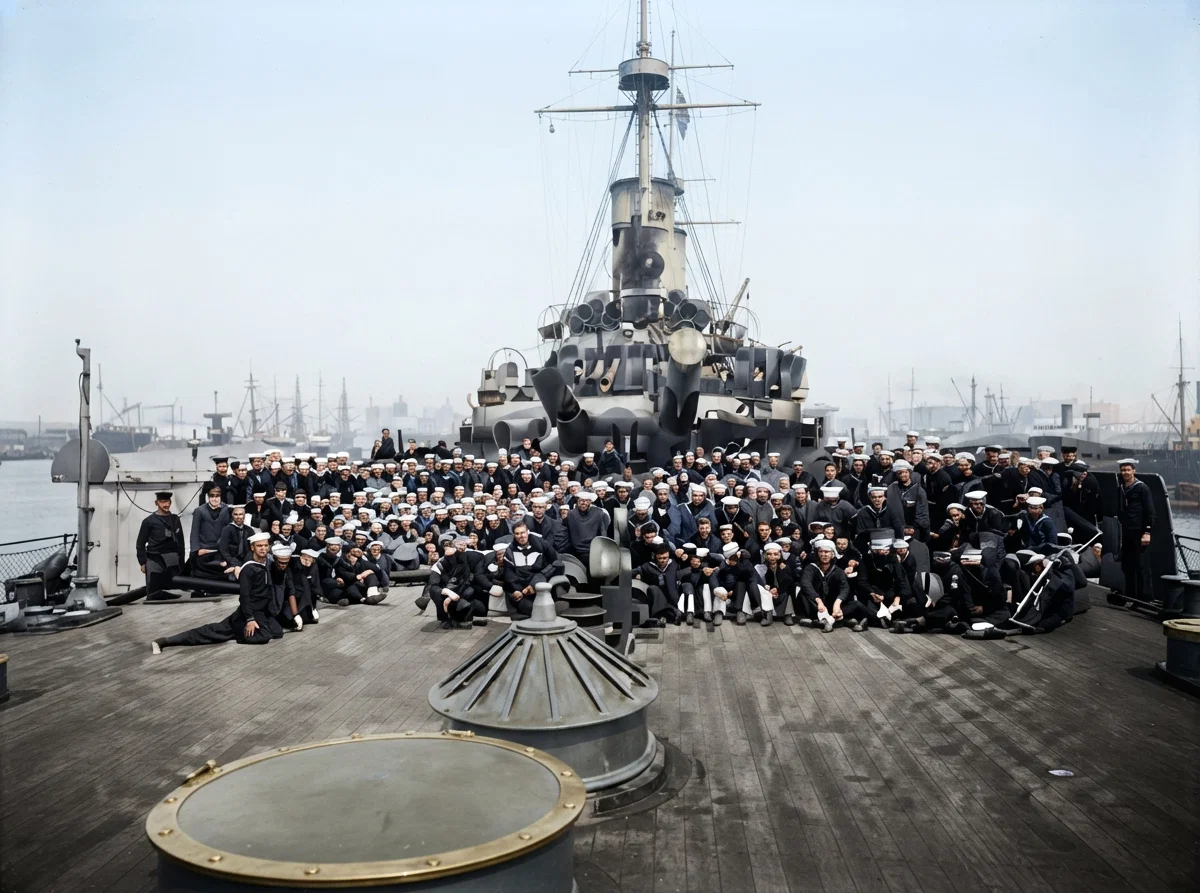
Ship's Company, U. S. Battle-ship "Indiana." "A ship's company is divided into two watches, port and starboard, and the watches are subdivided into divisions each in command of an officer. Certain portions of the ship are assigned to the care of each division, including the guns located in that part of the vessel. The subdivision of labor and duty is carried out to the last degree so that every man in a great ship's company has his own particular bit of work to perform upon all occasions. Everything in a war-ship is done with an absence of noise and without confusion."
The color left the man's face for a moment, and then returned, flooding it with shame. As he remembered John's attempted explanation, he realized keenly the injury done the boys, and sinking into a chair, he buried his face in his hands. His own heart condemned his whole course, and he felt that the mistake was a grievous one. He loved his boys, but it was difficult for his iron nature to humble itself and admit the wrong. However his sense of right pointed out to him that acknowledgment should be made. Then, too, he had been taught by the example of his wife upon many occasions the Bible doctrine of confession.15Yielding to the good influences which were working upon his heart, he called the boys to him, and in choking voice asked pardon for the wrong he had done them. Unused as they were to this display of feeling from their father, they were shy at first, but John soon threw his arms around his papa's neck, and laid his tear-stained face against the bearded cheek. Little Will was slower to make response. His face was still white and stern in childish resentment. But when mama knelt by him and tenderly told him the story of how Jesus forgave those who did Him wrong when He was upon earth, Will's heart melted, and in it all the father gained the wealth of his little boy's love.
Years after, in relating this incident to an intimate friend, Mr. MacOwen said that in this turning of his heart toward his children, dated the commencement of his yielding his heart to God.