THE great reason why we have so little good preaching is that we have so little piety. To be eloquent one must be earnest; he must not only act as if he were in earnest, but be in earnest, or he can not be effective. We have smooth and graceful, we have splendid and elaborate preaching, but very little that is in earnest.
One man who so feels for the souls of his hearers as to be ready to weep over them will assuredly make himself felt. This is what makes him effective; he really feels what he says. This especially was the charm of Summerfield, above all men I ever heard. We must aim, therefore, at high degrees of warmth in our religious exercises if we would produce an impression upon the public mind. Without an increase of our numbers, the very men we now have, if actuated with burning zeal for God, might work a mighty reformation in our country. — Dr. J. W. Alexander.
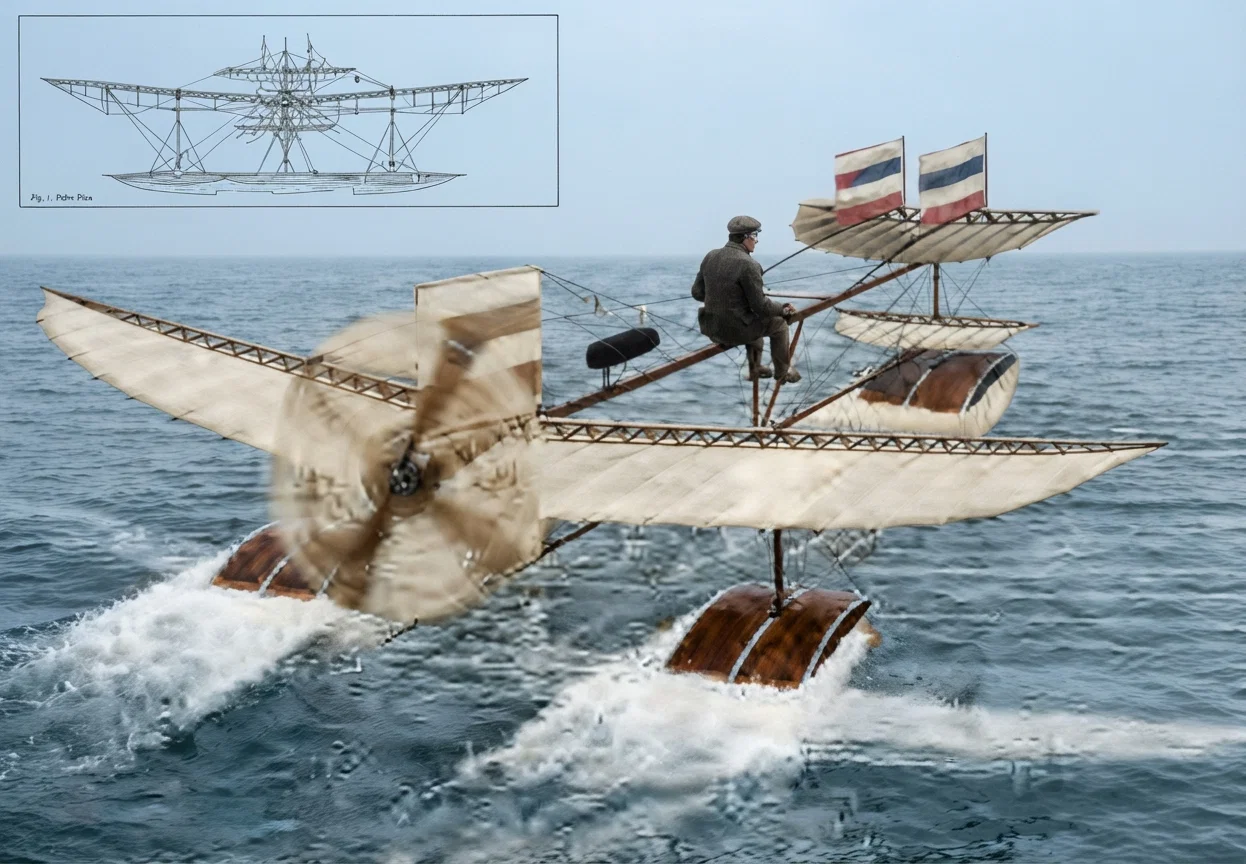
The Fabre Marine Aeroplane starting from the water. It is the first heavier-than-air machine to make successful flights in starting from and alighting upon the water. In the place of wheels it rests upon three hydroplane floats. The plane of the float also acts as an auxiliary supporting surface in the air. There is but little resistance in water even tho the floats may be submerged by waves. It has a depth of about 6 feet, and an area of 280 square feet. It uses a 50 horse-power engine, has an 8½ foot, two-bladed propeller, driven at 1,100 revolutions to the minute. Its total weight is 950 pounds. It certainly seems safer than the ordinary flying-machines. (Courtesy of the “Scientific American,” Dec. 17, 1910.)