EDUCATION and religion are twin sisters, and so dependent is the one upon the other that a religious revival, a reformation, if you please, is invariably either accompanied or closely followed by the development of a system of education. We are warranted in making the statement even stronger. To those acquainted with the great tidal waves of moral advancement which have from time to time swayed humanity, it is already clear that the work of some school, or the influence cast by the efforts of some man or set of men to get their fellow-men to think for themselves, has been necessary to start the movement.
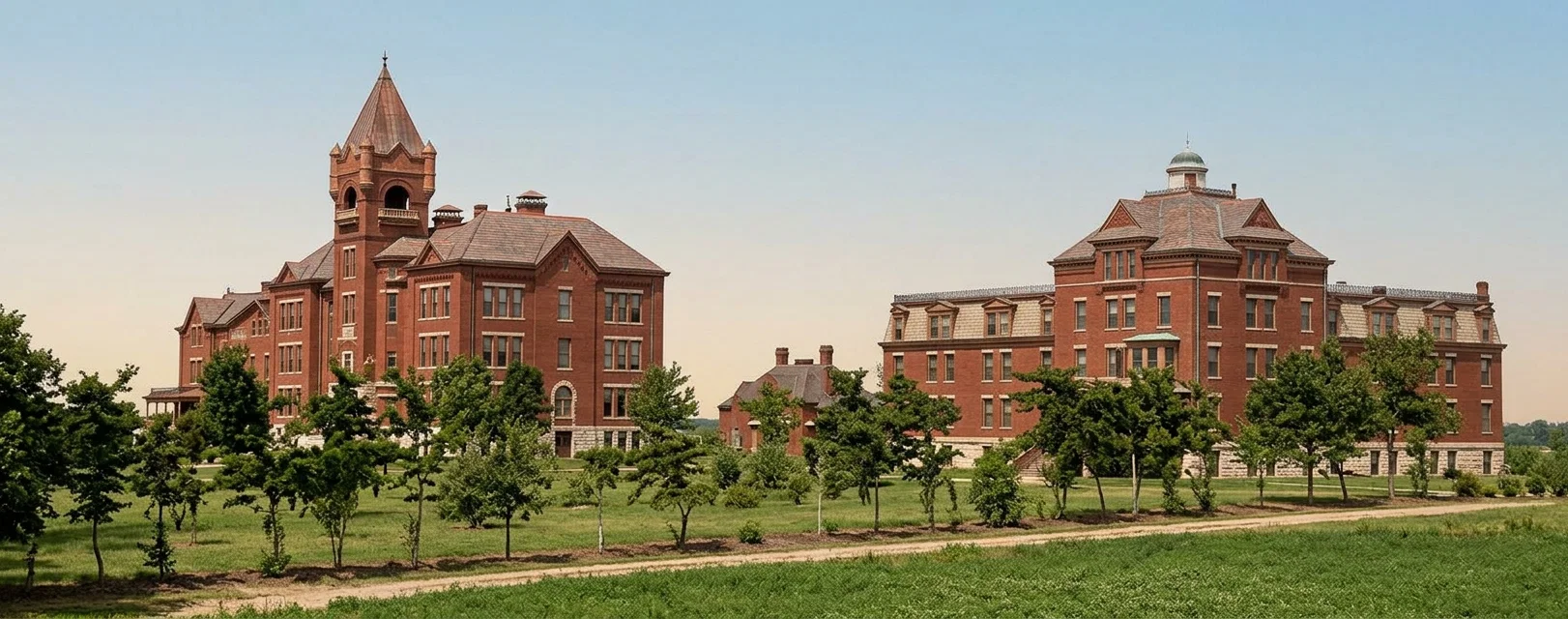
Union College, Near Lincoln, Nebraska.
The secret of the ability of the Papacy to hold nations in subjection during the period known as the Dark Ages was due alone to the fact that men were not allowed to read, to think, or to express an opinion. The first indication of original thought met with the most severe censure, and failure to return to the position automata has brought many a strong character to the stake.
Freedom of conscience, the fundamental principle of Protestantism, spread, in spite of all efforts to prevent it, because the Scriptures, the two witnesses which prophesied in sackcloth for 1,260 years, had been brought to light, and it was as impossible to hold thought in check when truth was planted in the brain as to stop the germination of a seed once planted in rich soil, warmed by the spring sun, and watered by the dews of heaven.
It must needs be that the Reformation of the sixteenth century in Germany should find its leader at the head of a school to which young men flocked, until Luther, writing to a friend, said, "We are as busy as bees here at Wittenburg."
It is, moreover, an unmistakable fact that when the light that shone from the Scriptures awakened minds hitherto darkened, it became necessary to materially alter the course of study previously offered and make that Word the basis of the educational effort.
Students' Home, South Lancaster, Mass. (From photo by editor.)
In England the same conditions existed. It was in Oxford and Cambridge that the truths of Protestantism found adherents. Milton, Tyndale, Bilney, Cranmer, and others testify to the fact that those who were learning to think were ready for the Gospel; and when that light found them, they were willing to sacrifice all, even life itself, for the spread of those principles.
It is almost needless to follow the movement across the Atlantic. Protestantism came to New England, and as, through adversity, its principles were more fully developed, we find that one of the earliest acts of the people of Massachusetts was the founding of Harvard College.
There was a strong religious motive behind the establishment of that institution, for Fiske, speaking of Henry Vane, who presided over the assembly that laid the foundation, says: "Thorough republican and enthusiastic lover of liberty, he was akin to Jefferson and to Samuel Adams. Like Williams, he was a friend to toleration." Whether or not the university has remained true to its purpose is not for us to say. To those who hear the calls for workingmen, men able to meet the stern realities of life, and see that we must look elsewhere than to the classical graduates of our famous educational institutions, a question arises whether it would not be well to return to the principle recognized by Luther, and place God's Word in its proper place as an educator.
To a denomination professing to adhere closely to the Bible the question of the education of its youth came with peculiar force. It was the duty of Seventh-day Adventists, if true to their trust, to warn the world of the second coming of Christ. If the world and its allurements were matters of but slight importance compared with eternal interests, should not the youth, during the years when their minds were peculiarly susceptible to impression, be placed in an atmosphere conducive to spiritual growth?
Healdsburg College, Cal.; College on Right, Students' Home on the Left.
South Lancaster Academy, Mass. (From photo by editor.)
With this object in view Battle Creek College was founded in 1874. Its aim as an educational institution has been well stated thus by one of its founders:
"Our school was established, not merely to teach the sciences, but for the purpose of giving instruction in the great principles of God's Word, and in the practical duties of every-day life."
It is painfully true that for nearly twenty years this institution, while having such an exalted standard before it, nevertheless failed to reach it because of an attempt to compromise with the systems offered by schools which made no such profession. However, between the years of 1891-98 the question was constantly kept before the minds of educators in the church, and as new schools were established (Union College, near Lincoln, Nebraska; Walla Walla College, in Washington; Keene Academy, in Texas; Mt. Vernon Academy, in Ohio; Graysville Academy, in Tennessee, and South Lancaster Academy, in Massachusetts, and others in various parts of this country and various foreign countries, as Cape Town, South Africa; Cooranbong, New South Wales, and in Denmark), it became more evident than ever before that the only salvation of the youth was to take a firm stand for that system of education which the Word of God makes plain. "They shall be all taught of God." "Thy word is a lamp unto my feet and a light unto my path." "The words that I speak unto you, they are spirit and they are life." It was decided to cut loose from the established ideas, and, accepting by faith the Word which they believed to be their life, to launch into new and untried fields.
Classical and scientific courses, musty with the spirit of the middle ages, were replaced by those lines of work which will prepare young people to raise the fallen, to relieve the sick and heal the broken-hearted; which would help them to apply honorable principles in trade rather than crowd others down for their own elevation; which will lead them into foreign fields, and will enable them to grapple with the problems of life, and point the downtrodden to the Lamb of God, who has a home in waiting for them.
The avowed object of the educational institutions among the Seventh-day Adventists is to make Christian workers; and to this object they hope to be true. Degrees and worldly honors are not the goal towards which students having in mind the spread of the Gospel, are aiming. "They left all and followed Him" is exemplified in the present curriculum.
Truth in its purity, truth in its simplicity and strength, is the object for which the schools aim.3
Walla Walla College, Wash.
Christ is the way, the truth, and the life. The Word of God is the first and greatest text-book, and His will, as revealed in nature about us, in the heavens above, and the earth beneath, follows closely after. Testing all things by the Word of God, finding there a principle of truth for every phase of life, a student can not err. Neither need he, with such a guide, be led to adhere first to one theory in science, then to another, only to find the most cherished one fatally defective when a strong ray of light from the throne of God is cast upon it.
In order to bring the best results intellectually it has been found advisable to follow the suggestions made to the father of the race when driven from the garden, that henceforth by works he should earn his bread. Work is the greatest blessing which survives the curse, and man can now return to his former position of physical, mental, and moral strength only through this avenue. Manual training is therefore placed upon the same basis as those lines usually denominated intellectual pursuits.
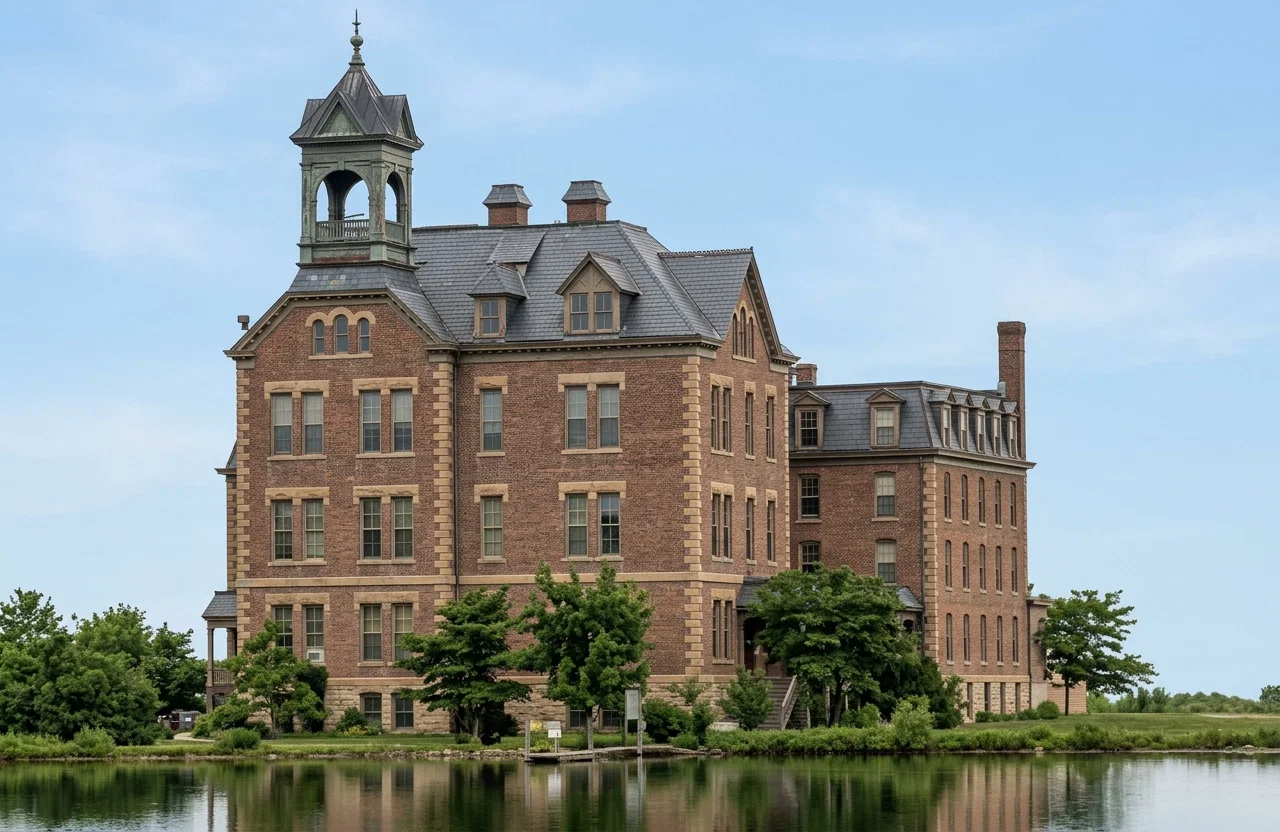
Battle Creek College, Mich.
Classes are conducted in tailoring, shoemaking, dressmaking, broom making, carpentry, cooking, nursing, and farming. Each department represents a phase of work which has the Word of God for its foundation. Young men and women have the privilege of learning a trade which will render them self-supporting.
Since Battle Creek College has taken its stand as a training school for Christian workers it has made a special effort to put its students into positions where they can do actual missionary work. The command, "Go ye . . . and teach all nations," has been heeded in a marked manner during the school year of 1889-1899.
The college conducts a mission at Jackson, Michigan, for the purpose of giving students an opportunity to develop their ability in city mission work. It has been a power for good to both the school and to the students privileged so to work. The sick have been treated, the hungry fed, the poor clothed, and to all classes the Gospel of Christ has been preached.
Students whose hearts have been touched by the infirmities of others need to hear but little of discipline. A calm, sweet spirit pervades the school, so different from the spirit of rivalry, or buffoonery, so often pervading college life. Games in a large measure give place to work for others. Simplicity of diet and dress are the order of the day. How could it be otherwise since all we have is but a loan? And while there are needy ones on earth, we must share our clothes and food. Then, too, strong minds are found only in properly-nourished and properly-clothed bodies. Those things tending to sensuality, whether in thought or action, are restrained by the longing for the inward purity of the Man of Nazareth.
Is it a thing to be wondered at that, living in such an atmosphere, characters should develop which are willing to carry the Gospel of salvation to earth's remotest bounds?
Restraint and compulsion are unnecessary. Ask a young person if he is ready to answer a call for a missionary teacher, a nurse, or a minister, and the answer, almost without exception, is, "Here am I, send me." Workers are now in course of preparation to encircle the earth with the message of glad tidings and of a soon-coming Saviour. From East and West, from North and South, come calls for workers.
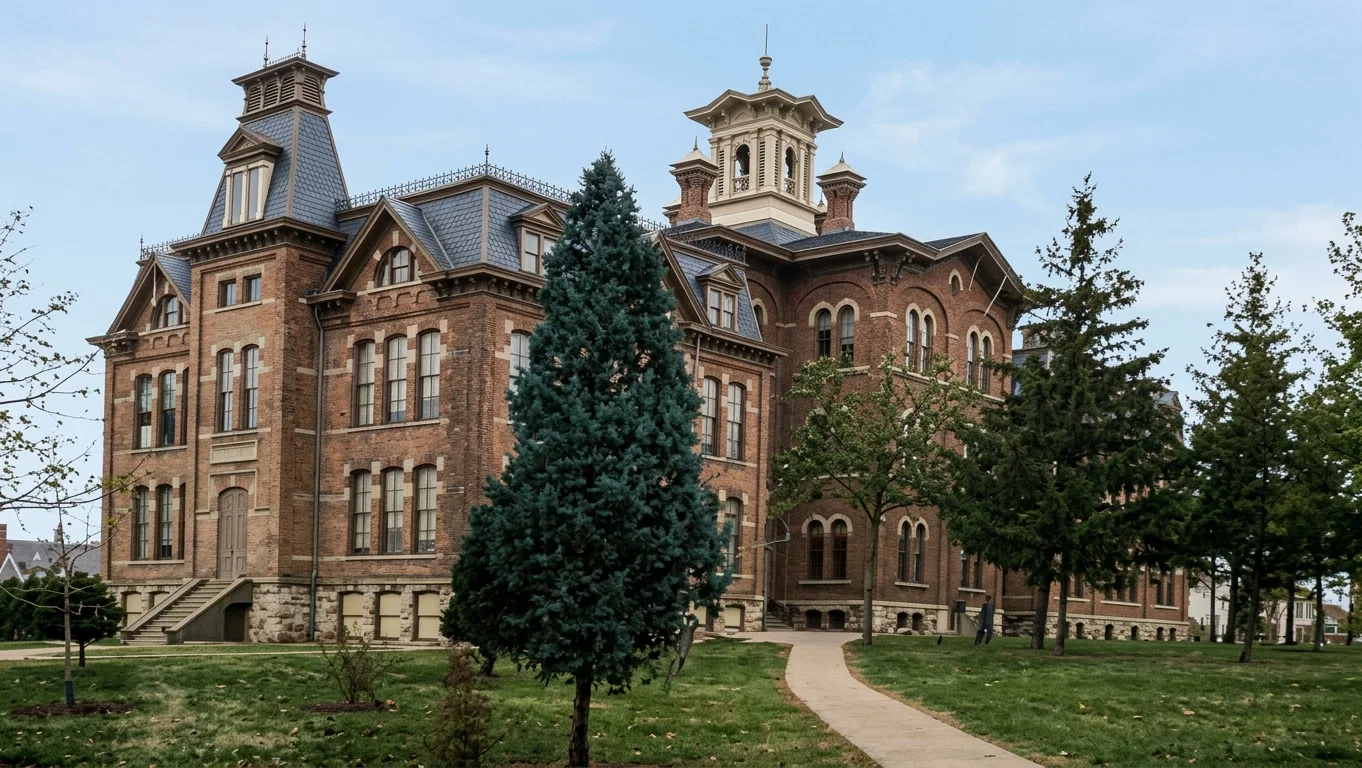
Mt. Vernon Academy, Ohio.
Prospects were never so encouraging for the educational work. Never were young people laden with such burdens of responsibility; never were they more earnestly responding to these God-given calls.
It is a mighty work, but it will be cut short in righteousness, and those who have borne the burden here will find, erelong, that those which seemed the heaviest but serve to prepare for an eternity of progress.