THE VATICAN VEXED

6%

Pacific Press Publishing Company · Mountain View, California · Nov 15, 1905

FromSigns of the Times, Vol. 31, No. 46.

Read the full edition

THE VATICAN VEXED.
A STRAW is a very little and unimportant thing when found in a barnyard or stubble field. It indicates practically nothing except that straw has been there; but floating in the air it is more important sometimes than a mountain; it shows the way the wind blows. Here is a little straw showing the feelings of the Papacy toward this country and the demands that it will soon be making on the government.
President Roosevelt's daughter has been making a tour of the world, and like any other free, independent American girl is following her own fads and fancies, without much regard to others, only as they dance attendance at her pleasure. Yet in her pleasure mood she has deeply vexed the Roman Catholic church, at least, so a special cable despatch from Rome, which is friendly to Vatican authorities, tells us. The date of the despatch is August 30. It declares that the pope had prepared a letter praising President Roosevelt for bringing about peace in the East, but he is holding that letter until Miss Roosevelt's conduct is explained.
The great offense which she created was to give a little more than ordinary attention to the schismatic archbishop Aglipay, who some time ago bade adieu to the Roman Catholic Church in the Philippines. As soon as she arrived in Manila, he called. Several of the dignitaries of the Roman Catholic Church called also, but "Miss Roosevelt's conversation was mostly monopolized by the schismatic prelate, while the members of the Roman clergy stood and looked askance;" but worse than this, she, even she, the President's daughter, permitted herself to be "photographed side by side with the greatest enemy the Roman Catholic authorities in the islands have, or ever will have." Therefore great displeasure is felt at the Vatican. Some charitable souls think that it is probably due to a lack of diplomatic training on the part of the President's daughter, and do not regard it as a deliberate snub to the Catholic authorities, because "long experience has shown Vatican officials how the President and other United States officials have always manifested the most conciliatory spirit to the representatives of church interests in the islands ever since the American occupation."
"It is remembered here that Mr. Taft, when governor of the islands, went out of his way to make concessions to the Church authorities regarding the settlement of the Friar's lands question, and that he was sent to Rome as a special messenger to the late pope, who was much impressed with his earnestness and fairness, and discussed with him all the questions affecting church interests in the islands, getting from him many advantages for the church which no one at the time in Rome could expect."
Yet after Miss Roosevelt's display of her preference we are told that the pope's representatives and Catholic bishops in the Philippines felt compelled to refrain from calling on the President's daughter to pay their respects as Aglipay had done, and that no direct invitation was received by any of them from Mr. Taft or the party to attend any special functions while the schismatic archbishop was always within the privileged circle. We are still further told:
It is surmised here that the Catholic prelates of the archipelago feel deeply about the matter, and justly so, because of the great damage done to church interests there by Aglipay's scheme.
Even while Miss Roosevelt was in the Far East the church authorities in the Philippines had a suit in the courts against Aglipay and his followers for the restitution of the churches and church properties taken possession of since the American occupation, and it seemed strange that this was not taken into consideration by the diplomats in the Taft party before granting to the schismatic archbishop unusual facilities to approach the President's daughter and be entertained by her in familiar conversation.
The very fact that the schism has lost to the church of Rome hundreds of priests and thousands of communicants in the archipelago ought to have prevented the Taft party and the civic officials in the islands from extending to Archbishop Aglipay more than the usual courtesies, instead of allowing him a preference over the Catholic prelates which the Vatican regards as unwarranted.
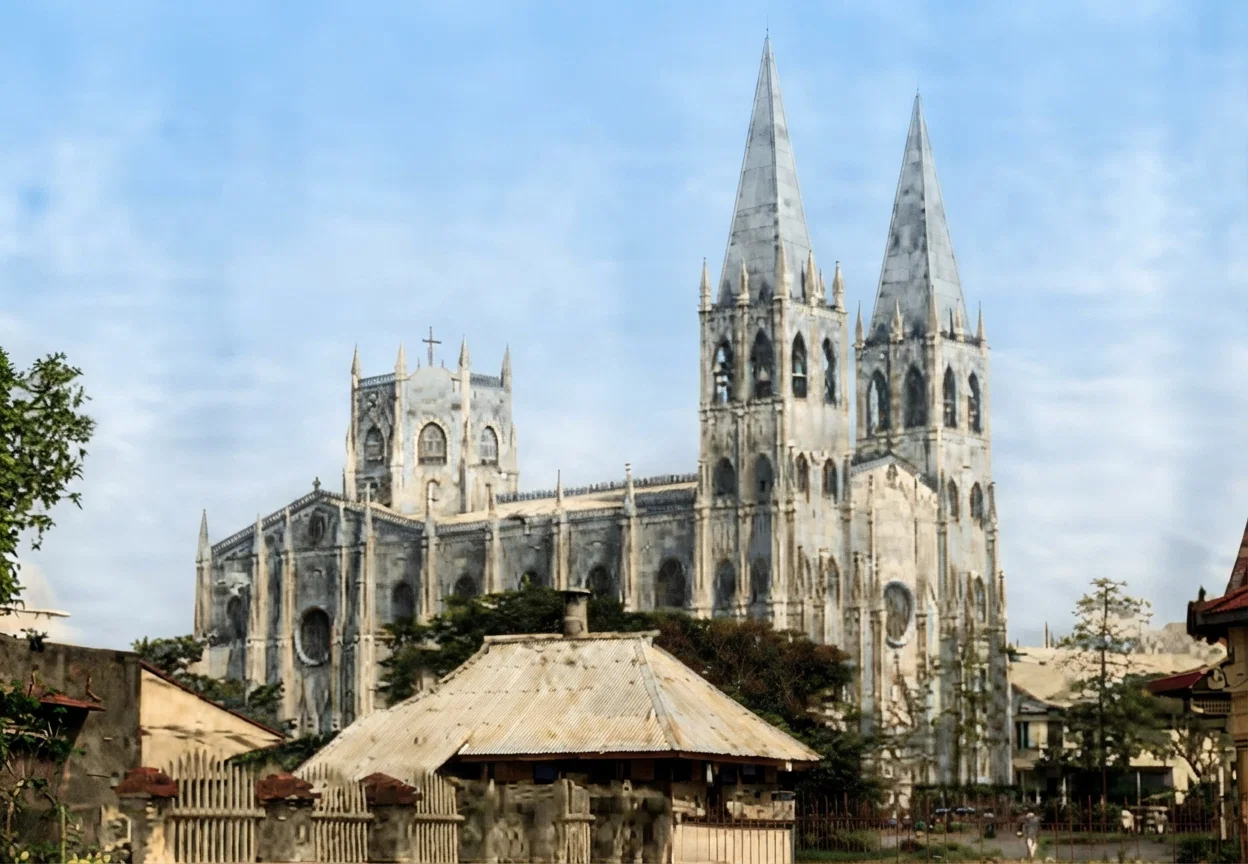
One of the Catholic Church Edifices in the Philippines.

Effect on Natives Feared.

It is greatly feared here that the extraordinary courtesies shown Aglipay by the American President's daughter will have a damaging effect among the natives of the Islands, many of whom are already at odds with the church authorities, and that it will encourage Aglipay followers in their rebellion and defiance.
Some prelates in Vatican circles, among them Cardinals Satolli and Martinelli, formerly apostolic delegates to the United States, were called into consultation by the pope as soon as Mgr. Agius's report came. They expressed the opinion that the whole matter was pre-arranged by island interests inimical to Rome, probably by prominent Protestants, who are known to be very active in the Philippines in trying to convert the natives to their churches and beliefs. It is also known here that a close intimacy exists in the Philippines between Aglipay's followers and the Protestants, and that several of the latter have often expressed the opinion that eventually all his followers will join Protestant churches. Miss Roosevelt's deference to the schismatic Archbishop is considered here as most likely to soon cause this step to be taken, and then all hopes of putting a stop to the schism will have vanished.
The despatch closes with an intimation that explanation will be asked for, so that the natives may know that Miss Roosevelt's action was an oversight due to her innocence of diplomacy and her ignorance of local conditions. Pius X. was upset for several days after hearing of the affair.
We are glad that Miss Roosevelt exercised her own free American common sense in the whole affair, but we are sorry that the relations are such between this government and the Vatican as even to make the Vatican feel that it has any right to demand any explanation at all. Miss Roosevelt is the daughter of an American citizen, and she is in nowise an official of the United States Government; but even tho she were, neither she nor Mr. Taft is bound in any wise to recognize any religious body whatsoever. The rights of Aglipay, be he entirely wrong, are equal to the rights of all the Roman Catholic clergy in the Philippines, be they wholly right. It is for the United States Government to treat them as men regardless of their religion. Such things as these ought to stir every American who believes in primitive American principles. This American liberality of going "out of the way" in granting Rome "concessions," will mean that this government will be called upon to go "out of the way" to grant her demands, or will suffer through her influence upon politics. The American nation has entered upon a dark, dangerous road, at the end of which is death to liberty.