THE FOURTH MEETING

11%

Pacific Press Publishing Company · Mountain View, California · Dec 20, 1905

FromSigns of the Times, Vol. 31, No. 51.

Read the full edition

THE FOURTH MEETING.

A United Church and Social Order.
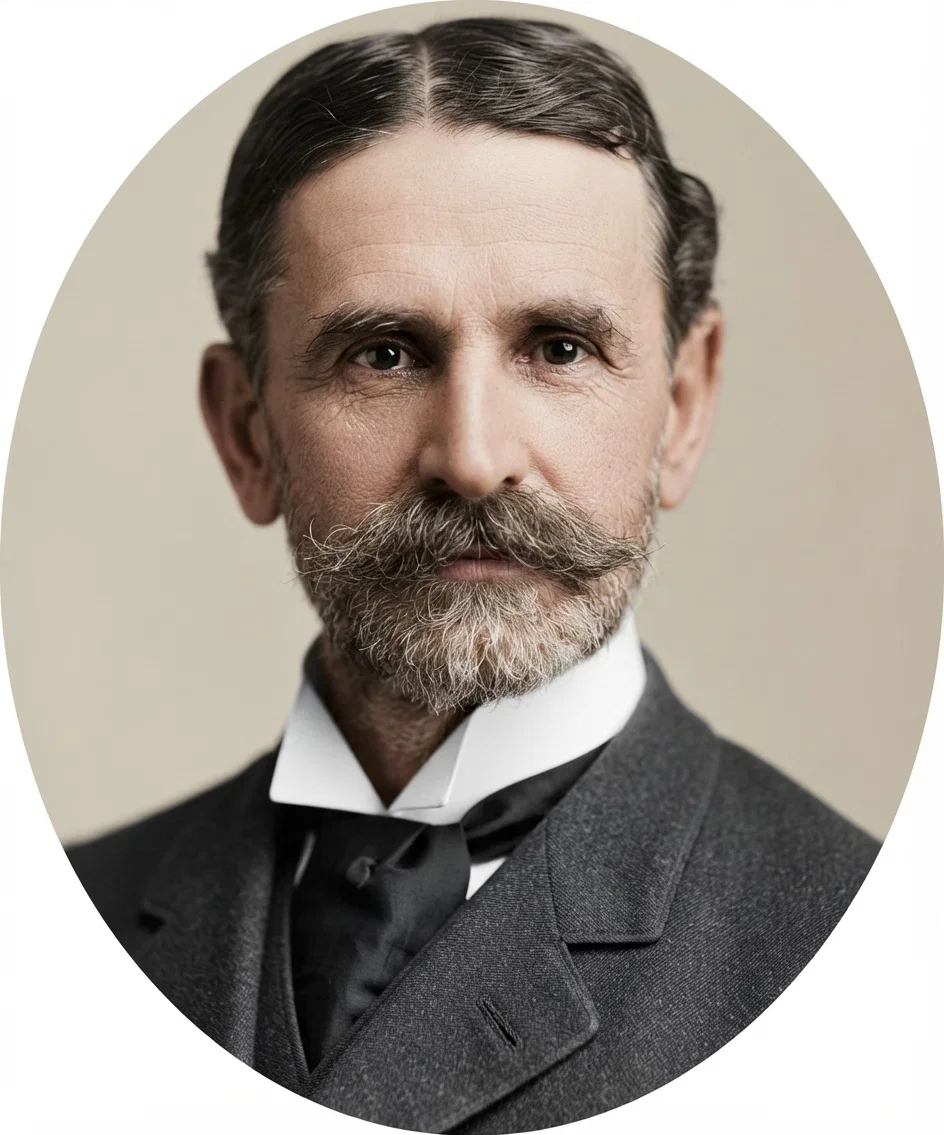
In the fourth meeting the general subject of discussion was "A United Church and the Social Order." The discussion was to have been opened with an address by Justice Harlan, Presbyterian, of the United States Supreme Court, on "Labor and Capital." He did not come, and his place was taken by his pastor, Dr. Radcliffe, of Washington, D. C. He said that the question is a Christian question. It has not been settled, and will not be settled until the Scriptural statement has been experienced, "Except a man be born again, he can not see the kingdom of God." The rich man's camel has been altogether overworked; and it is doubtful whether he has any desire even to look at the eye of that needle. Christ has not brought to us the idea that mon-kery is the ideal of life. The Federated Church, while emphasizing the teaching and example of Christ, will also emphasize the integrity of the individual. The church of Christ, as it would solve the problem of labor and capital, must recognize and emphasize the distinct personality of the individual man. Calvary stands, but Sinai has not been destroyed. Christianity carries righteousness, which is law and love. The spirit of Christ requires a fair day's wage for a fair day's work; everywhere and in all cases, whether of man or woman. The church of Christ will stand by the public school. The Federated Church will re-enforce the Bible in the public school. The Federated Church will declare and contend, not for a continental Sunday, nor for a Puritan Sabbath, but for the true, and the true observance of, the Lord's day.
Bishop D. H. Greer.
Bishop D. H. Greer.
Dr. Tucker, president of Dartmouth College, discussed "Citizenship:" What rank do we propose to give citizenship? If we are not prepared to give it the first rank, we are not ready to deal with it at all. What are the qualities that lead men to achieve greatness by way of citizenship? (1) Imagination, or if you will, faith. We ought to move out of "we ought" in relation to reforming our cities, and pitch our camp in "We can do it if we will." Why do we discuss citizenship in a federation of churches? The test of fellowship in this whole matter of civic righteousness is simply that they be able to "cast out devils"—the devils of greed and lawlessness.
Frank Mason North, D.D.
Dr. Doane, Episcopal, spoke on the "Family Life:" The family is the foundation of all human association. Our language has a monopoly of the work and idea of Home. "Here is the place, not for federation only, or combination, or co-operation, but of absolute, impregnable unity, and the place to begin is not in the legislature or in the divorce courts, but in the teaching of the pulpit, the insistence of the ministry, and the influence of Christian manhood and womanhood for the solemnity and sacredness of marriage."
Dr. Van Dyke, of Princeton University, spoke on "The Ideal Society:" It is a large, difficult, and remote subject. It is the goal of all the churches. The man who wants to be saved above, is on the way to be damned. No religion can do anything for me that does not make me do something for you. When the ideal society is reached, there will be no more churches, no more ministers; for all will know the Lord, from the least to the greatest. All men's good will be each man's goal. That is the ideal society—and it is a long way off. A golden age can not be made out of brazen hearts. The guide of Christian progress is the word of Jesus, "The kingdom of God is within you." What are we to do now, to aim at to-day, and to hope for to-morrow, to bring the ideal society? The foundation of Christ's work was the individual will and character. The first step is not through the heart of humanity, but through the hearts of men. The ideal society relies more on moral principles than legal statute. There is no law that man has made that man can not evade. The chief reason why society is not better is because so many men are bad. Legislatures can not reach the roots of the evils. It will be an ill day for the church when she yields to the delusion that society can be reformed from the outside. A society in which the Golden Rule seems to be impractical is not a Christian society. The church must hold ever that her field of effort is the life within, and that the root of human sorrow lies deep in human sin. Back to Christ was the cry a few years ago. The true cry is ever, Forward to Christ; forward to Christ the Founder and the Master of ideal society.
Chas. L. Thompson, D.D.