Famine in China

6%

Pacific Press Publishing Association · Mountain View, California · Mar 21, 1911

FromSigns of the Times, Vol. 38, No. 12.

Read the full edition

Famine in China
CHINA, in her rivers, has both a blessing and a calamity. Without railroad or country roads, rivers have taken the place of both. But these rivers have been allowed to silt up, and they silt up rapidly because of the loose formation of the soil. All the timber has been cut from the banks, so that you may travel hundreds of miles and not see any trees on either side other than a stray willow or two. The course of the main streams is from west to east. Rising in Tibet and in the mountains of West China, they wind their way south or southeast to the sea. When the snows melt in the mountains a great volume of water is suddenly added to the practically bankless rivers; and in some cases, as in the river causing the present flood in Anhui, the lower course of the stream is choked by a mountain on either side damming back the water and converting an immense area into a veritable lake.
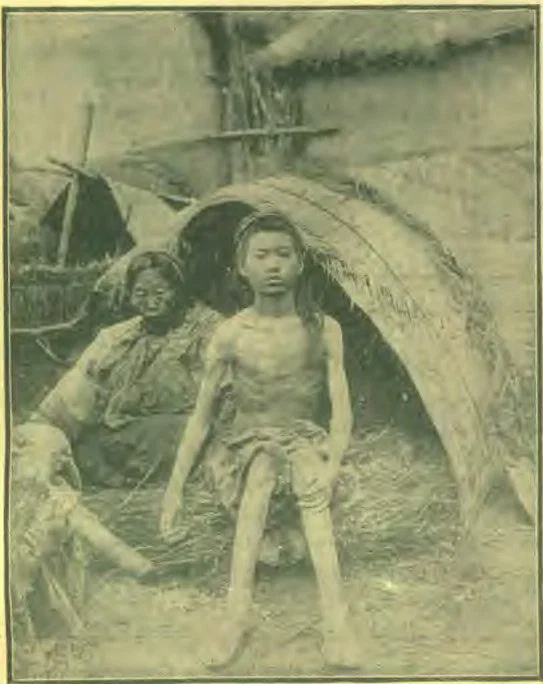
In a recent trip of several weeks through the province of Anhui, I passed through portions of the territory now in the clutches of a fearful famine. To those living in a land of plenty, a land where famine is unknown, it is impossible to describe the heartrending sights seen. The country is low and flat; and the inhabitants, who are industrious, and under normal conditions a very peaceable folk, are almost solely agriculturists. Under the most favorable conditions barely enough is raised to last them through the year, and laying by a store for the future is an impossibility. So when, as in the summer of last year, about eighty per cent of a tract having a population reaching into the millions was covered by water for a major part of the farming season, it means that starvation faces eighty per cent of the inhabitants of this area.
Their only protection from the cold and snow is a mat shed, and at night they sleep on the bare ground. (Photos by F. E. Stafford)
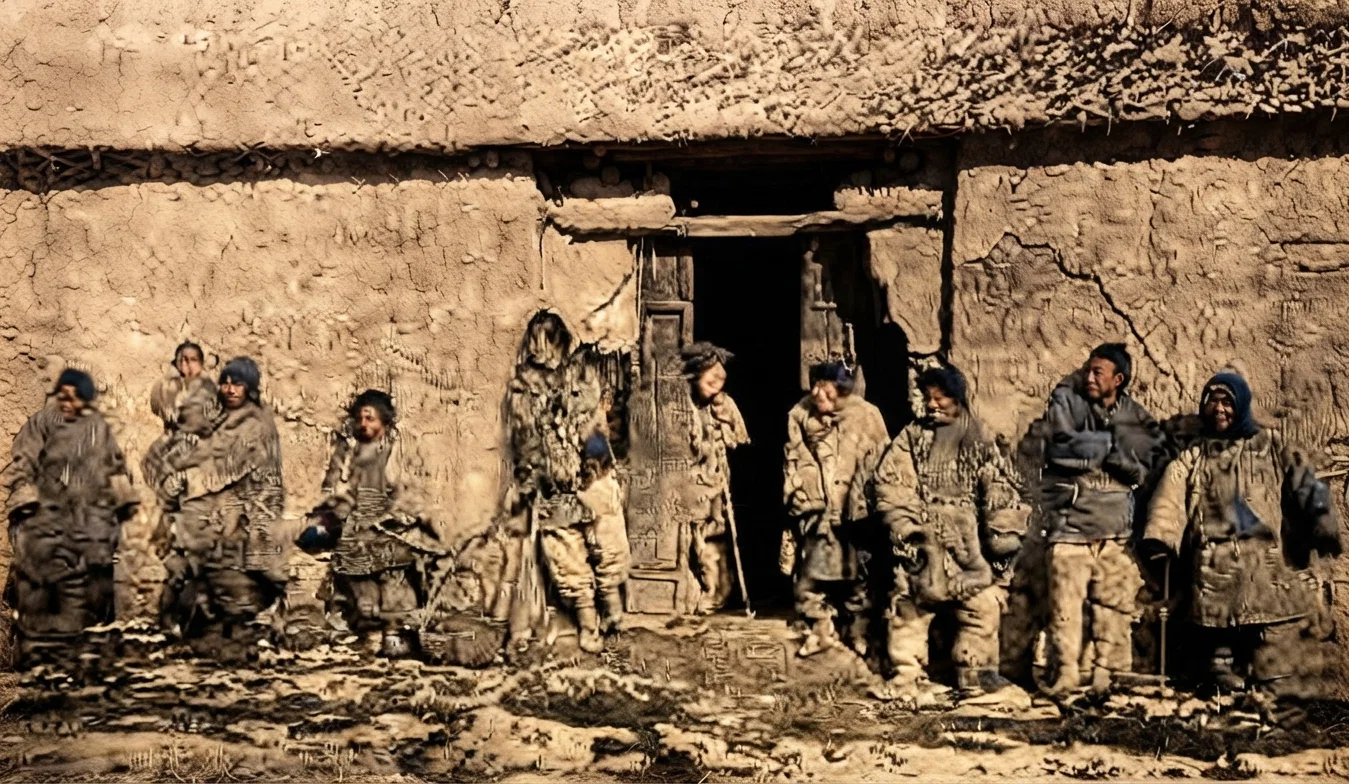
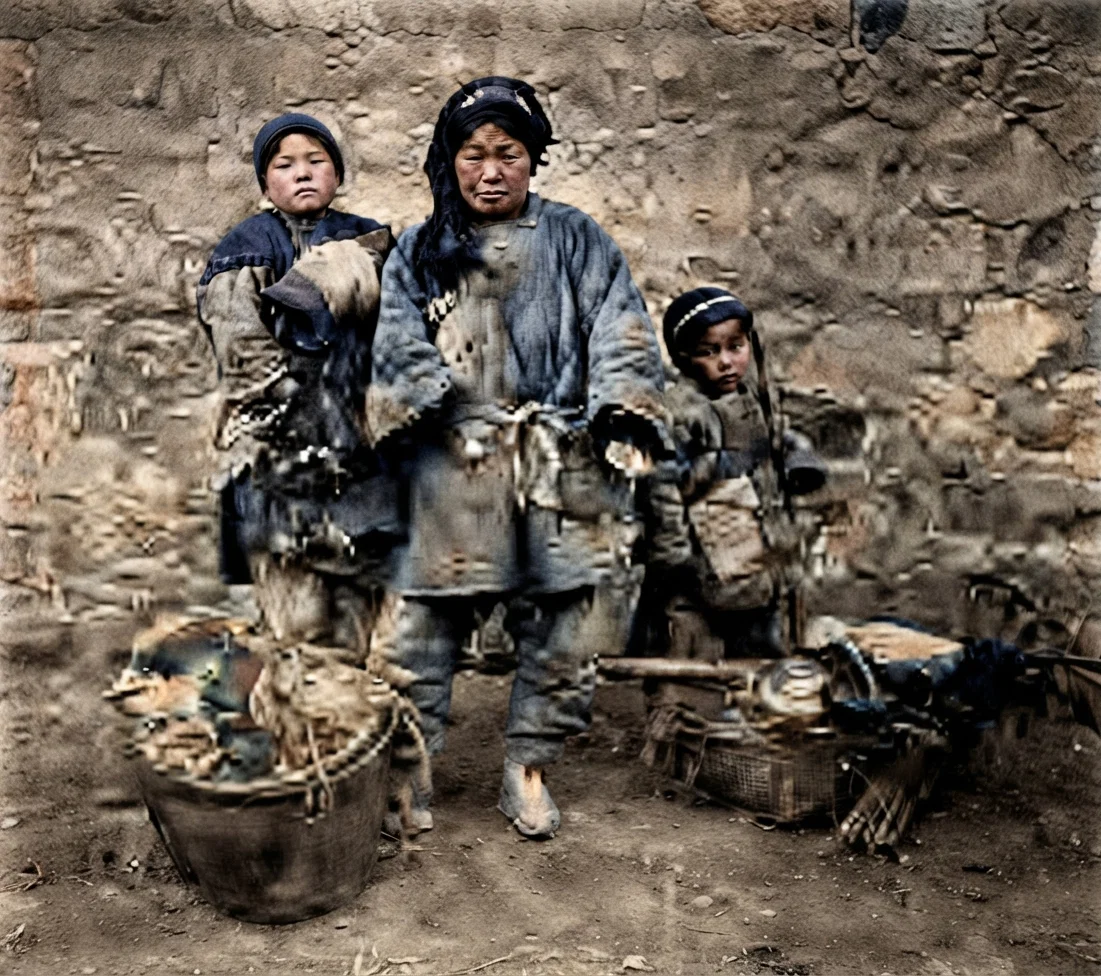
I traveled for days in this section, and passed a stream of people traveling toward the south, hoping to reach the region of the Yang-tse River before death claimed them. There was the mother, evidently a widow, who had gathered together what little of this world's goods she had, and placed them in a basket. In the basket that hung from the other end of her carrying pole was her baby. Poor shivering little soul, it is almost ten to one certain that he will never see another summer. Such a sight as this I saw not once but scores of times. Families who own their home and a bit of land stay by the place they call home and try to keep alive. There is no way for them to work and earn money, for the whole country about them is in the same destitute condition. As the cold weather comes on, food becomes scarcer and scarcer, their tattered clothes afford less and less protection to their famished bodies. They burn everything that can be burned for fuel; and when there is any sun at all the whole family will be seen lined up on the south side of the house trying to get what little comfort they can from the sun's rays. And when they finally forsake the home and start on the dreary march south, many are overcome by cold and hunger, and die by the way.
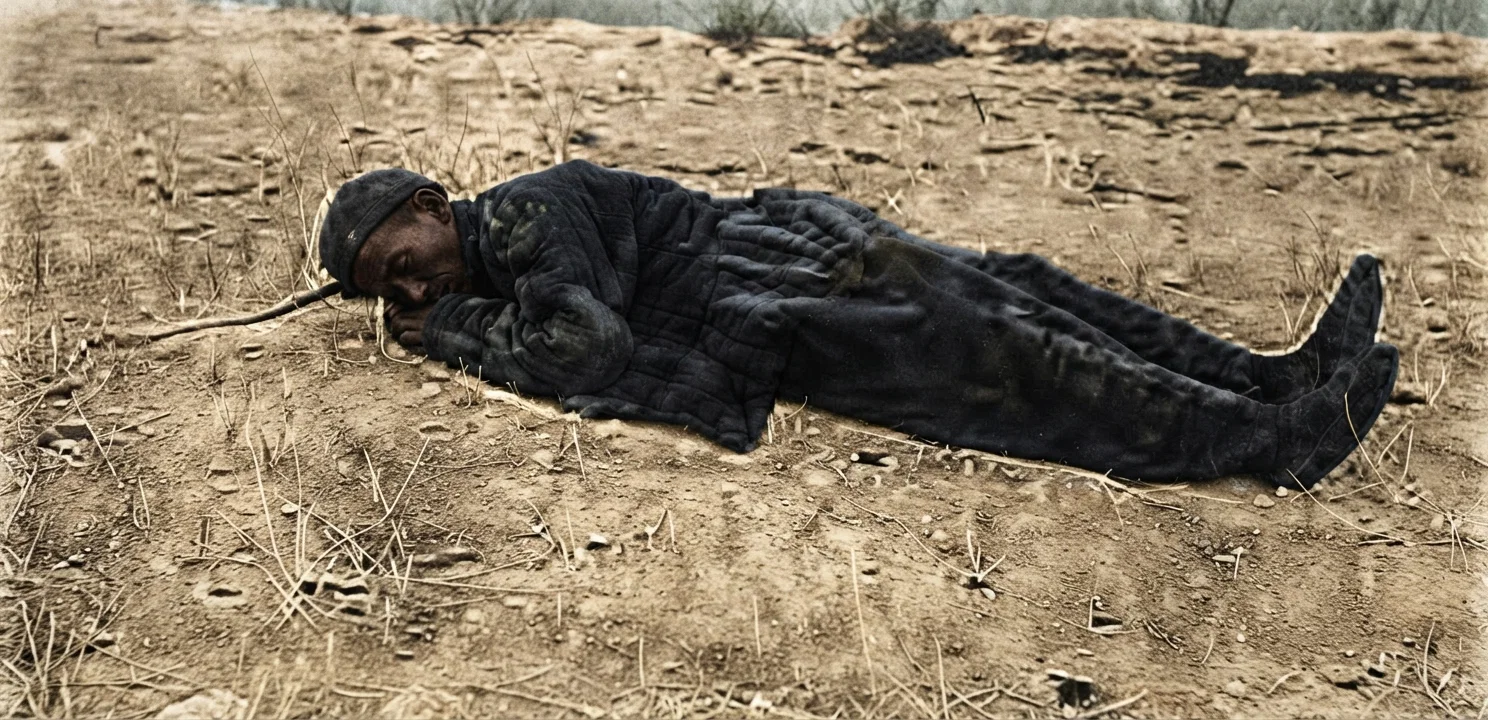
Weakened by hunger and overcome by the cold, many lie down and die by the roadside
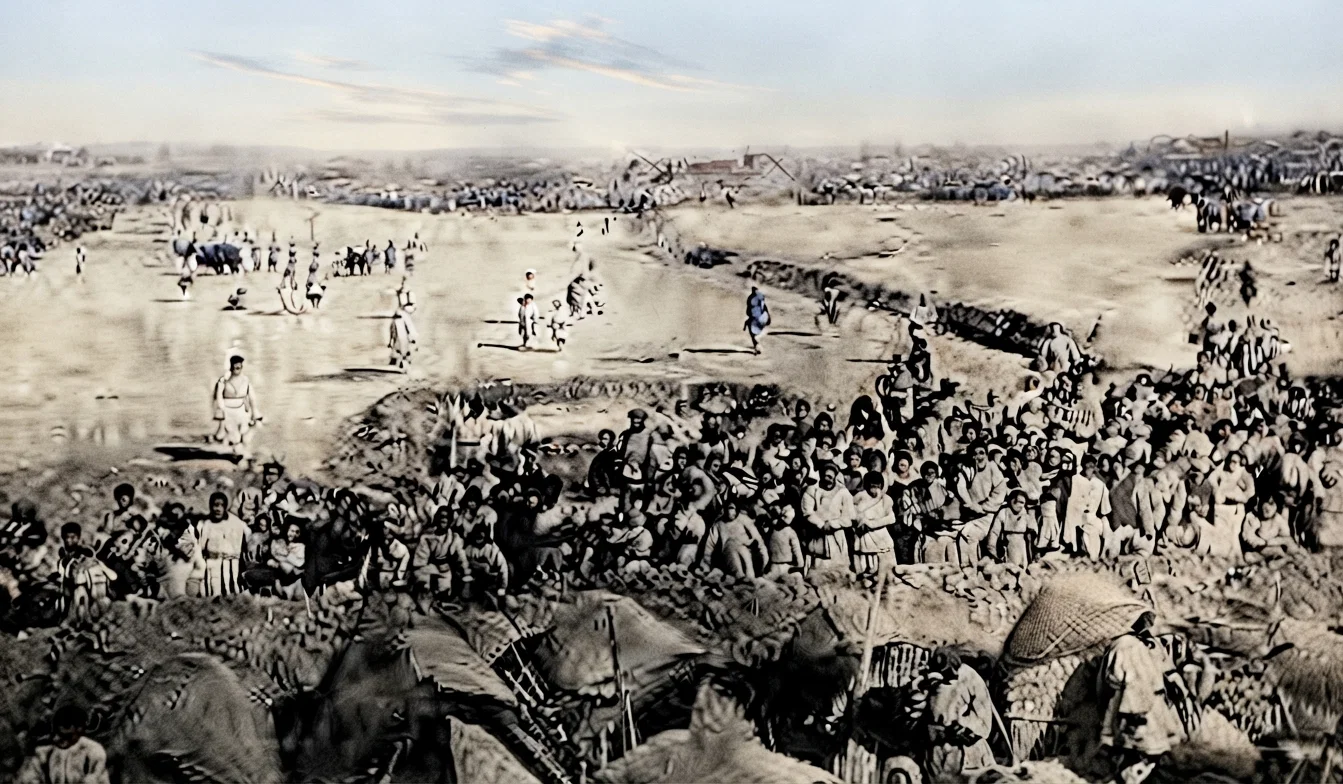
Portion of one family camp that contains half a million refugees
A starving family gathered on the sunny side of their tumble-down mud house
There is little hope for those who do not reach the regions not touched by the famine, for it is true all over China that the great mass of the people lead a hand-to-mouth existence, and they have very little that can be spared. Were the famine sufferers numbered by the thousands, the proposition of caring for them would not be so serious; but the number reaches into the millions. The picture shown is a portion of one famine camp that contains half a million refugees.
The poor starving people pass through the country like a great army of locusts, begging when they can secure anything by begging; but often they grow desperate, and falling upon an unprotected village, carry off everything eatable, not stopping short of wholesale murder to secure food. During my trip through this section there was a heavy fall of snow. With bare feet and almost bare bodies, the suffering of these people at this time I must leave the reader to imagine. Their only protection from the weather is a mat shed. At night they mustlie on the bare, cold ground. How it is possible for human beings to live under such conditions is beyond conception, for night after night on the road I slept with my clothes and overcoat on in addition to all the heavy bedding I had with me for covering. The food that most of these refugees are subsisting on is the very coarsest. Bean cake is a common article of food now used. This is simply the coarse yellow bean after the oil has been extracted, and in ordinary years is used only for fertilizer. Sometimes they secure a little flour and make a gruel, mixing it with a large quantity of coarse greens.
Mother and family with all their worldly goods leaving the famine region
Such are the conditions now (January). But the worst is not yet. No relief can be expected from the land before the middle of May, when the wheat is harvested. Unless help comes, death will surely sweep away a majority of the inhabitants of this great famine district during these five months. The following extract from a letter of a representative of the Famine Relief Committee will give some idea of what it will require to supply the smallest living ration to these famine-stricken people. This letter only speaks for one region of the famine area.
Since my return I have gone over with the Cochrans my estimate of a few weeks ago, that 1,000,000 people would be dependent on outside relief or probably die of starvation if kept in this region; and they agree with me that that is about as exact a figure as one can get at, and that it is not an overestimate. Five months must be counted on, and a family can not exist on less than thirty cash per head a day, if for that. This would, as you can readily see, amount for five months to three and a half million dollars Mexican; and this again is under, rather than an overestimate of what it will cost to keep the people alive for this whole time. They must have a little salt and oil, and they must buy fuel, as the ground is scoured clean of all dead grass. If you allow a catty of flour per head, the cost at present prices here would be nearly doubled.
As stated by this writer, thirty cash a day will not be sufficient. But granting that sixty cash (2¾ cents U. S. gold) feed one person for a day, then the price of one of your family meals would supply one of these destitute Chinese with food for nearly three weeks.
At Ying Shang Hsien, Anhui, we have a church of twenty-three baptized members, and a number of earnest inquirers in addition, and this place is in the southwest edge of the famine district. There are several families among the members and inquirers who will have to have help from now on till next summer, otherwise they will die of hunger.
A. C. SELMON, M.D.