LOMA LINDA

4%

Pacific Press Publishing Company · Mountain View, California · Nov 1, 1905

FromSigns of the Times, Vol. 31, No. 44.

Read the full edition

LOMA LINDA.

A Brief Visit to the Great Sanitarium.
BY MRS. EMMA H. ADAMS.
LATE on Friday afternoon, September first, the writer, with the above famous locality inviting her away from the mountains of dust and the indescribable racket of the streets of Los Angeles, took seat on a train of the main line of the Southern Pacific Railway for the 150 minutes' ride eastward to this point, sixty-two miles from Los Angeles.
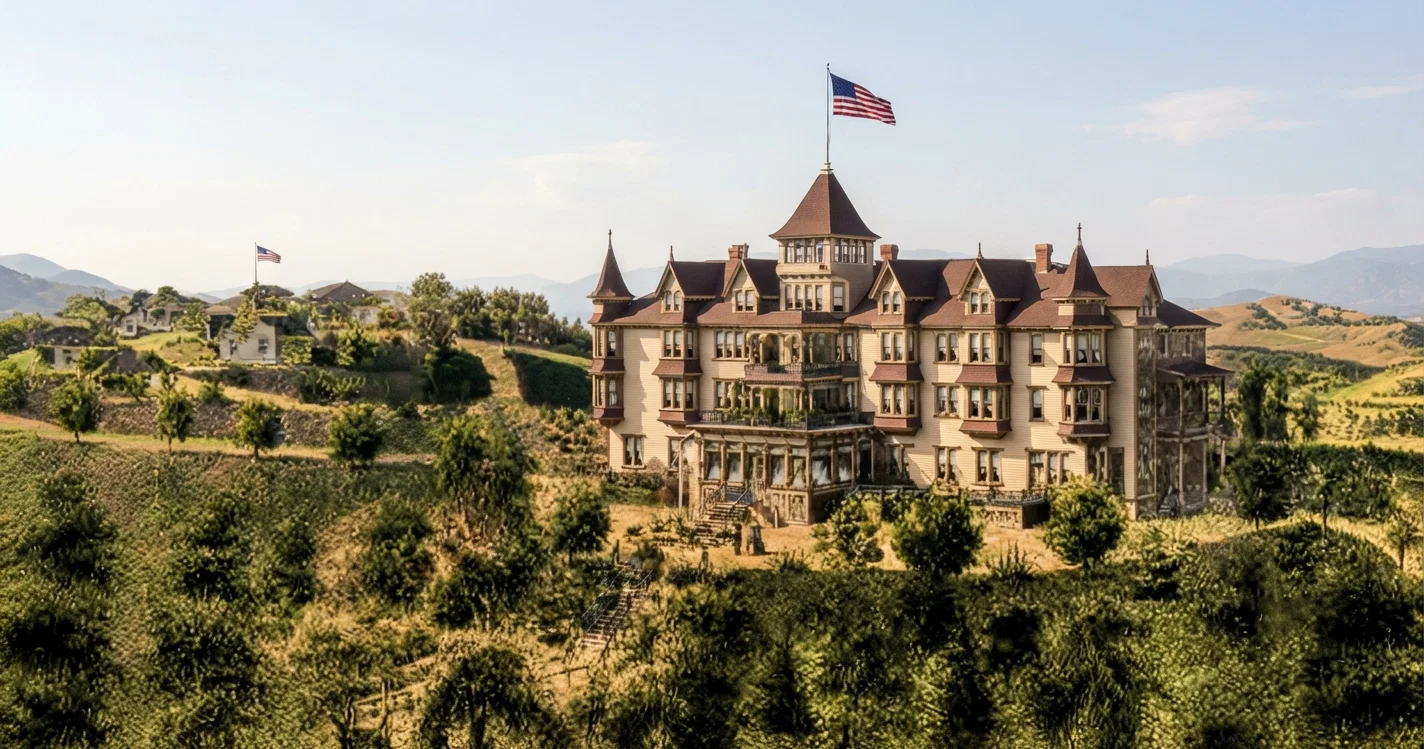
Alighting from the train, and passing through the verdant driveway, a distance of thirty rods or more, we stood at the base of imposing Loma Linda, and at the foot of the long double stairway leading to the sanitarium located far up its northern side amid a splendid ornamentation of trees, shrubs, and flowers.
The highly cultivated eminence, crowned by the stately sanitarium, and its cluster of pretty cottages, the sunlit valley with its miles of orange, lemon, olive, and apricot groves, together with the long lines of towering hills and mountains which frame all these things in, form an entrancing rural scene, one that can never be without charm and cheer for the invalid, and one of which the visitor fond of nature may never tire.
Loma Linda—the Spanish for beautiful hill—is a solitary eminence rising to a height of 200 feet near the center of the San Bernardino Valley. The altitude of the hill above the sea is 1,400 feet, an altitude considered especially favorable for many classes of disease.
And when to great beauty of scenery, and to faultless altitude, is added the subtle, life-giving influence of a pure atmosphere by night and by day, one can scarcely imagine a location more perfectly adapted to sanitarium purposes.
To have found, ready for immediate use, an institution so complete, and free from the perplexing labor of building and equipping, is certainly a piece of rare good fortune for the Adventist brethren in Southern California. Surely it evinces the favor with which God regards their efforts to give the great message to those who have not heard it.
An impressing feature of the five attractive cottages, and of the main building, with its three stories and sixty-four rooms, is the scope, the liberality, the amplitude, which speak out in their dimensions, furnishings, and provisions for light and heat. No where, in no thing, is there a suggestion of narrowness or of parsimony. To provide generously, to be humane, to meet need even before it is felt, seems to have been the purpose of the builders on Loma Linda.
The five cottages are so located that every room may have an unlimited supply of sunlight by day, and so furnished that there can be no stint of electric light by night. From broad, high windows in every room, the inmates may look upon delightful vistas of sky, mountains and valley, and upon charming garden effects at the very doors.
In all this graciousness the sanitarium itself does not fall behind. From its broad balconies, windows, and roomy fire-escapes, attached to the second and third stories, Colton, San Bernardino, Redlands, San Jacinto, with other near-by towns, invite to morning and evening drives full of charm, wrought out by trees, lawns, and flowers.
Then too, the great San Bernardino Valley is replete with historical stories and episodes, which invalids ethnologically inclined may find no slight pleasure in tracing. Representatives of three different races of men have flourished successively on its soil. Among them have figured leaders, strong, alert, ready for occasions of difficulty, and for splendid effort in times of great trial.
At this writing the institution is in the hands of care-takers, who are busy looking after the fowls, cows, horses, gardens, and many acres of fruit trees pertaining thereto.
However, settled occupation of the premises, and work along select, chosen, sanitarium lines will follow immediately. Elder J. A. Burden, now in charge of the sanitarium at Glendale, eight miles northwest of Los Angeles, will within the month enter upon his duties as manager at Loma Linda, and early in October the famed sanitarium will be opened to guests.
Two skilled physicians, and the necessary force of nurses and helpers will also be on the ground.
Thereafter the high endeavor of the management will be to carry out at Loma Linda a system of treatment and of living for the sick which shall be conducive in the highest degree, not merely to the physical healing, but also to the mental and spiritual welfare of all sojourners at the institution. And this means, simply, that a noble example of living on a high plane will be the steady, powerful object-lesson at Loma Linda.
The writer is loath to close this paper without brief reference to the unique but very enjoyable services held on the lawn at Loma Linda, on the Sabbath, September 2. The "Lawn" is a charming green space at the rear of the sanitarium and is shaded by wide-branching pepper trees.
The scene presented, when the people were convened for the Sabbath-school, and were awaiting the first hymn, was an exceedingly impressive one. Radiant sunlight flooded the hill-top and the picturesque valley. A brisk breeze bringing perfume from fragrant flowers and aromatic trees cooled our warm faces and swayed the graceful pepper sprays.
Happy birds, listened while we sang inspiring hymns.
Most of the company had driven over from Riverside, seven miles distant, and from Redlands, Colton, and San Bernardino, four and five miles away.
After the Sabbath-school service, Mrs. E. G. White, who had passed some two weeks among the delights of Loma Linda, addressed the assembly. She spoke for a half hour or more in a line very instructive and helpful. An interesting meeting, conducted by Elder Burden, was held in the afternoon at 2:30, and was full of uplift and profit.