A Brief Survey of the Movement — Advancing Inter-Denominationalism — Are there Any Dangers Threatened by Such a Federation? — Domination versus Disorganization
By B. G. WILKINSON
“IT was during the epoch when there were sects and heresies that Christianity made the conquest of the world.”— The Hon. Camille Pelletan, French statesman.
The churches of North America have aroused to action. To arouse to action may be all right. All depends upon what the action is to be. A confederacy of churches is no new thing. There was a confederacy of churches in the early Christian era, patterning after the circles of organization adopted by the state.
TO BE LIKE BIG BUSINESS
The present confederacy of churches, as expressed by many of its advocates, is an attempt to do with religious organizations what big business has done in the trusts and in other combines. Many writers see in this new movement the great consummation of things, the bringing in of the “one far-off divine event toward which the whole creation moves.” As the Independent says, “It marks an epoch; it opens a new era.”
In December, 1908, in Philadelphia, the first council of the Federated Churches of Christ of the United States was held, to unite, as one speaker expressed it, “their faiths in a larger faith, and their loyalties in a larger loyalty.” There were present delegates from thirty-three Protestant denominations, representing a church-membership of about eighteen millions. They were there for united action; for as one speaker said, “Two united means ten times one; because the Bible says that one shall put a thousand to flight, and two, ten thousand.”
THE PRELIMINARY NEGOTIATIONS
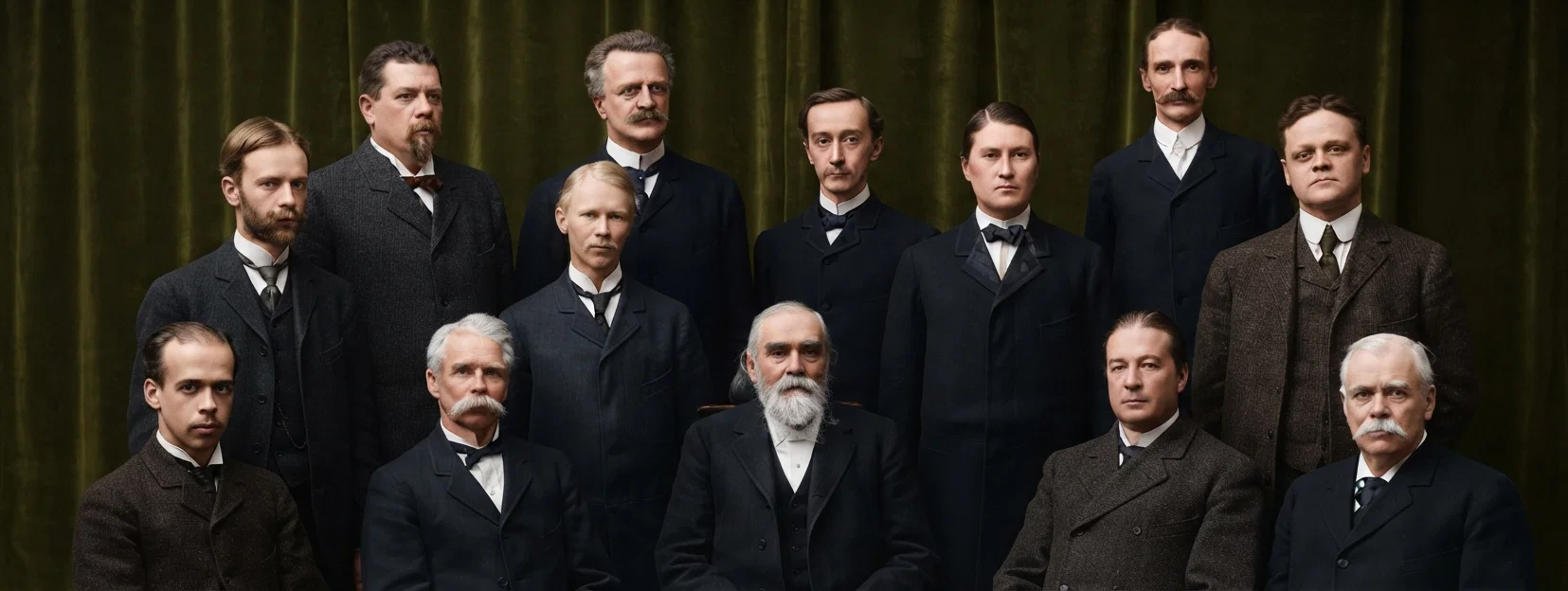
This meeting in Philadelphia was the outcome of three years’ preliminary negotiations. In 1905 a conference was held in New York City, of the representatives of the churches in the United States, to devise a plan for inter-denominational federation, and to report the same to the several denominations. Time was required for the different denominations to act. Some could not respond except through an action of the general body in council assembled; and in some cases, as that of the Methodists, this general assembly took place only once in four years.
CATHOLIC AND GREEK CHURCHES INVITED
Both the Catholic and the Greek Church were invited to participate, but did not act. The attitude of the Catholic Church may be gathered from the reference to Cardinal Gibbons by the Rev. Dr. William T. Manning, rector of Trinity Church, New York, as having “expressed friendly interest in the subject, a desire to be kept informed of the progress of the movement, and a conviction that clear statements of position would show them to be nearer together than had been supposed, and that only good could come of the effort to promote the spirit in which such a conference should be undertaken.”
It was planned for the Federal Council to meet once in four years. In the meantime, the work is to be carried on by an executive committee, meeting yearly, and composed of one member for each of the denominations in the Federal Council, and one additional member for every half million communicants.
The first annual meeting of the executive committee was held in Louisville, Kentucky. Before it there appeared a deputation from the American Federation of Labor, asking that the first Sunday in September immediately preceding Labor Day be set apart as Labor Sunday. Thus the two great federations, one of labor and one of religion, or the organization of the people in the shops and the organization of the people in the churches, agreed together touching the recognition of Sunday.
WILL ALL FIND A COMMON CENTER?
Will the commercial combine of the trust and the labor combine of the union find a meeting ground in the religious combine of the federation? Both capitalists and labor men sit in the pews.
Thus the attitude of the Protestant denominations toward one another was friendly, so much so that the federation was formed. And it being once formed, the attitude of the Catholic Church to it was friendly, and to it also the attitude of organized labor was friendly. As far as the United States is concerned, there would be very few men found outside the pale of the three organizations just mentioned. Hence the action of the federation, representing eighteen million communicants within itself, and about forty million of the population of the United States, must be, or ought to be, powerful, and influential, to say the least, upon the two other organizations. Therefore as this new federation steps into the arena, it demands that all scan it closely, as if something had been done, and as if something more were going to be done.
THE FOUNDATION HAD BEEN LAID
Just a little more as to the past before we look into the future. The Federal Council of Churches did not spring into existence as if it were the first experiment, large or small, of the principle. It was the final and highest expression of that trend of thought which had already found expression in other inter-denominational federations. In fact, throughout all the Protestant churches, the spirit of the age seems to be to look to organizing into bodies more powerful because of greater numbers, in order to solve the problems and to meet the issues that the churches consider it their duty to solve and to meet.
Already there had been an advance of inter-denominationalism. Cases are reported where they had so combined that a congregation in one locality disbanded and united with that of another church, on condition that in another locality the congregation of the other denomination disband and unite with that of the denomination whose congregation had disbanded in the first locality. Thus two congregations took the place of four.
SECTARIAN BARRIERS CRUMBLING
The fall of sectarian barriers is seen in Canada, where the Methodists, the Presbyterians, and the Congregationalists took steps toward organic unity; in Australia, where the Methodists, the Anglicans, the Congregationalists, and the Baptists engaged in friendly negotiations; in Scotland, where two or three branches of the Presbyterians united; and in the United States, where the Presbyterians of the North and the Cumberland Presbyterians merged. New York already had a state federation, so had Rhode Island, while in Maine there had existed for some time an Inter-denominational Comity Commission.
ORGANIZATION VERSUS INDIVIDUALISM
So it is again the eternal question of organization versus individualism,—of that confederation which tends to paternalism371and thus weakens the individuals, or of individualism so disunited that individual strength can not be combined for greater tasks, and thus the individual is weakened. It is the old question of state rights versus federal rights. And the question has now struck the Protestant churches. It long ago came to the Catholic churches, and resulted in that great organization known as the papacy.
Let us look at the question for a moment from both standpoints. First note the argument in favor of organization. There is a long steel rail lying alongside the railroad track. The construction crew intend to put that rail in its place in the track. One man approaches it with the boast that he can put it in place alone. He seizes it with both hands, and tugs away in an effort to lift it. Impossible. All exhausted, he goes to the green grass and throws himself down. Another man springs up. “I can do it,” he says, and he in turn lays hold of the rail, pulling and straining. But in vain. He too throws himself down exhausted. Then the foreman in charge of the crew says: “Come, boys, all hands together now! When I give the word, let all lift at once.” The signal is given, all hands lift at the same time, and soon the rail is in place. Thus the union of the strength of many has executed a larger task.
IS THERE LIMITATION?
Now the question arises, How far does this principle apply? Can we accept it as an absolute truth over against which there is no other principle as an offset? Is there any limitation to the range of its action? We think there is.
IF ONE MUST LOWER HIS STANDARD
Organization becomes objectionable when the first individual, in order to become united with the second, must lower his standard, or when the first organization must lower its standard to join hands with another organization. The offspring of such a union is usually lower than results produced by the two organizations working separately; for the one, in stepping down to the other, may have to endorse in the other some evil that is greater than that the two united seek to abolish. How could Christianity, for instance, endorse certain practises, as polygamy, in Mohammedanism, in order to secure the cooperation of the Moslems to drive intoxicating liquors from the world?
When the Protestant churches of Christ in North America are fully federated, they plan a world federation of the same. Then the next step is to secure, if possible, a federation into which Catholicism can come. Then what? Why not go on and create a federation into which Mohammedanism can come? Or will the divinity of Christ be the standard to be maintained, lower than which the waters of federation will not go? There must be a line somewhere.
ORGANIZATION MAY BECOME AN EVIL
In other words, there is a point where organization becomes an evil, because everything is reduced to a dead level, and the standard of the lowest is the standard of all. Moreover, the motive power of individual action is of far greater value than the demand for organization to control that action. One man’s head is worth more than the heads of a thousand cattle. Likewise the brains of one great thinker can do more good to this world than the low level of ten thousand ordinary lives. The atmosphere of liberty is conducive to the production of such a personality; the atmosphere of coercion can prevent it.
WHEN IT SEEKS TO DOMINATE
When organization runs into domination, the very principle which that organization exists to save, is never of so great a value as the principle it overthrows; for absence of organization is better than tyranny. Listen to the words of David Kinley, president of the American Economic Association:
“Man is so constituted that when he feels the evil of an existing system, he is likely to adopt measures of reform which will produce evils as great as those he is seeking to remedy. That danger exists now. We need to look very closely at the tendency toward the extension of the authority of the government into the details of our economic life. The principle of competition, the system of economic liberalism, has been too valuable to the progress of mankind to be given up altogether; for competition has been a developing force, even if it has failed somewhat as a controlling one. The motive power to action is of more importance in the long run than the regulation of action.”— Speech at Minneapolis, December 27, 1913.
THE OFFICERS OF THE EXECUTIVE COMMITTEE OF THE FIRST CHURCH FEDERATION CONFERENCE, HELD IN CARNEGIE HALL, NEW YORK, NOVEMBER 15 TO NOVEMBER 21, 1905