The Law and the Sinner

6%

Pacific Press Publishing Company · Mountain View, California · Jun 12, 1907

FromSigns of the Times, Vol. 33, No. 24.

Read the full edition

The Law and the Sinner

By A. O. Tait
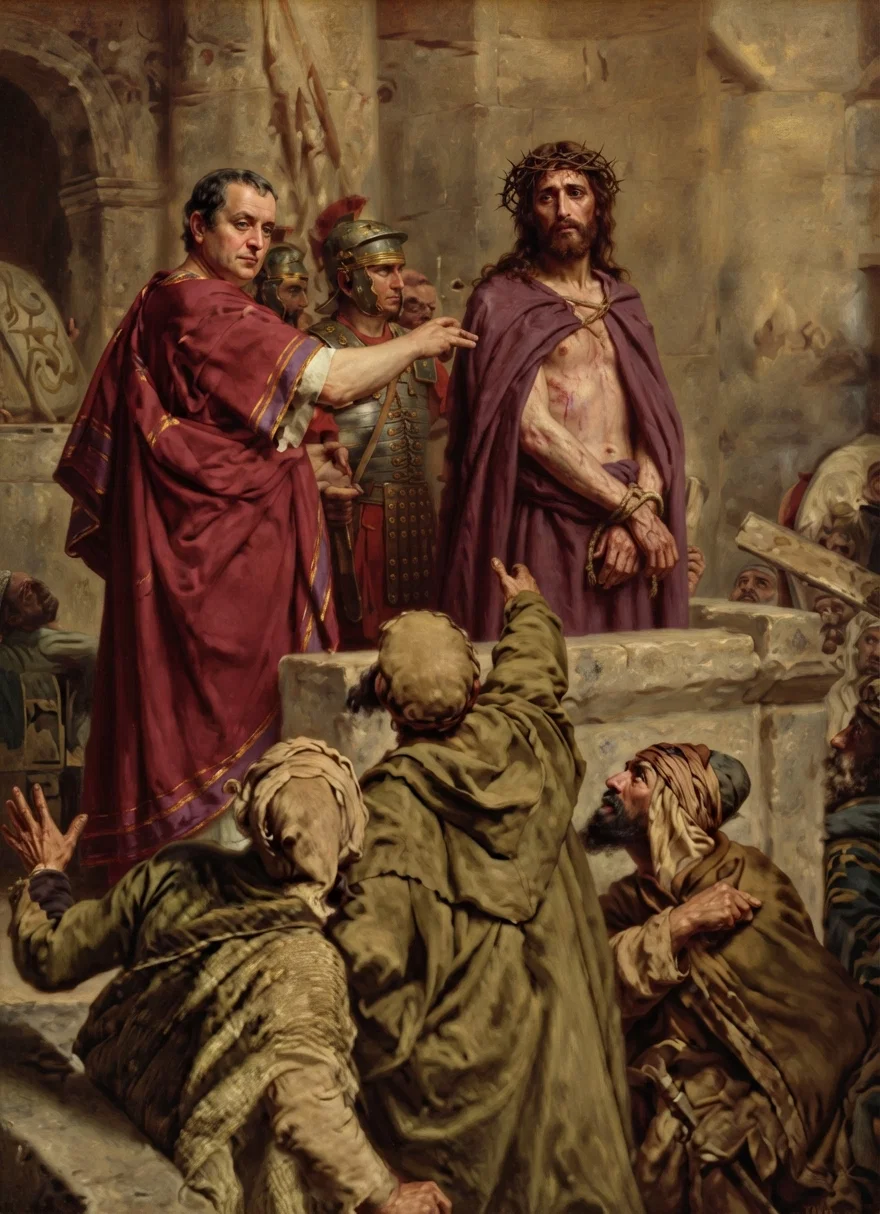
Hofmann Behold, the Man.
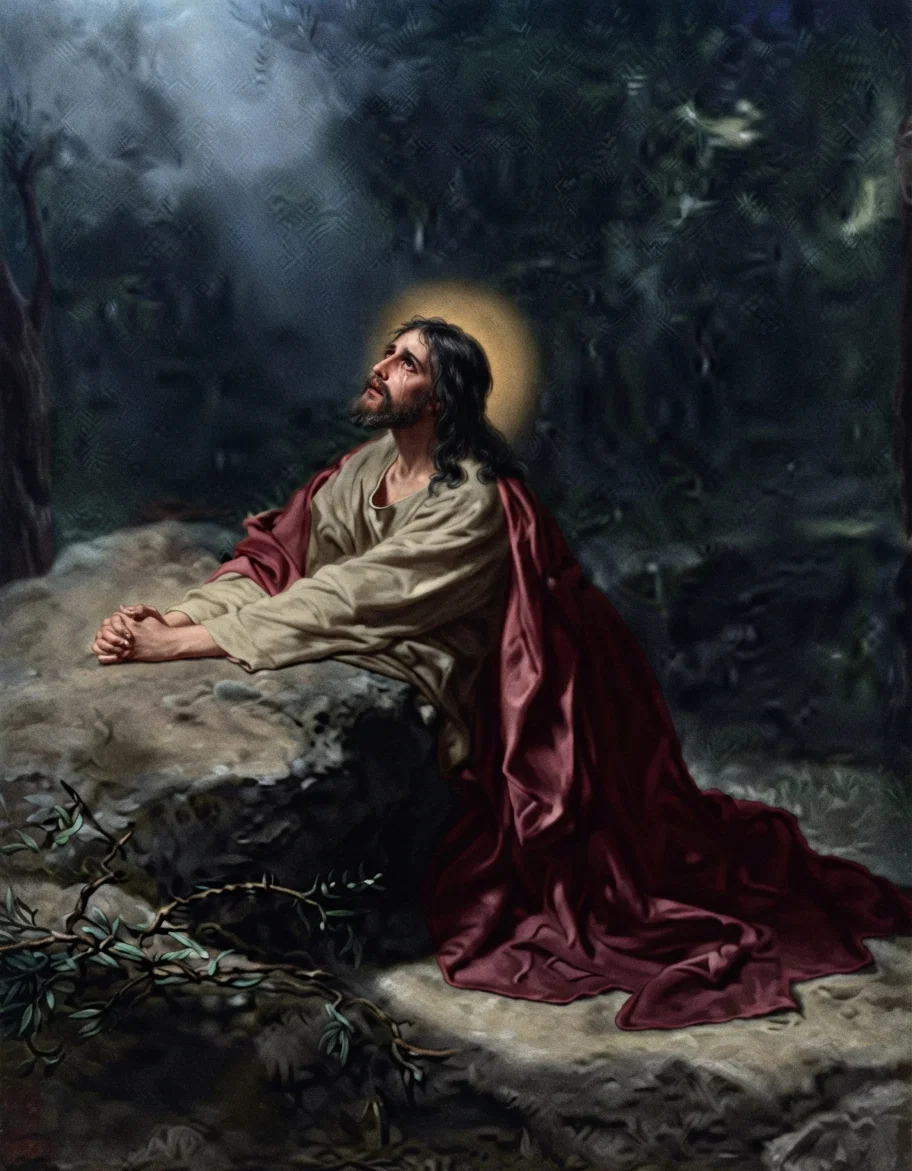
Hofmann Jesus in Gethsemane.
A VIEW of God's law erects before the mind the perfect structure of righteousness. Such a view of the law of the Lord enables a person to see just what a man should be in order to be perfect.
The written law of Jehovah, as it was given on the tables of stone, gives a word picture of the character of a perfect, upright man. But man in his fallen condition could not fully understand the breadth, meaning, and requirements of that law from the presentation in words alone. And so the Lord sent His Son Jesus Christ to actually live the perfect life required by the law so that sinful man could have before him in infinite perfection the life that the law really demands.
"For the law having a shadow of the good things to come, not the very image of the things, can never with the same sacrifices year by year, which they offer continually, make perfect them that draw nigh. Else would they not have ceased to be offered? because the worshipers, having been once cleansed, would have had no more consciousness of sins. But in those sacrifices there is a remembrance made of sins year by year. For it is impossible that the blood of bulls and goats should take away sins. Wherefore when He cometh into the world, He saith, Sacrifice and offering Thou wouldst not, but a body didst Thou prepare for Me; in whole burnt-offerings and sacrifices for sin Thou hadst no pleasure: then said I, Lo, I am come (in the roll of the book it is written of Me) to do Thy will, O God.
"Saying above, Sacrifices and offerings and whole burnt-offerings and sacrifices for sin Thou wouldst not, neither hadst pleasure therein (the which are offered according to the law), then hath He said, Lo, I am come to do Thy will. He taketh away the first, that He may establish the second. By which will we have been sanctified thru the offering of the body of Jesus Christ once for all."
God's will is expressed in His law. And twice in the foregoing scripture is the statement made that Christ came to do the Father's will. The sacrifices and offerings of the law of shadows and ceremonies of the old dispensation did not bring the relief that the sinner craved. It pointed forward to the relief that was to be experienced in the perfect sacrifice of Christ. For Christ had the will or law of His Father in His heart, and it was His delight to do that will.
And hence the sinner can look at the life of Christ and see what the law actually requires. The Christ-life is the one perfect representation that man has of what the law demands in real life. And as any one compares his own life with the life of Christ, and realizes that this perfect life is what the law of God demands, he feels his hopeless and undone condition. He realizes that for him to attain to the perfection of that law is a hopeless undertaking.
But bringing the sinner into a realization of his hopeless condition is one of the objects of the law. For the word of the Lord is:
"Before faith came, we were kept in ward under the law, shut up unto the faith which should afterwards be revealed. So that the law is become our tutor to bring us unto Christ, that we might be justified by faith. But now that faith is come, we are no longer under a tutor. For ye are all sons of God, through faith, in Christ Jesus."
The law reflects the perfect character of God, and in so doing it reveals the hideous nature of sin. It fills the soul with remorse of conscience at the thought of the iniquities and failures of the past life. But all this suffering because of past sin is a part of the plan. The law of God is thus revealing our defects, and the Spirit of God is thus filling our minds with the remorse of sin in order "to bring us unto Christ, that we might be justified by faith."
What a blessed thought it is to be "justified;" that is, to be made just. We have sinned, and can not make ourselves just. We have no power to reach into the past and undo the wrongs of the sins that we have committed. But God lays hold of our consciences thru His law, and brings us to Christ so that He may make us just, "justified," made righteous thru the power of the divine Father.
"For Christ is the end of the law unto righteousness to every one that believeth." Rom. 10:4. The end, or object, that the law has in view is to bring us to Christ. This scripture reiterates the same thought that is found in the text in Galatians. It is that we may find Christ and be cleansed from sin that the law discloses our characters. And when we accept Christ, with His life in perfect harmony with God's law of righteousness, we ourselves are brought into harmony with that law, and from thattime on the law, instead of filling us with terror because of its righteous demands, becomes our joy. For it is now our standard of right living, and thru Christ our past lives have been brought into harmony with its perfect requirements, and by the same power of the Master we are enabled to live from day to day so as to meet the demands of the law of Jehovah.
With such a perfect and desirable arrangement for righteous living as is thus provided thru the Gospel of Christ, why is it that men can be content to live in the disappointing and unsatisfying paths of sin and crime?