Our London Letter

4%

Pacific Press Publishing Company · Mountain View, California · Jul 22, 1908

FromSigns of the Times, Vol. 34, No. 30.

Read the full edition

Our London Letter

LONDON is in gala dress. The most brilliant season of the year has opened, and the city is thronged with interesting people and celebrities from many parts, and those who come to see them. The weather, moreover, has been favorable, and Hyde Park, St. James Park, and all the other breathing places, with their fine, green turf and magnificent trees and flowering shrubs, form scenes of vernal loveliness which it would be difficult to match. Whatever be said of it during the other months of the year, London is truly beautiful in June.

Orient and Franco-British Exhibitions.
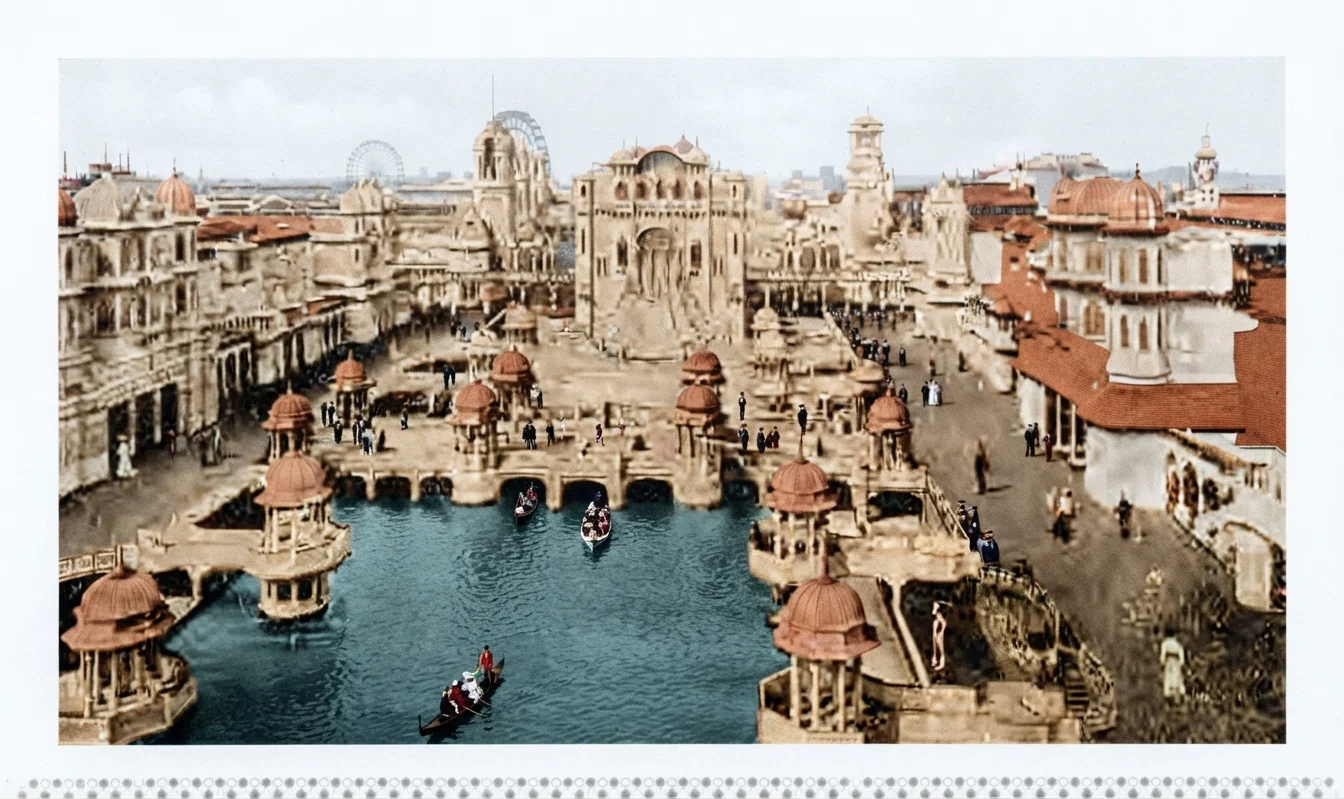
This year there are a number of special attractions. Agricultural Hall houses the Orient Exhibition, a very interesting and extensive object-lesson showing the manners and customs of the Orient, and giving some intelligent idea of the conditions among which missionaries must work. At Earls Court the Hungarian Exhibition is attracting large crowds daily. But far surpassing either of these, and forming the chief topic of conversation for the last two or three weeks, is the mammoth Franco-British Exhibition, covering some two hundred acres at Shepherd's Bush, in the west of London.
Court of Honor, Franco-British Exhibition, London.
The Exhibition, interesting in itself, and second in size and importance only to the three great world exhibitions of Chicago, Paris, and St. Louis, takes on added interest from being the outward embodiment of the very popular Entente Cordiale, which is cementing the friendship of the French and British people in a way that would have been thought impossible a few years back. Visiting the place, one is reminded at every turn of its Anglo-French character. Commercial exhibits of the two nations occupy the eight large industrial halls, exhibitioners representing the two countries stand side by side, and all over the grounds one hears French and English spoken alternately, while the official interpreters are numerous. The two peoples are undoubtedly coming together in a very pleasant way, and it is to be hoped that their mutual respect and good-will may be enhanced by this means.
Ground was first broken for the Exhibition something over a year and a half ago. The situation is a most happy one, being within fifteen minutes' ride on the electric tube from the center of London; and thus far the attendance has been all that could be expected. On the opening day it rained hard, and the grounds being in a general state of unreadiness, there was a good deal of mud to contend with; but even then the architectural effects were seen to be of a very fine order; and from that day to the present the crowds have kept coming, seemingly interested at first to see an exhibition in the making.

The King and the President.

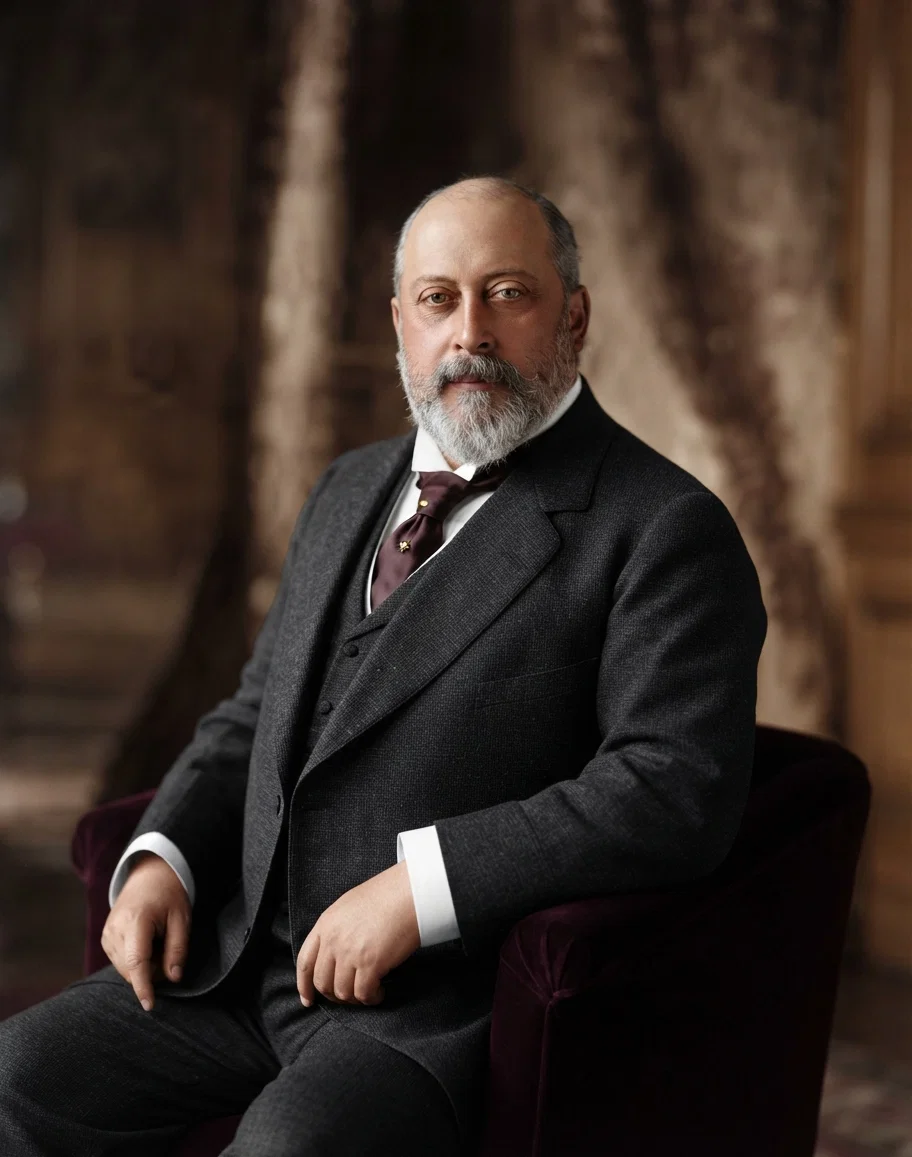
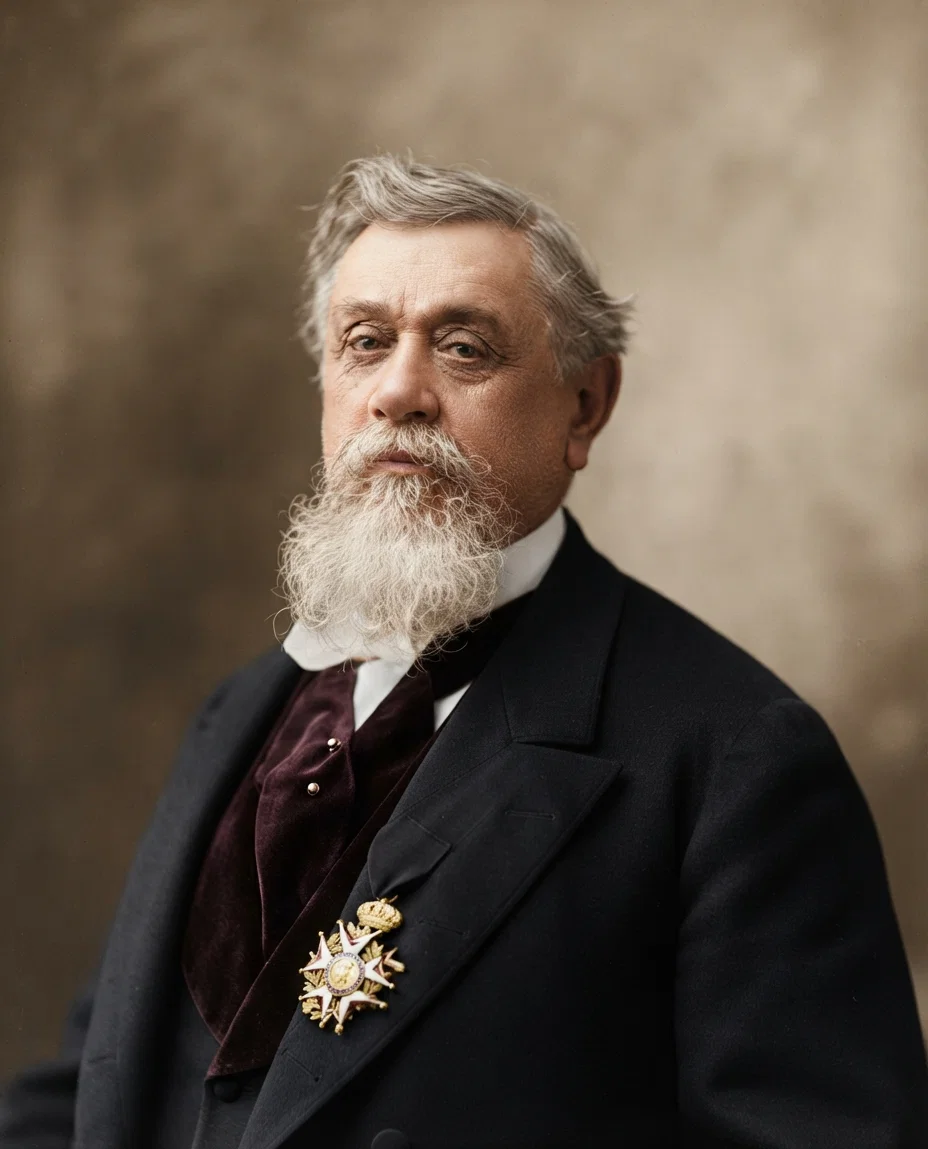
On May 26, when the king and queen and the French president visited the place, the grounds were looking splendid, and there were few signs of incompleteness. The august visitors spent some four hours in the place, and expressed themselves as highly pleased with all they saw. The writer arrived just as the royal party was about to enter the last building in the itinerary. A sign hung at the entrance stating that the building was closed to the public. Presently an attendant comes out and proceeds carefully to remove the dust from a red carpet which has been laid to the place where the carriages would stop. A large crowd soon gathers at the barriers in front and on the sides. Policemen and orderlies come trooping up. Presently the royal carriages appear around the corner, and all hats come off as the band renders in succession "God Save the King" and "Marseillaise." In the first carriage are the king, the French president, the Prince of Wales, and the Duke of Argyll, who is honorary president of the Exhibition.
King Edward VII.
King Edward VII.
President Fallieres.
The king, it must be admitted, carries his years well. About medium height, straight as an arrow, of generous proportions, but not corpulent, and of a quiet, dignified bearing, he well embodies the kingly ideal to the British people in all parts of the great empire. President Fallières looks distinctly older, a kind, genial personality but lacking the self-possession and decision of character which seemed most prominent in the king as he stood there on the steps waiting a moment for the arrival of the second royal carriage containing the queen, who also bore out her reputation for looking younger than her years.

The Buildings and Arrangements.

Turning a moment to the Exhibition itself, the first thing noticeable is the taste evident in the arrangement of the buildings and in the harmonious whole which the grounds present. On entering, there is first a spacious industrial hall, after emerging from which one soon stands in the Court of Honor, consisting of a group of beautiful buildings surrounding a fine artificial lake, with a pretty bridge, and dainty aquatic pavilions; at the far end stands the Congress Hall, from which a flight of crystal steps leads down to the lake. Over these steps the water ripples in a beautiful cascade, shining brightly in the sunlight, and at night by means of colored lights giving novel and pleasing effects. Beyond the Court of Honor lies a fine, open square, beautifully planted with trees and shrubbery, flanked on each side by the Decorative Arts Palace and the Palace of Fine Arts, respectively, and with charmingly designed smaller buildings occupying the four corners. Still farther on are the Elite Gardens, with dainty pavilions scattered about; on the left of them the enormous Machinery Hall; and on the right the Stadium, with its splendid facilities for sports of all kinds, and accommodations for fully a hundred thousand spectators.
Going on further, we pass on the left the fine buildings devoted to Canada and Australia respectively, while we see off on the right the Senegales Village, the French Colonial Palace, the Indian Village, and other interesting features. At the far end of the grounds and a little to the left, lies the IrishVillage, known by the musical name, Ballymaclinton, which has thus far proved one of the most popular of the so-called side-shows of the Exhibition. Here, covering some thirteen acres, one sees the romance and the beauty as well as something of the poverty and suffering of the Emerald Isle.
Near the entrance is the little cottage in which the grandfather of the late President McKinley was born, the identical rafters and other timbers being used, while the cheerful old woman who sits in front of the peat fire and talks in her musical brogue gives a home-like touch to the picture. Side by side with ruinous cottages,—unsanitary, damp, and inconvenient,—one sees model cottages such as are now being built to house the poor; and beside a stuffy, tuberculosis-breeding bedroom, one sees the clean, airy, well-ventilated room which meets modern standards. Model cow-sheds are also to be seen, and their opposites. In the industrial buildings we have bright-eyed Irish maidens in national costumes weaving vari-colored carpets and rugs; out in the open some are deftly making the famous laces; and in the Village Hall there is music and good cheer.
In one of the largest buildings we see the famous McClinton's soap in process of manufacture. A beautiful reproduction of the ancient Irish Cross of Donaghmore and of the far-famed Tower of Kilcullen, give a very picturesque setting to the village, and when the health restaurant is completed and ready to do business, that will prove another very attractive feature at the same time spreading far and near a knowledge of right principles of diet.
A fact which gives added interest to the Village, quite apart from its inherent attractiveness, is that all the proceeds are to go toward the present campaign against tuberculosis in Ireland. Mr. Robert Brown, the proprietor, who is also honorary secretary of the Ulster Branch of the National Association for the Prevention of Consumption, in thus putting the whole enterprise on a philanthropic basis, has placed all friends of Ireland under obligation.

The New Theology.

Turning our attention from the Exhibition, again let us take a brief survey of the month's doings in other directions. The famous May meetings have been held as usual, but no longer in Exeter Hall, that historic edifice having to give place to a restaurant. I am glad to say that some of the meetings have been enthusiastic, and some of the reports of work encouraging; but viewed as a whole, it can not be denied that the mission spirit is not as strong as it was fifteen or twenty years ago. It seems to die out wherever the New Theology and the comparative study of religions penetrate. The urgent personal note, the feeling of responsibility, the sense of sin and of the absolute need of a Saviour,—these essentials to a real missionary spirit—are sadly lacking to-day. We see it very markedly in the light literature of the time. Says the "Church Times," in a recent trenchant article dealing with the ethics of popular writers: "In the six-penny twaddle of our day, whether it be prose or verse, no one is a hero unless he has made light of the Ten Commandments, and every transgressor, whether penitent or not, is depicted as an interesting prodigal to whom, when he has trampled on all his opportunities in this world, a complaisant Father is going to give another chance in the next." These words strike home. One of the saddest features of the time is the utter lack of sense of responsibility and of sound principles. We seem to have instead, as the writer already quoted says, a "kind of shoddy, quarter-educated sentimentalism, which substitutes for Christ and His cross a kind of maudlin ethics made up of scraps of kind-heartedness and good nature."
"To do it justice," the writer continues, "it has a vague admiration for Him who went about doing good, but it knows nothing of Christ as Mediator and as the atoning Sacrifice for sin."

Political Matters.

In politics things are getting a little more quiet. The enemies of reform are still working in all manner of ways to defeat the Licensing Bill, but it stands a good chance of passing into law, having the support of the bishops in the Upper House and of a large majority in the Lower.
The Old Age Pension Bill which provides a state pension of ten shillings ($2.50) per week for all persons over 70 whose present income is less than that amount, is a fairly popular measure. It will place beyond the reach of want something like half a million deserving people, and later on the age limit may be lowered if thought best.
Churchmen and Nonconformists continue to differ materially in regard to the Education Bill. The government is willing to accept modifications, but holds out for a national system of education and the abolition of religious tests for teachers.
The Woman's Suffrage movement continues to show a good many signs of vitality, tho it still remains a question whether the women of Great Britain care for the parliamentary vote. There are to be a procession and a mammoth meeting in Albert Hall at the end of this week in which many prominent women will take part, the key-note being "Votes for Women."
Yesterday the king met the Czar of Russia at Reval, and thus performed another of those tactful, semi-official offices which have thus far at least always made for peace and good feeling. There was some strong opposition to this meeting on the part of the Labor Party, and something of a scene in the House of Commons when the matter came up for discussion. But the country as a whole is undoubtedly with the king. A friendly visit of this kind is not to be taken as endorsing all the methods that have been used, and are being used, in establishing peace in Russia; but the fact that the Russian Liberals welcome the visit and believe it will make for good, is the best evidence that it is a timely bit of courtesy and likely to prove beneficial.
M. ELLSWORTH OLSEN. London, June 10.