THE AINU OF JAPAN

9%

Pacific Press Publishing Company · Oakland, California · Mar 2, 1904

FromSigns of the Times, Vol. 30, No. 9.

Read the full edition

THE AINU OF JAPAN.

[By Rev. C. A. Clark, Miyazaki, Japan.]
TURN to your map of Japan and you will notice that the northernmost of the large islands is called Yezo on the map. But in Japan it is called "The Hokkaido." It was my privilege to make a tour in this island this last summer, and among the many interesting things which I saw were the Ainu.
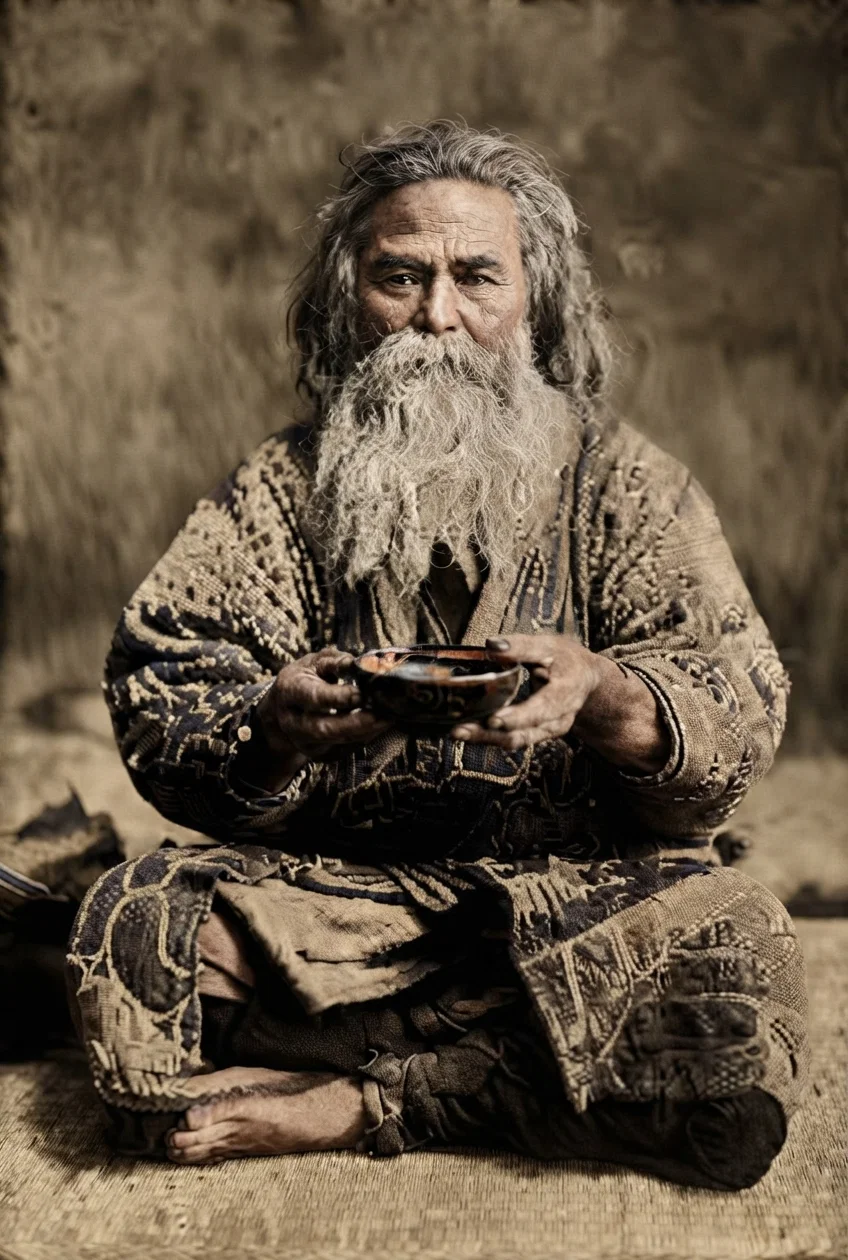
The Ainu are the people who were in Japan when the Japanese people came, long, long ago. They are to the Japanese what the Indians are to the other people of America. They used to be in other parts of Japan also, but they live now only in Yezo and some other of the northern islands. There are only about 17,000 of them left, and they are decreasing in number all the time on account of drunkenness, unsanitary living, and other causes.
Some of them are fine-looking men and women. Most of the men wear their hair and beards very long and do not comb them often; neither do they keep themselves very clean generally, so they do not appear as well as they might. Then, too, they have been easy victims of liquor-sellers, and this has, of course, done much to destroy their manly beauty and strength. The women are nearly all tattooed around the mouth. They think this is ornamental.
The roofs and sides of their houses are thatched with straw or grass. The houses have only one room besides the entry way. A large space for a wood fire occupies the middle of the room. The east window is counted as the sacred place. In front of this they worship, and, of course, next to this are the most honorable places. Between it and the fire the honored guests are seated, and on the south side of it such guests sleep. In the northeast corner are kept the large, round, lacquered treasure boxes and the sacred things of the family. Outside the window, and separated a little distance from it, posts are set in a row, to which they fasten one or more skulls of deer or bears, and before which they set their offerings, consisting of willow sticks whittled into long shavings, with the shavings left on the sticks (some of these are seen over the treasure boxes). This is their holy place and all they have for a temple.
On the east side of the house, also, is the bear cage. They consider the bear a sacred animal, and bears are taken when young and kept till they are grown and fat. Then they have a gathering of all the neighborhood, and the bear is killed and eaten with great religious festivity, in which all become very drunk.
They think that there are many gods, great and small, and one god supreme over all. But the greater the gods, the less they have to do with men. They do their work through the lesser gods. So the gods with which men have direct relations are not the great ones, but the gods of rivers and fields and winds and other gods of common things. These they try to pacify in various ways, so that they will not harm but help them. Fire is one of the gods which they worship and which, as they think, reports their conduct, and through these lower divinities they make known their requests to the upper gods. The favor of the fire god is secured sometimes by threats that they will not make offerings to him if he does not secure what they wish.
The Japanese Government now provides schools for the children, but these children have not, like American children, inherited the power to think hard and long, or the power to learn easily, and they are not able to keep up with the Japanese children in school, and so have to be taught differently. They excel in copying what they see, and writing and drawing are easy for them.
Much work is being done among the Ainus by the English Church Missionary Society, and a goodly number of them now profess to be Christians. The difference in their lives appears plainly, tho it is very hard for them to conquer their habit of drinking and the temptation to be like their non-Christian neighbors.—Missionary Herald.