How Widely Perpetuated

4%

Pacific Press Publishing Company · Mountain View, California · Nov 8, 1905

FromSigns of the Times, Vol. 31, No. 45.

Read the full edition

How Widely Perpetuated

THE term Babylon means "confusion," and is applied to the ancient Babylonian head of the seven-headed beast of Revelation, chapters 12, 13, and 17. Babylon refers to confused views of religious truth emanating from the ancient city of Babylon, and from that place heralded to all the earth. This is too well authenticated to leave reasonable room for doubt.
It is equally plain that Satan, termed in Isaiah 14:4, king of Babylon, and in Revelation 12:1-17, the dragon, set forth as in deadly conflict with Michael, determined to destroy the Manchild (Jesus) as soon as He was born, is the Head of this Babylonian system.

The Center of Controversy

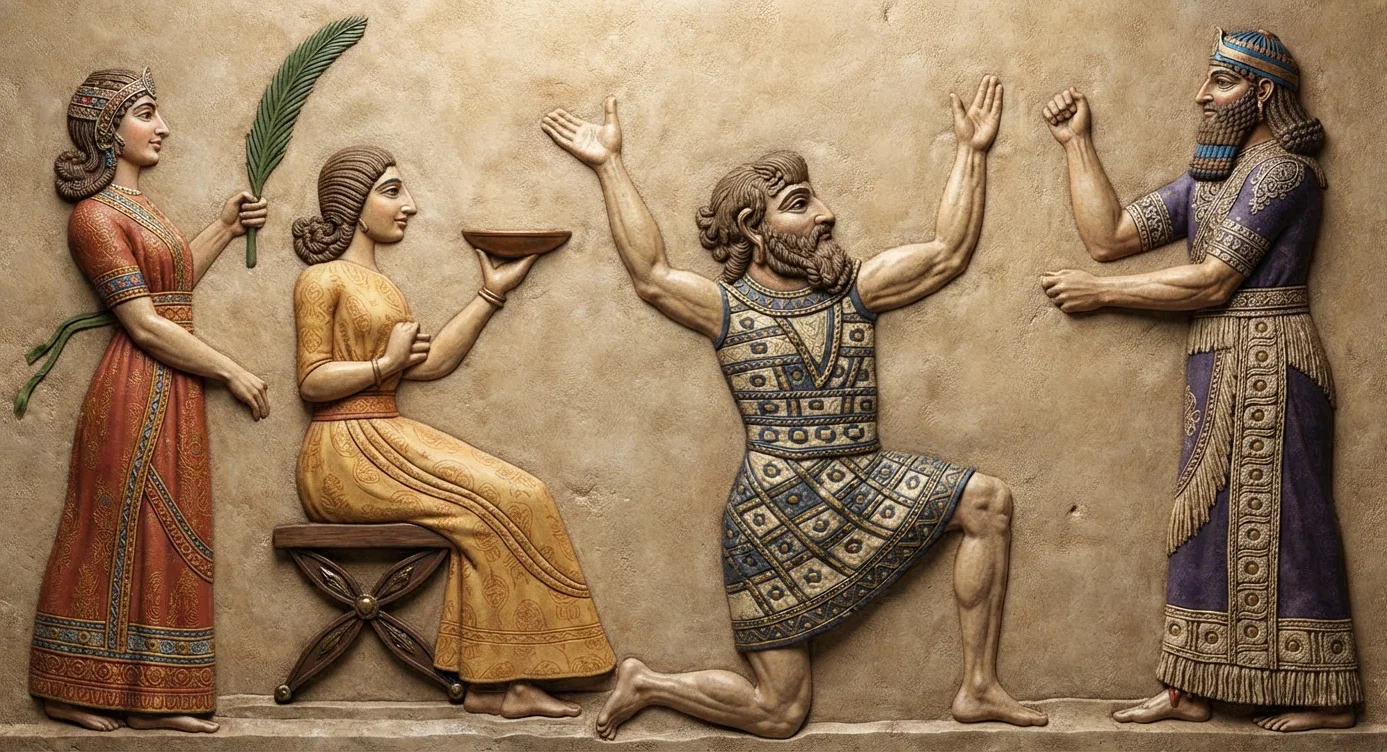
The warfare now waged upon earth began in heaven, when Michael and His angels fought against the dragon and his angels. Rev. 12:7. The conflict then was over the commandments of God and loyalty to the King omnipotent. The conflict upon earth has ever been over the commandments of God and the testimony of Jesus Christ. Gen. 3:1-5; 1 Kings 18:17-21. This will be the occasion of continual controversy between Christ and Satan, between Christianity and the Babylonian system, to the close of time. Rev. 12:17. In ancient Babylon the state was made to serve as a means of propagating a false system of religion. This abuse of the purpose of the state was carried to the extent of religious persecution. In Daniel the third chapter is recorded the order of the king, that all those who would not worship according to the demands of the Babylonian system should be cast into the fiery furnace. As a rebuke to the state for the misuse of its authority, and in demonstration of the superior power by which Christ conducts His work, the decree of the king was reversed by the presence of Christ in the fiery furnace with His faithful followers. The fire did not harm them, altho the furnace, by order of the king, had been heated sevenfold hotter than on ordinary occasions.

God's Attitude toward Babylon

There is no mistaking God's attitude toward this Babylonian system of religion. It is in open and irreconcilable hostility to the religion of Christ; and but for the judgments of God upon the nations from time to time, the states, influenced by the Babylonian system of religion, would have crushed out the last follower of Christ and allowed him no religious rights.
In the last part of Jeremiah 50, and chapter 51, the character of Babylon is set forth, and God's defense of His people. In verse eleven the kings of the Medes are called upon to "make bright" their arrows and gather their shields to destroy Babylon, "because it is the vengeance of the Lord, the vengeance of His temple." After all this testimony of God's disfavor to the system emanating from Babylon which caused the overthrow of that city and that nation, the same system is perpetuated, and the power of the state turned to its support in succeeding kingdoms. The second head of the beast of Revelation 13 evidently refers to the kingdom following Babylon. In this, the kingdom of the Medes and Persians, before the conclusion of the reign of the first king, we see Daniel in the lions' den by order of the state, for no cause but that he observed the law of his God. Here again Christ rebukes the Babylonian system of religion, and the state for allowing itself to become its agent in intolerance, by delivering Daniel from the power of the lions.
In Revelation 17, the apostate woman, who with her daughters, is used as a symbol to represent the Babylonian system in the Christian dispensation, is seated upon the seven-headed beast. And verse 18 says, "And the woman which thou sawest is that great city, which reigneth over the kings of the earth." This explains the meaning of the symbol of the woman seated upon the beast. The symbol is a fallen woman, representing an apostate church. Seated upon the beast is the same as reigning over the kings of the earth. Verse 2 states that with her the kings of the earth have committed fornication. An unholy alliance with kings for the accomplishment of her designs, and filling the world by this means with her false doctrines, is here revealed. This use of kings is seen throughout the seven heads, as we have seen it during the first two already examined.

A Threefold Manifestation—The First

In Rev. 16:19 this Babylonian system is said to be divided into three parts. The great pagan system of religion has in the previous article been shown to be the first division of this threefold Babylonian system. The influence of Paganism dominated Babylon, Medo-Persia, Grecia, and Pagan Rome. Persecution to the death was continued against those who were devoted to Christ in the days of Rome. Even Christ, pure and sinless, was condemned and executed upon Calvary through Rome's being controlled by the system of Babylon's religion. In this act the climax of the conflict between the religion of Love, of which Christ is the Author, and a religion of force, championed by Satan, was reached. In this act also the controversy was settled in heaven where it first began, and of the disloyal angels it was thenceforth said, "And prevailed not; neither was their place found any more in heaven. . . . He was cast out into the earth, and his angels were cast out with him." Rev. 12:8, 9.
PRINCIPLES OF BABYLON IN SUCCEEDING AGES
This stupendous challenge of the Babylonian system of religion, demanding the death of the Son of God to make way for its onward march, swaying into service the cringing, cowardly kings of earth, stands unparalleled for audacity.

The Second Manifestation.

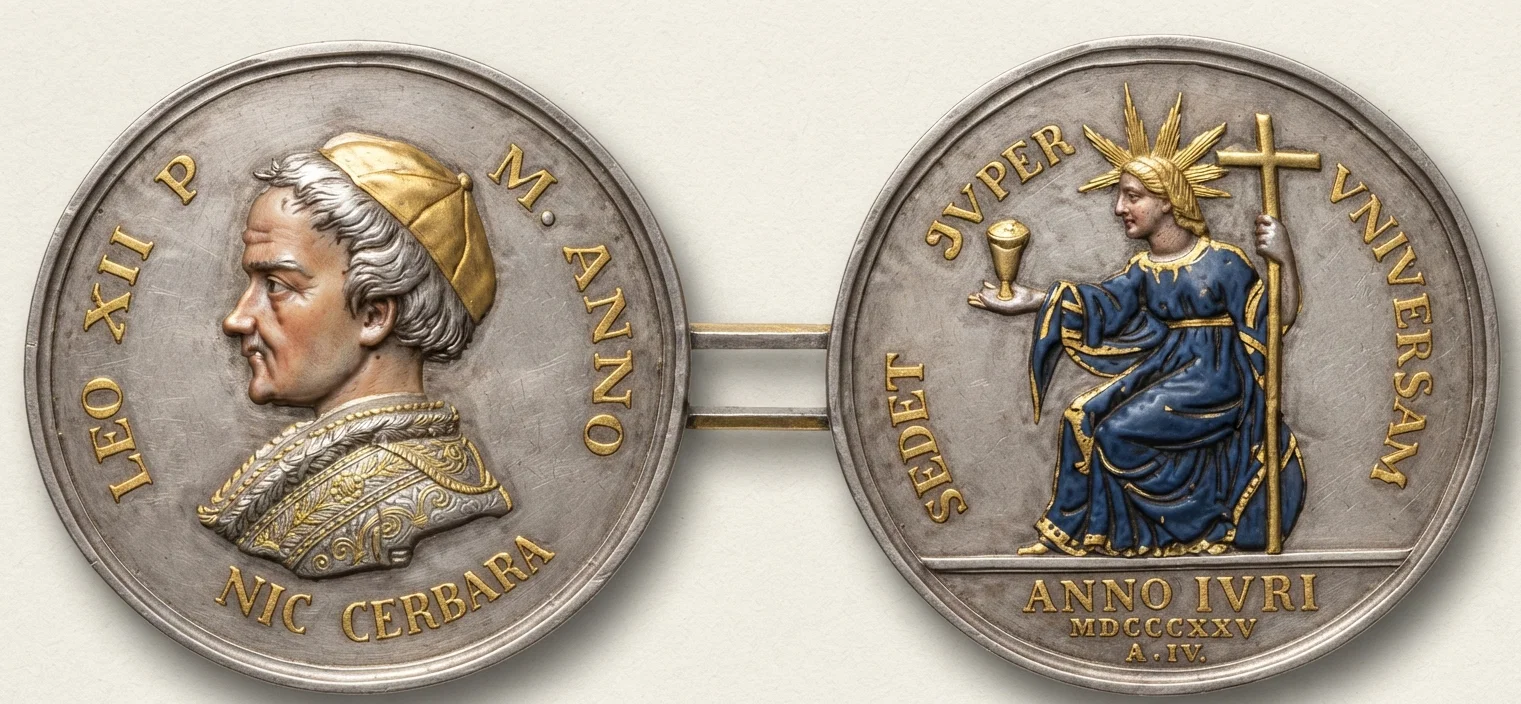
The exalted character of the religion of Love, represented by Christ—who so meekly met this insult from one dependent upon His love for life and power to perform this awful deed, who bowed His head in death before the storm of oppression, the tempest of wrath of Babylon's creed against the loveliest, purest Son of Man that had ever trod the earth—proved stronger than the creed of Babylon; yes, stronger than death itself. Soon old earth, appalled at such a scene, with a terrific quaking gave up this Son of Man as conqueror over death, and sealed the fate of His impenitent oppressors. Soon after, in deadliest wrath, knowing that his time is short, Satan, the head of this defeated scheme to hold in death the Son of God, develops through apostasy the second great division of Babylon. By this apostasy the Papacy is developed, "Mystery, Babylon the great, the mother of harlots." By this creed we see the worship of an image of a triune God, and the same is true in Babylon.

A Parallel

In this second edition of Babylon's great religious system, the Papacy, all can be shown to be radically Babylonian. The college of cardinals with the pope at its head, "is just the counterpart of the pagan college of pontiffs with its Pontifex Maximus, or sovereign pontiff, which had existed in Rome from the earliest times, and which is known to have been framed on the model of the grand original council of pontiffs at Babylon." ("Two Babylons," page 206.) "The sovereign pontiff of the Babylonian system was believed to be incapable of error." (Wilkinson's "Egyptians," lib. ch. 7, p. 57.) "So also the pope claims infallibility. The pagan system had her priests, monks, and nuns. The Papacy has the same. Paganism had her madonna and child. The Papacy has her Virgin Mary and Child. Paganism had her sign of the cross, infant sprinkling, relic worship, purgatory, and prayers for the dead, sacrifice of the mass, extreme unction, Christmas and lady-day, Easter, image-worship, and a host of holy days. The Papacy has the same. ("Two Babylons," pages 128-224.) Paganism had its Sunday holiday as a rival of the Sabbath of the Lord, decreed by civil enactment by Constantine in A.D. 321." ("Encyclopedia Britannica," art. "Sunday.") The Papacy claims to have enforced Sunday upon the Christian world in the place of Sabbath. (See Catholic Catechisms).

A Third Manifestation of Babylon

The warfare waged by the Papacy against the followers of Christ was so fierce and relentless that inspiration describes it in Rev. 17:6 with these dreadful words, "And I saw the woman drunken with the blood of the saints, and with the blood of the martyrs of Jesus." In Rev. 13:1-10 we have the history of the Papacy as forecasted in prophecy. The last verse of the above reference give the overthrow of the Papacy when it went into captivity under the sword of France in 1798. In verse eleven "another beast" is seen "coming up" controlled by the influence of the lamb-like principles of the Protestant Reformation, through which the Papacy received its first death-stroke which led to its overthrow. These Protestant principles do not last. The beast later speaks as a dragon. It also proceeds to make an image to the beast (the Papacy) which preceded it, and, drifting into the old dragon-like spirit of Paganism, enforces the worship of the beast (the Papacy) and the reception of his mark under the pains and penalties of the boycott and death.
This is, in brief, the history of Protestantism and prophecy of her apostasy. Protestantism in her apostasy joins the Papacy as the third division of the old Babylonian system of apostasy, and completes the picture of Babylon in three divisions before she drinks the fierceness of the wrath of God. Rev. 16:19.
The characteristic feature of the Babylonian system is religion by force. When Protestantism enters upon a campaign of enforced Sunday observance, she will have taken the step taken by both Paganism and the Papacy, which identifies her as a part of the Babylonian system, and it will be but a short time until she will influence the Protestant nations to make an image to the Papacy. Supported by this influence the Papacy will rise again, and all the world will pay her homage. In Rev. 14:8 the sad statement then applies—

Principles of Babylon

(Continued from page 8.)

"Babylon Is Fallen, Is Fallen,

that great city, because she made all nations drink of the wine of the wrath of her fornication." Also Revelation 18: "Babylon the great is fallen, is fallen, and is become the habitation of devils, and the hold of every foul spirit, and the cage of every unclean and hateful bird." "Come out of her, My people, that ye be not partakers of her sins, and that ye receive not of her plagues." Called out of fallen Babylon, the safe platform of true reform is presented in Rev. 14:12: "Here is the patience of the saints, here are they that keep the commandments of God, and the faith of Jesus." The enforcement of religious observance is the test in all the ages since the creed of Babylon was given to the world from that fallen city. That creed has permeated the nations and peoples of earth from that day to this. Her final doom is fast hastening. The call "Come out of her, My people," is as emphatic as in the days of Lot. "Escape for thy life," was his only hope. So now, "Blessed are they that do His commandments, that they may have right to the tree of life, and may enter in through the gates into the city."