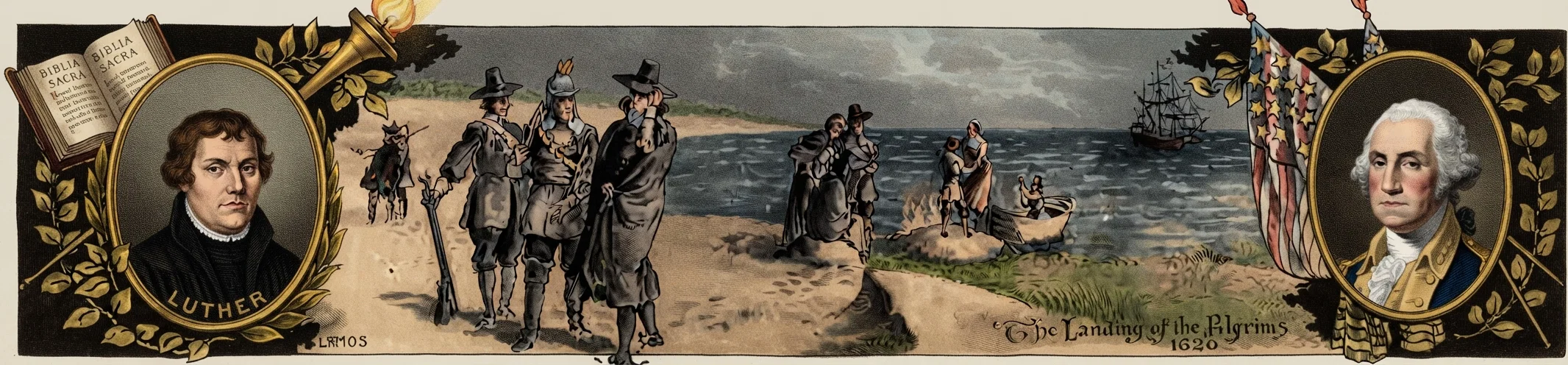
FOR well-nigh nineteen hundred years no name except that of Jesus Christ has contained such significance as that of Rome. Rome! that resistless embodiment of force which rose and dominated the world. Rome! whose mission it was to give to mankind law, as Greece gave beauty in literature and art. Rome! whose mind-and-soul-en-slaving religion has even yet loosed its last shackle from but a small part of Christendom. But the wondering gaze of men is shifting; or we might say, is beginning to pierce the glory that so long has dazzled human vision, and to see far behind it the flashes of an earlier and brighter glory, of which Rome is but a dim reflection.
The Mother of Much in Modern Education
When in the middle of the last century the shovel of the archeologist first turned sod over the ruins of Babylon, the light burst forth. From more than one hundred sixty thousand tablets—books of ancient ages—we now read the records of a kingdom the genius of whose institutions and principles is identified to-day as one of the chief elements in the underlying forces of twentieth century civilization. Not Egypt, Greece, or Rome has set in motion influences so perennial. Especially is this true in religion and certain theories concerning the sphere of civil government. Says the author of "Religious Systems of the World:" "The time will come—is rapidly drawing near—when no student of the science of religion will feel his work complete without careful study of the ancient tomes which for centuries have lain hidden in the treasure-houses of antiquity. From them we learn that not only was Babylon the motherland of culture and civilization, of arts, science, and letters, but also that in her temple-schools were taught the first principles of many of the great doctrines of religion which we hear at the present day set forth from our pulpits." This opinion is not alone.
The Survival of the Unfittest
But in nothing is this more evident than in the survival of her religion and her church-and-state doctrine. It is simply the statement of a fact patent to every student of ancient Babylon to say that every essential feature of her degrading religious system exists to-day, sometimes, indeed, disguised, but none the less identical. None familiar with the ancient system, with its elaborate rites, its hierarchy from priest-king and pontifex maximus down to tonsured monks, and "unmarried maidens" (nuns) consecrated to the service of the "sacred harlot" Istar, the mother of the gods, and its whole doctrine from the three-in-one trinity, its priestly power to forgive sins, purgatory, and what not,—no one that has studied that system can fail to recognize its successor and counterpart during this Gospel dispensation. John, the seer, beheld it in vision, saw and marveled, and branded it as "Mystery, Babylon the Great, the Mother of Harlots and Abominations of the Earth." Mysterious indeed has been the working of this stealthy principle. Paul calls it the "Mystery of Iniquity." A better characterization could not be devised.
The Fruitage of Babylon
Strange and marvelous was the eclipse of "the grandeur that was Greece and the glory that was Rome," the eclipse of those mighty civilizations, and the plunge into the intellectual and spiritual night of the Dark Ages. But the pendulum of the centuries, moved by the hand of God, swung back again. The hour struck. Infinite wisdom had permitted spiritual Babylon to demonstrate to the satisfaction of the universe the fathomless, destructive, insatiable iniquity of her principles. Degradation of mind, slavery of soul and body, murderous persecution of the saints of the Most High—in one word, Antichrist,—this was the fruitage of her doctrines. First among the forces which Providence prepared to assault this fortress of wickedness was that mighty awakening of the long-dormant human mind—the Renaissance.
When in May, 1453 A.D., Mohammed II, battered down the ancient walls of Constantinople, the last stronghold of the Cæsars and of political Rome, the event was in a sense typical of the outcome of the assault which the re-awakened mind of Europe was to make against the venerable fastnesses of ignorance. The Greek scholars, fleeing from the impending doom of the Eastern capital to Italy, with their ancient manuscripts, rekindled the flame of classic culture. As men saw from what they had fallen intellectually, so they naturally began to question other things.
The restless human spirit aroused by the revival of learning invaded the realm of religious beliefs. Babylon entrenched in church and state was to totter to its foundations and lose its grasp on a large part of Christendom.
The crusades had prepared the way for the Renaissance, voyages and discoveries assisted in arousing curiosity, stimulating to inquiry, and in forming broader conceptions. Men more than suspected that if the dominant church was mistaken about the earth's being flat, it might be mistaken on other things.
As a natural result of all this, says Professor Fisher, "there existed a great amount of outspoken and latent discontent. First, complaints were loud against administration in church affairs. There were extortions and other abuses that excited disaffection. Secondly, the authority exercised by the pope was charged with being inconsistent with rights of civil rulers and national churches. Thirdly, disputes sprang up both in regard to various practises deemed objectionable, like prayers for the dead and invocation of saints, and also concerning important doctrines, like the doctrine of the mass, or the Lord's Supper, and the part that belongs to faith in the Christian method of salvation. Out of this ferment arose . . . the Protestant Reformation." Better, "Into this mass God sent the life of the Gospel."
Principles of Babylon Remain
Dissent from Rome became possible, and also triumphantly actual; but, strange to say—and yet not strange to the student of the Bible—the Babylonish principle of conformity still survived. The tyrant was dead, the tyranny still lived. Many states broke from the Papacy, but the papal principle of the union of church and state remained the ruling theory concerning the relation between government and religion. This was the doctrine of ancient Babylon. "The king often was by birth, and always by right of office, a khattesi, or high priest, and, as such, head of the church and state." ("Religious Systems of the World," page 19.) "The earliest form of government in the Euphrates Valley is theocratic." ("Religion of Babylon and Assyria," page 656.) "From the outset the Babylonian monarchy was essentially theocratic. The king was simply the high priest in a new form. But [later on] the king himself became a god. The vicegerent had taken to himself the attributes of deity, the adopted son succeeded to the rights and powers of the divine father." (Sayce.) Here we find that infallibility is not peculiar to the successors of Peter in the primacy of Rome. We also see where modern Babylon got her doctrine. One more quotation from the last-mentioned source: "At the head came the potesi, or high priest, who in the early days of Babylonian history performed the functions of a king. But the potesi was essentially the vicegerent of the god. The god delegated his powers to him and allowed him to exercise them on earth. It was the doctrine of priestly mediation carried to its logical conclusion. Only through the priest could the deity be approached, and in the absence of the deity the high priest took his place." It is evident that the genius of Babylon still flourished at the time of the Reformation.
But the Reformation Opened the Bible
Thus was unchained the mighty adversary of the "mystery of iniquity." "Every plant which My heavenly Father planted not, shall be rooted up," said Jesus. Matt. 15:13. This the Word of God must accomplish. The work begun by Huss, Wyclif, and others, has never stopped. The years that have intervened have witnessed a gradual purification of faith and doctrine in the true church. From the hierarchy of Rome to congregational church government is a far call. But it came. One by one the errors and superstitions of Romanism have withered beneath the blaze of Biblical truth. We shall briefly illustrate the process by the history of the development of the Christian principle of the separation of church and state.11
As noted above, the Reformation gave only the right to dissent from Rome. No European nation from that day to this has entirely succeeded in disentangling itself from the Babylonian notion of a necessary connection between civil government and religion. It remained for America only to found a state on the Scriptural principle, "Render to Cæsar the things that are Cæsar's, and to God the things that are God's." Ireland (the most Catholic of Catholic countries) has absolute religious liberty in practice. In law, however, that nation is subject to England, which could, if she pleased, re-establish in Ireland the Church of England. Of course religious freedom in Ireland is simply a concession from her Protestant mistress. This is toleration, not liberty. Of all European nations, Switzerland by her constitution approaches nearest to the true principle. The constitution of 1874 grants liberty of worship to all except Jesuits. These are forbidden to enter the country. The same instrument forbids the establishment of convents and religious orders. "Every canton," however, "has its own established church controlled by civil magistrate."
This and the following quotations are from "Rise of Religious Liberty," by Cobb:
Few of the reformers got far enough away from Rome to be clear regarding this great principle. Truly all nations have been made drunk by the wine of Babylon. Luther himself was not consistent on this point. Notice his contradictory statements: "Whenever the temporal power presumes to legislate for the soul, it encroaches." Compare this with, "Since it is not good that in one parish the people should be exposed to contradictory preaching, he (the magistrate) should order to be silent whatever side does not consist with the Scripture."
That he saw the true position there is evidence; but it is equally certain that he did not stand unequivocally for it. The explanation—or excuse—may possibly be found in the impression made upon him by the generally rude state of the German people, the Peasant War, and the fanatical disturbances of the Anabaptists. These last held the principle in its theoretical purity, but brought it into disrepute by their turbulent actions.
It was probably due to Luther's influence that the Augsburg Confession, in 1530, contained the correct doctrine: "The administration of civil affairs has to deal with other matters than the Gospel deals with. . . . The ecclesiastical and civil powers are not to be confounded." But the Peace of Augsburg, twenty-five years later, shows a great retrogression. Here the principle, "Cujus regio, ejus religio"—"Whose the rule, his the religion," in other words, that the people must follow the prince in religious matters—is stated in so many words. Emigration was the only relief.
Every one knows what Calvin did for Geneva and to Michael Servetus. Zwingli was scarcely behind Calvin in his belief on this question. If John Knox and Scotland did not burn heretics it was due to public sentiment rather than to the authorities.
Vindication of the Principle
But not by might nor by power has the true principle come to prevail. Of the forces working for it, space would fail us to speak of the Anabaptists, Quakers, Sir Harry Vane, Roger Williams, Jonathan Edwards, Madison, Jefferson, and others. Madison believed persecution to be a "diabolical, hell-conceived principle." Jefferson taught, "It is error alone that needs the support of the government. Truth can stand by itself." Roger Williams stood for absolute religious equality under circumstances similar to those where Luther failed. God has vindicated the principle on American soil. Every American citizen knows (as, indeed, does all the world know) the position of our organic law on this matter. Babylon is judged. Would God she were as far removed from the hearts of the people as from the fundamental law of our nation.