EUROPEAN LETTER

3%

Pacific Press Publishing Company · Mountain View, California · Mar 15, 1905

FromSigns of the Times, Vol. 31, No. 11.

Read the full edition

EUROPEAN LETTER.

FRANCE is at present waging a noble struggle against the hoary and baneful system of church and state union, which has been afflicting its history for about thirteen hundred years. This struggle comes nearly one hundred years after a first attempt in shaking off this disagreeable yoke. It may not end, this time, as it did then, in such a fearful upheaval as was the French Revolution, then to collapse into the arms of a clever dictator like Napoleon. We hope not.
Passions are not heated now as they were then, altho there is a set determination, on the part of the liberal and socialistic parties which form the bloc or anti-clerical majority, to put an effectual check on the ever-threatening, ever-increasing, and ever-encroaching power of the regular and secular clergy—the monks and the priests.
It might be interesting, in this letter, to study how the French people are relating themselves to a question which has a direct bearing on the principle of church and state union—I mean the Sunday-law question.
The first time, perhaps, within half a century or more, that this question was brought up before the French legislators was in July, 1880, when the last Sunday law, dating back to 1814, was abolished by the French Senate on account of its religious character. At that time a distinguished scholar and statesman, who was then acting as vice-president of the Senate, M. Barthélemy-Saint-Hilaire, took occasion to remark that the day of rest, according to the Bible, was not Sunday, but Saturday.
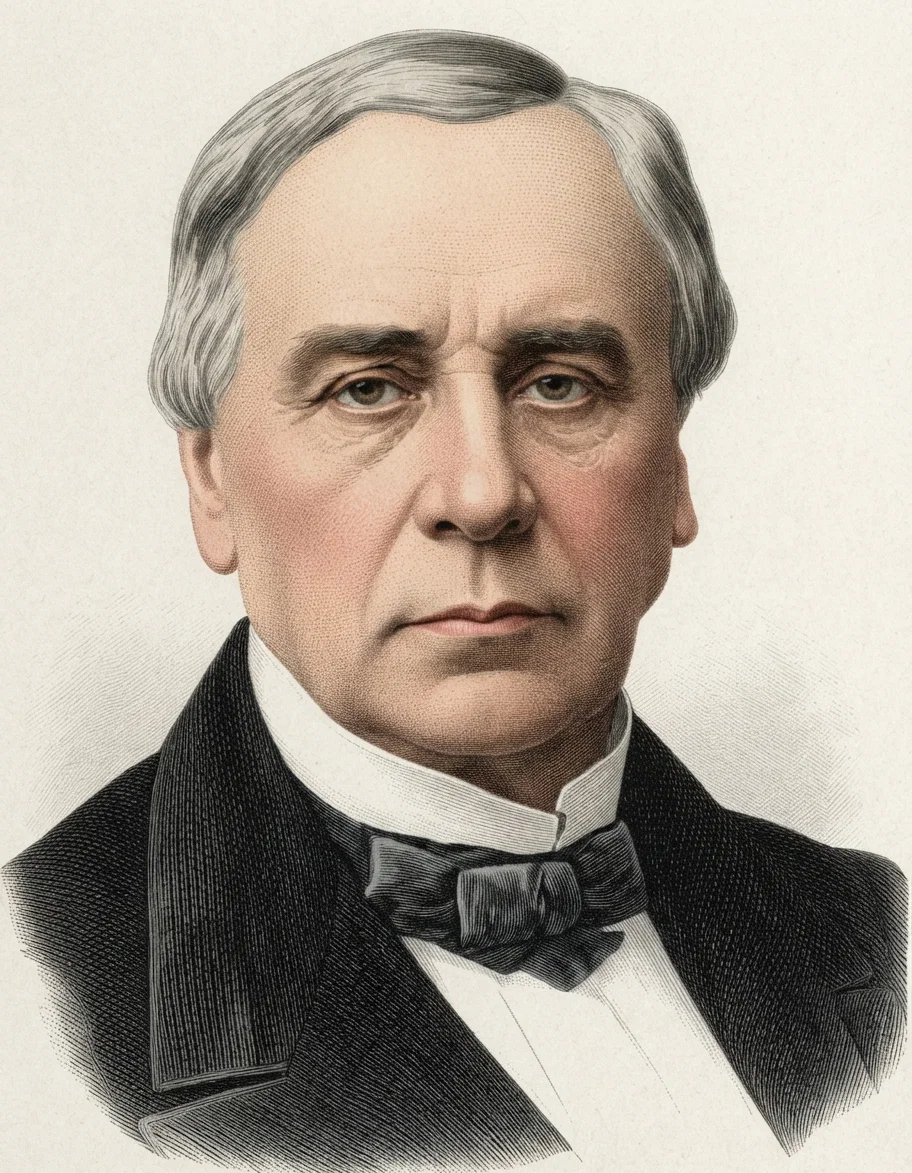
Barthelemy-Saint-Hilaire, French Senator (1805-1895).

Agitation for Sunday Laws.

In 1892, a law was enacted for the protection of females and children laboring in factories, and forbidding their being employed on Sunday.
Two years ago a Rest-Day Bill, recognizing the right of resting one day in seven, was presented by Deputy Zevaes, a socialist. It has not yet, so far as I know, received the honors of a discussion.
This is about all that the French government has done, for one hundred years, in the line of Sunday laws. There is, however, among the friends of Sunday-rest, a class of thinkers—politicians and religious men, but mostly the latter—who are zealously laboring to bring over the French public opinion in favor of Sunday laws. But on this question, the Sunday-rest men are divided, and this difference comes out plainly at every large meeting in which the forces of the movement meet together.

A "Rest-Day" Congress.

The first meeting of the kind was the Rest-Day Congress which convened in Paris in 1889, in connection with the World's Fair. This Congress was mainly promoted by the directors of the "International Federation for Keeping Sunday Holy" the seat of which is at Geneva. But the French government would consent to take this Congress under its protection and consider it as official only on the condition that the word "Sunday" should not appear in the title, thus avoiding all appearance to a clerical connection. The organizers called it, "Weekly-Rest Congress, from the social and hygienic standpoint."
The subject of "legislation" was treated as well as the social and hygienic benefits of the day of rest. The discussion was introduced, as is customary, by a paper on the subject. The writer quoted in favor of Sunday legislation the example of the United States, which has Sunday laws, while at the same time it is "the freest country in the world, and the one in which the separation between the church and the state is the most clear cut." The writer went on to make a distinction between the civil and the religious aspects of the Sunday rest, but he maintained that the right of working on Sunday was as sacred as the right of not working.
Several speakers, mostly Protestant ministers, spoke decidedly in favor of the right of the state to legislate on the question. The Catholic priests who were members of the Congress said very little or nothing on the subject. The other side was taken by an architect, M. A. Riviere, who positively denied the state the right to interfere, calling it an immense danger, and the entering wedge for future encroachment on the liberties of the people.

Another Congress.

A National Congress for Sunday rest was held in Paris in 1892 under the auspices of a non-sectarian Sunday-Rest League organized at the close of the Congress of 1889. Full reports were read about the condition of things on Sunday in all parts of France and in all classes of society. The conclusion was that, in governmental and municipal works, in the mail and railroad services, in the big and small trade, and in the industrial and agricultural life, about half of the people keep on working on Sunday while the other half is resting, some spending the day decently and religiously, but the majority in drinking and in harmful pleasures.
The question of Sunday legislation was not touched.

The Congress of 1900.

But the two parties came in conflict again in the second International Congress held in 1900 in connection with the Paris World's Fair. On the last and fifth day of the Congress, when the matter of legislation was touched, a lively discussion sprung up. In favor of Sunday laws spoke two well-known Catholic priests, Abbotts Garnier and Lemire—the latter a deputy at the Legislature—and several Protestant ministers, all of them without exception from countries outside of France. Against Sunday legislation spoke several laymen, the principal being Senator Bérenger. Strange enough, Pastor Gambini, from Geneva, president of the International Sunday-Rest Federation, took a middle ground position, but really spoke in strong terms against the principle of Sunday laws; while Pastor Deluz, secretary of the same federation for over a quarter of a century, the most indefatigable Sunday worker in Europe, spoke energetically in favor.
It may be both interesting and profitable to read some of the remarks made on both sides.
ABBOTT GARNIER.—I am here to voice the feelings of many working men and merchants who have tried very hard to get a chance to rest on Sunday, but did not succeed for the lack of a law to back them. In several cities the interested ones came to an agreement. But several who had pledged to close on Sunday withdrew their signature and thus prevented the rest from closing on Sunday. Could there not be a legislative sanction given to pledges made under such circumstances? Again; after we have secured three quarters of four fifths of the signatures of a certain trade in favor of Sunday closing, could it not be possible to compel the minority to come to terms? Otherwise, if one single individual resists, the whole movement has to stop. Can not the legislator help us to conquer the rebellious ones?
M. LAVOLLEE, ex-consul.—In the name of liberty, a general law is asked for, which would enforce Sunday-keeping upon all employees and all employers. But this principle of liberty can be invoked on both sides. Of course, liberty is violated when an employer forces his employee to work. But would it be less so if a law took away the liberty of working on Sunday from both the employer and the employee, in case they were agreed, one to furnish work, and the other to do it?
PASTOR GAMBINI, from Geneva.—I am deeply perplexed. I love liberty everywhere, and I consider that it is the greatest force in human society. Abbott Garnier has asked that a majority of three fourths might compel a minority of one fourth to close on Sunday. There is there an absolute violation of individual liberty; it is the suppression of the right of minorities. You say that Sunday work will be forbidden even to those who want to work. This idea will arouse public reprobation.
PASTOR BUCHSENSCHUTZ, of Paris.—Can it be enacted that a determined majority shall have the right to enforce upon a minority its wish not to work on Sunday? And if the opposite case occurs, can a minority be compelled to work? Let us not trample upon the rights of conscience. It would be depriving man of what God has given him—liberty. A legislator has no right to go beyond God.
ABBOTT LEMIRE, Deputy.—The question as stated by Abbott Garnier embodies a principle. I wish to state plainly that I am in favor of state interference in favor of Sunday rest. Socialists take every opportunity of demanding the protection of the laboring man, and of asking for the weekly day of rest. They are in line with French traditions. For we have a Sunday legislation, the law of Germinal, the law of 1802; and it does not rest on a theocratic principle. As a legislator, I wish to say that whenever Sunday-keeping shall be asked for as a humanitarian measure, there will be a large majority for it in the Chamber. And I wish it understood that when I ask the legislators for Sunday rest, I am not taking a religious, but a humanitarian, standpoint. As to the repulsion which some of you here feel about the interference of the state, repulsion inspired by their cult for absolute liberty, I am free to say that I do not share it. Liberty is good for the strong, while the Sunday law is made to protect the weak, which are the great majority. I beg of you to give us legislators a chance to help you.
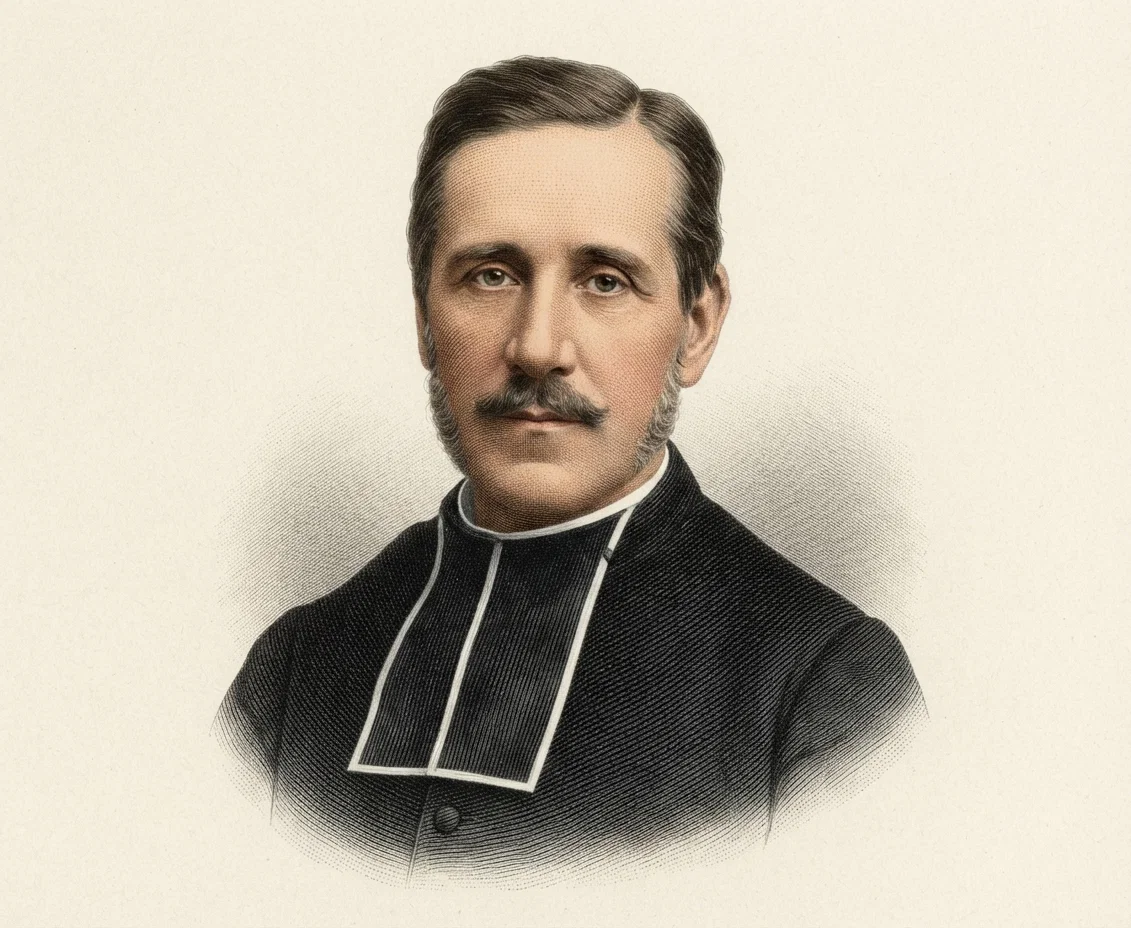
L'Abbe Lemire, Député du Nord.
SENATOR BÉRENGER, President of the Congress.—I am sorry not to agree with the honorable Abbotts Lemire and Garnier. What they demand of the law is beyond its domain. The law has no right to enforce Sunday rest, backed with penalties. Our law of Nov. 2, 1892, came to protect women and children. But the working man is not a minor, he is a major, and well able to fight for himself by refusing to work, and by association.
Suppose a working man coming to you and saying, "You have made a law forbidding Sunday labor; but I want to work." How can you forbid him? The fact is, the man who does not work on Sunday looses one seventh of his wages; he may be poor and have a large family. Now about the employers: Suppose that some want to work on Sunday and others not; for these, under the law, there will be no more freedom at all. Law must do everything to insure liberty, nothing to lessen it.
It has been said that some friends of Sunday dared not carry out Sunday rest, because their competitors kept working on that day. If we have only such helpers, we are in a bad predicament. Once a man is convinced on a point, he must be willing to sacrifice some of his interests for his convictions. See what has been done by the Magasins on Louvre [Louvre stores] and by the glass and paper factories which have been mentioned here. They did not hesitate to do what they thought was right, not fearing the bad feelings which might arise, nor the losses which they might incur. God so led matters that their loyal efforts caused them no damage. These are the examples which we must show the public, instead of talking of those false believers who are not willing to act out their convictions.
As to the opinion of the majority, it must not necessarily become a law. The right of one individual is as respectable as the right of several individuals of the same mind. What are the laws for, if not to protect minorities? It would be immoral to make majorities rule in everything. I shall vote against the resolution calling for the interference of the law.

The Act of the Congress.

Notwithstanding these noble and eloquent words, a resolution recognizing the principle of Sunday legislation was voted by the Congress.It may seem strange to the reader to note, from the above discussion, that the natural friends of Sunday and religion, like priests and pastors, were to be found on the side of expediency, selfishness, and compulsion, while laymen, who do not make any special religious claims, had to come forward in defense of freedom of conscience, the rights of minorities, and the Christian principle of self sacrifice.
Is not this a sufficient indication that the Sunday rest is not a legitimate object of legislation, having no civil character, being only a religious institution? Are not the embarrassed and roundabout arguments of the Sunday-law promoters taken with their clerical character and the theocratical and bloody pedigree of said laws, another strong reason for reproving them? And is it not a cause for sadness when we see Protestant ministers coming to Paris all the way from Switzerland, Germany, England, and the United States to unite with French abbots and "monseigneurs" in clamoring for the arm of civil power in the matter of keeping one of God's commandments? Is there no better way of promoting religion among the people? And have these distinguished gentlemen forgotten all about the Acts of the Apostles and the history of the Reformation?
JEAN VUILLEUMIER.