Out of Babylon to Zion

6%

Pacific Press Publishing Association · Mountain View, California · Apr 19, 1910

FromSigns of the Times, Vol. 37, No. 15.

Read the full edition

"Out of Babylon to Zion"

God's People in Babylon

THE prophecy of Zechariah is remarkable for the rich stores of truth it contains; and this, together with the fact that it seems to be very poorly understood by many, leads us to the belief that a series of studies of this portion of the Scriptures would be helpful. Considering the fact, too, that the prophecies of Zechariah were given in the time of the restoration, when Jerusalem was being prepared for the first advent, they will contain something of help in this second period of restoration, of spiritual temple-building, in preparation for the second advent of Christ. Beginning the prophecy we read:
"In the eighth month, in the second year of Darius [Darius the Persian, called the Great, B. C. 520], came the word of the Lord unto Zechariah, the son of Berechiah, the son of Iddo the prophet, saying." Zech. 1:1.
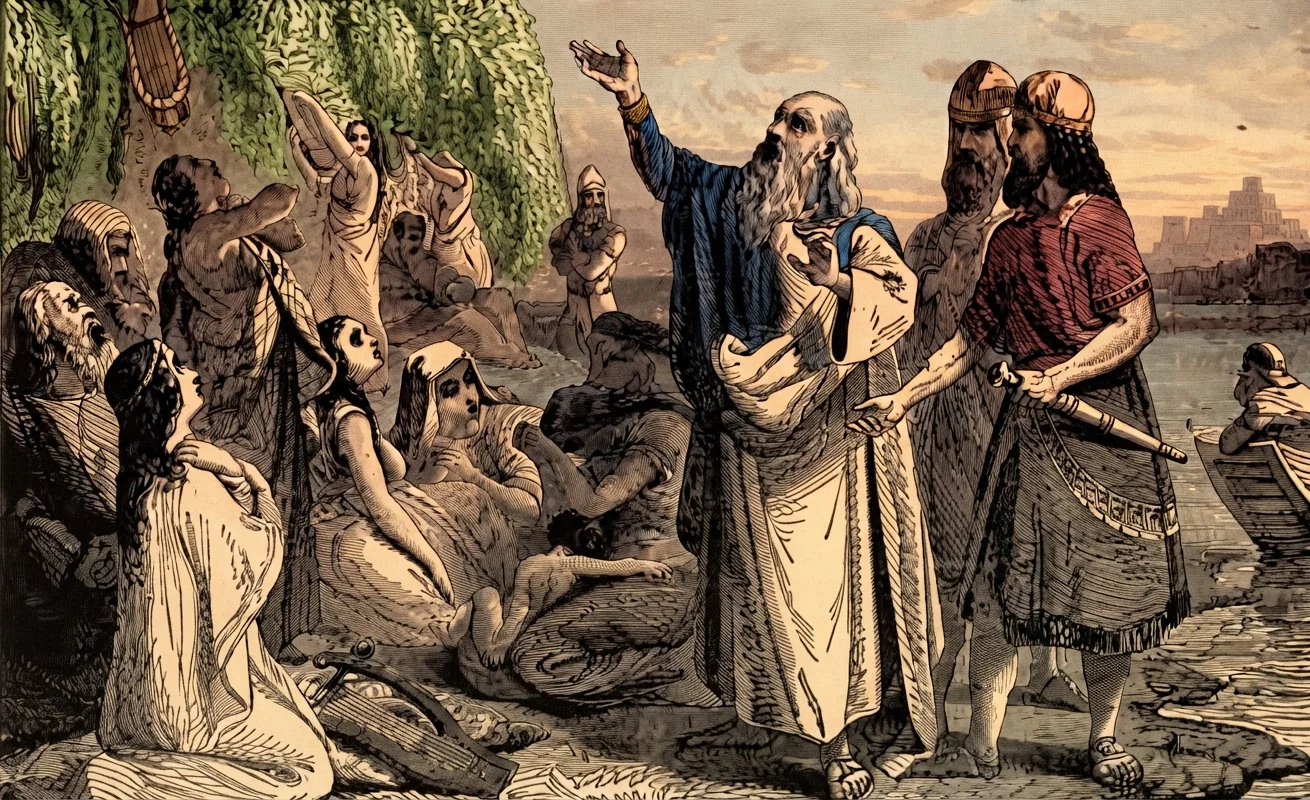
It is impossible for us to understand the force and beauty of God's Word to His people at that time unless we understand the historical setting of the whole book. The children of Israel had been taken captive from Jerusalem, had been in captivity in Babylon for seventy years. The captives had been treated as colonists, and had been given a large degree of freedom and opportunity in that country, and many of them had settled down, had established homes, and were content to remain in the land of Chaldea; but there were those who longed to return to Jerusalem. The desire of these to return to their native land is well expressed in the 137th Psalm:
"By the rivers of Babylon, there we sat down, yea, we wept, when we remembered Zion. We hanged our harps upon the willows in the midst thereof. For there they that carried us away captive required of us a song; and they that wasted us required of us mirth, saying, Sing us one of the songs of Zion. How shall we sing the Lord's song in a strange land? If I forget thee, O Jerusalem, let my right hand forget her cunning. If I do not remember thee, let my tongue cleave to the roof of my mouth; if I prefer not Jerusalem above my chief joy. Remember, O Lord, the children of Edom in the day of Jerusalem; who said, Raze it, raze it, even to the foundation thereof. O daughter of Babylon, who art to be destroyed; happy shall he be, that rewardeth thee as thou hast served us. Happy shall he be, that taketh and dasheth thy little ones against the stones."

The Prophet Daniel

Among those who longed for the time to come when God's people might return and rebuild Jerusalem, was the faithful prophet of God, the beloved Daniel. In the ninth chapter of the book of Daniel we read that in the first year of Darius, who was the ruling king, Daniel understood through a study of the prophecy of Jeremiah that the seventy years appointed by God for the desolations of Jerusalem were about to expire. Then it was that this faithful servant of God set his face unto the Lord to seek Him by prayer and supplication, with fasting, sackcloth, and ashes. The wonderful confession of his sins and the sins of his people is given in Dan. 9:4-19. While he is in prayer, the angel Gabriel appears to him, and gives him understanding with reference to the time period that is set apart by God for the accomplishment of great events, and which runs forward into the future, covering thousands of years.
This vision was given to Daniel in the first year of Darius, who was ruling at that time in Babylon. It is under Darius that the conspiracy of the presidents and princes to get Daniel into trouble took place. Daniel had been highly honored during the Babylonian supremacy, and had occupied a position fairly equal to that of the prime minister of the kingdom. When the Babylonian rule was overthrown, and Darius the Median and Cyrus the Persian came to inquire into the affairs of Babylon with respect to the establishment of order and the reorganization of the government, they found Daniel in his royal robe and holding his high official position. His wisdom, his thoro information respecting the affairs of the kingdom, its revenues, etc.,—his supreme ability,—caused them to honor Daniel with a place in their new council, and to give him the very highest place in the council; for we read:
"It pleased Darius to set over the kingdom an hundred and twenty princes, which should be over the whole kingdom; and over these, three presidents; of whom Daniel was first; that the princes might give accounts unto them, and the king should have no damage. Then this Daniel was preferred above the presidents and princes, because an excellent spirit was in him; and the king thought to set him over the whole realm." Dan. 6:1-3.
The very fact that the king thought to set him over the whole realm, shows that there was some opposition to this plan, and yet that the king deliberately had it in mind to finally bring it about.

God's Revelation to the King

In the midst of these affairs, what seemed to be an opportune time for a conspiracy against Daniel had arrived, at least so the presidents and princes of the council argued among themselves. Envious that Daniel should be placed above them all, and seeing that he was to be advanced still higher and become prime minister, the whole company of them formed a conspiracy and diligently sought to find occasion against Daniel. How a law was obtained preventing a petition by anybody to any one save the king, how Daniel continued to pray with his window open toward Jerusalem as he had done ever before, and how by the law the king was compelled to cast Daniel into the den of lions, and how God shut the mouths of the lions and preserved His faithful servant, are facts that are thoroly familiar to all of us.
“Out of Babylon to Zion” By Prof Lucas A. Reed
The king was terribly troubled over the conspiracy, but had no way to break his word; but how deeply he sympathized with Daniel is well shown by the fact that the king arose very early in the morning, and hurried to the den of lions, and cried with a voice of lamentation, "O Daniel, servant of the living God, is thy God, whom thou servest continually, able to deliver thee from the lions?" The cry of this great king to the faithful servant of God is something almost pathetic. The condition of affairs had come to the place that practically demands that a test shall be made of the power of that God whom Daniel served. It is the only hope of the king, and it is the only salvation for Daniel; and as that pathetic cry of the king rings out in the early morning hours, "Is thy God able to deliver thee?" there come, to the delight of the king, the wonderful words of assurance on the part of Daniel: "O king, live forever. My God hath sent His angel, and hath shut the lions' mouths,that they have not hurt me: forasmuch as before Him innocency was found in me; and also before thee, O king, have I done no hurt."
This was the great revelation of God to Darius the king. He realized now who is really the God of heaven, who it is that rules in the kingdom of men; and he at once sent forth a wonderful proclamation, declaring that the God of Daniel is "the living God, and steadfast forever, and His kingdom that which shall not be destroyed, and His dominion shall be even unto the end. He delivereth and rescueth, and He worketh signs and wonders in heaven and in earth, who hath delivered Daniel from the power of the lions." All this had taken place in the short period of two years; namely, from the fall of Babylon in 538 B.C. to the death of Darius in 536.
JEWISH CAPTIVES IN BABYLONIA