The ROYAL LAW

3%

Pacific Press Publishing Company · Mountain View, Cal. · Jun 6, 1906

FromSigns of the Times, Vol. 32, No. 22.

Read the full edition

The ROYAL LAW

BY F. C. GILBERT. (A Hebrew Christian.)

III. WHY THE LAW WAS GIVEN ON SINAI.

IF the law of God was known by Adam and his descendants prior to the time of the giving of it upon Mount Sinai, why then was it necessary for Jehovah to make so grand and glorious a demonstration amid fire, and smoke, and thunder, bringing ten thousand times ten thousands of His angels, to proclaim His law from the summit of Horeb? Deut. 33:2; Judges 5:5; Ex. 19:18. Because the Ten Commandments were proclaimed amid such awful grandeur to the Israelites, is the reason often assigned why these ten precepts are called Jewish. But there is a reason why Jehovah declared again His law to Israel.

The Israelites Lost the Knowledge of God's Law.

Abraham was a commandment-keeper. He obeyed the voice of the Lord and observed all His commandments. Gen. 26:5. Because Abraham was such a faithful and devoted man of God, the Lord made promise to him that through him and his seed the earth would be blessed. Gen. 12:1-3; 18:18. This promise had a double application, including the literal seed as well as the spiritual seed. Gal. 3:16. As a result of the Israelites mingling with the Egyptians, or rather as a result of their stay in the bondage of Egyptian slavery, they largely lost the knowledge of the true God. Jacob and his sons were dead. The next generation had also passed away; and now that the fourth generation had come, the laws of Jehovah and His requirements had been almost entirely lost. The time had come, however, when God was to deliver His people according to the promise made to Abraham. Gen. 15:13-16. He raised up Moses and Aaron to be the outward leaders of their deliverance. These men went to Egypt to declare the news of what God was about to do. Ex. 4:27-31. The tidings were received with great joy among the people, and they bowed their heads in worship to God. But Israel was not yet prepared to leave Egypt. He must have some conception of the wonder-working power of the God of his fathers. Therefore Moses introduced among them the memorial of God's creative power, namely, the Sabbath, which they had lost while serving as slaves to Pharaoh. Pharaoh was informed of what was taking place among the Hebrews, and immediately he remonstrates with Moses and Aaron, thus:
"Wherefore do ye, Moses and Aaron, let [hinder, Hebrew] the people from their works? . . . And Pharaoh said, Behold, the people of the land now are many, and ye make them rest from their burdens." Ex. 5:4, 5. The word "rest" in this verse is in the Hebrew,
V'hish-ba-tim, literally, ye make them sabbatize, ye make them keep the Sabbath.
On the one hand God was seeking to impress upon the minds of the people the memorial of His creative and redemptive power, and preparing them to be rid of their idolatry; on the other hand the cruel and hard Pharaoh refused to allow them to obey God and to keep His law. Consequently the time had fully come when God would bring Israel forth from their slavery where they should know and understand God's law, and then be able to obey it. Ps. 105:37, 38, 45.

Israel's Murmuring—God's Mercy.

Tho Israel began the observance of the Lord's Sabbath, they were not familiar with the true knowledge of God and of His law. This is evident from their experience which followed for a time after their deliverance from Egypt. God brought them out with great signs and mighty wonders. Egypt literally thrust them forth, for fear that if they did not depart all the Egyptians would be dead. No sooner had Israel crossed the Red Sea on dry land than they began to murmur against Moses for not taking care of them. Moses cried unto the Lord, and Jehovah immediately satisfied their needs. After this was done, then came this message to the people: "If thou wilt diligently harken to the voice of the Lord thy God, and wilt do that which is right in His sight, and wilt give ear to His commandments, and keep all His statutes, I will put none of these diseases upon thee, which I have brought upon the Egyptians; for I am the Lord that healeth thee." Ex. 15:23-26.
A few weeks more had elapsed when the Israelites again broke forth in murmuring against Moses, Aaron, and this time, against God. "Would to God," they cried, "we had died by the hand of the Lord in the land of Egypt." Ex. 16:3. Immediately, without the slightest provocation on the part of God, the Lord said, "I will rain bread from heaven for you." Verse 4. God furnished them with a table in the wilderness, and had made no charges against them for the murmuring, even tho He had done great things for them. All the time they were sinning against God who had delivered them; but they had lost the knowledge of sin, and their centuries of oppression had hardened them so that they had lost the sense of sinning against God.
After the passing of a few days more, again there goes up a cry from the camp of Israel, "Wherefore is this that thou hast brought us up out of Egypt, to kill us and our children and our cattle with thirst? And Moses cried unto the Lord, saying, What shall I do unto this people? they be almost ready to stone me." Ex. 17:3, 4. Moses receives instruction from the Lord to get the people water; and in this experience God gives them the first object-lesson of His power to save them from
their murmurings, viz., the smiting of the rock and the bringing forth of the water. But they could not understand this yet; for they had not learned what sin meant. They must first know the sinfulness of sin; then they could appreciate the meaning of God's way out of it.
Shortly after this, after they had murmured and complained and had accused God, the Lord commands Moses to come up unto Him in the mount, and to prepare the people for the awful majesty and presence of God. He Himself is about to descend among the people and proclaim to them His statutes, His voice, His law. When they were to hear this, they would then know God's requirements, they
would learn what God demanded of them. God then spoke His law; the people agreed to heed what God said.

Israel's Great Sin and Remedy.

After this was finished Moses was called of God to again ascend the mount, this time to receive in writing what God had already spoken to the people. During Moses' absence the people sinned; they made them a golden calf. "And the Lord said unto Moses, Go, get thee down; for thy people, which thou broughtest out of the land of Egypt, have corrupted themselves; they have turned aside quickly out of the way which I commanded them; they have made them a molten calf, and have worshiped it, and have sacrificed thereunto. . . . Now therefore let Me alone, that My wrath may wax hot against them, and that I may consume them." Ex. 32:7-10. Now the conditions were different. God had proclaimed to them His law. They had violated it, for they had sinned. "Sin is the transgression of the law." 1 John 3:4. But "the wages of sin is death." Rom. 6:23; Eze. 18:4. Therefore the God of righteousness and justice demanded they should forfeit their lives as a penalty for their sin. If Moses had not stood in the breach and plead for them the great mercy and kindness of God, they undoubtedly would have died. Moses, however, knew God would make provision; for he was aware that God was merciful. And thus the way now was open for God to instruct them in the way of salvation, His own means whereby they might not only know they were sinners, but God's remedy for sin, salvation through the shed blood as illustrated in the services and ministrations of the sanctuary. This was why the law was given on Sinai. The people had lost the knowledge of God and of sin, and they did not know the way of salvation.
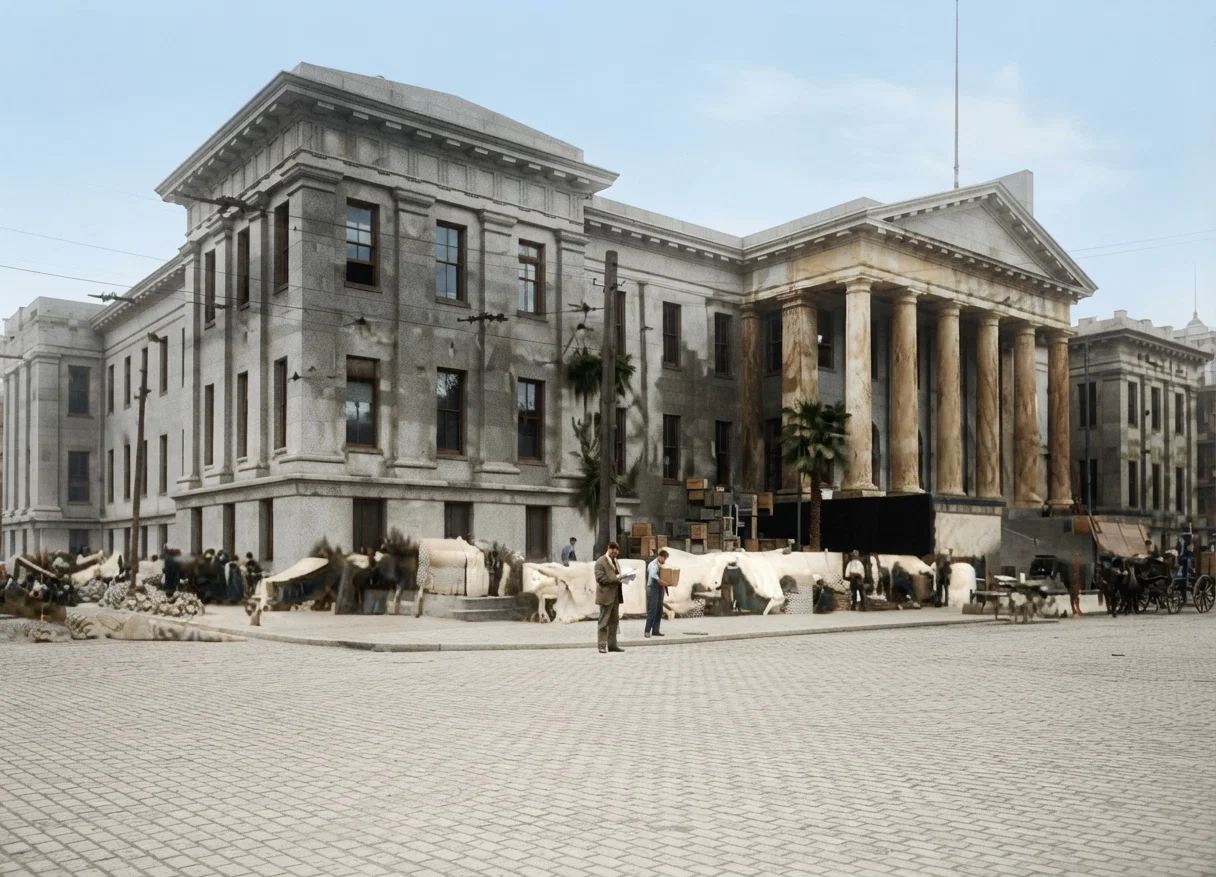
United States Mint, San Francisco—An Oasis in the District of the Ruined City.
After the Lord had declared unto them His law, then the way of salvation was made plain to them, and to their posterity ever afterward. But had they not lost the knowledge of God, of sin, of His law while in Egypt, there would have been no need for this grand display on Sinai. All these precepts had been known before, as was suggested in the previous article. When Moses expostulated with the people at their gathering manna on the seventh day he
told them that the Lord had already given them the Sabbath. They knew of it. Ex. 16:27-29. But how did they know it?—Moses told them when he first went to them in Egypt. See Ex. 5:5. But how did Moses learn of it?—He knew it; for God originally gave it at creation. Gen. 2:23.
How could the children of Jacob have sinned against their father when they brought that terrible grief upon him by selling Joseph, if there were no knowledge of the commandment which says, "Honor thy father and thy mother"? It is evident they considered it a sin by the way they confessed it to Joseph in later life. See Gen. 50:16-20. It is plain,
therefore, that the fifth commandment was known before Sinai.

The Last Five Commandments.

And it is equally true of the last five commandments of the Decalogue. Cain killed his brother and was a murderer. But where there is no law, there is no transgression. Rom. 4:15. Joseph, that pure and noble young man, was terribly tempted by his mistress to violate the seventh commandment. But hear his words: "How then can I do this great wickedness, and sin against God." Gen. 39:9. If, however, there were no law against adultery, how could Joseph have known this to be sin; for sin is not imputed where there is no law. Rom. 5:13. Joseph had been taught the law by his father, Jacob, and when the hour of temptation came he remained true to God's truth. Jacob violated the eighth commandment when he stole the birthright. His children violated the ninth commandment when they bore false witness against their brother to their father after they sold Joseph. Abimelech violated the tenth commandment when he coveted Abraham's wife. Gen. 20:1-7; 12:14-20.
Thus we see that every one of the Ten Commandments had been violated before Sinai. They then must have been known; therefore the people must have been taught them. Satan sought to blind the minds of men to the force of the obligations of this law, until its knowledge was almost entirely lost. Jehovah rehearsed it upon the summit of Sinai to Israel that the world once more should hear the
immutability and greatness of the law of Jehovah. It was Israel's duty to teach it to the world.
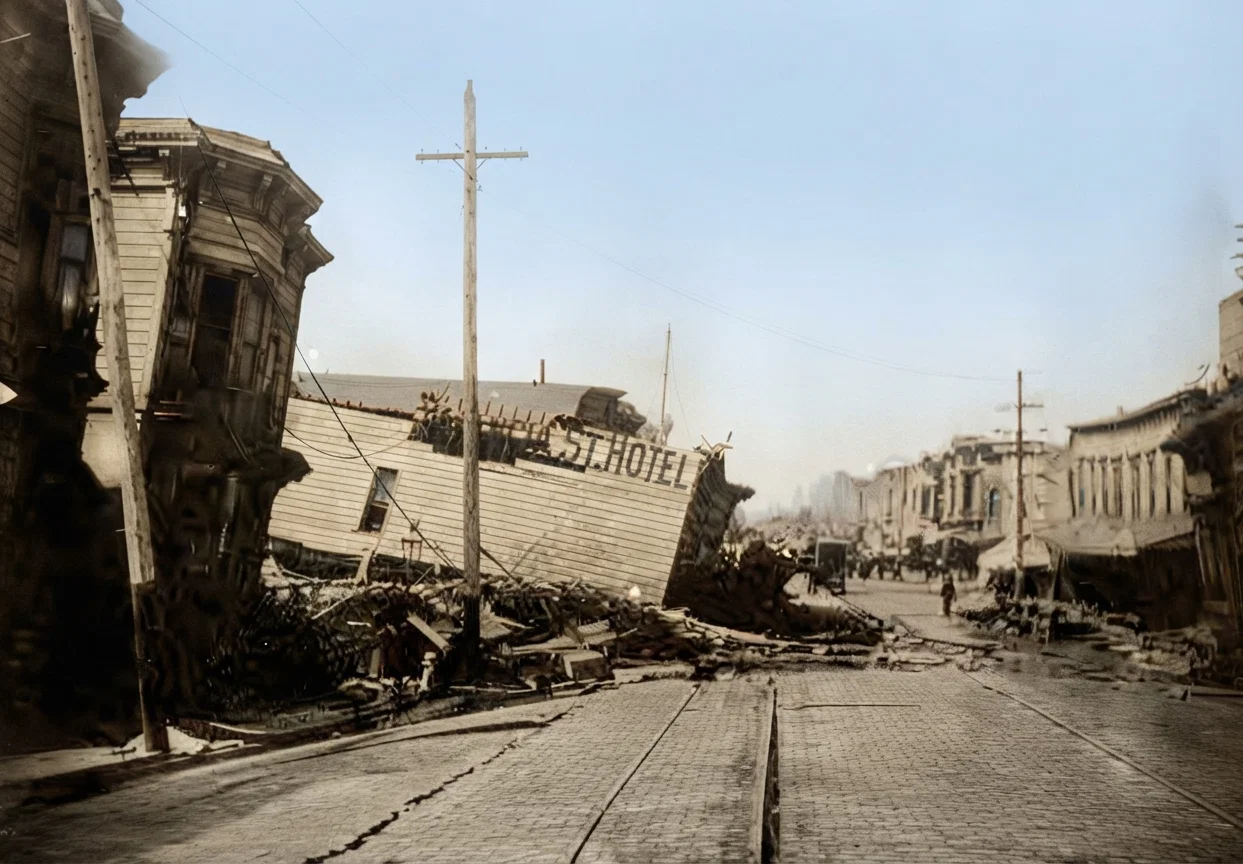
Valencia Street Hotel, out of which 30 bodies were taken. The third story rests upon the ground.