By Arthur T. Pierson, D.D., Editor Missionary Review of the World
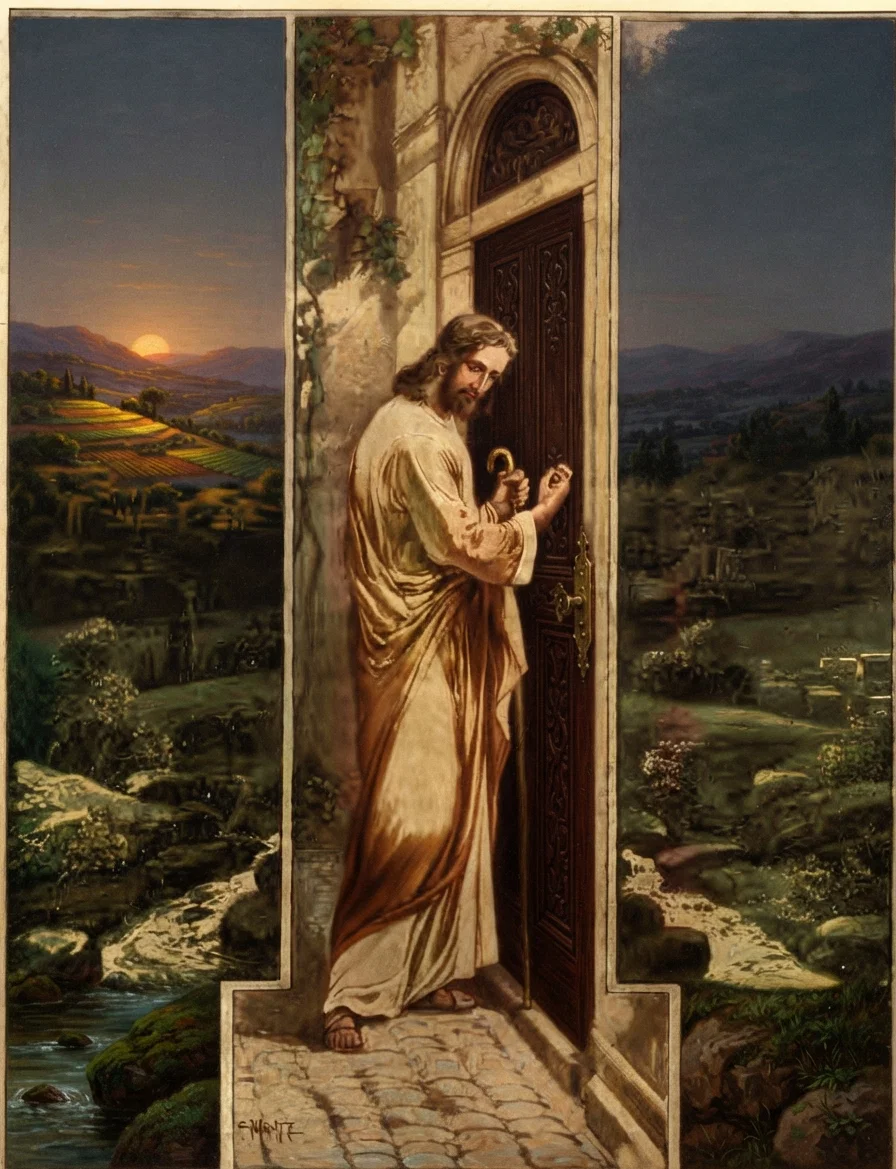
BEHOLD, I have set before thee an open door"—"Behold, I stand at the door, and knock," are the two typical messages to the Philadelphian and Laodicean churches; and it is a singular and pathetic fact that both conditions are true now as then. Before His church God sets an open door, but His church sets before Him a closed door. Opportunity is always confronting apathy. The chance for work far outruns the zeal and even knowledge of God's people.
God's Open Doors for Missionary Work
An Open Field.
At this, the beginning of the twentieth century, the whole world is like an open field, with the fences down, inviting tillage. When the Haystack Band at Williamstown, a century ago, were praying and planning for missions, scarce one country on earth presented an opening for Christian labor. Africa was the unexplored continent; Asia stood like a great city with adamantine walls and gates of steel. Papal Europe was as forbidding to Gospel effort as pagan isles in the South Seas. The Moslem world floated its green flag of defiance, and scarce had within it one evangelical worker. South America, the "Neglected Continent," was wrapped in a pall of impenetrable night.
Since then on every side the iron gates have opened as of their own accord, and there was a single decade of years, about the middle of the century that stretches between 1807 and 1907, when access was secured to three-quarters of the inhabitants of the heathen world.
Keys Used of God.
It is interesting to note what are the keys which God has been using to unlock these closed gates and give His church access to the nations that sat in the death shade.
There are seven such keys that might be mentioned: First of all, the simple spoken Gospel message, as under John Williams in the South Seas and William Johnson in Sierra Leone and Titus Coan in Hilo and Puna, or the printed word, as in Korea under John Ross; second, the key of commerce, as in China and Japan; third, the key of education, as in the work of Duff and Clough in India; fourth, the key of medical missions, so conspicuous, for instance, in Doctor Allen's work in Korea; fifth, the key of conquest, as in the control of Britain generally in India, Thibet, and other provinces under her sway; sixth, the key of progress, which is now apparently invading even the colossal empire of China and opening breaches in her wall; and seventh, the key4of philanthropy, as has been seen in a multitude of cases when help given in famine and plague has broken down long-continued opposition. But whether by His word, or by trade and war, or by letters and medicine, or by civilization and unselfish ministries of love, He has been working to put before His people a great, world-wide opportunity.
It may be well to glance rapidly at the open doors now set before the church of God.
The Sunrise Empire.
Beginning at the remote East, the Sunrise Empire may be said to present perhaps the widest opening in the world for missionary effort. Japan, of all Oriental countries, is the most tolerant and liberal in policy. Buddhism, since the middle of the sixth century, has overshadowed the older cult of Shintoism, especially prevalent since in the ninth century Kobo rebaptized Shinto ideas and rites with Buddhist names. But Japan has, since 1873, when the Edict Boards were removed, taken a tolerant attitude toward Christianity, and, in fact, toward all religions, very much as Rome admitted to her Pantheon, as its name indicated, any and "all gods."
The strategic value of the Island Empire is immense, and is due to two facts: first, Japan is the point of approach to the northern Buddhism; and, second, it is the outpost of all Asia, the country contiguous to Korea and China, and the natural eastern gateway to the rest of the continent. Let Japan be permeated with Christianity, and the problem of Asia's evangelization is half solved.
The Hermit Kingdom.
Korea, with its 8,000,000, is also substantially open. Already there are about 600 Protestant centers of mission work, and a total of about 160 missionaries and nearly twice as many native workers, with about 35,000 professed Christians, and schools and hospitals and very important publishing-houses. The influence of Japan is, of course, dominant, and this is promotive of religious toleration. Christianity is making most remarkable and rapid advance. Since, in 1875, John Ross sent over from Manchuria the Korean New Testament, translated by him without his ever having set foot on Korean soil, and especially after, in 1884, Dr. H. N. Allen so skilfully treated Prince Men Young Ik during the riot in Seoul, Korea has opened her gates wide. The emperor openly befriends the missionary, and while recently destroying thirty heathen fanes and officially deploring the money wasted on idols, he favors Christian churches, schools, and hospitals. The Bible Society sold 70,000 copies in 1900, and half the professed converts, both Catholic and Protestant, have been gathered within the last decade. At this time such a great revival pervades Korea that it seems as tho it is about to become a Christian nation.
The Celestial Empire.
China has been slow to open her ports. In 1842 five were opened by the guns of the first "opium war," nine more by the treaty of Tientsin in 1858; but the present reform movement seems to be preparing for a new era of religious liberty which always goes hand in hand with enlightened civilization. Contact with the Occident and its progressive spirit is obviously modifying the hatred of "foreign devils," while it humbles the conceit of Chinese literati. In 1900, about 2,800 Protestant missionaries were at work in this gigantic field. There were nearly 7,000 native workers and 113,000 converts.
Siam.
In Siam, in 1828, Gutzlaff and Tomlin did the pioneer work. These visitors from India, finding an open door, appealed to the American churches to occupy it, but already the first Christian book ever printed in Siamese had been introduced—a catechism translated by Doctor Judson's wife in 1819. Other missionaries began to enter the country in 1830, notably Doctor Bradley, but until 1857 little progress was made, for the king was hostile and despotic. But his death that year marked a great crisis. The man who was called to succeed him was a Buddhist monk, Maha-Mong-Kut, who had been trained by a Christian missionary, and he inaugurated a liberal policy. For seventeen years he and Chulalangkorn, his successor, were the patrons of Protestant missions. Here then is another open door to at least 5,000,000 people in the heart of Asia.
India and Burma.
India and Burma certainly present few obstacles to missions and no exclusive policy. Great Britain's flag is unfurled over this great Oriental empire with its 1,500,000 square miles and 300,000,000 people. Here Brahmanism is the ruling cult, but there are also 63,000,000 Moslems and 10,000,000 Buddhists. Missions here date back just two centuries to the days of Ziegenbalg and Plutschau. But the grand crisis was in 1858 when the rule of the East India Company, always hostile to missions, was broken,—one beneficial result of the bloody mutiny. As to Burma, from the baptism of Moung Nan, in 1819, and Ko-Thah-byu the Karen, in 1828, the work has gone steadily on with uninterrupted success. The greatest transformations in modern mission history have been seen in Tinnevelly and the Telugu district; and in the latter the largest church in the world to-day is to be found, at Ongole.
Persia.
Persia seemed to repel Henry Martyn, who went there in 1811, but left without knowing of one convert after his eleven months in Shiraz. But his translations of the New Testament and Psalms were not lost, nor was Pfander's "Balance of Truth," twenty years later. Under Fidelia Fiske, a three years' revival, from 1844 to 1847, left an impression never to be effaced. It was an outpouring so copious that all the girls in her school, over twelve years, were converted, and many of them became missionaries in their degraded Persian homes. In 1885 revivals again prevailed, and of late years there have been signs of a great movement toward Christianity among the 9,500,000 Moslems who constitute the bulk of the population. In no other Mohammedan country does such liberty prevail, partly because here the Moslems are torn into sects.
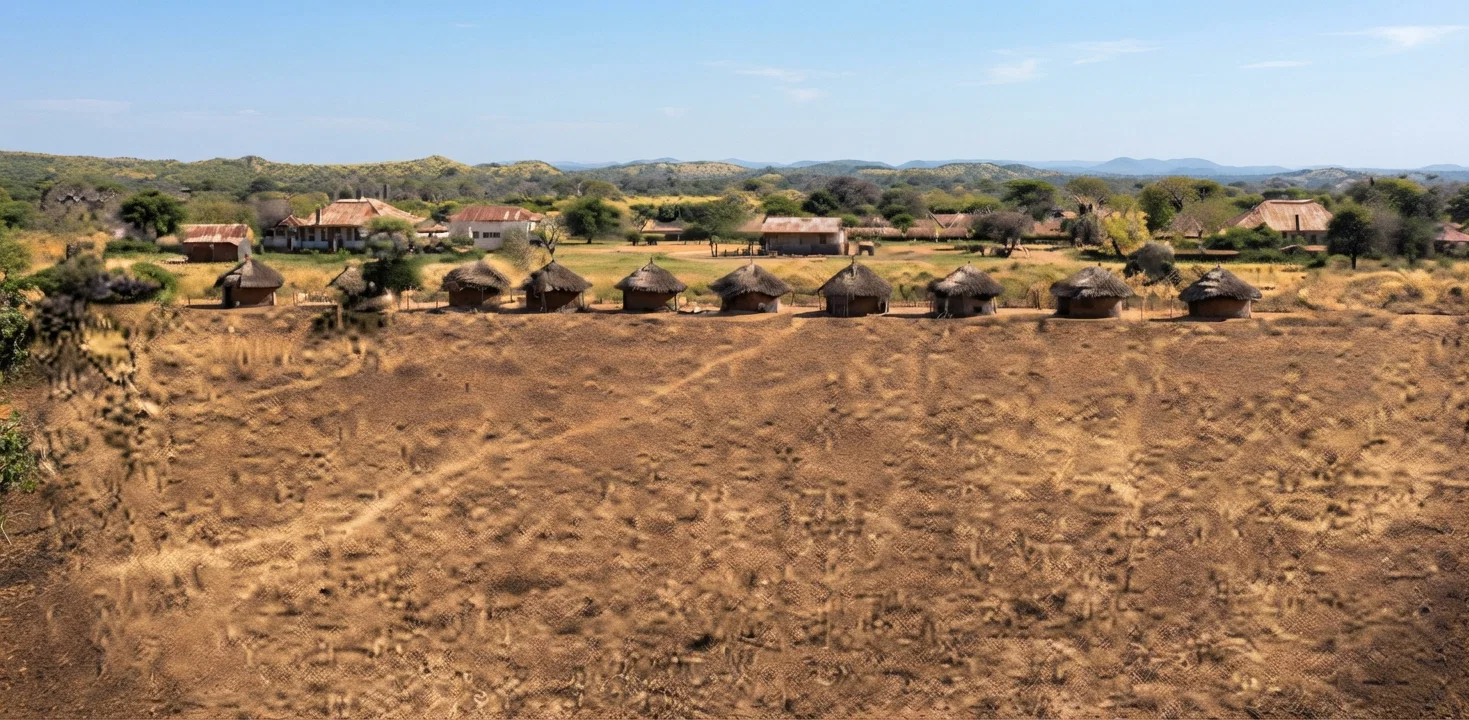
Solusi Mission, Matabeleland. (See Page 25.)
The Dark Continent.
Africa for the most part presents a magnificent door of opportunity, tho in some districts like Khartum there are restraints upon Protestant work. The Nile Valley is the great field for the United Presbyterians, and they are doing a great work. In Uganda, since Stanley wrote his famous letter to the London Telegraph in 1875, appealing in Mtesa's name for "teachers," progress has been so rapid that scarce anything in mission history equals it. It has been a martyr history, and one of revolution, civil as well as religious. But Hannington's death has been avenged. Thirteen years ago began a revival, first among the missionaries themselves, and then among native Christians, the especial feature of which has been for all these years a thirst for the word of God, the like of which has never5been known before. Three years later two hundred "synagogi," or reading-houses, had been built by native Christians to accommodate "Bible-readers," people who yearned to learn to read God's Book, and 6,000 were under instruction daily. So great did the opportunity become that even India's missionaries bade the church missionary society send candidates to Uganda instead of India, as on the whole most needed there. And where in all Africa can we now complain of no opportunity?
Even Arabia, the stronghold of the prophet of Mecca, seems letting down the bars of exclusion. Two noble efforts have been made to enter this forbidden land—the Keith-Falconer Mission at Aden with its chief station at Sheikh-Othman, and the mission of the Reformed Church of America, operating from Turkish and independent territory on the Persian Gulf, with three stations. That heroic pioneer, Mr. Zwemer, feels that the church has a great responsibility just now for this land with its 6,000,000, to turn Arabia Deserta into Arabia Felix.