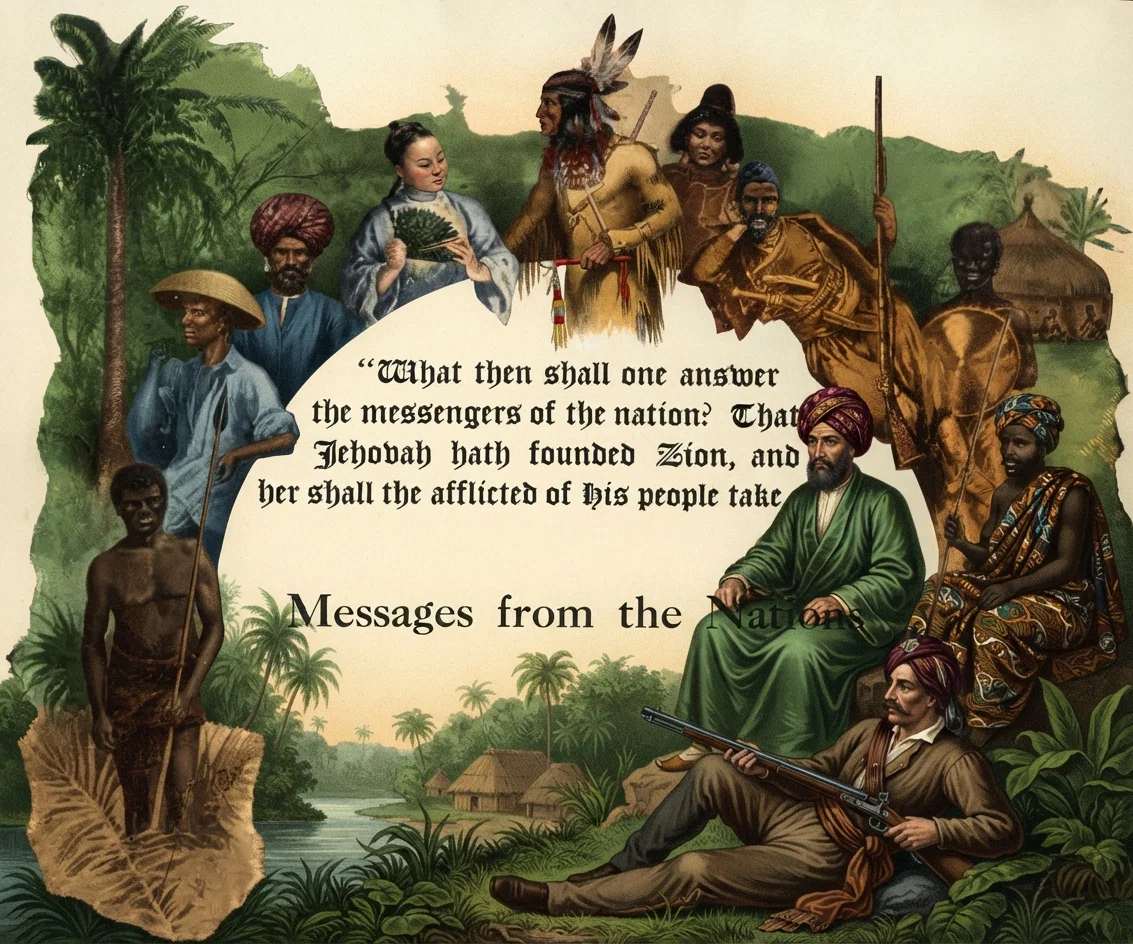
"What then shall one answer the messengers of the nation? That Jehovah hath founded Zion, and in her shall the afflicted of His people take refuge."
—Isa. 14:32.
Messages from the Nations
Messages from the Nations
Mighty Appeals from China.
A Typical Widow.
IT would seem that any one would have noticed her, there was such a look of distress in the delicate features, as, with the downcast eyes of the modest woman unaccustomed to the street, she came painfully—her feet were very small—making her uncertain way, leaning on the shoulder of a little slave girl for support. She was not old, but the secluded life, with absence of either work or recreation, had left her in young womanhood dependent on the strength of this mere child. The golden hair-ornaments and the earrings of yellow gold and green jade had been exchanged for silver-white articles, and the soft silken garments had been laid aside for the coarse, glazed linen of the bereaved.
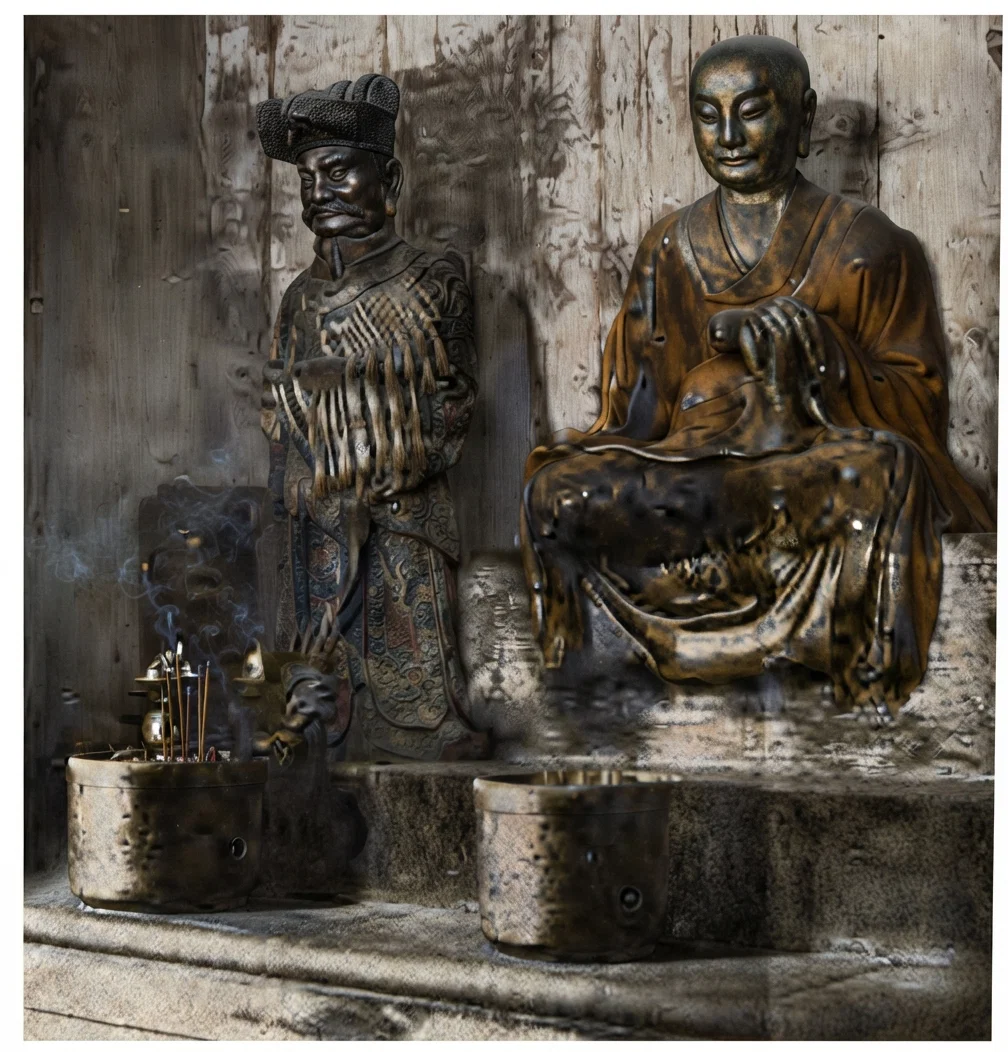
Turning into the comparative quiet of a side street, in the shade of a great tree, she pauses to take a look about her, and then, in abject grief, casts herself upon the stone altar at its base. No words are spoken; only the sobs and moans of the widowed woman are heard. The slave lights the incense sticks and places them in receivers before the senseless idol whose stony face seems to grin more hideously in the presence of this hopeless grief. Presently she becomes more calm and rises up. The hands are clasped; the body sways this way and that, or bows before the shrine; the lips move, while spreading circles rise higher from the smoking taper tips.
A pile of clothing is taken from a basket carried by the slave,—beautiful silken stuffs in delicate tints, and in more serviceable shades. One by one the worshiper lifts the garments in sacrifice, prostrates herself before the idol, and lays them on the fire. Piece by piece they are consumed to cinders while the distressed woman continues her supplications. He had been a good husband; she would send this token of her devotion to him in the spirit world, so her deceived heart reasoned in a vain attempt to comfort itself.
Once more the almost girlish figure is prostrated on the stone in a convulsion of grief, and then the two go away as they came, the mourner to spend the night in lonely vigils before the household gods, seeking consolation and peace where they may not be found, knowing not Him who graciously invites, "Come unto Me, all ye that labor and are heavy-laden, and I will give you rest."
Chinese Idols.
An Abandoned Baby.
WALKING down an unfrequented lane in the suburbs of Canton with a friend one day, we noticed a bundle of old clothes, wrapped in matting, loosely tied about, lying in the grass and weeds at one side of the path. We had passed the spot where it lay, when my companion, stepping short in the conversation, said, "I feel curious as to the contents of that bundle," and walking back to the spot where it lay poked open the end of the parcel with her walking stick. "We are too late," she said, as with pale face she rejoined me on the path.
Fathers and mothers, you in whose homes the little daughter is the joy in your household, can you guess what she saw? I did not ask, for well I knew. This was not the first baby-girl, innocent of even the first breath of life, which, under cover of night, had been cast into that out-of-the-way place.
A Baby for Sale.
"I HAVE had a strange experience to-day," said one of the ladies of our mission, coming from a long tramp in the city.
She had been walking some distance with a native woman in attendance, for the greater part of the way conscious that still another person was taking the same route. No matter what turns were taken, the shadow was still present, till she began to feel uneasy, and she took the opportunity of the next corner to see who it might be following so persistently.
It was only a woman of the working class carrying a baby on her back. Feeling more at ease, the two continued their way, the woman still coming after, till the thought that her pursuer certainly had some object, and, perhaps, a malicious one, so harassed her mind that the lady determined to face the matter. Turning to the woman, she said, "I see you have been following us some distance; have you some business with us?" The woman looked confused. "Tell me what you want, or please do not follow us any farther," she said decisively. "I only want to sell my baby to you," the woman remarked coolly.
Her story, as it came out, is that of many another Chinese woman. The husband's earnings were small, the family large and mostly girls, the wife must do her part to earn a living. That morning a family council decided to reject the responsibility of the tiny newcomer (she ought to have been born a boy), and to the wife had been committed the task of carrying the three-days-old infant to a native orphanage, where she would receive twenty-five cents to pay for the ginger root added to the mother's simple diet for the past few days, and be relieved of any further care of her offspring.
At sight of the foreign woman she remembered having heard that foreign missionaries sometimes received little girls, reared and educated them, and saw them married to steady, sober husbands. Under the impulse of these recollections she had followed the kind and generous-hearted foreigner to offer her the baby for but a slight premium above the customary government price. She was willing to sell it to the missionary for $1.00.
With ready tact the lady set to work to touch the chord of mother-love and save the baby from the orphanage. She was all interest in the tiny mite. How really pretty it was; just see the mass of silky, black hair. How cunning she would be in a little while when this was plaited in glossy braids and tied with pink zephyr wool; such fat little hands; such a fine, strong baby would soon grow up and ere long be able to help in the light work of the house—thus she went on as tho thinking aloud. Why, yes, indeed, who would not be willing to pay one dollar for such a baby!
The mother drew back a little. The baby nestled and opened her mouth. O, see! she is hungry. At my house she would be obliged to drink rice water or tinned cow's milk. (Many Chinese deem cow's milk unfit for food since these are work animals in China.) You have plenty of nourishment for your child that costs you nothing. Would you really sell your dear little one, the babe you yourself have borne, for one dollar?
The appeal went home, and so did the baby, snuggled close to the mother's breast.
Up from the narrow, crowded thoroughfare, where only the strong and sure-footed might safely make their way, and above the noise of barter, carriage, and traffic, rose a woman's wailing cry,—22
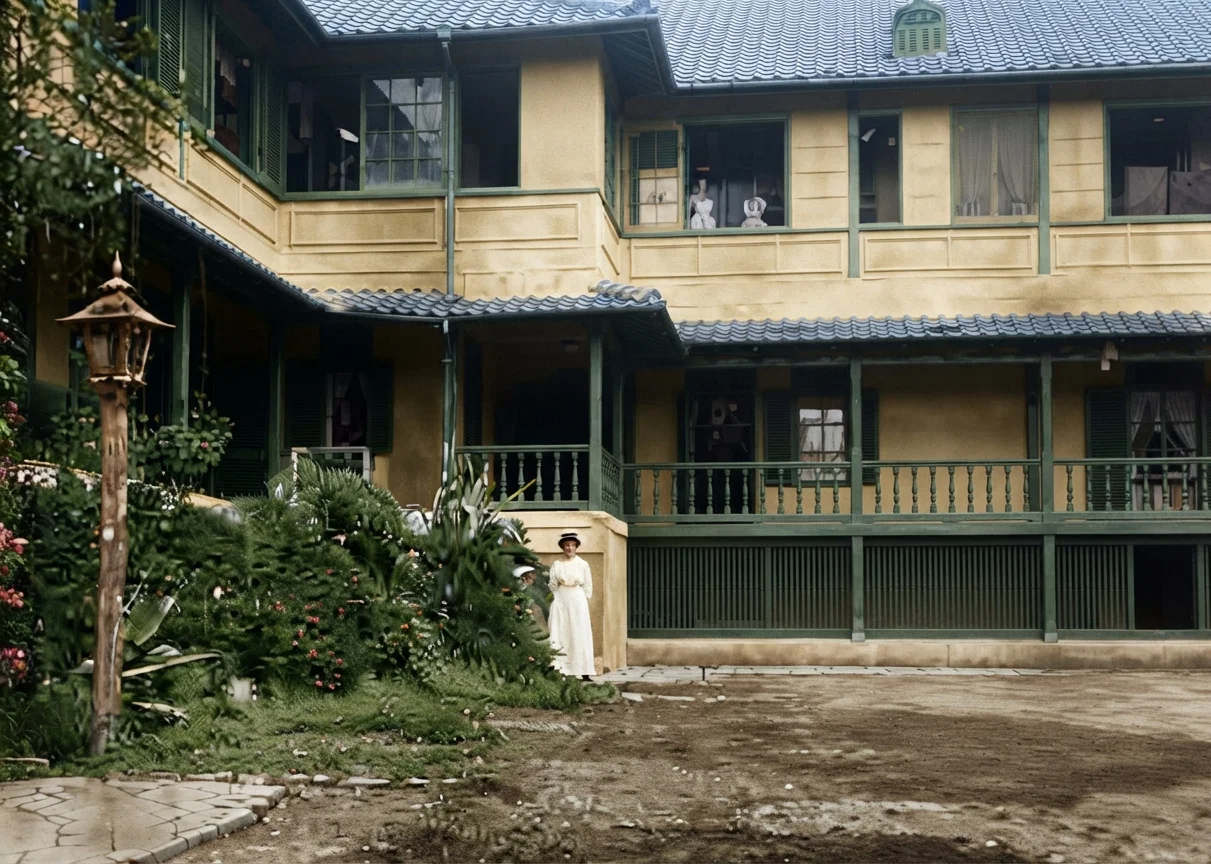
Main Building of Sanitarium, Kobe, Japan.
"Have pity! have pity! O, pity a poor, old, blind woman, who has no one to care for her. You who are blessed, you who have money, give an alms to a poor, blind woman. O, you generous lords, and you kind-hearted ladies, give an alms to a poor, blind woman."
There at the side of the street from whence the cry came, was a kneeling figure. Kneeling on the rough stone blocks of the pavement,—kneeling, half crouching, as tho caught in the early rush of the busy market street and afraid to move,—with thin, pale cheeks and sunken lids, drooping over orbless sockets turned to the dawn, which may never more dispel her night, a woman begged for bread. In the lines of her countenance was written the tale of suffering thru which she had passed, uncared for and alone, ere nature relinquished the precious boon of sight. The half-starved infant in her arms tugged at the lymphless breast and cried.
Farther on and on the cry still came, and mingling with the voices of the street, above which rose the one distinct utterance. It seemed swelling into the voice of a great multitude of her hopelessly blind sisters in China, from whom not only the physical light, but the very "Light of Life" has been shut away, many of whom, in the hands of remorseless masters, lead a shameful life for bread, pleading with outstretched hands in touching appeal, "Pity, O pity the blind!" You who have means, you who know comfort and love, you who are kind and tender-hearted, have pity on the poor spiritually blind of China.
Mrs. J. N. ANDERSON.
Canton, China.