Child-Wives and Widows

6%

Pacific Press Publishing Company · Mountain View, California · Oct 30, 1907

FromSigns of the Times, Vol. 33, No. 44.

Read the full edition

Child-Wives and Widows

By Mrs. Bessie L. Shaw, Wife of the Superintendent of S. D. A. India Missions
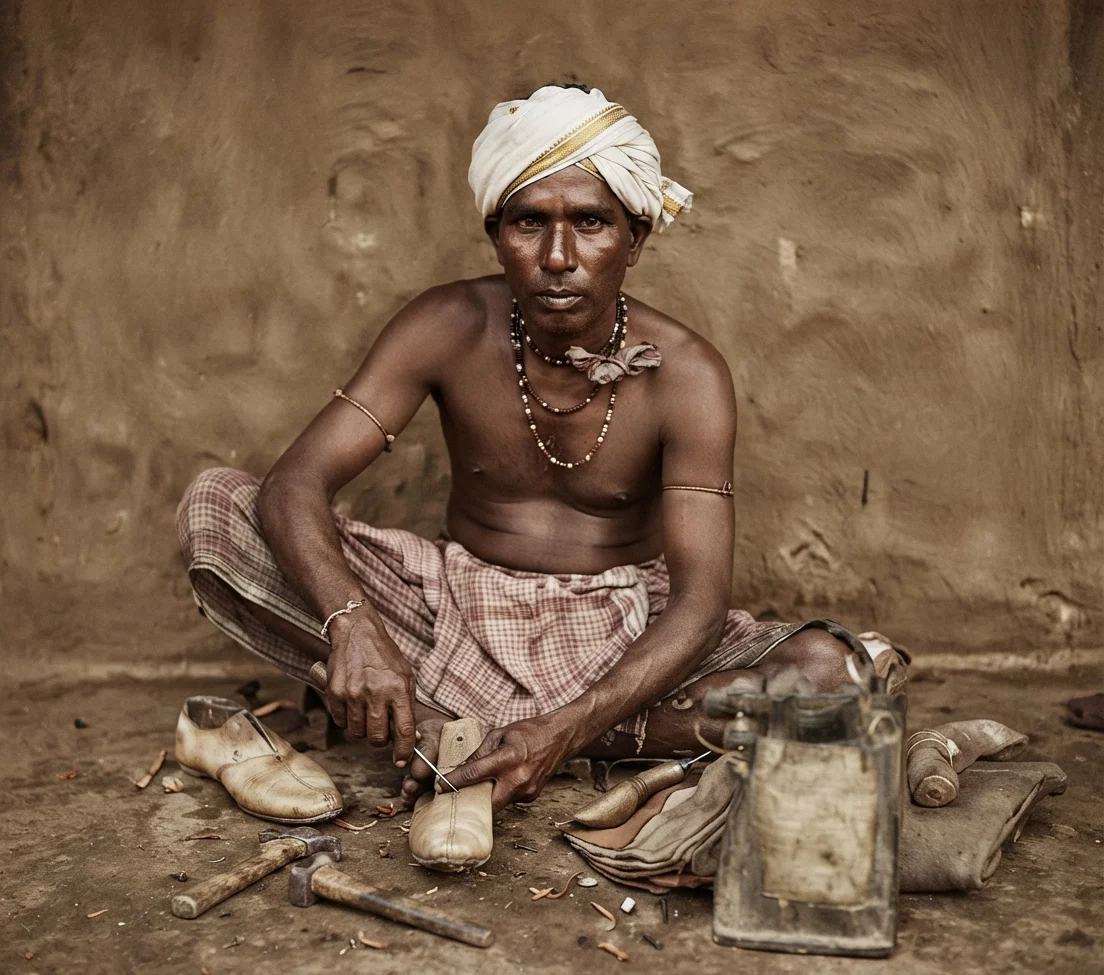
Shoemaker, India.
Shoemaker, India.
INDIA has been called a nation of children. Motherhood at the age of ten or twelve is not infrequent. How the thought strikes terror to the mothers in the home land, and their whole soul rebels, and they say, Has not the Indian mother any love for her child to give her in marriage so young? The Indian women have hearts just as loving and just as tender and fond as any mother, yet they are taught this as their religion, and if their daughters are not married at an early age, they will suffer "great pains" in the future state.
So the wee little brides are often sent away from their father's house when they are only ten or twelve. Often they have never seen their husband's face until their wedding-day, when their loving home is exchanged for one of tyranny, ruled by an over-bearing mother-in-law. In some cases the new home becomes nothing more than a prison-house, and the little bride leaves it not until the day of her death. The condition of keeping the women shut in brings about a sad condition for the bright, active little child-brides.
When the Mohammedans went to India, they carried the custom of keeping their women in seclusion, and often they compelled a beautiful Hindu woman to leave her household and join theirs. This greatly enraged the Hindu people, and for protection they adopted the same custom of keeping their women shut in, and it soon became a disgrace to be seen by any man excepting those of their own household. It is estimated that fully one-third of the women of India live this shut-in life.
When we see the misery and suffering that these customs bring, we get a little glimpse of the awfulness of these heathenish practises. No matter how ill Hindu or Mohammedan women may be, their husbands would be everlastingly disgraced if their wives were seen by a gentleman physician. In extreme cases they may take their pulse if the patient is kept screened behind a curtain, but this is the limit of the examination. There is a saying that a Mohammedan man will blush ten times before he allows his wife to put her tongue thru a slit in the curtain to show the physician just how ill she is.
These things seem ridiculous, and yet they are facts that bring misery and suffering to these shut-in women, and all over India one is constantly confronted with heart-rending examples of utter neglect in times of illness when the tenderest care and attention are required, and one of the saddest things is that these poor people follow these customs from a religious sense of duty. The Indian people are a religious people; they are said to "eat religiously and sleep religiously." So they follow these customs carefully, and yet their hearts rebel at some of these things, and when approached about them, they will say, "How can we help it? This is our fate. It was written in our foreheads. Our fathers did thus, and what was good for our fathers is good for us."
We have seen very touching scenes in the parting of parents with their children, and the bitterness of the little bride in being snatched from the loving care of her mother. One dear old man in parting with his daughter was very much overcome, and when we offered sympathy and encouragement, he replied, "How can I help but grieve? She is the child of my youth." He asked us to pray to our God to protect and guard his child.
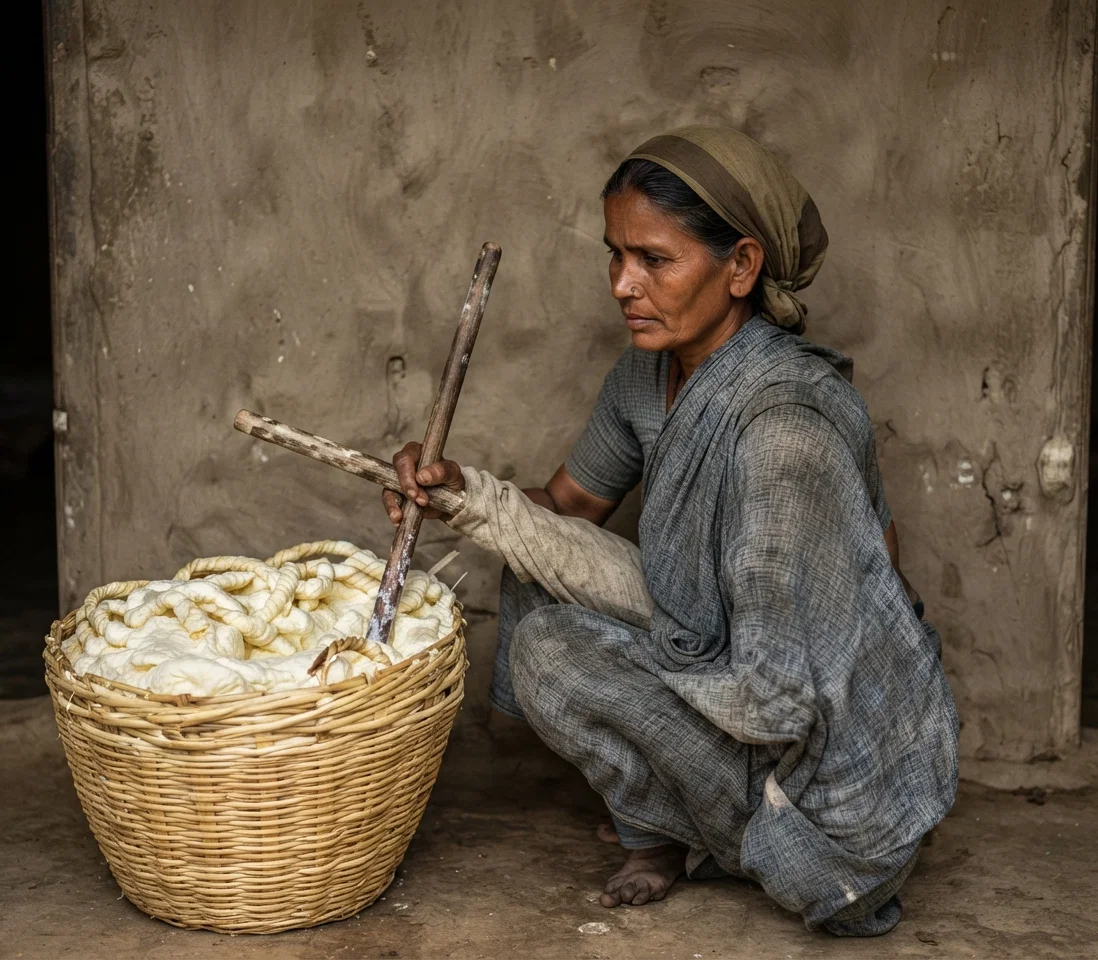
Selling Curds, India
So anxious are the Indian fathers and mothers to marry their children that they will give a little child of ten to an old man of sixty. So the little wee bride is often a widow at ten or twelve. Fourteen thousand children are found to be baby widows under four years of age, and 60,000 are widows between five and nine years of age, and widowhood in India is so different from widowhood in our enlightened land. To a widow in America, our heart goes out in love and tender sympathy for her bereavement, but not so in India. When a wife is left a widow here it is supposed that she is the cause of her husband's death, and that for some sin of hers, he has been taken away. From the day of his death, the wife, no matter how young, is considered an outcast, and her very presence an omen of future ill.
The following is a true picture which we take from a paper:
"The inhumanity with which widows are treated is one of the foulest blots upon the Hindu character. A poor girl is given by her father in marriage. She may never have set her eyes on her husband except on her wedding-day. But if the man who calls her wife dies, she is his widow and a widow for life. She is stripped of her ornaments, her dress is changed, and among some classes her head is shaved, and her rich, black hair is taken from her. Then begins a cry of bitterness and degradation. She is charged with her husband's death. He is taken from her, they say, to punish her sin in her former birth. The younger she is the greater sinner she must have been to be overtaken so soon. Her presence is a curse and a blight to any social festivity. The house is cursed for her sake. No accident or misfortune occurs but that it is her fault. She is the drudge and curse of the family."
We once visited a little Indian queen who was much better favored than the ordinary widow, as her husband's station in life left her a beautiful home, to which she brought her own father and mother. When we visited her one day we remarked on her blessings and how much more favored she was than her Indian sisters in general. Her beautiful countenance saddened, and she replied, "Ah, mem-sahib, the joyful things are all removed from my life." And so it was, tho her husband's home was beautiful, yet she could not get out and enjoy the outside world and its freedom. There was always hung over her the stigma of being a widow and the direct cause of her husband's death.
It is very sad to see that while the men are being educated and are receiving their college degrees, the majority of the women do not know a single letter of their alphabet. On an average not more than three women in a hundred can read and write. A missionary who has worked for years among these shut-ins, vividly pictures their life in the following language:
"It is a common saying among men that the more uneducated the women, the better wives they will make. A Hindu once told me that he could beat his wife and abuse her and she would know no better than to suffer and endure and get a worse beating if she did not do better. A Hindu gentleman of high standing and good education said, 'To give women education is like giving wings to a bird. It always tries to use its wings, and often flies away; so,' he said, 'as we do not want to lose our women, we will clip their wings, or give them none at all!' According to their custom, most of the Hindu women are their husbands' slaves. Think of them having to wait hours sometimes without food because their lord and master has not taken his. In most cases he eats first, and what he condescends to leave is her meal. When he entertains his companions and friends she is generally in the background or closed in a dark room. She must not sit down before him unless with special permission."
These conditions in India have come as the result of heathenism. The beautiful home-life we find in our own land has simply come as the result of following God's word. Our fathers and mothers have been surrounded by Christian influences and the freedom that comes from obedience to God's word. India's hope for its 150,000,000 women comes in accepting the Gospel call. There are many who have found the Saviour, and to such homes there have come a new life and a bettering of conditions. There are to-day in India loyal women who have forsaken their idols of wood and stone and in return have given their lives to the bettering of their Indian sisters. The Gospel, like the little grain of mustard seed, has commenced to unfold in the lives of these dear women, and as the result some homes in India are beginning to see the blessedness of the Christ-life and are faithful unto death. One poor woman who had learned to love Jesus died with a Bible under her head. Her priest came and sought to minister heathen services and wished her to take dying powders. These she refused in spite of angry look and word, but till death she was faithful, and to many of these women shut in from the outside world will come the words, 'Well done, thou good and faithful servant.'
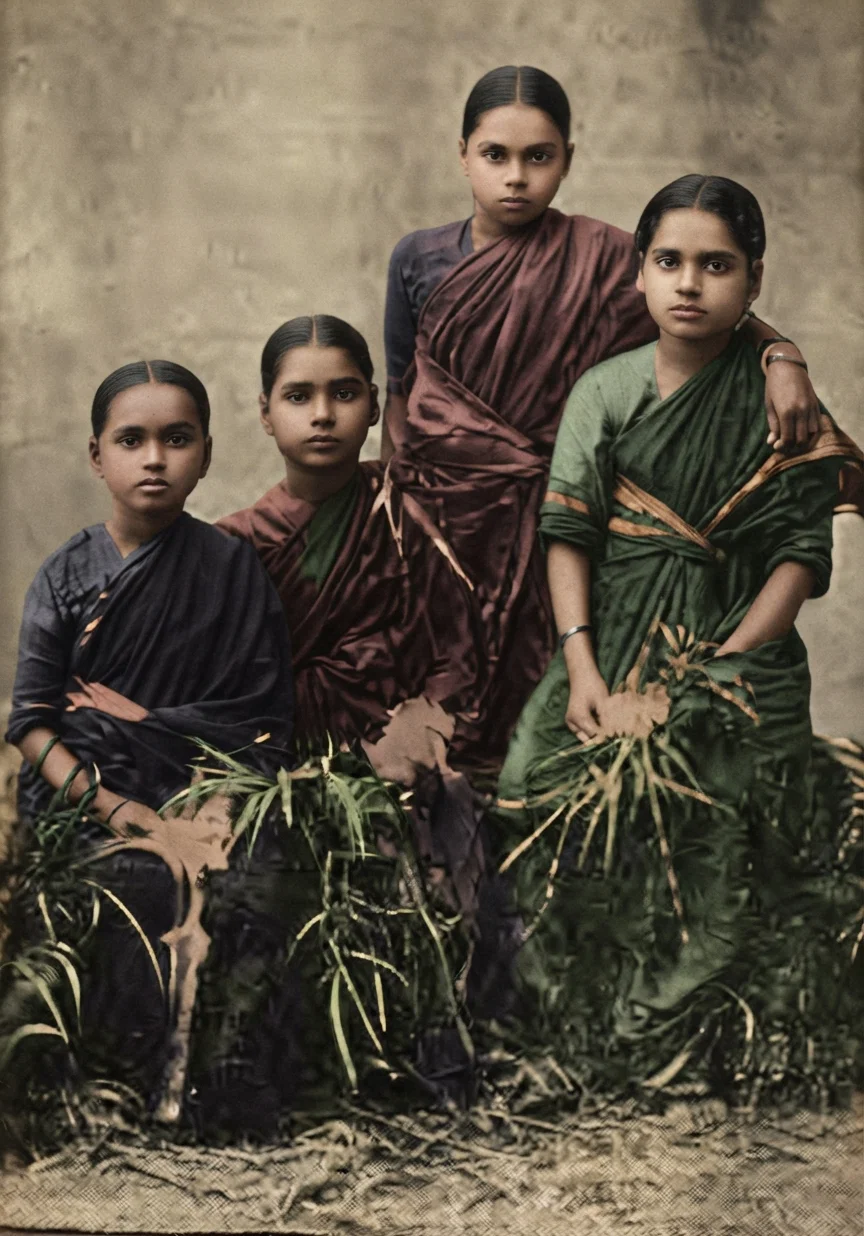
Group of Child-Widows, India.