Portugal

4%

Pacific Press Publishing Company · Mountain View, California · Mar 11, 1908

FromSigns of the Times, Vol. 34, No. 11.

Read the full edition

Portugal

Some Present History

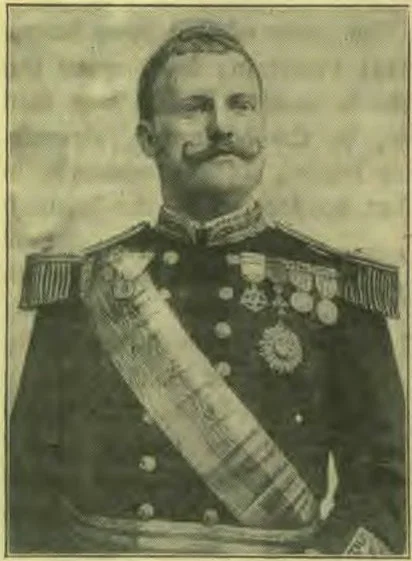
D. Carlos I, Late King of Portugal, Assassinated Feb. 1, 1908.
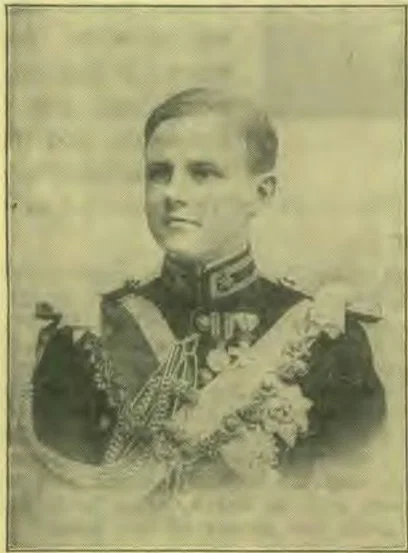
IN the evening and night following the first day of February, 1908, the world was startled by the report of a terrible crime perpetrated in the capital of Portugal. The King D. Carlos I and Crown Prince Luiz Filippe were assassinated by shots from a revolver and Winchester carbine in the hands of two regicides, who, in their turn, were slain by police and other officials.
The royal family were returning from an outing and disembarking from the ferry in front of Lisbon; they greeted the prime minister and other prominent officials, after which they took their places in an open carriage to go to the palace. A few rods away the deed was done which dethroned one king and enthroned another. The dailies have given many details of the affair, so we will not occupy space in recounting them.
We are reminded of our Saviour's words in His great prophecy: "Because iniquity shall abound, the love of many shall wax cold." An Englishman who has been in Portugal thirty-eight years told us that if any one had asked him if it was safe for the king to be without protection, up until the first of February, 1908, he would have replied, "Yes, certainly!"
He believed this people to be very pacific, but did not count with the false teaching of centuries the evil result of the union of church and state. When the young king took his place, he swore to support the religion of the state,—the Roman Catholic,—that one which has robbed the people of more money than has entered the coffers of the kings. This is a fact recognized by the majority in the nation.
For instance, after the death of a certain countess, a last will and testament was published providing for over three thousand masses to be said for the souls of herself, relatives, and other souls in purgatory. Such wills are very common, altho the masses have different prices.
The people are not taught that the Bible says, "But the dead know not anything." "His breath goeth forth, he returneth to his earth; in that very day his thoughts perish." Therefore all this money is spent for nothing as regards the purpose for which it is given. It helps support the priests.
People that have been trodden upon for years, having their life-blood drawn by unsupportable taxation to sustain two institutions which have come down arm-in-arm thru the Dark Ages, sooner or later rise up to overthrow the oppressor. But sad is the result of a sin-burdened heart which knows not the way of salvation, the Saviour or a loving heavenly Father. Such broods over his fate until he determines to avenge himself and his downtrodden fellows. We see the result, terrible in its nature.
The dead king was said to be a liberal man in regard to religious tolerance. While he was in England at the funeral of Queen Victoria, the queen who was regent gave orders thru the prime minister to close all Protestant houses of worship. The Protestants complained to friends in England, who sent a delegation which delivered to D. Carlos I an address. He replied by sending back a telegram, "Let my people have their liberty of worship."
However there seems to be very little sorrow manifested by the people at large. The soldiers and public officials are in mourning. The court is in mourning for two months. The fort and war-ships in the harbor have been firing salutes every fifteen minutes both day and night. Representatives of nearly all nations are or will be here to attend the funeral. Telegrams of sympathy have been received from all parts of the world. Eight or ten days after the death, the funeral takes place.
The bodies of the king and prince will be deposited in the pantheon of the kings of Portugal, a room in an old church built about seven hundred years ago. Forty-four years were necessary to complete it. The worker received two cents a day or as much bread. By the earthquake of 1755 the church was partially destroyed but was rebuilt by D. Jose I then king. It has a basilica done in wood, being an imitation of that in St. Peter's in Rome.
Crown Prince, Luis Filippe, of Portugal, Age 21 Years, Assassinated with His Father, Feb. 1, 1908.
Amelia, Queen Regent of Portugal.
Here are to be found the coffins of quite a number of royal families of different centuries, made according to the style of the times. Those of interest are D. Jose I, king in the year 1755, and D. Pedro II, emperor of Brazil, who was expelled from there by the forces that proclaimed the republic. Pastor Ernesto Schwantes, who is the superintendent of the Portuguese mission, was a commander in the Brazilian army fighting for the monarchy and his emperor. The body of this monarch is shown to the visitors by the guard.
The accompanying photo shows the room, occupied by silent men, women, and children, who await the same judgment day and resurrection that do others the places of whose sepulchers are unknown to mortals.

Revolution Imminent.

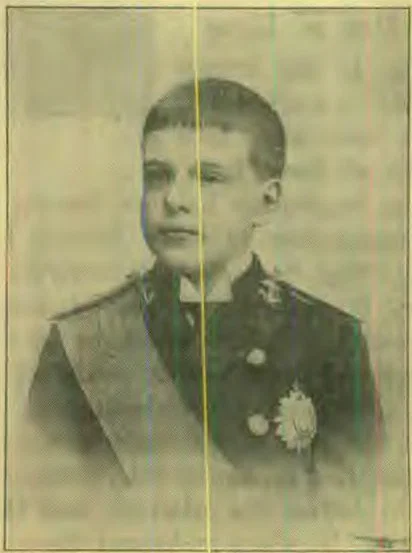
King Manuel II, of Portugal, Age 18 Years, Crowned on the Assassination of His Father.
Altho Portugal has been emerging from horrible spiritual darkness, as is shown by religious tolerance and permission given for the Bible to be circulated, yet there is a great alarm felt that the people might rise up in a revolution, not only to overthrow the monarchy,but also the richer classes. The unconverted man goes from one extreme to the other. O, that the Portuguese people would see in God's great message their joy and happiness; that they would hail their Saviour, Redeemer, who will soon come as "King of Kings and Lord of Lords."
Would that the people of God in the free land could cross the water to see what this people are and have been, to see the number of convents, churches, begging monks and nuns, and common beggars; to see the oppression of a church-state! I am sure they would return to struggle with greater energy to stay the religious persecution in the United States of America. If those who are so eager in demanding national Sunday laws could have a few years' struggle against persecution, they would be glad to repeal every Sunday law on every statute-book in every state.
Poor Portugal, once so proud in her discoveries and conquests, is lost in sin! How many are ready to show their sympathy by more than words? Our hearts are sad, yet we believe God has a faithful few here. Who will help us in carrying the message to this people who helped open South America, Africa, and India to the Gospel by her discoveries?
Portuguese possessions in Africa are waiting. The isles call for help before they disappear from sight beneath the waves of a tempestuous ocean! Who will go?
C. E. RENTFRO.