STRIKE SUDDENLY ENDED

17%

STRIKE SUDDENLY ENDED.

THE strike of the street railroad carmen in San Francisco came to a sudden and unexpected end on the 5th inst., after a tie-up of eleven days. The surprising feature of the case was that the carmen's union yielded. From the first the president of the railroad company took the stand that he would not make any terms, or consider demands, unless the men returned to work; then he would be willing to arbitrate. He even agreed to give the wages asked ($3.00 per day) and then arbitrate the question of an eight-hour day. This was decidedly refused by the carmen. They were backed by all the union element of the strongest union city in the United States, whose entire administration was chosen by the unions and the saloons. The mayor and the Building Trades Council made strenuous efforts to bring about a settlement, but with evident bias in favor of the carmen; altho the mayor admitted that the strike was hasty and ill-advised at the time. This had to be admitted because the strike was in open violation of the carmen's contract with their employers.
The railroad company had imported several hundred men, and had announced the day on which their cars would be again started. A thousand men arrived on a river steamer from Benicia the night before, and marched quietly through the streets before dawn to their respective quarters in the various car-houses. Just how well they would have succeeded in running the cars will not be known, for on the same day the strikers accepted the terms proposed by the company—to return to work, and then submit their claims to arbitration. Now, however, all questions, wages, hours, and other points are to be arbitrated.
The settlement of the strike was brought about by appeal to the president of the Amalgamated Street Railway Employees of America, who directed that the men return to work. It was certainly a good piece of generalship on the part of President Calhoun, of the street railroad company, to win the day against two thousand strikers in a city ruled in the interest of unionism, and that, too, by carrying his case to the highest authority recognized by the union men themselves. He won his original point—return to work first, then arbitrate.
But is it not a pitiable sight in a so-called free country, to behold so many hundred laboring men so bound up, body and soul, that they must quit work at the behest of, two or three men who have no interest whatever in the enterprise for which the men labor; and that, too, when many of the workers knew the order to be hasty and unwise? And is not that pitiable condition emphasized when another man of a little higher rank can order them back to work? In other words, they must have the permission of disinterested bosses before they can go to work for the man who pays for their services. To go to work independently would mean ostracism and persecution by one's fellow laborers. Such is the boasted interest that unionism has in the laborer, other than "union" laborers. Men who thus place themselves at the mercy of uninterested masters have but limited appreciation of the boon of liberty. Surely they are, altho unwittingly, lending their energies to the building of a despotism of which they themselves will be the bondmen. They are persistently forging their own fetters, and do not know it. G.
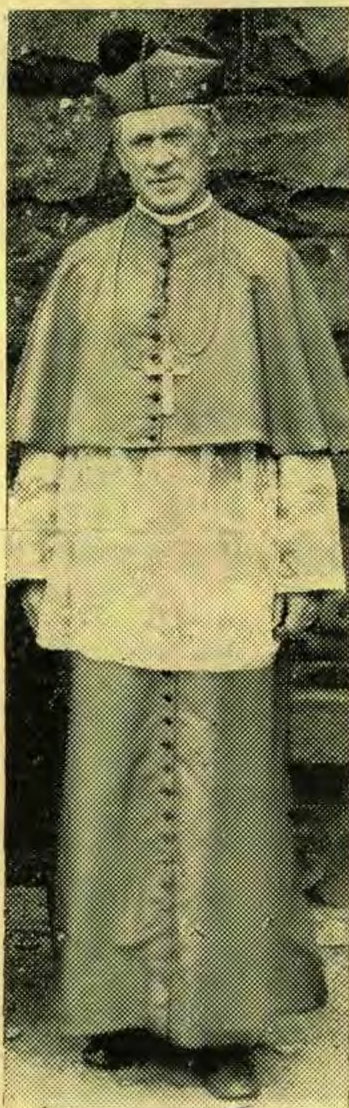
BISHOP CHARLES H. COLTON, BUFFALO, N. Y.