[Editor of the Medical Missionary, Battle Creek, Mich.]
THE world seems rushing on in these closing years of the century with rapidly-accelerating pace. Forces which have been slowly gathering strength through preceding years seem suddenly to have reached a climax of power, and the resultant changes thrust themselves upon our attention with almost bewildering rapidity. As Daniel saw in prophetic vision, men are "running to and fro," and knowledge is marvelously "increased."
While this is especially true in lines of scientific discovery and application, it is hardly less so in the direction of religious thought and methods. Old faiths are being tested to their foundations, and old methods set aside; new thoughts pervade and new methods enter into every line of Christian activity.
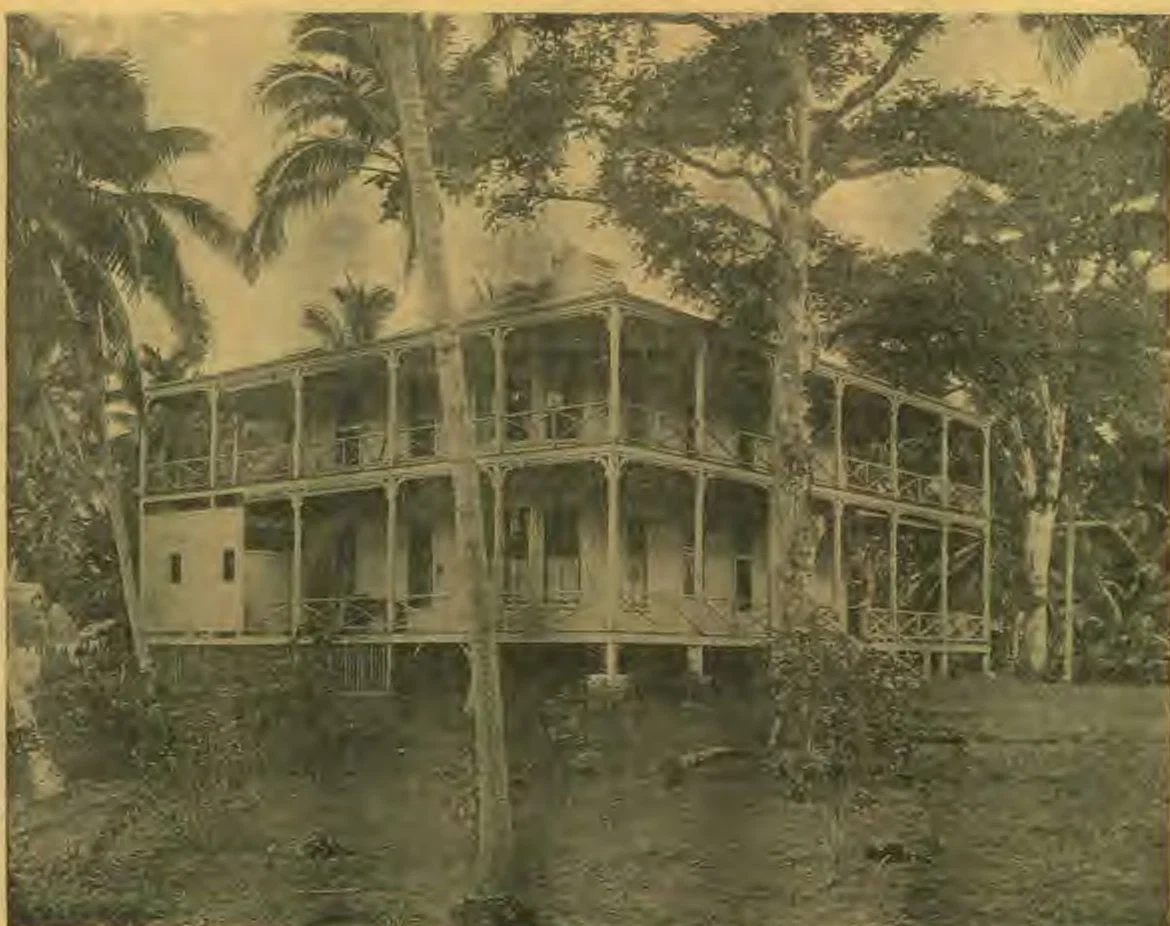
A MEDICAL MISSIONARY SANITARIUM.
In religious work the new methods that prove successful are really the old methods that Christ used. Christ was the perfect missionary, combining in Himself both the healer and the teacher, and He taught the sacredness and value of the human body. These methods, which fell into disuse in the apostasy of the church, are, in these latter days, taken cognizance of anew.
Prominent among these revivals of the old ways is the recognition of late of work for the body as a factor in missions. It has been asserted that medical missionary work is to the Gospel message what the right arm is to the body. If this be so, we have had, ever since the passing away of the apostolic church, the lamentable spectacle of a church grappling left-handed with the problem of a world's evangelization, with its strong right hand bound helplessly to its side by prejudice. Might not this of itself account for the failure of the church of Christ to keep in vitalizing touch with the world lying in darkness and misery, as compared with the success of the primitive church in proclaiming a risen Christ to "all the world"?
In order better to appreciate the progress of the last twenty-five years in this branch of the work, let us note a few points in the early history of medical missions, no farther back than the present century. Dr. John Scudder, the first medical missionary from America, went to India in 1819 and labored till 1855. The next fifty years furnish a few notable examples, like Dr. Peter Parker, who went to China in 1834, and instituted a work which has been all these years like a mighty wedge, cleaving the rock of Chinese superstition and prejudice. The first effort at organized coöperation in medical missionary lines was the organization of the Canton Medical Missionary Society, in 1838, including both English and American medical missionaries, an organization which has reached its sixtieth year of steadily-increasing usefulness.
The Edinburg Society for the training of medical missionaries was instituted through Dr. Parker's efforts, and has exerted its influence since 1841. Slowly, very slowly, to the shame of the church be it said, the tide gathered strength, and the mid-century found only forty medical missionaries among all the millions of heathen misery. Of these forty, twenty-six were Americans. These physicians received no mention as such in general mission reports,—they were only "lay workers." Even as late as ten years ago, one interested in medical missions might have searched the missionary periodicals of the day almost in vain for information, so few and incomplete were the references as to the medical missionary work done under the auspices of the respective boards.
In large edifices there is always a long preparation of foundation-laying before the superstructure appears. After three-quarters of a century of pioneer work, out of sight, the last quarter shows how grandly the foundation was laid by the rapidity with which medical missions are taking a front rank in the work of the kingdom. The London Medical Missionary Association took definite form about 1878, with Medical Missions at Home and Abroad as its exponent to the public. A movement was made in 1876 to establish scholarships in New York for those preparing for medical missionary work, followed in 1881 by the organization of the International Medical Missionary Society in New York City, with Dr. G. D. Dowkontt as director; its organ, the Medical Missionary Record,25to which in more recent years is prefixed the name of the Double Cross. In 1855 was organized, in Chicago, the American Medical Missionary Society, with the Medical Missionary Journal as its organ. In 1893 was organized, in Battle Creek, Michigan, what is now known as the International Medical Missionary and Benevolent Association, the organ of which is the Medical Missionary.
All these associations have the three objects of training men and women for their work, in both medical and missionary lines, of establishing medical missions, home and foreign, and of disseminating information concerning the progress of medical missions. With each of them are connected a chain of dispensaries, and systematic visitation of the sick poor; and growing out of these there are other Christlike instrumentalities for the help of those whom misfortune or vice have thrust down to the level of what are known as the "depressed classes," such as day nurseries, work for mothers, homes for the friendless and fallen of both sexes, rescue missions, shelters, industrial training for the young, etc. Not that many of these means of help to the unfortunate did not exist before, or do not exist independently now, but in the steadily-increasing light upon the relation between the physical nature and the spiritual development, the medical-missionary idea has grown to embrace all that can help in the development of the entire being.
The five or six societies which have been mentioned are by no means the limit of organized medical missionary work, but they are the parent stock, from the ramifications of which many others have sprung up in foreign lands, or in the cities of the home land, and they have been, directly or indirectly, an inspiration to independent work in many instances.
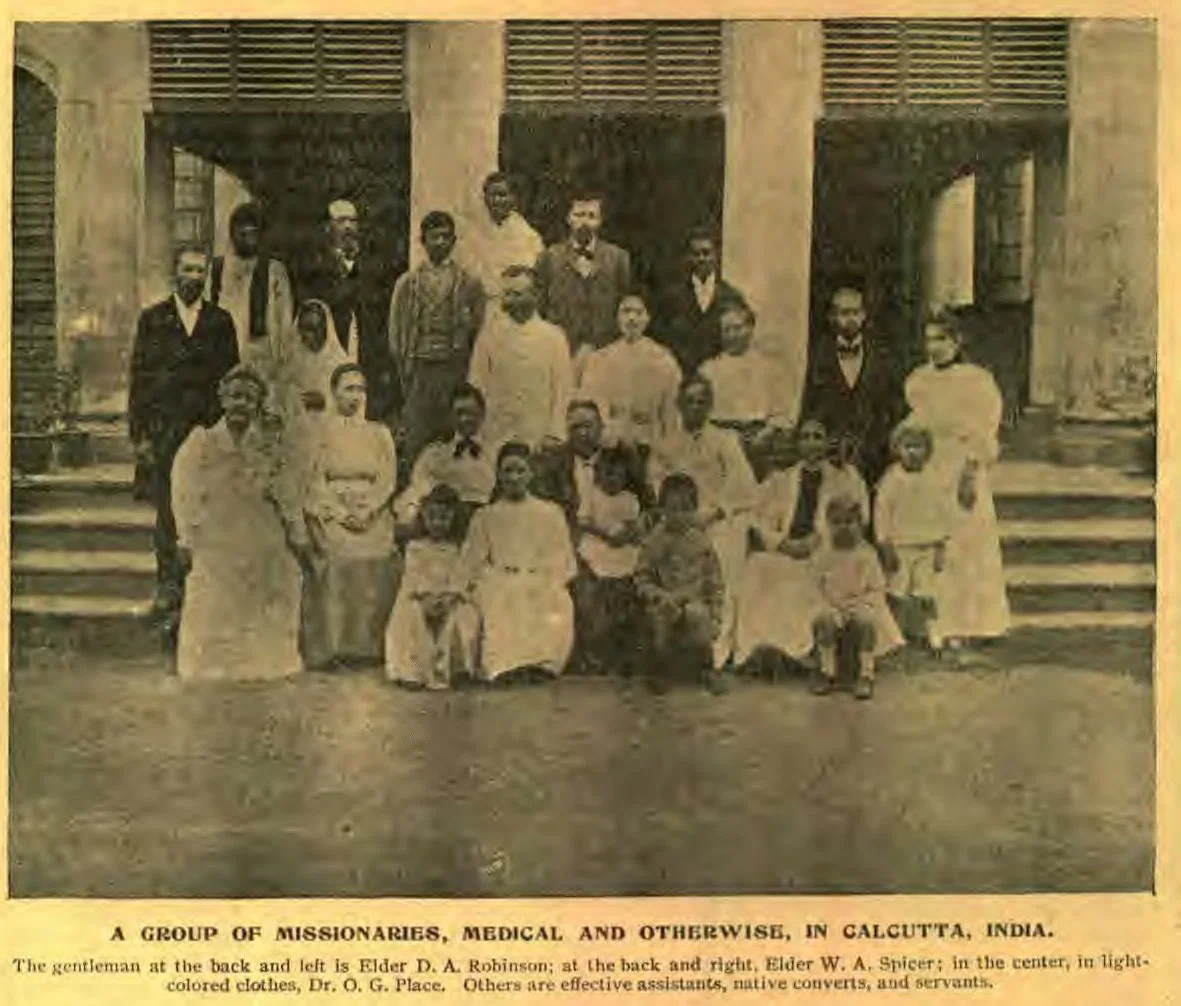
The youngest of the organizations mentioned has had an almost phenomenal growth. Organized in 1893, it has at present associated with it 16 sanitariums in this and other lands, 8 foreign medical missions, 8 training-schools, a medical college, just entering its fourth year with over 100 students, 65 missionary physicians, of whom 15 are already in the foreign field, and others connected with home missions, 85 nurses in the home field, and 49 in the foreign, besides several hundred under training. About 30 city missions have sprung up in the United States and elsewhere within the last two years as a direct result of its influence, in all of which medical or relief work, or both, are prominent features. One special feature of this organization is that it makes much not only of healing the sick, but of educating all men everywhere in the laws of life and health, using the healing art not so much to make sinners willing to listen to the Gospel message, as to clear minds darkened by physical infirmities so that they may comprehend the Gospel in its fulness.
As to the present status of medical missionary work, there are few large cities in the United States that have not some form of medical missions established; not simply free dispensaries, but places where ministrations to the sick are coupled with earnest efforts to cure also the sin-sick soul.
There are at present in the foreign field 487 missionary physicians, men and women, working under the auspices of different boards. About one hundred of these were students of the International Medical Missionary Society of New York. The increase for the last five years alone has been 122, nearly one-fourth of the whole number, besides nurses and hospital assistants, whose number we can not give even approximately. The above figures do not include the native converts who have prepared themselves for medical work in the mission colleges or in Western schools.
The American Board now has medical missionaries in almost all of its twenty missions. Of the missionaries of the Presbyterian Board, one in twelve is a physician, and the attitude of these two boards illustrates that of other societies toward this phase of the work. At present nearly every missionary society at work in China has established medical missions. Patients come a thousand miles in some instances, and carry away seeds of Gospel truth. Some of these missions are daily thronged with patients. Nearly every missionary periodical of to-day contains more or less information concerning the medical work carried on under the auspices of its board, and there are eight or ten monthly or quarterly journals devoted to this branch of mission work, where ten years ago there were but two or three.
Missions to lepers, in India and elsewhere, are necessarily classed with medical missions. They represent a courage on the part of the missionaries which places them in the front rank of heroism. In the leper asylums of China, India, Burma, Japan, and Ceylon there are over one thousand poor, dying creatures who have received the light of a new life.
Experiences of most thrilling interest in connection with some of the medical missions are of common occurrence. The statistics, too, are wonderful, to those who can read between the lines. Dr. J. G. Kerr, of Canton, China, completed a half century of medical service this year, most of it in the foreign field. His surgical cases, several years ago, reached 40,000; many of them would, in Western lands, be called "brilliant" operations. Men and women of thorough preparation and consecration, but otherwise of the ordinary people, have, because of medical successes, been chosen as court physicians and confidential advisers to the chief ruler in several Eastern countries, and the way for the Gospel has thus been opened in lands in which the evangelistic missionary had for years besieged almost in vain. China, Korea, Persia, Siam, and Afghanistan, are all illustrations of the power of medical missions to open a way to the hearts of the rulers.
All this is but a return to the "old paths," the paths which the model Missionary trod. We do not ignore the noble work done by faithful evangelists and teachers, work which God has accepted and most signally blessed. Many events in the development of God's work have their set time in history, and are only made manifest when "the fulness of the time" has come. It may be so with this fuller development of the Gospel,—the good news of salvation not only for the souls of men, but for their bodies also; their redemption not only from moral sin, but from physical sins which hamper men in their strife for better things, and defile God's temple on earth, "which temple ye are."
"Hark! the voice of Jesus calling,—
Who will go and work to-day?
Fields are white, the harvest waiting,
Who will bear the sheaves away?"