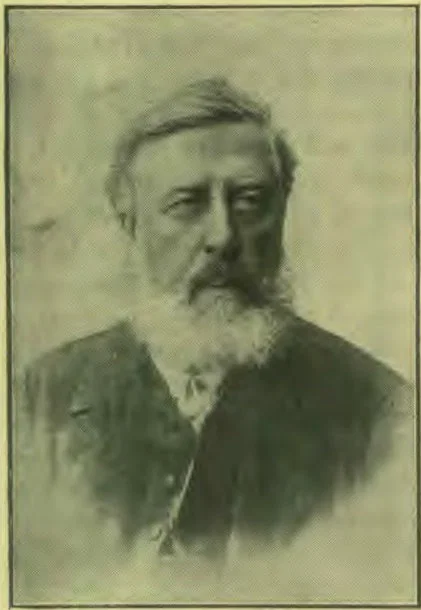
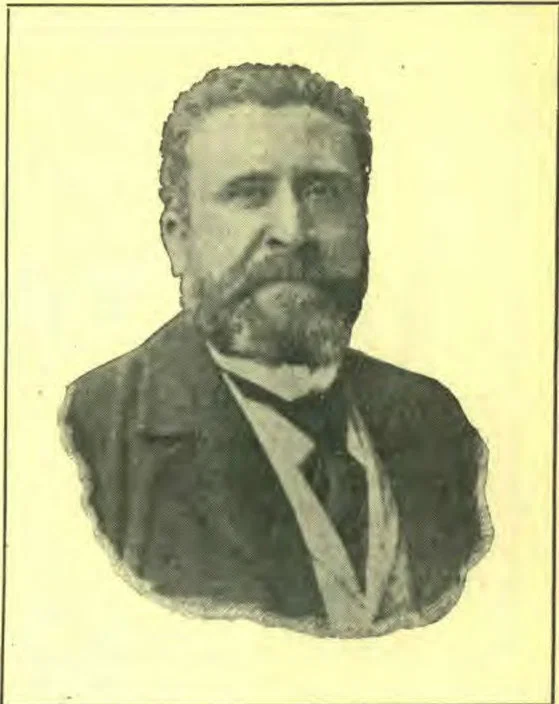
The late W. Liebknecht, founder of German Socialism. Was in the German Reichstag for years as a representative of the Social-Democrat party. He was the author of numerous well-known works.
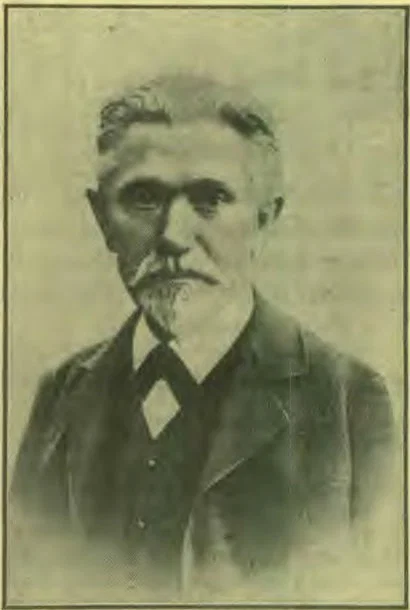
Ferdinand August Bebel, author of numerous Socialist works. Has served as Socialist member of the German Reichstag, and was delegate from Germany to the congress at Stuttgart.
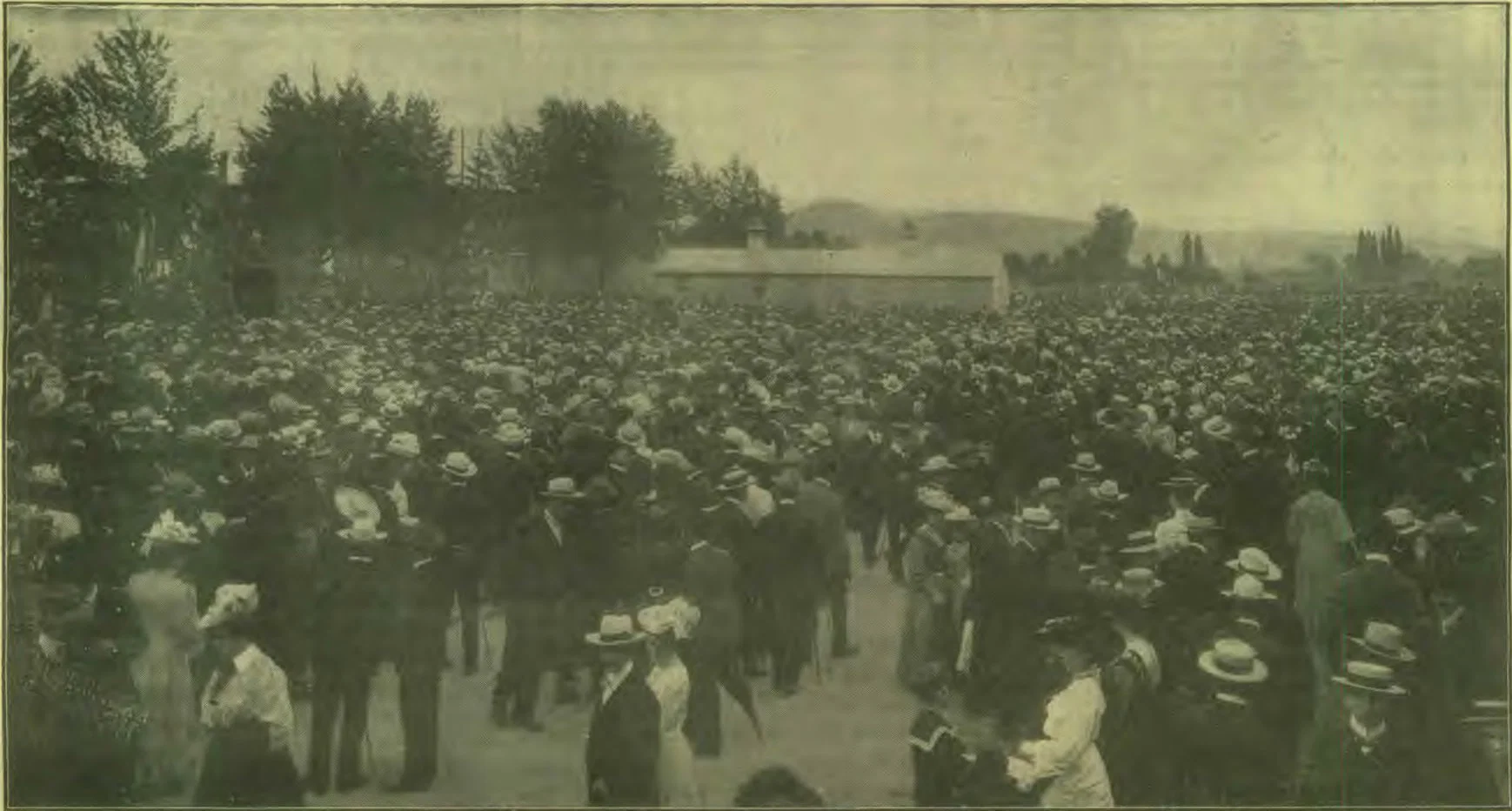
The Socialist Mass Meeting at Stuttgart, Germany, at Which Were Assembled Between 40,000 and 50,000 People.
SOCIALISTS on the continent have been busy this year (1907); they have held a national French Congress at Nancy; a national German Congress at Mannheim; and an international congress at Stuttgart.
These various gatherings have shown that Socialism is a growing power in the nations of Europe. The French Socialist party has sent to the Chamber of Deputies fifty-two members instead of thirty-seven. In England, the first Socialist deputy has entered Parliament. In Finland the ballot has been extended to women. And Germany, altho somewhat beaten in the number of her Social-ist deputies, has seen this party grow from 350,000 to 500,000 members; while the German labor unions, which counted in 1894 only 246,500 members, and in 1905, 1,366,000, number to-day 1,800,000 members.
Growth of Unionism.
I have before me the labor unionist "Correspondenz-Blatt" of Aug. 17, 1907. It contains several pages devoted to the statistics of the unions, giving minute details respecting the standing of the central organization and five other smaller organizations. Labor unionists in Germany are divided among sixty-six various trades, and the number of members belonging to each trade is given. Their growth in each of the last twelve years, as well as the amount of contributions and the amount paid out are given in exact figures.
I will give here a few of these figures to show the financial power of these unions. In 1906, the amount paid to unemployed members was $631,484.45; to sick members, $781,059.12; to life invalids, $89,581.08; for sickness and death, $281,145.12; to party papers, $379,850.14; to strikers, $3,276,-931.66. Grand total of receipts for 1906: $9,901,499.48; and grand total expenses, $8,797,239.89. These figures do not include the financial operations of the five smaller labor union organizations, which amount to about $1,190,000.
The International Socialist Congress convened from August 18 to 24 in Stuttgart, the pretty capital of Württemberg, a well-known seat for religious and missionary institutions. The congress was preceded by a grand mass meeting which took place on Sunday in the open air, about three miles out of the city. It was a grand success. Between forty and fifty thousand people flocked to the spot. The leading Socialist orators endeavored to make themselves heard of that human sea. Bebel and Jaures and Singer were the heroes of the day.
11
Earlier International Socialist Congresses.
The city authorities had some misgivings about such a gathering; but everything passed off quietly. It must be remarked that a Socialist congress had never before been held in Germany, on account of the refusal of the government to grant permission. The first international congresses held by the Socialist party were as follows: Geneva, 1866; Lausanne, 1867; Brussels, 1868; Basle, 1869; The Hague, 1872; Paris, 1889; Brussels, 1891; Zurich, 1893; London, 1896; Paris, 1900, and Amsterdam, 1904.
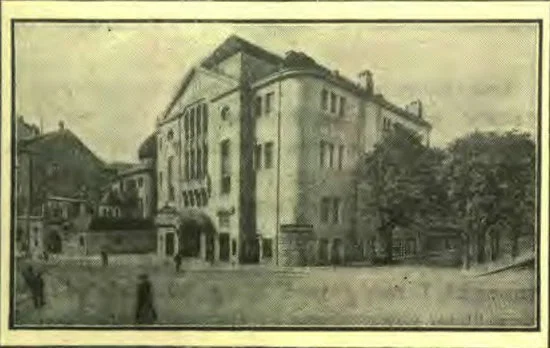
The city of Stuttgart was so full of strangers that your correspondent had to find a room in a private family. But he had no difficulty in finding the headquarters of the congress. As he came out of the station, he was met by a large decorated panel announcing in big letters the date and place of the meeting. From distance to distance, Socialist "oriflammes" hung on poles led you unmistakably to the spot, namely the "Liederhalle." This is a fine and imposing concert hall, with all the necessary dependencies, such as restaurant, dining-hall, vestries, committee rooms, etc.
Socialist Literature in Many Languages.
In one room was to be found an exhibition of Socialist literature; while another room, devoted to correspondence, was made noisy by the sound of a dozen typewriters. Stationery and a full supply of Socialist books and publications were not lacking. Everything seemed to be thoroughly organized.
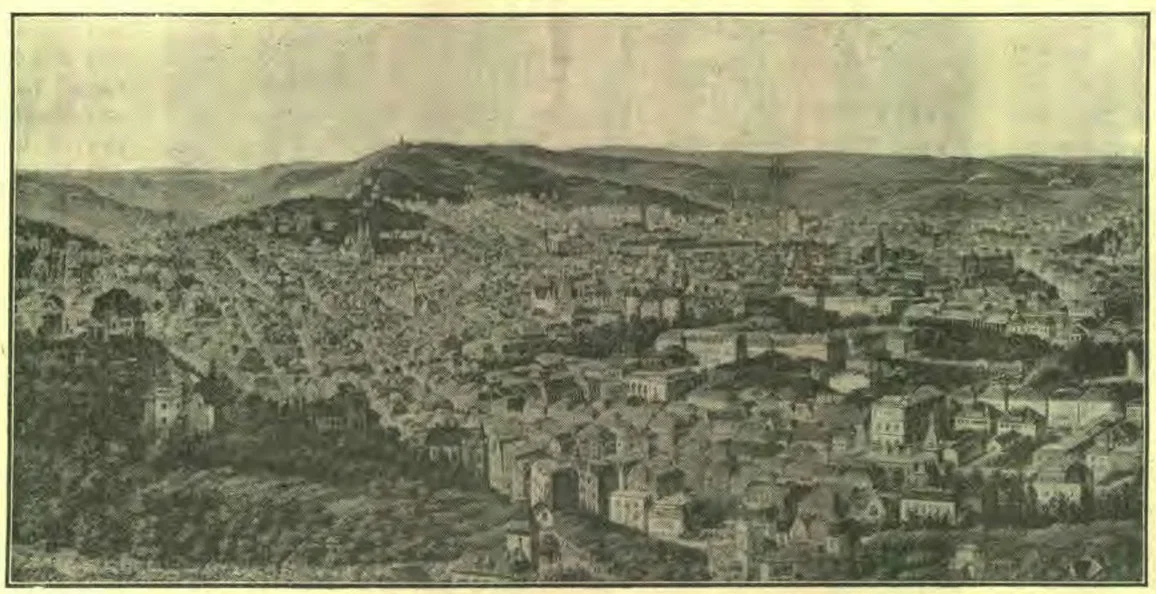
Panorama of Stuttgart.
"Liederhalle," Where the Congress Was Held.
Let us stop a few moments in the Socialist book exhibition room. Here are to be seen on their respective tables or stands complete sets of Socialist publications in various languages, books, pamphlets, tracts, leaflets, almanacs, and periodicals. I jot down, as I pass, the following languages: Polish, Yiddish (low German in Hebrew letters), Flemish, German, Czechic-Slav, Norwegian, Hungarian, (forty-five different Socialist periodicals in this one language), Dutch (fifteen periodicals), Swedish, Bulgarian, English (United States and England), Servian, Russian, Armenian, Finnish, and Spanish.
At the main entrance, a crowd of people stands looking curiously on the delegates as they pass in. They are an interesting sight, representing, as they do, from fifteen to twenty various nationalities. Each one wears a badge.
The hall itself, including the galleries, can seat a few thousand people. Sitting at a long table kept for the representatives of the press, behind and above the presidential rostrum occupied by twenty or thirty leaders, we look down upon the assembly of would-be regenerators of society. Nine long tables run parallel from one end of the hall to the other. Around these, seven or eight hundred delegates are sitting or standing, talking and smoking. Each one has before him paper and ink and a pile of books and documents. There are ladies and gentlemen, young, old, and middle-aged. Here and there are to be seen long beards, blond, brown, and gray. As a rule, these people look remarkably intelligent, energetic, and decided. From the galleries, about three hundred people are looking down.
The Work of the Congress.
The work of the congress proceeded very slowly, every speech or motion having to be translated into two languages besides the language of the speaker (German, English, and French) by two specially appointed translators, speaking perfectly German and English or German and French, respectively.
As I entered the hall, President Singer was trying to put to a vote some previously discussed resolutions. His was no small task, amid the noise of conversation and the blue haze of tobacco smoke. A difficulty arose as to whether the majority or the minority report should be voted on. The president explained his point of view. His two translators did not understand him or else were not understood by the audience. Confusion arose. An English delegate shouted: "We do not understand what is going on," and tried to suggest his idea. His voice was drowned by the noise and the president's big bell. With impatient tone and gesture, a vice-president approached President Singer and endeavored to make him understand that he was making a blunder. Singer listened a few seconds, shook his gray head negatively, and then agitated his bell again with all his might to quell the growing confusion and din among the delegations.
M. Jean Jauros, Deputy of the French Chamber, and Delegate from France to the Socialist Congress at Stuttgart.
Harmony Is Wanting.
When, at last, one hour and a half or two hours had been spent in procedure and technicalities, it happened that a majority of only 15 or 20 votes had been secured from several hundred ballots! "What does such a vote mean?" I asked myself. If in union there is strength, where is the strength of this movement, representing millions of people aiming at the reorganization of the world? And yet, here is this army of representatives like a roaring sea threatening to destroy the existing order of things, to abolish private capital, and to "place the wealth and industries of the world under control of all the people." And supposing they should succeed, what then? This control will have to be placed in the hands of a few men for the mass of the people. And who knows whether these few men in each community will not betray the confidence vested in them and become capitalists in their turn? And thus we will be brought back to the present state of things after passing thru such scenes of revolution, civil war, and bloodshed as have never been acted out on this earth, not excepting the French Revolution.
How foolish, childish, and dreamy, yea, how criminal these Socialistic schemes! For no one can think for a moment that the expropriation and redistribution or control of wealth will take place without a deadly struggle which will threaten the very existence of society.
The Core of the Matter.
How sad to think that this whole mistake resolves itself into a religious error, which a correct knowledge of the fundamental truth of the Gospel would have prevented. "MAN IS GOOD, BUT SOCIETY IS BAD," says the Socialist; "hence society must be reconstructed." No! says the Gospel of Jesus Christ; society would be all right enough if man were good; society is only what man makes it; man can never make a better society, not even should Socialism have its way. MAN IS BAD, here is the whole secret; MAN is selfish; MAN is sinful; HE needs reconstruction; HE needs conversion; HE needs to be changed by the grace and spirit of God; and when society is made up of such men, then, like in apostolic days, social conditions will be transformed, and equal privileges and comforts will be provided for all, because all will be looking for the interests of each, and not each one for his own interest.
The Leading Questions Discussed.
The leading questions discussed at Stuttgart were: (1) Militarism, shall it be utterly condemned by Socialists? (2) Shall colonization by national force be countenanced or not? (3) Shall the general strike be approved and prepared for or not? (4) Shall not trade unionists unite closely with the Socialist party?
(Continued on Page 12, Column 3.)
12
International Socialist Congress in Stuttgart.
(Continued from Page 11.)
On each of these questions—several of which would immediately involve Socialists in grave difficulties with each government—the majority, led by Bebel, Jaures and Vandervelde, voted resolutions taking a medium and prudent ground between extreme opinions.
On the military question, the debate between Herve and Bebel focused the interest of the congress. Herve claimed with pitiless logic that, in case of war, Socialists should not be found shooting at each other; while Bebel maintained with good common sense that refusing to serve would lead every Socialist behind prison-bars.
On the colonial question, both majority and minority stated, tho in different terms, that "the congress condemns this policy of robbery and conquest; this shameless application of the right of the strong trampling underfoot the rights of the vanquished races ... while increasing the dangers of international complications and war." Some one might have remarked here that the main reason of the European governments in conducting a colonial policy is the necessity for new markets in order to keep busy the millions of working people who make up the Socialist party.
A Significant Address by a Lady from India.
One morning an Indian lady, dressed in yellow silk, was addressing the congress. Vehemently she was pleading "for that one-fifth of the human race which is starving under English tyranny." While she was speaking, I happened to look toward the gallery; half concealed in a special box, methought I recognized King Edward VII, who was then somewhere in Germany at a bathing resort; his whiskers dyed in brown, he was listening earnestly and soberly to the speech
13
of the Hindu lady, while now and then exchanging a few words with a lady sitting with him and looking at him with evident respect. Whether I was mistaken or not about King Edward, I could but think of the tragic forebodings that such a gathering and such speeches must awaken in the hearts of kings who are looking on and who may from one day to the other be hurled down from their thrones by the waves of international revolution.
The Only Remedy.
In conclusion, the Socialist movement appears to us as a natural consequence of the present situation caused by the increase of wealth on the one side and of poverty on the other; by the merciless spirit of greed and oppression on the part of capital, and the increase of drunkenness, vice, and laziness among the working classes. Looking at this problem from the human side, the only outcome would be a deadly and universal conflict. The only remedy is the one announced in the Holy Scriptures: the second coming of Christ as King of Kings to put an end to injustice and sin. And of this blessed and long-looked-for solution of earthly evils, Socialism and the lamentable conditions it seeks to remedy are nothing but one more among many of the glaring signs of our times.