MUSIC IN THE HOME

5%

MUSIC IN THE HOME.

BY MRS. L. D. AVERY-STUTTLE.
IF there is music in the heart, there is quite likely to be music upon the lips.
It is rare indeed to find a man or woman, and rarer yet to find a child, who does not love music. It is an inborn passion of the soul. How perfectly it expresses the myriad emotions of the human heart. Are we happy? What so expressive of our joy? “Is any merry? let him sing psalms.”
Are we sad? what so perfectly expressive of our sorrow?
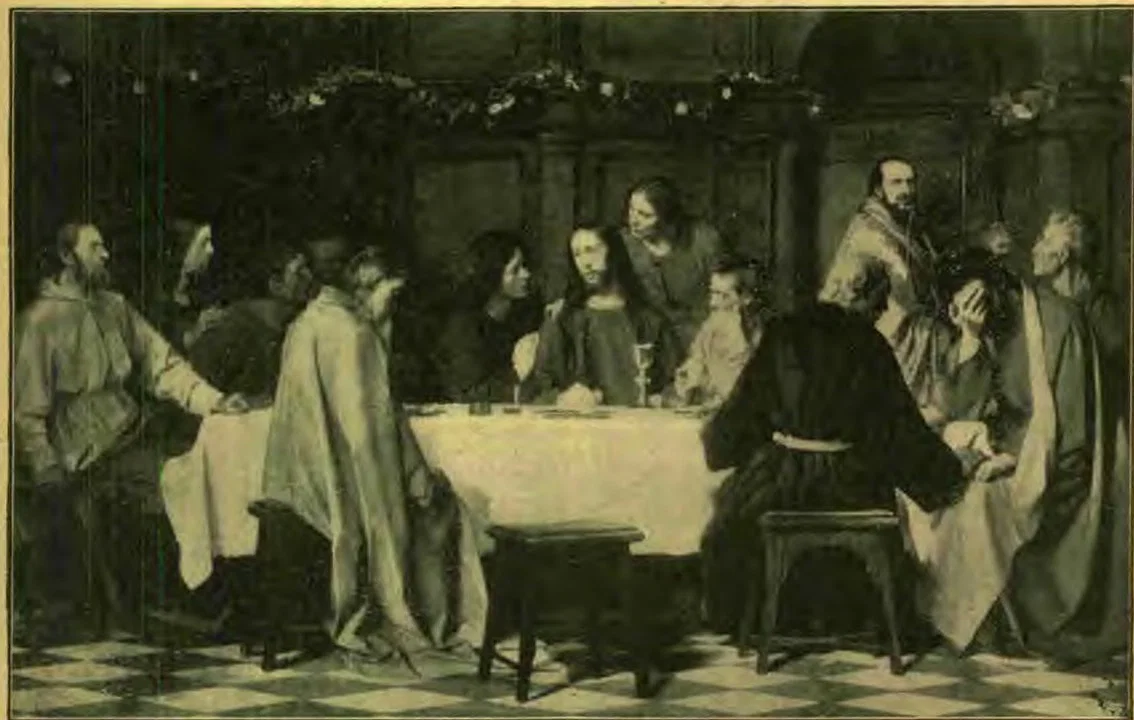
Go with me to the large upper room where the disciples met for the last supper with their beloved Master. The table is spread. The bread and the sop are ready. The sad, prophetic words have been spoken: “One of you shall betray Me.” One after another asks the heart-breaking question, “Master, is it I?” Even the youthful face of the beloved John is lifted in horror-stricken wonder from the breast of the Man of Sorrows with the same tearful question. At last the murderous hand receives the sop, and the false one steps out into the night to commit the black deed of everlasting infamy, and to write his traitor name on the records of time and eternity in crimson characters of shame. Then, upon the still night air is borne the notes of that sad, sad hymn. All join in singing it. Peter the impetuous, Thomas the doubting, John the beloved,—all but the traitor. He could sit quietly by, and eat of the Passover Supper, but he could not stay to join in that solemn hymn which was the last they would sing with the Man of Sorrows.
When that mighty hero of the Reformation, the humble monk, who appeared before the Diet of Worms with shaven crown and bare feet, was assailed by the darts of Satan, he would say to his bosom friend, Melancthon, “Philip, come; let us sing the forty-sixth psalm.” And, under the inspiring influence of that song, they went courageously to do battle with the enemy, in the name of the Lord of hosts.
O, there is strength, there is inspiration, in music!
“Well, what about music in our homes? Now, I have a daughter who loves music, and she was so determined to have a piano that I bought one for her. I don't know that I am sorry, for she was getting to be pretty wild and reckless; now her mother and I never have any trouble with her. She has just dropped all her wild associates, and seems to care for nothing but music.”
There is no instrument made by the hand of man which can equal the human voice. Yet I think all will agree that there is a certain kind of artificial training which ruins the simple and natural beauty of the voice—a sort of operatic affectation. I have known sweet voices to be ruined by this, and the tender, bird-like tones, a gift from the hand of the kind Creator, spoiled by a foolish vanity, until they were anything but pleasant.
Ah, what so beautiful as the soft and tender lullaby from the mother's lips, which calms and soothes the sleeping infant at her breast? All the famous operas in the world can not be compared to it. The wonderful strains of a Patti may be forgotten. The songs of the greatest singers of earth whom kings applaud, and over whom princes rave, may be forgotten as the years roll on and the hair becomes white and the form bent; but the songs mother used to sing to us as the sun was sinking out of sight behind the old barn, while she held us closely in her dear arms, and
swung back and forth in the old rocking chair, will never be forgotten while life lasts; and even over in that happy land, where voices never become cracked and shrill with age, methinks we shall ask mother to sing again the old lullabies of yore.
There is something wondrously soothing in good music. You remember how the dulcet tones of the sweet singer of Israel charmed away the evil spirit from the impetuous king.
But if music is used as an agency for good, so Satan, recognizing its power, has harnessed it to his car also, and used its alluring and persuasive, yea, almost compelling, force to draw his victims into the net. A few evenings ago my way down-town led me past a number of saloons—those dens of death. But from the beautiful and brilliantly-lighted interiors floated the witching and subtle strains of music.
O music! sweet and heaven-born tho thou art, thou hast been prostituted by the prince of evil, and made to serve his fiendish purposes. But we will not surrender thee to the forces of evil. We will employ thy beautiful voices and thy rapturous melody as instruments of praise to our King. Aye,
through the ceaseless cycles of eternity, that matchless choir around the dazzling throne shall chant their “Holy, holy, holy, Lord God Almighty!” and the countless suns and systems and blazing worlds shall keep harmonious time to the rhythmic music of the spheres.
Well, then; since we expect to enjoy music in heaven, why not enjoy it upon earth? Since, in our heavenly homes, we shall hear, as did the seer of Patmos, every creature in heaven and in earth and such as are in the sea, singing praises to Jehovah, why not begin to sing His praises in our earthly homes?
Why not?
This will be followed in our next Special by an article by the same writer, entitled, “The Sanctity of Marriage.”