Our Work in China

5%

Our Work in China.

A Humble Pioneer.

THE work of Seventh-day Adventists in China is not insignificant when it is remembered that this body reckons its age by decades, not by centuries, and that already, within the period of an individual life, its lines of missionary activity have been extended in other directions to meet in China, thus encircling the earth.
In 1888 Abram LaRue, a layman, then long past the meridian of life, offered himself for self-supporting work in the islands of the Pacific, and was accepted, being allowed his choice of field among all the islands and archipelagoes of this watery expanse.
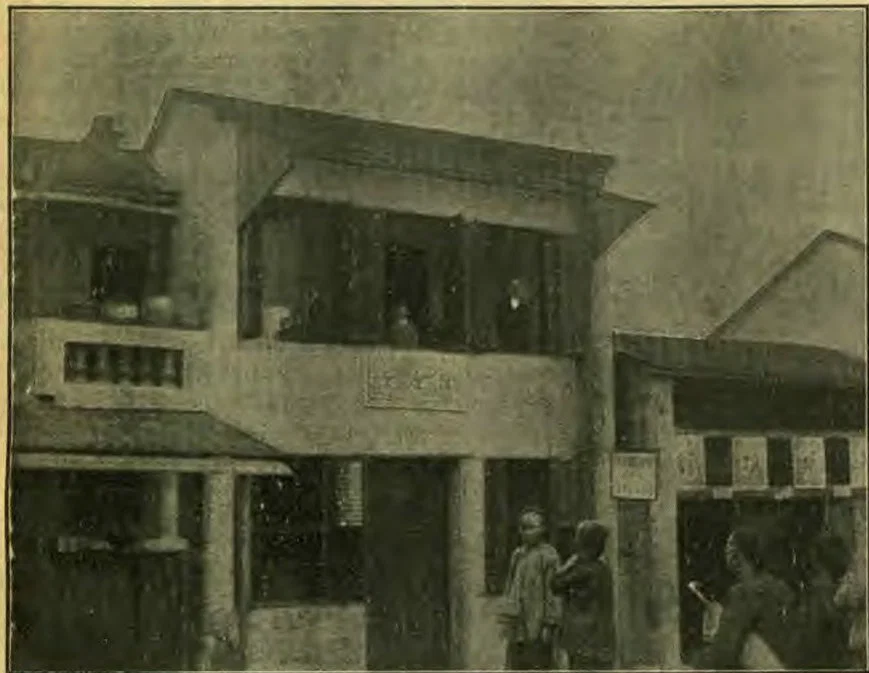
Building Occupied by Mission Headquarters in Canton, China.
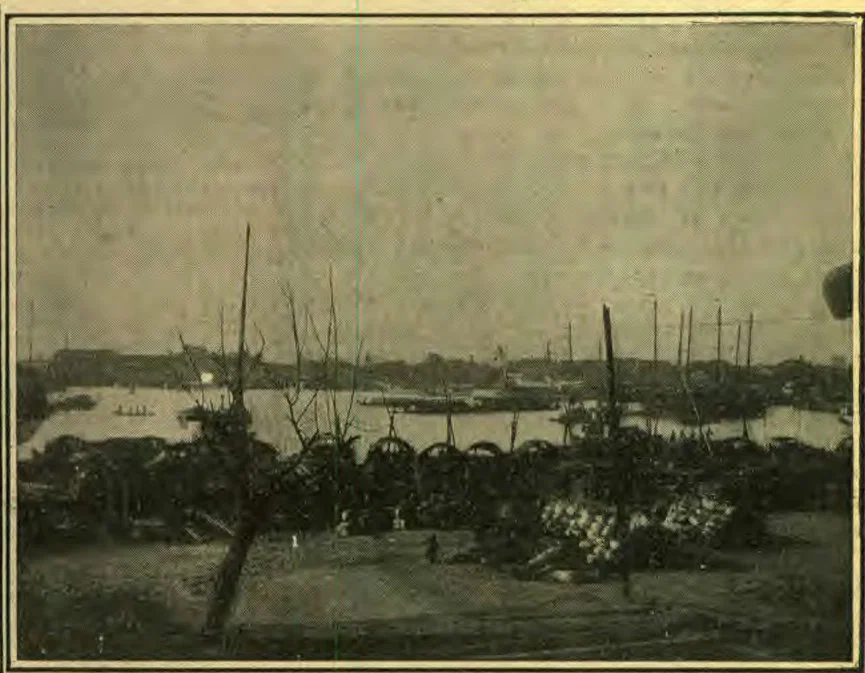
View of Pearl River, China, Front of Mission Headquarters, Canton.
"I just kept within the bounds of my commission," he used to say, relating the incidents connected with his travel and final settlement in Hong Kong.
"As you go, preach," was the motto of this enthusiastic pioneer; and ere the voyage was over the ship's mate bad decided to cast his lot with the lone man. In the home of the two men, LaRue and Olsen, the large room was used for a Gospel-meeting hall and a good stock of religious books and Bibles was attractively displayed. Among the soldiers and sailors and wayfarers the place soon became known as the headquarters for any man who needed a friend. The seed cast into the shifting sand of such a soil took root in some instances, and not a few men returned to their homes in the four quarters of the earth, thanking God for the beacon light set at this strategic point on the great highway of the Far East.
While Mr. LaRue was past the time in life when languages may be acquired, and so was confined in his labors to the English tongue, yet his location in Hong-Kong had the effect to draw the beginnings of our work to South China; for when in 1901, my husband offered himself for service in China, he was recommended by the board to proceed to Hong Kong, that this faithful standard bearer might have the companionship and care of those of like faith, in his old age. Feb. 2, 1902, our party of three adults and our four-year-old son landed in Hong Kong where we had long been expected at the little mission on Arsenal Street. In April of the following year, Brother LaRue was laid to rest, past the age of eighty years, but active to the time of his last illness.

In Canton.

Canton, being the provincial capital of the two southern provinces and the metropolis of southern China, appeared to be the most advantageous location for our work in this section; for, while it is in every respect a typical Chinese city and offers the best opportunities for the acquirement of a pure dialect, it is also in close communication with the outer world and other parts of this empire, being inland about one hundred miles from Hong Kong, with which it is connected by several lines of river steamers. Located in the delta of the west river which with its network of tributaries supplies the principal means of trade and travel, it is in easy communication with the interior districts.
Following the suggestion of Paul's example that the Gospel will naturally diffuse itself along the lines of commercial intercourse, Canton has always, since the days of Robert Morrison, been the center from which a large missionary influence has been extended to the surrounding provinces.
It was in December, 1902, that E. H. Wilbur and wife, then fresh recruits from the United States, settled in Canton. Circumstances later compelled their return to Hong Kong for a time. From this beginning the station has been strengthened till at the present time the work here is represented by three families and two lady workers sent out by the board.
Impressed with the urgency of the message which impelled them to leave the more agreeable life in the home land and become the adopted sons of a nation every way contrary to its alien residents, our missionaries have, from the first, sought to press into service their knowledge of the language as fast as acquired. Our ever-gracious God has faithfully acknowledged these efforts and in the space of three and one-half years—since the first permanent residence was made in Canton. There have been in operation for the past two years a girls' school and a boys' school in both English and Chinese, besides the regular chapel work with its Sabbath and week-day services. Attendance at the Sabbath-school and service is not obligatory, but those in charge exert their influence to bring their pupils with them to the sacred service. A church organization has been effected, and a few faithful converts gathered who profess, in heathen China, to keep all the commandments of God, not excepting the fourth, and to look for their Lord from heaven.
In a land where plague and cholera annually reap a large harvest, where quarantine of chicken-pox, small-pox, measles, or any other infectious or contagious disease is unknown, where the victim of leprosy may make even the gate of the yamen (official residence) or the stone steps of the temple his nightly resting-place, in a land of no sanitary regulation or precaution, where medical science as a science is unknown, where ignorance and poverty combine to shut the sunshine out of, and the germs of disease in, the homes, where the tobacco habit fastens itself upon boys and girls alike in tender, even childish years, and where opium reckons among its devotees the fairest of the people, both men and women, there is a vast opportunity for self-sacrificing missionary work both in its relation to healing and education. It is expected that a modest beginning in this line of work will be addedto the list of our missionary activities in the southern provinces and developed as fast as means and laborers permit.
In January, 1903, only about a month later than the location of our first worker in Canton, a communicant of this denomination, Elder E. Pilquist, resigned his connection with the British and Foreign Bible Society to take up work under the direction of the Seventh-day Adventist Board. During his travels in the Bible work, he had made the acquaintance of a large section of country, and, therefore, decided to remain where he was, in the province of Honan, Central China, and follow up the work there.
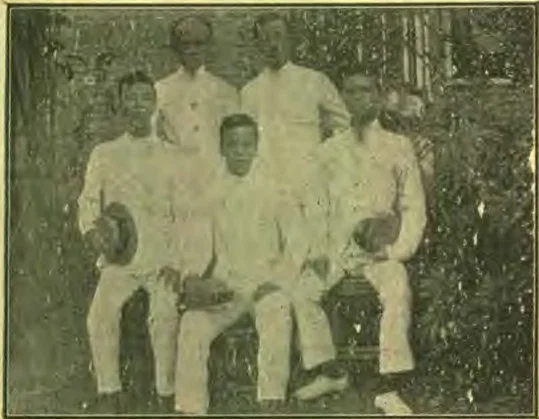
The First-Profits among the Hakkas, China.
MRS. J. N. ANDERSON. (Concluded next week.)