LAST week I related briefly the opening of the conference on June 15, and set forth some preliminary considerations bearing on the subject. I shall attempt in the present article, while touching but lightly the doings of the conference, to give some general impression of the situation as it appears at this very early stage.
The second formal meeting was held in the Ridderzaal at a quarter after three on Wednesday, June 19. It was an impressive sight, as carriage after carriage drove up, to see the large number of delegates representing so many different countries enter the historic building. One wanted to think that it really did betoken peace and good-will among the nations of the earth. Here were men of power and note from practically all the nations of the world, who had come together to deliberate concerning matters of the highest interest. Could they have come in vain?
Interesting Surroundings.
Almost unconsciously the mind wanders into the past, while the frock-coated, silk-hatted procession files in. The Binnenhof has a dark side to its history. Here, in May, 1619, the ill-fated John van Oldenbarnevelt was beheaded, "for having conspired to dismember the states of the Netherlands, and greatly troubled God's church." Yonder a few yards is the old Gevangenpoort (prison gate), a tower in which political prisoners were formerly confined. Here Cornelius De Witt was imprisoned, under a false accusation of conspiracy against the life of William III. His brother, hearing of his danger, came to rescue him; but the angry populace, availing themselves of their opportunity, forced their way into the prison, and seizing their victims, literally tore them to pieces.
Within these same gloomy walls, with old oak floors of surprising thickness, and apparently as sound and good to-day as when first laid down some six hundred years ago, there is a marvelous collection of instruments of torture. There is a frame-work in the shape of the letter "X" upon which it was customary to stretch the person condemned to death. The bones of legs and arms were then deliberately broken in two places, after which the executioner waited a full half-hour before administering the blow which put an end to the prisoner's life. One sees also thumb screws, racks, a piece of rock deeply hollowed out in two places by the action of dropping water under which the prisoners were placed. The men who suffered this latter punishment became insane the first day, and were dead in three days. In the second story, facing, and only a very few feet from, the open kitchen, is the heavily-grated chamber in which persons were starved to death, it being so located in order that the savory odors of the food should intensify the sufferings of the victim.
As might be expected, this prison was full to overflowing in the Duke of Alva's time, but it had long periods of service before and after his day. When the mind turns from the contemplation of cruelties so refined, and one may add, fiendish, to the gathering of men in the Ridderzaal, and the efforts they are apparently making to rid even war of some of its cruelties, it is by no means strange that one should indulge the hope that the world had changed for the better. But we need to be careful to distinguish between moral improvement and the change of customs and manners, which is really quite another thing. Tragedies have occurred in recent times which show that even an American mob can go to terrible lengths, and it is never safe to count on unaided human nature changing very materially.
The Second Meeting.
But to return to the second meeting of the conference. It was held behind closed doors, and was concerned with the receiving of telegrams from the Emperor of Russia and the Queen of Holland, and the arrangement of the four commissions, the first to deal with arbitration, the second with war by land, the third with war by sea, and the fourth with maritime rights. Even with these commissions the conference finds itself a pretty large and unwieldy body, and it is probable that most of the commissions will again be split up into smaller bodies.
The days immediately following were occupied with consultations between the chief officers of the different commissions, and on the 22d and 24th, respectively, the commissions held their first sittings, the time being occupied with the determining of procedure.
General Prospects.
What can be said of the general prospects of the conference? The answer will depend upon how much is expected. After interviewing a number of people, and watching the general course of the meeting during the opening days, I think I am safe in saying that with few exceptions the delegates do not expect to accomplish anything beyond the regulation of certain matters of actual warfare, and the enlarging of the sphere of arbitration, with the further probability of forming a permanent peace tribunal at The Hague. Within this sphere there seems to be a good deal of unanimity. Other things may and will be discussed, but without practical results.
Germany is, on the whole, much more favorable than at the conference of eight years ago. She is not particularly opposed to there being a discussion of the limitation of armaments, only she does not care to take part in such discussion, regarding it merely as a waste of time. England, tho she made it very clear previous to the conference that she wished the matter taken up, has said nothing of it thus far at the meeting. There is hardly any doubt but the question will be introduced and discussed, but it is also pretty sure that nothing whatever will come of it.
A Modest Program.
Nelidoff laid a very modest program before the delegates in his inaugural address, and a day or two later he made it quite clear in an interview that the conference was not likely to effect any large and decisive results in the direction of the limitation of armaments, nor to change materially the present situation of most European nations, which are staggering under heavy burdens of military expenditure. It was, however, he said, something that such a large number of nations should come together to deliberate in a friendly way regarding the maintenance of the world's peace, and to arrive at some definite understandings in reference to certain phases of war both on land and on sea.
Interesting Interviews.
General Davis, whom I interviewed yesterday, was reluctant to express himself fully, because the situation was still uncertain; the conference had not taken definite shape, and so many things were in the developing stage, as it were; but he said he was pleased with the general outlook, that the delegates were applying themselves seriously to the task in hand, and there seemed to be a very general spirit of cooperation. He thought there was reason to hope for some permanent results.
Mr. Grieg, one of the technical delegates of Norway, and his colleague, Mr. Lange, who is the secretary of the Nobel Peace Committee, expressed their belief that something should be arranged in the nature of a Commission of Inquiry which, by official inquiry into such incidents as the sinking of the Maine, might help to avoid unnecessary wars. They also spoke favorably of the prospects for an International Prize Court. This matter, it may be said in passing, has been broached by Germany at the conference, but the original suggestion came from Norway last February. Norway will gladly fall in line with any and all efforts to promote peace. In common with other small powers, she desires peace, tranquillity, and independence.
The United States of the World.
Probably Mr. W. T. Stead's opinions are fairly well-known in America. I met him last evening at the headquarters of the Foundation of Internationalism. Asked what his impressions were of the opening of the conference, he replied, "Good, very good."
"Do you think the United States of Europe is a feasible thing?"
"Rather," he replied, "the United States of the World. This latter is the more likely; for in any union of the different States of Europe, there is likely to be friction over details, while in a world alliance or union, matters of detail would not be expected to be taken up. The world has shrunk greatly the last few years; what with our numerous inventions in the way of rapid travel, it has become a very small place. The trouble is that the mechanical progress of the world has outstripped its moral and intellectual progress; it has made us neighbors before we have been made neighborly, and brought us close together before we have adjusted our old political relations."
"You are quite sure that we shall be made neighborly?"
"Certainly, the world is moving that way. In very early times each man did as he pleased, and made war upon any and everybody, if he so chose. Then this was found to be inconvenient; so the people gathered together in families and tribes; afterward out of these were formed the nations. For a time, long, in fact, till very recently, any nation has been free to make war, but at the present day the smaller nations are practically excluded. Only a very few great and powerful nations have the power. Thus there is a drawing together. It is all part of a great movement, and this conference is the natural outgrowth of the ages."
I also interviewed the Baroness Bertha von Suttner, the recipient of the Nobel Peace Prize in 1906, and Felix Moscheles, Chairman of the International Arbitration and Peace Association, and editor of "Concord." I shall give the gist of these interviews in my next contribution. The peace movement has grown with great rapidity in the last few years, and has taken on unwonted activity. There can be no doubt that the present Hague Conference is to a certain extent, at least, an outgrowth of the agitation which various branches of the great movement have been carrying on for years past. On this account it is of interest to trace the movement back to its earlier source, and endeavor, if possible, to ascertain what relation these peace societies sustain to the general public. Are they or the politicians nearest the hearts of the people? Are they, again, men in advance of their time, or do they lack practical common sense, and so give themselves to the elaboration of theories which can never be worked out under ordinary human conditions?
M. ELLSWORTH OLSEN.
The Hague, June 24, 1907.
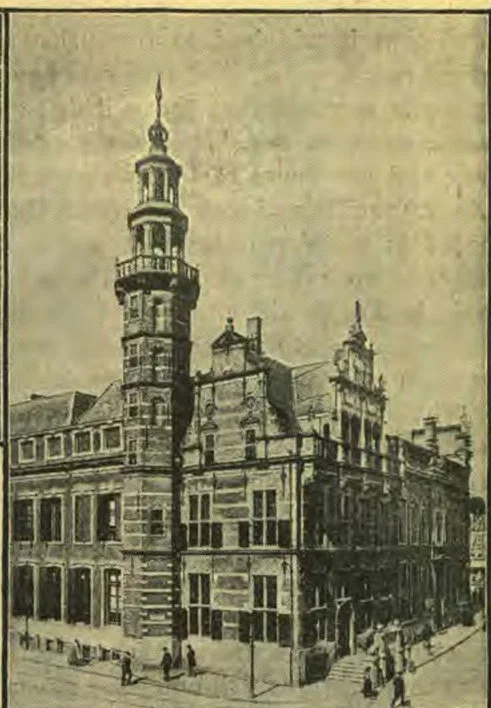
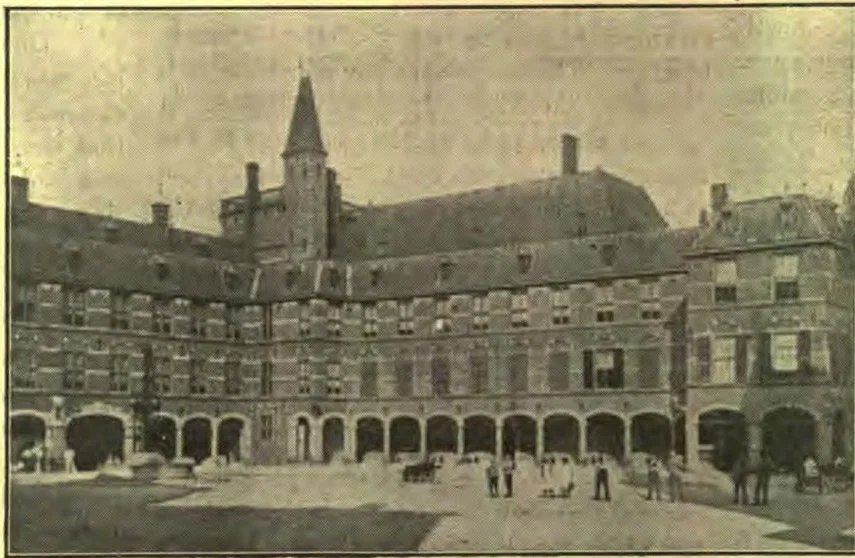
Town Hall, The Hague.
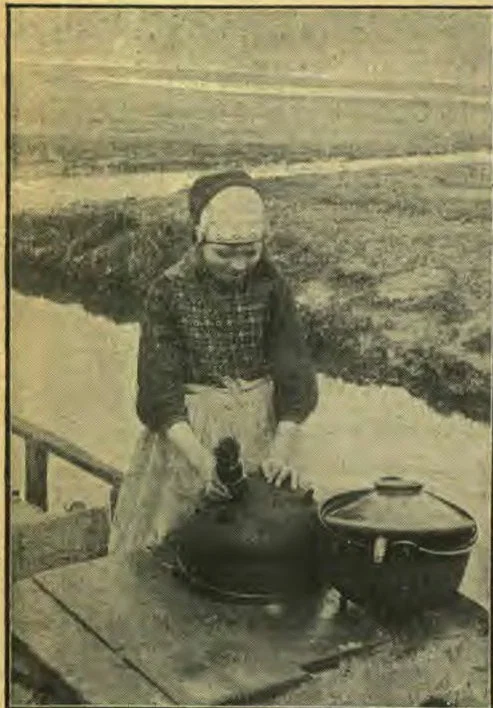
Domestic Labor.
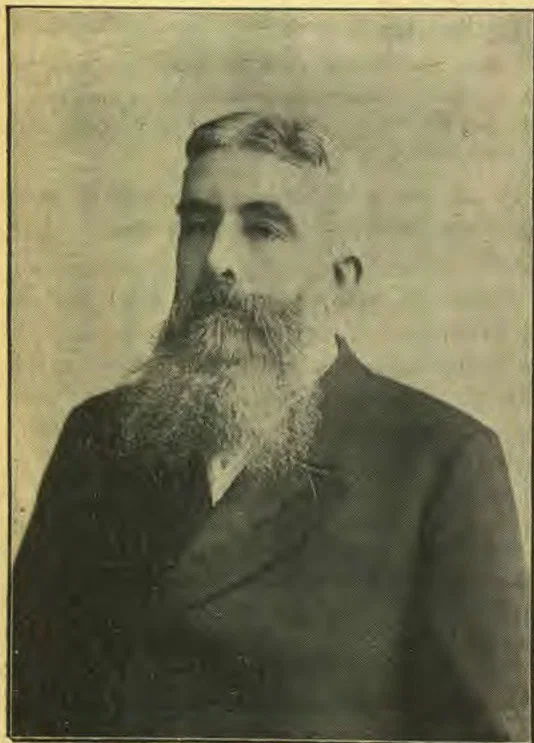
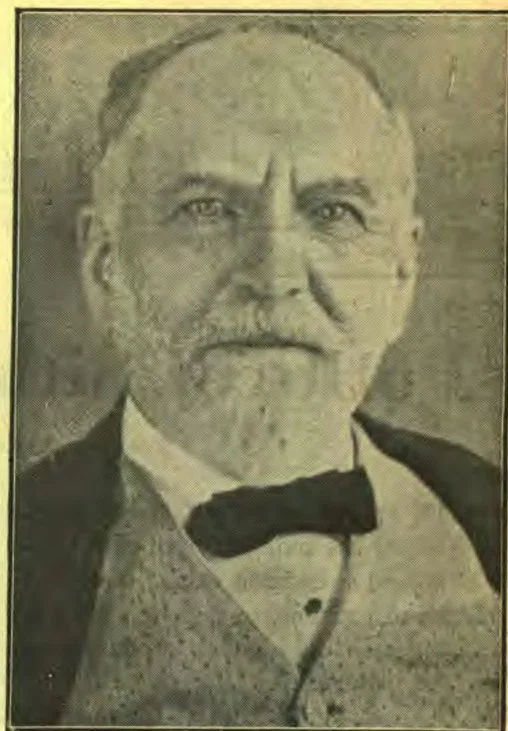
M. de Beaufort, First Dutch Delegate.
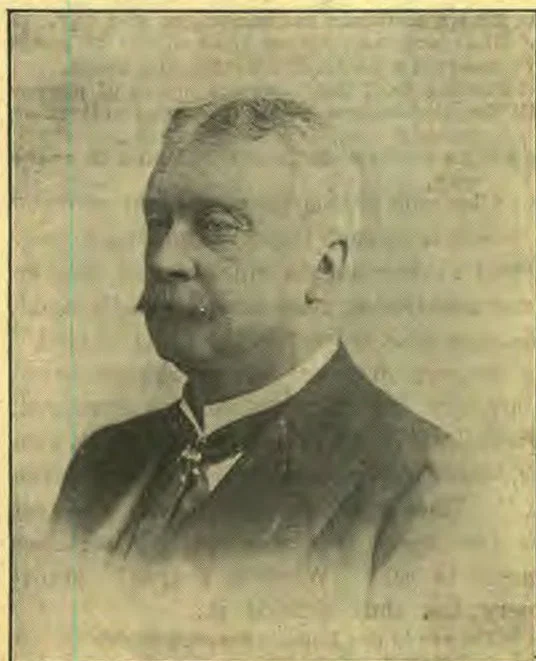
Sir Henry Howard, English Minister to Holland and Delegate to Peace Congress.
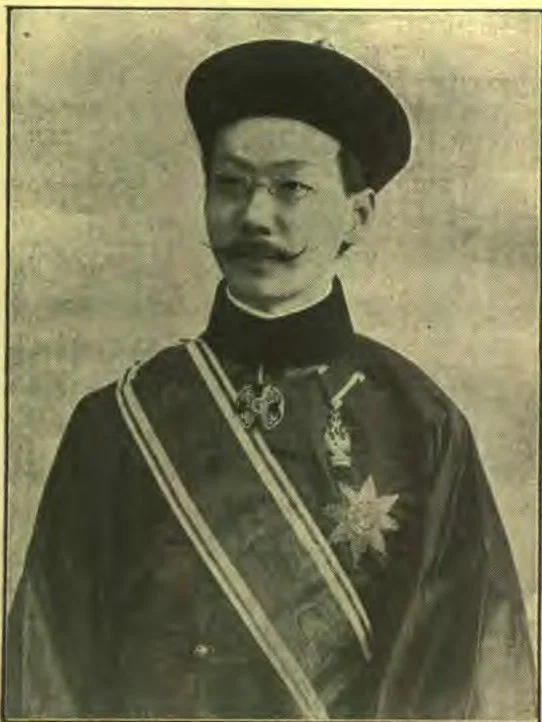
M. Lon Tseng Tsieng, First Chinese Delegate to The Hague.