''The Sabbath was made for man.'' Mark 2:27. This scripture leaves no question in the mind of the honest inquirer after truth as to the binding obligation of God's hallowed rest-day. Christ is the Author of the above language. He does not say that the Sabbath was made for the red man, or the colored man, or the Frenchman, or the Englishman, or the Jew man, or the Gentile man, or any other limited portion of the race of mankind; but the Sabbath was made for man—the entire race of mankind. There is no more reason for restricting the word man in the above text, in his relation to the binding claims of the Sabbath, to the Jew man, than there is for restricting the word man in the text, ''The woman was made for man,'' to the Jews only. To argue that the Jews only were in right entitled to the privileges of the marriage relation, upon the basis of this scripture, would be regarded as too absurd to receive serious consideration.
Are They Men?
It therefore follows that the only question necessary to settle, in order to determine the binding claims of the Sabbath upon any people, is, Are they men? If they belong to the race of mankind the Master says the Sabbath was made for them. The Sabbath, like all God's laws, was made for man. It was not against him, but promotive of his highest good.
God's original law is summed up by the Master in these words:
''Thou shalt love the Lord thy God with all thy heart, and with all thy soul, and with all thy mind. This is the first and great commandment. And the second is like unto it, Thou shalt love thy neighbor as thyself. On these two commandments hang all the law and the prophets.''
Every law of God and every prophetic utterance of Holy Writ hangs upon this principle of love to God and love to man.
Love Is the Basis.
This gives us the divine philosophy of God's laws. None of them are arbitrary. He gave none of them for the purpose of the condemnation of ar~~ of His creatures.
Why did He command the relation of love between Himself and His creatures and between man and his fellow man?—It was because love is the only basis of happiness. ''There is no fear in love; but perfect love casteth out fear; because fear hath torment.'' He therefore gave all of His laws based upon love to insure happiness to all who would receive and live them. No man was truly happy from cherishing hatred toward God or his fellow man. Happiness is always the fruit of love. Perfect happiness can therefore be produced only by perfect obedience to all of the divine law of love. The only way into this perfection of Christian experience is thru Christ, who is the door. He says, ''I am the Way, the Truth, and the Life: no man cometh unto the Father but by Me.''
That we may be absolutely certain that the Sabbath of the Old Testament has been perpetuated in the New Testament so that the Sabbath originally instituted in Eden is still the Sabbath to-day, we shall trace it from its institution to the close of the New Testament.
It is a principle of law in tracing a statute that the original statute must first be found, and the statute must then be traced thru the later revised statutes to see if there has been any revision or repeal of the statute. If there has been no revision or repeal, the original statute still stands. We should be as rational in tracing a statute of the divine law as we are in tracing a statute of civil law. Following this principle, which all men declare to be sound, let us trace the Sabbath statute that we may be unquestionably fair in reaching our conclusions with reference to the perpetuity of the Sabbath to our time.
The first introduction of the Sabbath is found in Gen. 2:1-3. After laboring six days in the work of creation, it is said:
''And on the seventh day God ended His work which He had made; and He rested on the seventh day from all His work which He had made. And God blessed the seventh day, and sanctified it: because that in it He had rested from all His work which God created and made.''
Who Wrought in Creation?
The God that wrought in the work of creation, rested and blessed and sanctified, or appointed, the Sabbath as a day of rest. By whom, then, was the work of creation wrought? In Colossians, chapter one, verses 12-17, the Son of God is plainly declared to be the Creator. Verses 13 and 14 speak of ''the kingdom of His dear Son, in whom we have redemption thru His blood.'' Verse 16 says, ''By Him were all things created.'' The 17th verse says, ''And He is before all things, and by Him all things consist.'' This was God the Son, or Christ, of whom it is declared that He created all things.
Some have been troubled because it says in Genesis, in giving the account of creation, that ''in the beginning, God created the heaven and the earth.'' They conclude that this must refer to the Father. It should be remembered that the Son bears the same name as the Father. In the first chapter of Hebrews, verses 1-3, the Son of God is again declared to be the One thru whom God the Father performed the work of creation. The 8th verse reads, ''But unto the Son He saith, Thy throne, O God, is forever and ever.'' The title God is here definitely applied to the Son of God. It is therefore clear that the Son of God is the One thru whom the work of creation is wrought. The title God applies as properly to Christ as to God the Father. Hence Christ is the God who created, and at the end of the six days of creation rested on, and blessed and appointed the Sabbath.
The Christian Sabbath.
From its very institution, therefore, the seventh day of the week as the Sabbath was Christ's rest-day, or the Christian Sabbath. Since the seventh day of the week is the day upon which Christ rested at the close of creation week; and the seventh day of the first week was made the Sabbath by the act of Christ in resting upon that day, blessing that day, and sanctifying, or appointing, that day as the Sabbath for coming time; and our text declares, ''The Sabbath was made6for man;'' it follows that so long as the race of man continues, and as universally as man is found thruout all time, the seventh day, which is the Christian Sabbath, is made for his observance, as a day of rest and worship. There could be but one act that could nullify this obligation, and that would be the revision or repeal of the Sabbath statute.
The Original Law.
The twentieth chapter of Exodus gives the law of God as spoken directly by the voice of God upon Mount Sinai. In the very midst of the law is found the Sabbath commandment. It reads:
''Remember the Sabbath day, to keep it holy. Six days shalt thou labor, and do all thy work: but the seventh day is the Sabbath of the Lord thy God: in it thou shalt not do any work, . . . for in six days the Lord made heaven and earth, the sea, and all that in them is, and rested the seventh day: wherefore the Lord blessed the Sabbath day and hallowed it.''
Here we find the original law of the Sabbath. It refers us to the time of creation for its institution. It declares that it was made by the Creator, who was Christ, resting on the seventh day at the close of six literal days which were ruled by the sun, and made up of day and night. See also Genesis 1. And when it was made, He blessed and hallowed it.
Has Christ changed it or revised or repealed this statute? If not, according to the above-stated principle of law in tracing a statute, the original law still stands.
Prophesied to Magnify.
The 42d chapter of Isaiah opens with a beautiful prophetic description of the character of Christ. Verse 21, speaking also prophetically, says, ''The Lord is well pleased for His righteousness' sake; He will magnify the law, and make it honorable.'' The 40th Psalm, verses 7 and 8, declares His relation to this law at His coming as follows: ''Then said I, Lo, I come: in the volume of the Book it is written of Me, I delight to do Thy will, O My God; yea, Thy law is within My heart''—the very opposite of a repeal or revision of the law.
In the 5th, 6th, and 7th chapters of Matthew, His inaugural address, He lays out the principles of His administration and His kingdom. In chapter 5:17-19, He plainly presents His relation to the law. His first statement is very clear, ''Think not that I am come to destroy the law, or the prophets.'' Some one was evidently in danger of thinking that He came to destroy the law or the prophets, but in the very first mention He makes of the law, He corrects this erroneous thought. He then emphatically adds, ''I am not come to destroy.'' The 19th verse presents the conclusion from this premise: ''Whosoever therefore shall break one of these least commandments, and shall teach men so, shall be called the least in the kingdom of heaven; but whosoever shall do and teach them, the same shall be called great in the kingdom of heaven.''
There can be no misunderstanding this statement. The Master here first declares that He did not come to destroy the law. He then announces His disfavor upon any one who fails to teach every precept of the law, and concludes with the highest commendation to those who do and teach them. He thus surely fulfils the prophecy by magnifying the law and making it honorable. That He is speaking this of the law given at Sinai, of which the Sabbath statute is a part, there can be no question; for in verses 21 and 27, He quotes two of the commands of that law in confirmation of the fact that it is the law in which these commands are found of which these statements are made. We can not therefore hope to find either a revision or repeal of any command of this law. To satisfy every inquirer, however, there is one other place we may properly inquire if there has been any such revision or repeal. Have the Gospels or the Acts of the Apostles recorded any such thing? If such a revision or repeal had occurred, it must have been there recorded. Let us, therefore, examine the Gospels with a view to informing ourselves as to the record of the Gospels on the perpetuity of the Sabbath.
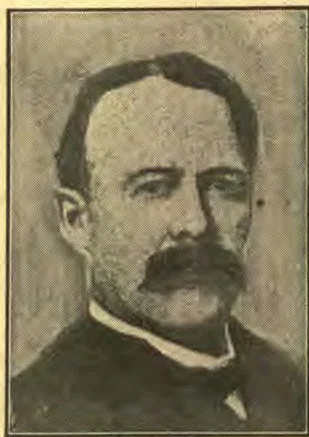
Judge Freemont Wood,
Who Presided at the Haywood Trial—See Last Page.
Sunday in the Gospels and Epistles.
Matthew says, ''In the end of the Sabbath, as it began to dawn toward the first day of the week.'' This record confirms the fact that the original Sabbath statute is still in force. Mark says, ''When the Sabbath was past, . . . very early in the morning of the first day of the week.'' Here again the seventh, and not the first day of the week is declared still to be the Sabbath. There is no revision or repeal here. John mentions the first day of the week in the 20th chapter of his Gospel in verses 1 and 9, but he does not even hint a revision or repeal of the original Sabbath-command. In the 5th chapter he emphatically states, in verses 16 and 18, that the same day the Jews regarded as the Sabbath is still the Christian Sabbath.
Paul, in 1 Cor. 16:2 and Acts 20:7, mentions the first day of the week, but in neither case does he intimate that that first day of the week has now had conferred upon it the title of the Sabbath, or Lord's day. It is merely called the first day of the week. There is no intimation of a transference of the Sabbath to that day. The book of Acts abounds with references to the Sabbath, but that Sabbath day is in every case the seventh day. There is no intimation in any case of either a transference of the day or a repeal of the Sabbath command.
But One More.
There remains but one more scripture that mentions the first day of the week in the New Testament. That scripture is in Luke 24:1. If there had been a transference of the day or a repeal of the Sabbath statute, we must find it here. But this scripture merely says:
''Now upon the first day of the week, very early in the morning, they came unto the sepulcher, bringing the spices which they had prepared, and certain others with them.''
There is no evidence of a repeal or revision here. To the contrary, there is the plain declaration in chapter 23, verse 56, that the original Sabbath-command still stands:
''And they returned, and prepared spices and ointments; and rested the Sabbath day according to the commandment.''
What language could be more forceful? What day is to be observed by Christians? The answer is unmistakable. It is the Sabbath according to the original commandment. ''The Sabbath was made for man.'' ''Remember the Sabbath day, to keep it holy''—the Sabbath ''according to the commandment.''
Which day does that command enjoin? ''The seventh day is the Sabbath of the Lord thy God; in it thou shalt not do any work.'' There has been no repeal or revision of this statute. God's original law of the Sabbath still stands. Shall we obey and live?