Clericalism in Italy

4%
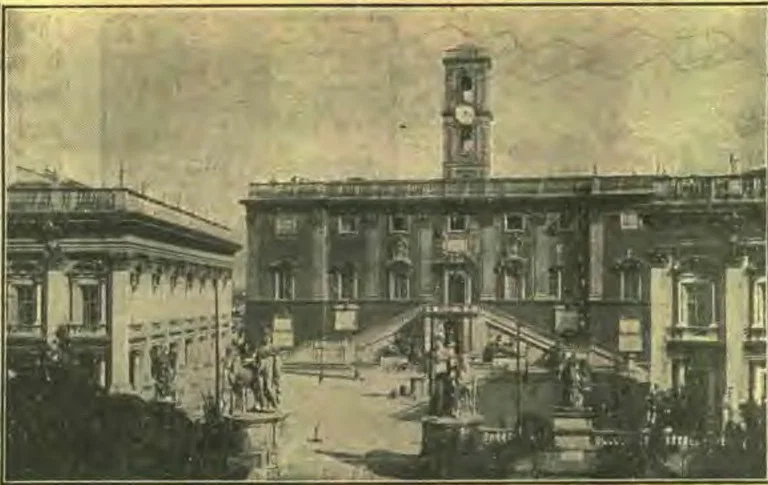
Campidoglio—Rome.
Campidoglio—Rome.

Clericalism in Italy

(From Our Own Correspondent)
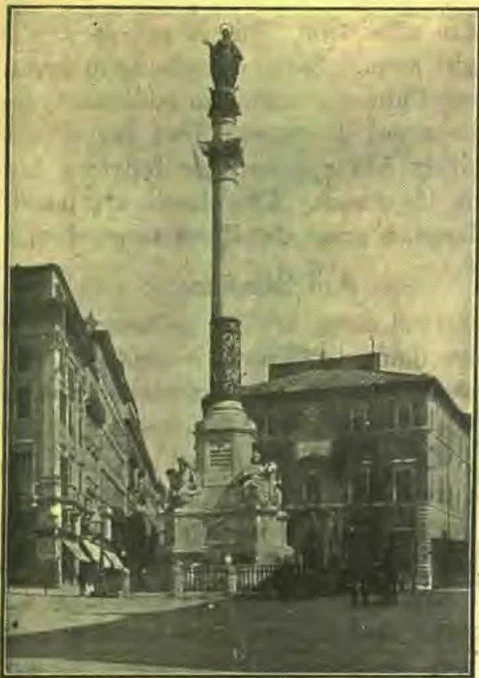
Monument Dolls Concessions—Rome.
THAT the Catholic forces have taken the arena in a determined fight for political supremacy in Italy has become alarmingly evident. All the friends of religious liberty are more or less alive to the peril of the situation, but how to successfully meet the difficult issue is a problem not so easy of solution.
The church is powerful and has an unlimited amount of wealth and influence at its command. The men of the present generation are weak morally, and consequently lack that stamina which is indispensable in a fight for principle. We are all more or less familiar with the power of the money-king. The value of wealth as a factor for controlling and commanding men is not less known to the leaders of the Roman church than to the man of business or the politician. But if to this financial hold upon the bodies of men we add the still stronger grip derived from the power of domineering the consciences, we can better appreciate the position of the Papacy.
Then we must consider that Italy is a poor country and that the strong middle class which is such a power in other countries is almost unknown here. The wealth of the country is largely in the hands of the nobility and the Jews. The former, as a general rule, are strong and even bigoted Catholics, while with the latter class religion plays so small a part that their personal and material interests to a large extent become the all-absorbing factor in deciding them for one side or the other. This latter declaration is fully verified in the present prime minister of Italy, who, notwithstanding his Jewish nationality, is lending his influence in a marked way in favor of the Papacy.
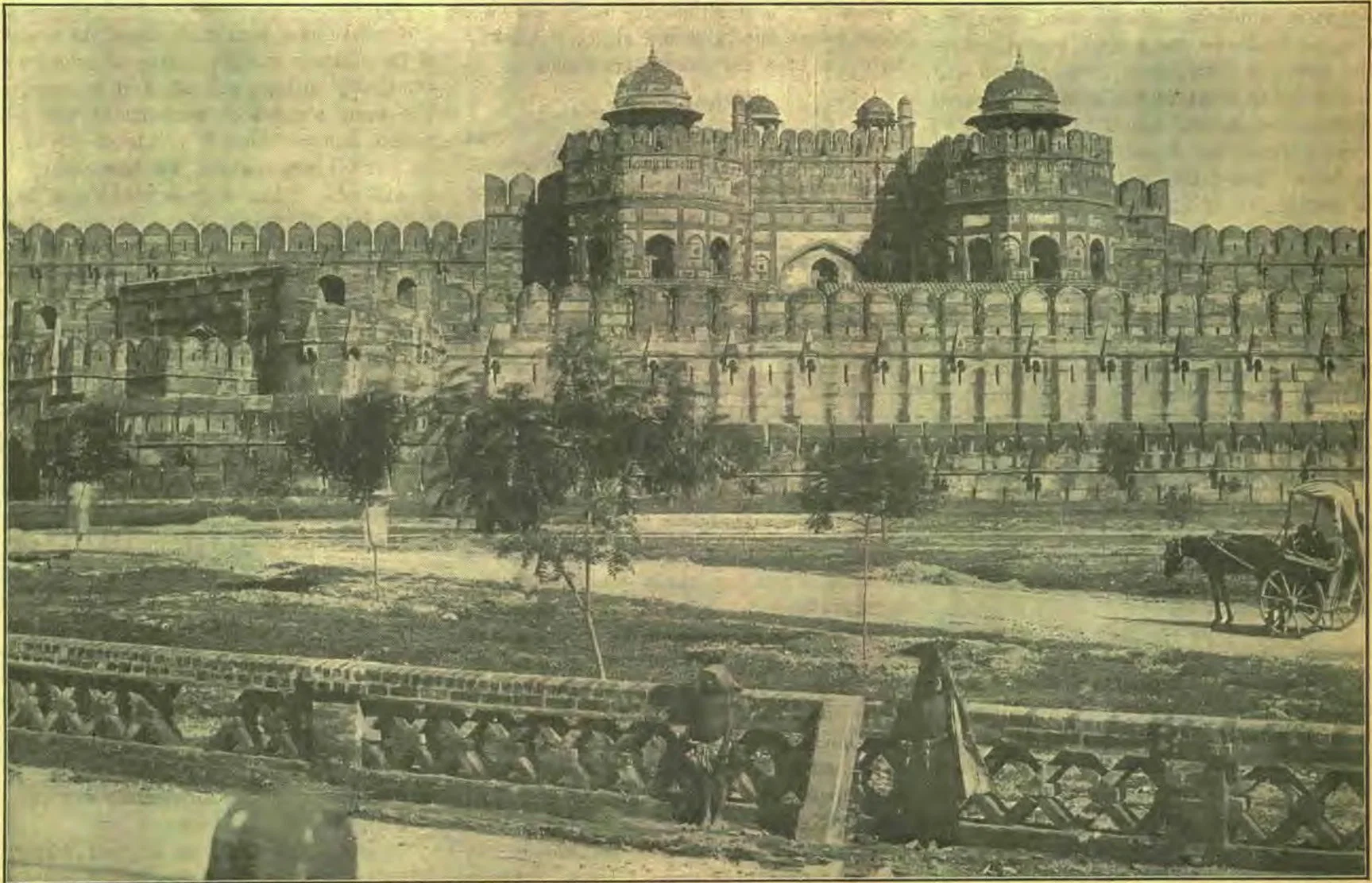
Agra Fort, where the British troops and Europeans of Agra were shot up during the Mutiny of 1857. They remained in the fort until the capture of Delhi. This fort was built by Magal rulers before the English got possession of India. Akbar began it in 1566 on the site of an older one constructed by Salim Shah Sur.
The poorer classes are either ignorant, superstitious Catholics, or out and out atheists. The former class marches blindly on under the lash of the domineering priest, while the latter class can not be depended upon in a fierce struggle for principle. The situation surely calls for some real reformers who are ready to stake their all for the cause of religious freedom.
The liberal parties make powerful demonstrations every so often, but these are not sufficient to cope with the persistent, steady, undermining influence of the Papacy, which, with its centuries of political experience, is making a life and death struggle to ostracize the enemy from its "home."
Just now Italy is celebrating the centennial of the birth of its great hero and patriot, Joseph Garibaldi. On this memorable occasionthe veterans that helped to liberate the country from papal usurpation are reminded, by contrasting the present conditions with those of 1870, that the Papacy in the last years has retrieved much of its lost prestige and greatly strengthened its position. In fact, so strongly has this conclusion forced itself home to their minds that at the present time they have had large posters put up all over Rome which read as follows:

Clericalism in Italy.

(Continued from Page 11.)
"The Joseph Garibaldi Society of Veterans of Rome: In view of the program that forms the basis of this patriotic society; and in view of the fact that this program is and must be maintained and continued by this association; and that our lamented companion Menotti Garibaldi and the successive presidents have held themselves true to the same program, we declare that any concession or transaction with the Papacy shall be considered a violation of the natural rights of the people and a setting aside of the causes that contributed to the uprising of the Italian people in favor of liberty and union: and would create a certain peril for the internal peace and security of the nation. We further declare that United Italy can have nothing whatsoever in common with the program and aspirations of the Vatican. We recommend all sister societies, and, in fact, all Italians, to ever defend Italy from every influence and intrigue of clericalism, guarding energetically the civil rights of the great Italian family which should not be forgetful of its origin and its mission in Rome and in the world, neither ought we to lose sight of the sublime ideals for which an entire generation of martyrs has been sacrificed."
Such powerful and significant statements made by men who are not political agitators or alarmists, but those who have put their all on the altar of liberty and have fought the nation's battles until now they are gray in the service of their country, ought to have some weight in convincing us of the real seriousness of the situation.
At this present time also the municipal elections are taking place at Rome, and the fight is on for the political supremacy of the city. The clerical forces have for some time been in power in the municipal government, but on this memorable occasion when the country is celebrating the triumphs of the great leader and liberator of Italy, Garibaldi, the liberal forces are making a tremendous fight to gain control of the political situation in Rome. Great, flaming posters cover every available place on the public and private buildings. The liberals have posted extensively the following significant placard:
"The liberal party must not accept alliance with the clericals. If the ecclesiastical authority adopt spiritual arms for spiritual interests, I, confiding in the public conscience and the tradition of our forefathers, will find the power to maintain intact the civil liberty. Victor Emmanuel II."
Among other places, I saw this poster pasted on the walls of the great Jesuit church in which the body of Ignatius Loyala rests. Another poster reads as follows:
"'Voters, reject resolutely every alliance with the clericals. I can not conceive of a greater calamity that can befall a civilized people than to see the civil and the religious power united in the hands of its ruler. The history of every century as well as of every country demonstrates that wherever this union takes place, civilization almost always immediately ceases to progress, or, in fact, always retrogrades; and the most obnoxious despotism establishes itself; and the result is ever the same, whether a priestly caste usurp the temporal power or a caliph or a sultan grasp the spiritual power. Everywhere this fatal mixture has produced the same effects. God help us, therefore, that this may not take place in our country. Camillo Cavour.'"
This powerful agitation on the part of the liberal parties has not proven in vain, for the results show that the clerical party has been snowed under and that the liberals have won a splendid victory. The clericals made a desperate fight, and many priests and monks went to the polls to register their vote in favor of the church's choice. In one place as many as fifty priests voted. The results of the election were received with much bitterness by the Roman hierarchy, and especially by the pope himself, who has always taken a lively interest in the local politics of the city where he has been situated. This great interest taken in politics by the leaders of the Roman church together with the stir seen in the ranks of the priesthood during the recent election are indications of a mighty awakening on the part of the Papacy in favor of a more aggressive political policy in Italy.
And while the liberal parties arise and for the moment sweep everything before them, when the enthusiasm has passed, the agitation ceases. But the church keeps continually and everlastingly at it till it wins out. The leaders that form the heads of the political parties have their affairs to attend to and thus are also impeded from spending all of their time in the political arena. But the Church of Rome has an army of prelates and priests that have nothing else to do than to tend to the call and beck of the Papacy and consequently also it is in a position to keep everlastingly working away at a problem until it wins.
However, the fact remains that clericalism is stronger in Italy to-day than it has been since Italian liberty was declared.
C. E. MILTON.
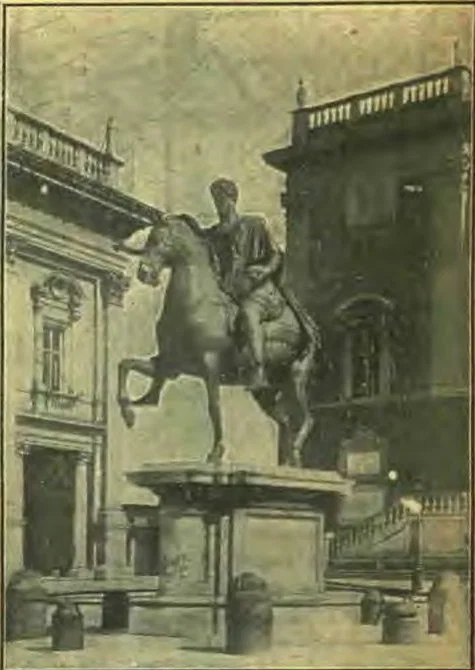
Statue of Marcus Aurelius.