The Outlook

6%

The Outlook

best express… communicat…… veying the… follows: "… lie and p… teachings… of Detroit,… tion, thus… "Our ob…

The American Federation of Catholic Societies

(Reported for the SIGNS OF THE TIMES) AS LOOKED AT BY A BIBLE PROTESTANT.
selves t… and no… federati… away fr… civil, ar… stitution… legislati… whether… claim o… as Ame… low citi…
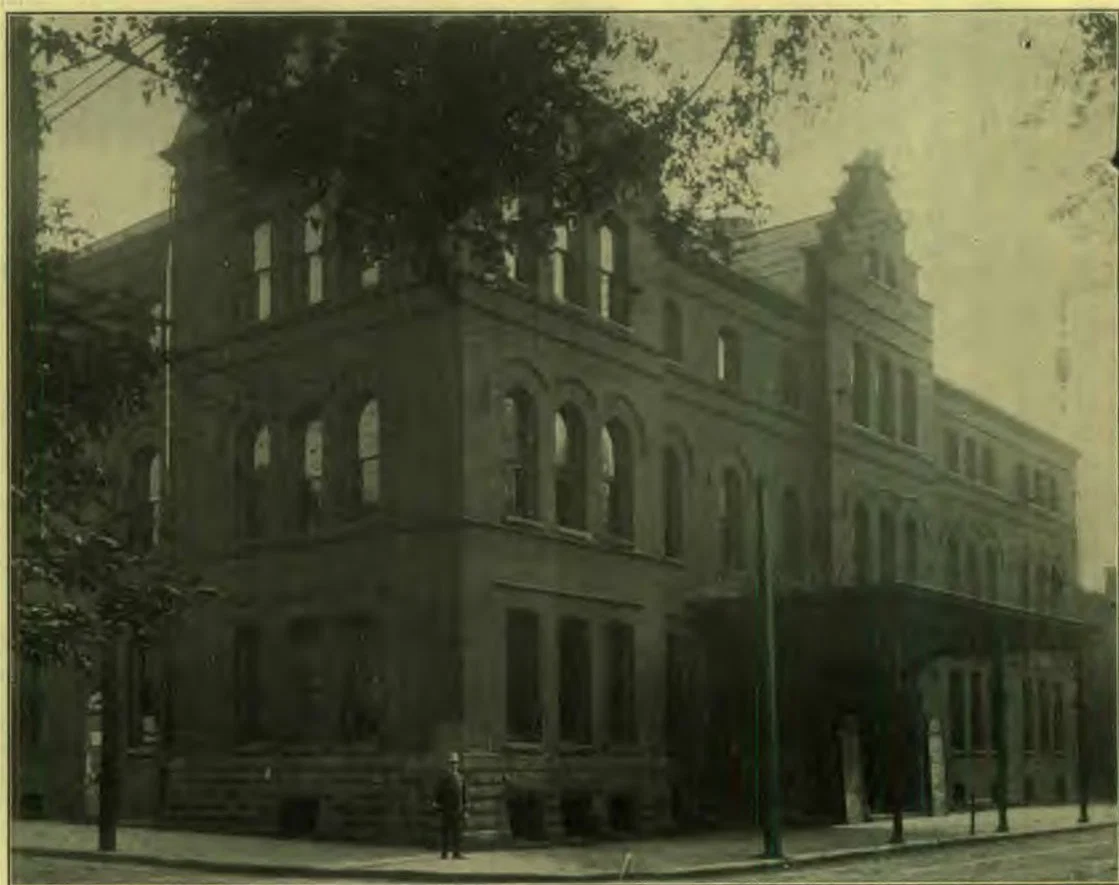
THE Great National Convention of the American Federation of Catholic Societies is a thing of the past, but its influence is yet a matter of the future. The annual convention of this year, the fifth in the history of the organization, was held in Convention Hall, Buffalo, N. Y., July 29, to August 1, inclusive. Truly, it was the most representative gathering of Catholic citizens since Columbus discovered America, and unfurled the papal flag of the Spanish sovereignty upon the virgin soil of a new continent.

What Is American Federation of Catholic Societies?

It is the grouping together of all the great and strong Catholic Societies, and even of the whole world, into one organized mass that can be wielded for and in the interest of the Roman Catholic religion and the Catholic Church, and directed by the masterly mind of a single individual. And to write the history of this Convention of Catholic Societies is simply to rewrite the history of that other great religious convention, the Inter-Church Conference on Federation of Protestant Churches, which met in New York City last November; for in the manner of its rise, its demands, its utterances, its organic action, avowed purpose and design, the Catholic Federation Convention was precisely like the Protestant Conference, with the one exception that there was absolutely no difference in the former upon points of doctrine or respecting the faith, and a possible single other exception unworthy of public notice. Indeed, it seems to one who was in constant attendance at both conferences, that the Catholic Conference was but an adjourned session of the Inter-Church Conference, so strong was the likeness of one to the other. And this is positively the most interesting feature, and the most significant item, to be noted in particular of these dual religious bodies.

The Object of Catholic Federation

may be ascertained from several reliable sources. The Rt. Rev. J. F. Regis Canevin, D.D., of Pittsburg, in a public discourse delivered just prior to the opening session of the convention, and which was listened to by the delegates in a body, stated the principal objects to be:
  1. The Christian education of youth.
  2. The sanctity and perpetuity of the Christian marriage as the basis of the family, and the preservative of the morality and happiness of the home.
  3. To correct error and expose falsehood and injustice, whether in the misrepresentation of history, doctrine, or principles of morality.
  4. To oppose and root out the great social and political evils which confront and menace us—socialism, anarchy, perversion of marriage, divorce, dishonesty in business, corruption in politics and offices of public trust, the lawlessness of wealth and the law-defeating power of money, the evasion of justice and widespread disregard for law.
And added:
  1. We stand for sanctity of the Christian home and family, resting on the sacred and stable foundations of Christian marriage.
  2. We maintain that man was created to know and serve God. Hence religion ought to be fostered and inculcated in every department of education from the lowest to the highest.
  3. We wish Christian principles to rule every-

where; in the State, in business, in labor unions, in all the civic, social, financial, and industrial relations of men. We must combat the materialism and secularism which are the sources of nearly all the great evils which threaten the country to-day. Article II of the Constitution and By-Laws of the Federation, states: The objects of this Federation are the cementing of the bonds of fraternal union among the Catholic laity and the Catholic societies of the United States; the fostering and protecting of Catholic interests and works of religion, piety, education, and charity; the study of conditions in
our social life; the dissemination of the truth and the encouragement of the spread of Catholic literature, and the circulation of the Catholic press. Bishop James H. McFaul, thus defines its purpose: "To realize the objects covered by the Constitution. Broadly stated, these objects are: (1) The unification of the Catholic nationalities in America; (2) the voicing of Catholic public opinion on the solution of modern problems; (3) the destruction of divorce; (4) the banishment of Socialism; (5) the education of all citizens to a realization of the injustice of taxing us to maintain a system of public instruction which we can not conscientiously patronize. "Federation is not then a mere grievance committee, altho it will use its influence whenever possible to redress grievances. It is not a political party; it will not engage in partisan politics; yet there is no power known to American citizenship which it will not employ in the interests of Catholics." Perhaps its greatest, all-absorbing purpose, is
best expressed in a sentence taken from the official communication of Cardinal Merry del Val's conveying the pope's blessing upon the convention, as follows: "Finally to endeavor to renovate public and private life in conformity with the teachings of Jesus Christ." Archbishop Messmer, of Detroit, at the very foundation of the Federation, thus tersely stated it: "Our object is not political. We positively repudiate the charge. It is foreign to our intentions to become a political party or to affiliate ourselves to become a political party or to affiliate ourselves to any of the existing political organizations and no 'political jobbing' is to be allowed in our federation. Yet we can not and shall not keep away from politics. Catholic interests, religious and civil, are greatly affected in many of our public institutions, the management of which is subject to legislation and the rulings of public officers—whether State or Federal. It becomes necessary to claim or defend our full religious and civil rights as American citizens, or those of our Catholic fellow citizens in these public institutions; it must be done through political action and influence. "Again, should the social questions and troubles of the day become a matter of public or political agitation, Catholic citizens will be found by a duty of religion as well as of citizenship, to take part in it. . . . While, therefore, in the very nature of the case this Federation is to be at certain times or under certain conditions forced to exert a political influence, yet it will never do so for mere temporal, material, or purely political purposes." The question of purpose is well epitomized in the words of Pope Leo XIII., everywhere appearing upon the literature of the Federation: "May the Faithful unite their efforts more efficaciously for the common good, and may their union rise like an impregnable wall against the fierce violence of the enemies of God." While it disavows any intention to engage in partisan politics or to identify itself with political parties, or even to be purely political within itself, yet the Federation does frankly avow and declare its purpose and intention to exercise its influence in civic affairs, and to wield its power in the arena of politics. Nor can any one fail to see its political character in the sense that it will seek to control political parties. In this, it is exactly identical with the purpose and intention of Protestant federation. Since the Federation will not exert its influence for "mere temporal, material, or purely political purposes," there is only one other sphere that remains in which it may, and for which it may exert itself, and that is the domain of the spiritual, or religious. But since the spiritual is, and can be, no part of the temporal, we mustreach the unavoidable conclusion, that since the Federation does not desire to, and will, employ the temporal means and political ways, it is therefore not spiritual, and, necessarily, is altogether political. It will exert its influence and make its demands for creed and for church. As a matter of fact, the Catholic Federation is simply to become a great fighting machine in the political world to demand and to secure all that the church desires in her interest!
The object of Protestant Federation is "to secure a larger combined influence for the church of Christ in all the matters affecting the moral and social condition of the people, so as to promote the application of the law of Christ in every relation of human life." The object of Catholic Federation is, in short, "to endeavor to renovate public and private life in conformity with the teachings of Jesus Christ." And it, too, designs to secure a "larger influence for the church of Christ in all matters affecting the moral and social conditions of the people." In addition, Cardinal Merry del Val said: "How much joy all this (the plan of federation) gave to the Sovereign Pontiff can be more easily imagined than described. For you are aware that he has
federation of this kind very much at heart because of the abundant blessings that accrue from them to society." Federation is for the concentration of effort, for the removal of social evils, the cleansing of the centers of vice and corruption, and the promotion of temperance, Sabbath observance, and general morality. Hence it is evident the purpose and design of the religious federations are alike in every particular. There is unanimity of opinion startling in its significance. "Righteousness, God in the Home, the School, the Nation" was the watchword of both of these great religious conventions. This much anent the question of the uniformity of purpose upon the part of religious federations.
Convention Hall, Buffalo, where the Federation Meeting was held, July 29 to Aug. 1, 1906.